Our Top Picks


What's inside
As an Amazon Associate I earn from qualifying purchases. This post may contain affiliate links at no extra cost to you.
A seized lug nut does not care how expensive your tool is. It cares about breakaway torque, anvil size and how much the battery can dump before it sags. If you have ever leaned on a breaker bar in a gravel lot with a flat tire, you already know the gap between a tool that spins and a tool that breaks bolts loose. Finding the best cordless impact wrench for lug nuts is mostly about matching torque to the fastener, then not overtorquing on the way back on.
Most passenger car and light truck lug nuts are torqued to roughly 80 to 140 ft-lbs from the factory. Three quarter ton and one ton trucks climb higher. That is the spec, not the reality. Add corrosion, an overzealous tire shop with an air gun, and a few winters of road salt, and the torque needed to break that nut loose can be double or triple the install spec. That is why nut-busting torque, not fastening torque, is the number that matters when you are removing.
As an Amazon Associate we earn from qualifying purchases at no extra cost to you.


What we cover
Torque, Anvil Size and Thickness, Explained Plainly
Two torque numbers get printed on the box. Fastening torque is how hard the tool can tighten. Nut-busting or breakaway torque is how hard it can hit to loosen. Breakaway is always the bigger number because the hammer mechanism gets to build momentum before it slams the anvil. For lug nuts, you want breakaway torque of at least 700 ft-lbs on a car or half ton truck, and 1000 ft-lbs or better if you work on heavy duty trucks, trailers or farm equipment.
Anvil size tells you the drive. A 3/8 inch is for interior bolts and small brackets. A 1/2 inch anvil is the lug nut standard and covers almost every wheel in a US driveway. A 3/4 inch or 1 inch anvil is structural and suspension territory, semi wheels, heavy trailers, and it is overkill on a Civic. Stick with 1/2 inch unless you genuinely service class 6 and up.
Material thickness matters for the same reason it matters at the welding table. A thin wall chrome lug nut cover will crush under a big impact. A hardened alloy socket will not. Use impact rated sockets, black oxide or phosphate finish, six point where you can. Chrome hand sockets crack and throw shards. Six point grabs more flank on a rounded nut than twelve point does. And do not use an extension unless you need one, because every joint eats energy before it reaches the fastener.
| Job | Anvil | Breakaway Torque Target | Battery Class |
|---|---|---|---|
| Car and crossover wheels | 1/2 in | 600 to 800 ft-lbs | 2.0 to 4.0 Ah |
| Half ton truck and SUV | 1/2 in | 800 to 1100 ft-lbs | 4.0 to 5.0 Ah |
| 3/4 and 1 ton, trailers | 1/2 in high torque | 1100 ft-lbs and up | 5.0 Ah and up |
| Suspension and frame bolts | 3/4 in | 1400 ft-lbs and up | High output pack |
| Interior trim and brackets | 3/8 in | 200 to 400 ft-lbs | Compact 2.0 Ah |
Mid Torque vs High Torque: Pick One On Purpose
The tool market splits 1/2 inch impacts into mid torque and high torque. Mid torque units land somewhere around 500 to 800 ft-lbs of breakaway and weigh noticeably less. High torque units start around 1000 ft-lbs and go up hard, and they weigh two to four pounds more with a battery attached.
If your work is wheels, brakes and general service on light vehicles, mid torque is the smarter buy. It fits behind a caliper, it does not wreck your wrist overhead, and it still pops rusted lugs. If you pull suspension, work on trucks and trailers, or you are the person the neighborhood calls for a hub that has not moved since 2009, buy high torque and accept the weight. Owning both is common in shops for a reason.
Brushless is not optional at this point. Brushed motors bleed heat, lose torque as the pack drains, and wear out. Every serious line runs brushless: DeWalt XR and Atomic, Milwaukee FUEL, Makita LXT and XGT, Ryobi HP for the budget end. Pick the battery platform you already own before you pick the tool. A second charger and a second battery family costs more than the difference between any two of these tools.
Mid Torque 1/2 in Cordless Impact Wrench
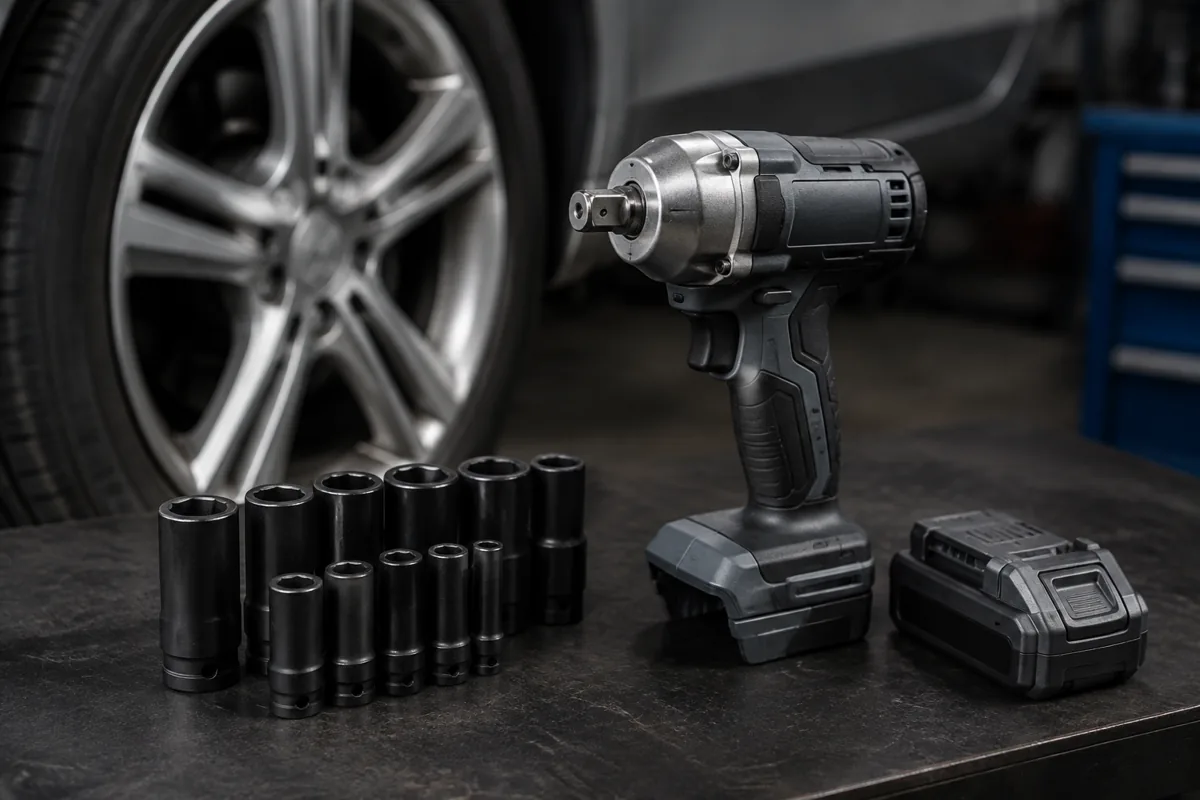
This is the sweet spot for lug nuts and brake work. Look for a stated breakaway number above 700 ft-lbs, a friction ring or detent pin anvil to match your sockets, and at least three forward speed settings so you can back off for aluminum wheels. Buy it as a bare tool if you already run that battery platform.
Battery, Duty Cycle and Cold Weather
Torque ratings assume a healthy pack. A 2.0 Ah compact battery on a high torque wrench will deliver its rated hit once or twice and then sag under voltage drop. Amperage draw is the reason. An impact under load pulls very high current in short bursts, and small cells cannot supply it without heating up and throttling. Practical rule: 4.0 Ah or larger for lug nut work, and high output packs if you are running a high torque tool all day.
Cold cuts capacity. In a 20 degree unheated shop, a pack that does eight wheels in summer might do five. Keep spares inside, not in the truck bed. If a battery gets hot after a stubborn hub, let it sit before charging. Charging a hot lithium pack shortens its life, and most chargers will just blink at you until it cools anyway.
Also watch the electronic clutch or drive control feature. Cheap tools give you a trigger and nothing else. Better tools give you selectable modes and an auto-stop for removal so the wrench does not keep hammering a free-spinning nut into your knuckle.
- ✔ Breakaway torque above 700 ft-lbs handles rusted lugs without a breaker bar
- ✔ Brushless motors hold torque as the pack drains
- ✔ Multiple speed settings let you throttle down for alloy wheels
- ✔ Same battery platform as your drill and grinder means fewer chargers
- ✘ High torque models get heavy fast, especially overhead
- ✘ Big impacts will happily overtorque and stretch or snap studs
- ✘ Compact batteries cannot supply the current these tools want
- ✘ Impact rated sockets are a required extra cost
Shop Safety: Overtorque, Studs, PPE and Fire Risk
An impact wrench is a removal tool. It is not a torque wrench and it never will be. Run the lug nuts on snug with the impact on the lowest setting, then finish with a calibrated click-type or digital torque wrench to the manufacturer spec, in a star pattern. Overtorqued lugs warp rotors, stretch studs and turn a roadside tire change into a stud replacement job. If a stud looks rusted thin or the threads are galled, replace it. Studs are cheap. A wheel coming off is not.
PPE is not negotiable. Safety glasses always, because impacts throw rust scale and chrome socket fragments at eye level. Gloves are a judgment call: they help with hot sockets and sharp brake hardware, but keep them snug so nothing catches in the anvil. Hearing protection matters more than people admit. A 1/2 inch impact under load runs loud enough to do cumulative damage over a shift.
Now the part that gets skipped. If the lug will not move and you reach for heat, you have changed the job. A torch near a wheel means fume and fire risk. Brake dust can contain metallic particulate, and older or aftermarket friction material may still contain asbestos. Do not grind or torch brake components without respiratory protection and ventilation. Zinc plated hardware releases zinc oxide fume when heated, which is what causes metal fume fever. Wear a fitted respirator, not a dust mask.
Fire risk near a wheel is real. You are inches from a rubber tire, a grease packed bearing and often a brake line with fluid in it. Brake fluid is combustible. Keep a rated extinguisher within arm’s reach, shield the tire with a welding blanket, and never torch near a fuel or brake line you have not traced. Penetrating oil is flammable too, so let it flash off before you introduce any heat. Better answer most of the time: soak the fastener, hit it with the impact in short bursts rather than one long pull, and let the hammer mechanism do the work.
Support the vehicle properly. Jack stands on solid ground, wheels chocked, never just a jack. A high torque impact can rock a vehicle on a bad stand.
High Torque 1/2 in Impact Wrench for Trucks
For 3/4 ton trucks, trailers and suspension bolts. Expect 1000 ft-lbs of breakaway and up, a friction ring anvil, and real weight in the hand. Pair it with a high output battery or you will never see the rated numbers. Overkill for a commuter car, correct for a work truck.
Sockets, Extensions and the Rest of the Kit
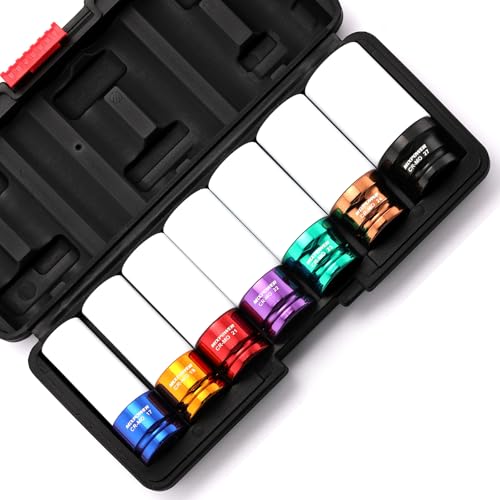
The tool is half the setup. Buy a dedicated impact socket set in the sizes your vehicles use, usually 17mm, 19mm, 21mm and 22mm, plus 3/4 inch and 13/16 inch for older domestic trucks. Thin wall impact sockets matter if your wheels have tight lug pockets. Get protective sleeve sockets for aluminum or painted wheels, the ones with a plastic jacket, because a bare steel socket will chew a wheel face in one pass.
Skip long extensions when you can. If you need one, use an impact rated extension and expect to lose some torque. Keep a short breaker bar in the kit as the backup for a nut that has truly welded itself in place, and keep a stud extractor set on the shelf because eventually you will need it.
Impact Socket Set with Protective Sleeves
Six point, impact rated, with sleeved sockets for alloy wheels. This is the accessory people skip and then regret when they scar a wheel or crack a chrome socket. Match the drive size to your wrench and keep the set in the vehicle, not on the bench.
FAQ
How much torque do I actually need for lug nuts? Aim for at least 700 ft-lbs of nut-busting torque for cars and half ton trucks, and 1000 ft-lbs or more for heavy duty trucks and trailers. Installation spec is much lower, usually 80 to 140 ft-lbs on light vehicles, so always finish with a torque wrench.
Can I tighten lug nuts with an impact wrench? Only to snug them up on the lowest setting. Final torque has to come from a calibrated torque wrench in a star pattern. Impacts do not measure torque, and overtightening warps rotors and stretches studs.
Is a 3/8 inch impact wrench enough for wheels? No. A 3/8 inch drive is built for interior bolts and small hardware and does not have the anvil strength or torque for rusted lug nuts. Use a 1/2 inch drive as your minimum for wheel work.
Pick the anvil size for the vehicles you actually service, buy the battery platform you already own, and treat the finish torque as a separate step with a separate tool. That combination outlasts chasing spec sheets.
Check prices on Amazon →