Our Top Picks


What's inside
As an Amazon Associate I earn from qualifying purchases. This post may contain affiliate links at no extra cost to you.
Plasma gets sold as a magic wand. It is not. It is a fast, dirty, extremely useful way to sever conductive metal, and the best plasma cutter for your shop is the one matched to the thickness you cut every week and the air you can actually feed it. Buy on the marketing thickness number and you will end up dragging a stalling arc through half-inch plate wondering why the consumables last twenty minutes.
Here is the blunt version. Plasma wins on shape, on stainless and aluminum, on thin sheet, and on anything you would rather not clamp in a vise. A saw wins on square ends, on repeat lengths, on tubing you plan to fit tight, and on cost per cut. Most working shops need both. This is how to decide which one you are actually short of.
As an Amazon Associate we earn from qualifying purchases at no extra cost to you.



| Cut Type | Plasma | Saw / Abrasive |
|---|---|---|
| Curves and holes in plate | Best option, no contest | Not possible |
| Square ends on tube for tight fitup | Workable, needs cleanup | Best option |
| 22 ga to 10 ga sheet | Fast and clean | Chews and distorts |
| 1/2 in plus plate | Slow, high consumable cost | Bandsaw or torch better |
| Stainless and aluminum | Clean, no contamination | Abrasive wheels contaminate |
| Rusty, painted, coated stock | Cuts through it | Loads the blade |
| Noise and dust in a shared shop | Loud, sparks, fume | Bandsaw is quietest |
What we cover
What the best plasma cutter actually needs to do
Ignore the headline number on the box. Manufacturers list a severance thickness, which means the arc will part the metal and leave you a ragged edge you have to grind. The number that matters is rated or quality cut thickness, usually a good deal thinner. A machine advertised at 1 inch severance is often a 1/2 inch quality-cut machine and a 3/8 inch machine if you want the edge to be weld-ready without dressing.
Pick your amperage from the thickness you cut most, not the thickness you cut once a year. Rough field guide: around 25 to 30 amps handles sheet metal and light tube all day. Roughly 45 amps is the sweet spot for general fab, meaning up to about 1/2 inch mild steel with decent edges. 60 amps and up is production plate territory and starts demanding real power and real air. If you only occasionally hit thick stock, cut it on a bandsaw or with oxy-fuel and stay in the lighter, cheaper machine.
Duty cycle is the other number people skip. It is expressed as a percentage at a given output over ten minutes. Thirty five percent at 45 amps means three and a half minutes of arc time, then cool down. For hand cutting with repositioning, marking and clamping between cuts, a 35 percent duty cycle is honestly fine. If you are tracing long templates or running a track, you want 50 percent or more or you will be babysitting a thermal cutout.
Air, power and the two things that kill plasma machines
Plasma runs on compressed air, and dirty air is the single most common reason a machine cuts badly. Moisture and oil hit the nozzle, the arc wanders, the swirl pattern breaks up and consumables die early. You want a proper filter and dryer at the machine, not just the little bowl on the compressor. Drain your tank. If you live somewhere humid, add a desiccant stage.
Volume matters more than peak pressure. Most 45 amp class machines want somewhere in the 4 to 6 CFM range at 60 to 90 PSI, sustained. A pancake compressor will start the cut and then fall behind mid-pass, which reads as a machine problem and is not. Check the machine’s air spec against your compressor’s real delivered CFM before you buy anything.
On power, dual voltage is worth paying for. Running 120 volt gets you portable and gets you thin material. Running 240 volt gets you the machine’s actual rated output. Also check whether the unit is a blowback or high frequency start design. High frequency start can raise hell with nearby CNC controllers and electronics, which matters if your table shares a shop with a router or a plasma table computer.
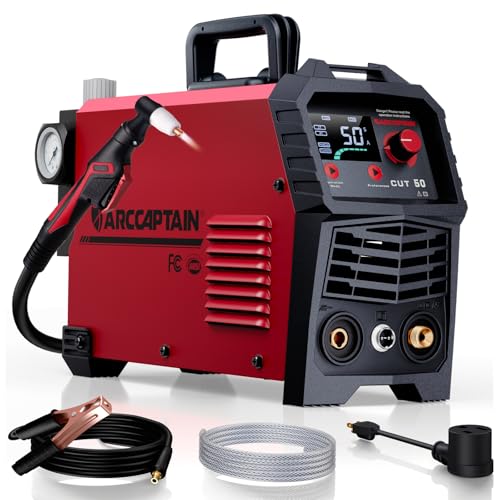
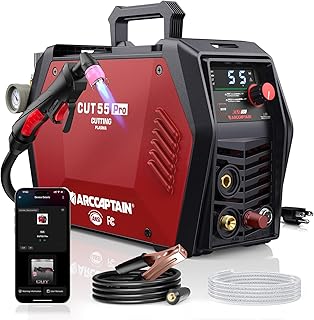
45 Amp Dual Voltage Plasma Cutters
If you are buying one machine for a mixed shop, this is the class to shop. Enough output for 1/2 inch mild steel, small enough to move, and the consumables are widely stocked. Confirm the CFM requirement against your compressor and check that a torch consumable kit is easy to reorder before you commit.
Consumables, torch quality and the long-term cost
The machine is the cheap part. Nozzles, electrodes, swirl rings and shield cups are the ongoing bill, and off-brand machines with proprietary torch geometry will hurt you here. Before you buy, search for a consumable kit for that specific torch. If it is hard to find, walk away. A machine you cannot feed is a boat anchor.
Drag-tip consumables let you rest the shield on the work, which makes hand cutting far more accurate and beginner-friendly. Standoff tips run slightly cleaner but demand a steady 1/16 to 1/8 inch gap. Buy a roller guide or a simple circle attachment early. Freehand curves in plate look like freehand curves in plate.
Consumable life goes to hell from three things: piercing at the edge of the plate instead of stepping in, starting the arc without moving, and cutting with too little air. Pierce thick stock at an angle so blowback goes away from the nozzle, and get the torch moving as soon as the arc transfers.
- ✔ Cuts any conductive metal including stainless and aluminum without contamination
- ✔ Cuts curves, holes and shapes a saw cannot touch
- ✔ Fast on sheet and light plate with a narrow heat affected zone
- ✔ Cuts through rust, paint and mill scale without loading a blade
- ✔ Portable enough for field and repair work
- ✘ Needs clean dry compressed air at real volume, not just a small compressor
- ✘ Consumable cost per foot is high compared to a bandsaw blade
- ✘ Cut edges usually need dressing before a critical weld
- ✘ Slow and expensive above about 1/2 inch versus oxy-fuel or a saw
- ✘ Loud, sparky and produces serious fume, especially on coated or galvanized stock
Safety, because plasma is nastier than it looks
Plasma arcs put out intense UV. A cut that takes four seconds is long enough to burn your corneas. Minimum shade 8 for low amperage work, shade 9 to 11 as you climb into the 40 to 60 amp range. A cheap clear face shield is not eye protection. Wear safety glasses under the shield too, because plasma throws spatter sideways and off the backside of the plate.
Fume is the part people underrate. Plasma vaporizes whatever is on the metal. Galvanized coating gives you zinc oxide and metal fume fever, which feels like a bad flu and is entirely avoidable. Grind the coating back well past the cut line, cut outdoors or with local extraction, and never trust a shop fan to do the job of a hood. Stainless produces hexavalent chromium. That one is not a flu, it is a carcinogen, and it wants real extraction or a supplied-air setup, not a dust mask.
Fire watch is not optional. Plasma dross is molten metal ejected downward through the cut, which means it lands under your work, inside the tube you are cutting, and in whatever is on the floor. Clear a 35 foot radius of anything flammable, keep an extinguisher within reach, and check the area 30 minutes after you finish. Slow smolders in sawdust and rags are what burn shops down, not the visible sparks.
Two more. Gloves and dry leathers, because the torch tip stays hot and the work stays hotter. And never cut a sealed container, a drum, or anything that has held fuel or unknown chemicals. Ever.
Plasma Cutting PPE and Fume Control
Budget for a proper shade 9 to 11 helmet or shield, leather gloves, and some form of fume extraction in the same order as the cutter. A portable extractor arm is cheaper than one bad zinc exposure and far cheaper than a shop fire. Add a desiccant air dryer to the same cart while you are there.
When a saw still wins
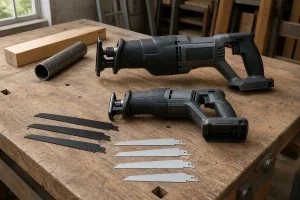
If you build with tube and you need clean square ends that fit tight, a cold saw or a good horizontal bandsaw beats plasma every time. Plasma leaves a bevel, a small kerf taper and dross. On a 90 degree butt in 1 inch square tube, that means grinding, and grinding is time you did not budget.
Repeat cuts favor saws too. A stop block on a bandsaw gives you forty identical pieces without measuring. Freehand plasma gives you forty pieces within a sixteenth if you are good and it is a bad day for consumable cost.
Above roughly 1/2 to 3/4 inch, oxy-fuel is often the better answer on mild steel. It is cheaper per foot, needs no electricity, and handles thick plate that would need a much larger plasma unit. Plasma keeps the edge on stainless and aluminum where oxy-fuel will not cut cleanly at all.
The honest recommendation: if you do not own a bandsaw, buy the bandsaw first. If you already have one and you are grinding curves out of plate with a cutoff wheel, the plasma cutter will change how you work.
FAQ
Do I need a CNC table to get good cuts? No. A roller guide, a straightedge clamped to the work, and drag-tip consumables get you most of the way on hand cuts. A table matters when you need repeatable shapes or nested parts in quantity, not for one-off fab work.
Can a plasma cutter cut aluminum and stainless? Yes, and it is one of plasma’s real advantages since it cuts anything electrically conductive. Aluminum tends to leave more dross on the underside, and stainless holds an oxide layer you should clean before welding. Fume control on stainless is not negotiable.
Is a cheap import plasma cutter worth it? Sometimes, if the torch takes commonly stocked consumables and the machine has a real warranty and support in the US. The failure mode on bargain units is not the cut quality, it is discovering nobody sells nozzles for that torch a year later. Check consumable availability first, then price.
Match the amperage to your usual thickness, feed it clean dry air, and keep the saw for square ends. That combination covers almost everything a small shop cuts.
Check prices on Amazon →