What's inside
- Choose the disc size before comparing brands
- Power: match the motor to the work
- Corded versus cordless: choose by workspace and frequency
- Speed control is useful, but not always essential
- Guard and handle features that affect control
- Buy the disc for the job, not just the grinder
- Durability and ownership costs
- A sensible first purchase
- Related Guides
- Choose the disc size before comparing brands
- Power: match the motor to the work
- Corded versus cordless: choose by workspace and frequency
- Speed control is useful, but not always essential
- Guard and handle features that affect control
- Buy the disc for the job, not just the grinder
- Durability and ownership costs
- A sensible first purchase
- Related Guides
As an Amazon Associate I earn from qualifying purchases. This post may contain affiliate links at no extra cost to you.
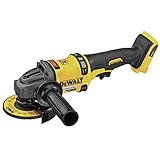
The best choice in an angle grinder buying guide for beginners is usually a 115 mm or 125 mm grinder with adjustable speed, a three-position side handle, a tool-free guard, and enough power for the material you expect to cut or grind.
As an Amazon Associate we earn from qualifying purchases at no extra cost to you.


What we cover
- Choose the disc size before comparing brands
- Power: match the motor to the work
- Corded versus cordless: choose by workspace and frequency
- Speed control is useful, but not always essential
- Guard and handle features that affect control
- Buy the disc for the job, not just the grinder
- Durability and ownership costs
- A sensible first purchase
- Related Guides
Choose the disc size before comparing brands
Disc diameter determines cutting depth, handling, and the range of accessories available. A larger disc is not automatically better: it adds weight and demands more control, while a small grinder is easier to position in tight spaces.
| Disc size | Typical maximum cutting depth | Typical power | Best for | Main drawback |
|---|---|---|---|---|
| 76 mm | About 15–20 mm | 500–800 W | Light trimming, tile, small metal work | Limited disc selection and shallow cuts |
| 115 mm | About 30 mm | 700–1,000 W | Light fabrication, sharpening, rust removal | Less capacity for thick stock |
| 125 mm | About 35–40 mm | 900–1,400 W | Best all-round beginner size | Heavier than compact models |
| 180 mm | About 55–60 mm | 1,500–2,200 W | Heavy steel, masonry, deep cuts | More kickback, weight, and fatigue |
| 230 mm | About 65–75 mm | 2,000–2,600 W | Large structural and masonry work | Usually excessive for occasional DIY use |
For most first-time buyers, 125 mm is the practical middle ground. Select 115 mm if compact size and lower weight matter most. Choose 180 mm or 230 mm only when you regularly need deep cuts; a large grinder can be tiring and less forgiving for an inexperienced operator.
Power: match the motor to the work
For corded tools, compare input power in watts. A 700–900 W grinder is adequate for occasional deburring, surface rust, and thin steel. Around 1,000–1,400 W gives a 125 mm tool more reserve when cutting thicker bar, removing welds, or using a flap disc over a broad area. Heavy 180 mm and 230 mm tools generally need at least 1,500 W.
For cordless tools, voltage alone is not a complete power comparison. A brushless 18 V grinder can be very capable, but the battery’s amp-hour rating affects runtime and weight. A 5.0 Ah battery stores approximately:
18 V × 5.0 Ah = 90 watt-hours.
If the grinder averages 500 W under a demanding load, the theoretical runtime is 90 ÷ 500 = 0.18 hours, or about 11 minutes of continuous loaded operation. In real work, intermittent cutting and repositioning may make one battery last considerably longer, but thick cuts can reduce runtime quickly.
Corded versus cordless: choose by workspace and frequency
| Situation | Better choice | Why |
|---|---|---|
| Occasional home use near an outlet | 700–1,000 W corded grinder | Low purchase cost and unlimited runtime |
| Outdoor repairs or roof, gate, and vehicle work | 18 V or 20 V-class cordless grinder | No extension cord and easier movement |
| Long cutting sessions | 1,000–1,400 W corded grinder | Continuous power without battery changes |
| Existing compatible battery system | Cordless grinder in that system | Lower total cost if batteries and charger are already owned |
| Very heavy steel or masonry work | High-power corded grinder | Better sustained output and less battery heat |
Cordless tools are convenient but the complete cost includes batteries and a charger. A bare tool may appear inexpensive, yet a first-time buyer may need one or two batteries for practical work. Corded grinders are usually the economical option when mobility is not important.
Speed control is useful, but not always essential
Most angle grinders run at roughly 8,000–12,000 revolutions per minute, depending on size. Fixed-speed models are suitable for cutting and ordinary grinding. Variable-speed models are more versatile for wire wheels, flap discs, sanding discs, and polishing pads.
Never exceed the maximum revolutions per minute printed on the disc or accessory. A polishing pad or wire wheel may have a lower safe speed than a cutting disc. For polishing, a grinder with a low setting around 2,000–3,000 rpm is more controllable than a fixed-speed model. Speed control also reduces heat when working on stainless steel or painted surfaces.
Electronic constant-speed control can help maintain performance under load, while soft start reduces the sudden twist when the motor starts. Overload protection is valuable for beginners because pressing too hard can overheat the motor and stall the disc.
Guard and handle features that affect control
A tool-free adjustable guard is preferable to a guard that requires a screwdriver. You should be able to position it between your hands and the rotating disc without removing it. The guard must remain installed for normal cutting and grinding; it is not an optional accessory.
A two-position or three-position side handle lets you work with the dominant hand on the main grip and the other hand supporting the tool from a comfortable angle. Three positions are especially useful when changing from horizontal grinding to vertical cutting. Anti-vibration handles can reduce discomfort during extended work, but they do not replace breaks or correct technique.
- Choose a narrow body if you have smaller hands or work in confined spaces.
- Look for a paddle switch if you want the tool to stop when you release the grip.
- Choose a lock-on switch only if you can safely control it and the work requires extended running.
- Prefer sealed or protected switches and vents when grinding produces heavy dust.
- Check the tool’s weight with its guard and handle fitted; the bare-tool figure can be misleading.
Buy the disc for the job, not just the grinder
Cutting discs
Thin abrasive cut-off discs are intended for slicing metal and should not be twisted or used for side grinding. Diamond blades are used for suitable masonry, concrete, tile, or some metal applications, but the blade type must match the material. A disc labelled for steel is not automatically suitable for stainless steel, aluminum, stone, or reinforced concrete.
Grinding wheels
Thicker grinding wheels are designed for removing welds, shaping steel, and correcting edges. They tolerate side loading better than cutting discs, but the grinder should still be kept moving to avoid gouging the workpiece. Use a wheel rated for the grinder’s speed and intended material.
Flap discs
Flap discs combine abrasive cloth flaps with a backing plate. They are useful for blending welds, cleaning rust, and preparing metal for paint. Coarse grits such as 40 or 60 remove material quickly; 80 or 120 produce a smoother finish. They generally give beginners better control than a hard grinding wheel for surface finishing.
Wire wheels and cups
Wire wheels remove loose rust, scale, and paint but can throw wires at high speed. They are not substitutes for cutting or grinding wheels. Select the correct wire type for the material and inspect it frequently for broken or missing wires.
Polishing pads
Polishing requires a compatible backing pad, compound, and usually a lower speed. A standard fixed-speed grinder can burn paint or aluminum and fling compound, so a variable-speed model is the safer choice for occasional polishing.
Durability and ownership costs
The first parts to wear are usually consumables, carbon brushes on brushed motors, switch components, spindle locks, and bearings exposed to abrasive dust. Brushless cordless models remove brush replacement, but their electronic controls and battery packs can make repairs more expensive.
Budget for discs rather than judging the grinder by its purchase price. For example, if a grinder costs $70 and you use it 10 times per year for five years, the tool cost is approximately $1.40 per use before discs and electricity. A $150 tool used 100 times over five years costs about $0.30 per use. Frequent users can therefore justify better overload protection, a stronger gearbox, and a more comfortable handle.
After each session, unplug the tool or remove its battery, brush dust from the vents, and inspect the cord, guard, flange, spindle, and disc. Do not blow abrasive dust deeper into the housing with high-pressure air unless the manufacturer permits it. Replace discs that are cracked, warped, damp, excessively worn, or past their marked expiry date.
A sensible first purchase
For general household metalwork, select a 125 mm grinder rated around 900–1,200 W, or a brushless cordless model in an existing 18 V or 20 V battery system. Prioritize a tool-free guard, three-position handle, soft start, overload protection, and a comfortable grip over the highest advertised speed.
Buy separate, material-specific discs for cutting, grinding, and finishing, plus eye and hearing protection and suitable respiratory protection for dusty work. Secure the workpiece, keep the guard between you and the disc, use both hands, and allow the accessory to reach full speed before making contact. That combination will serve a beginner better than simply choosing the largest or most powerful grinder available.