What's inside
- Quick picks by welding situation
- What a wire feeder actually controls
- Wire-feed speed: broad range versus useful range
- Spool size and drive-roll compatibility
- Duty cycle: match it to your actual weld time
- Notable feeder types and real-world choices
- How to match mig welder wire size to a feeder
- Ownership costs and common failure points
- Related Guides
- Quick picks by welding situation
- What a wire feeder actually controls
- Wire-feed speed: broad range versus useful range
- Spool size and drive-roll compatibility
- Duty cycle: match it to your actual weld time
- Notable feeder types and real-world choices
- How to match mig welder wire size to a feeder
- Ownership costs and common failure points
- Related Guides
As an Amazon Associate I earn from qualifying purchases. This post may contain affiliate links at no extra cost to you.
The best mig welder wire feeder is the one whose speed range, spool capacity, drive rolls, and duty cycle match both your welding machine and the wire size you actually use; for most shop work, a 30–700 inches-per-minute feeder accepting a 12-inch spool and rated around 60% duty cycle is the most versatile choice.
As an Amazon Associate we earn from qualifying purchases at no extra cost to you.


What we cover
- Quick picks by welding situation
- What a wire feeder actually controls
- Wire-feed speed: broad range versus useful range
- Spool size and drive-roll compatibility
- Duty cycle: match it to your actual weld time
- Notable feeder types and real-world choices
- How to match mig welder wire size to a feeder
- Ownership costs and common failure points
- Related Guides
Quick picks by welding situation
| Shopper’s situation | Best feeder profile | What to prioritize | Typical market range |
|---|---|---|---|
| Occasional repairs and light fabrication | Compact integrated feeder or small portable unit | 0.023–0.035-inch wire support, 8- or 12-inch spool, simple tension adjustment | $150–$500 |
| Regular home-shop welding | Separate feeder with four-roll drive | 30–700 ipm, 12-inch spool, interchangeable rolls, 60% duty cycle or higher | $500–$1,500 |
| Outdoor maintenance or field repair | Portable suitcase feeder | Rugged case, strain relief, long lead compatibility, 100% duty cycle at a practical amperage | $900–$2,500 |
| Heavy structural or production work | Industrial four-roll feeder | 60–1,200 ipm, 44- or 60-pound spool, high duty cycle, feeder-to-power-source communication | $1,500–$4,000+ |
What a wire feeder actually controls
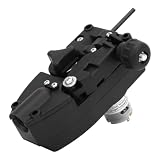
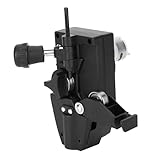
A welder wire feeder does more than push filler metal through a liner. It controls wire-feed speed, which affects amperage and deposition rate, while the power source controls voltage or arc length. The feeder also houses the spool, drive rolls, inlet and outlet guides, contact-tip connection, and usually the trigger circuit.
Compatibility is not universal. A feeder must match the power source’s control cable, connector pinout, motor voltage, gas-valve arrangement, and intended welding process. A feeder designed for a compatible constant-voltage MIG power source may not work correctly with a machine intended for a spool gun, TIG torch, or unrelated brand-specific interface.
Wire-feed speed: broad range versus useful range
Many feeders advertise a range of roughly 30–700 inches per minute (ipm). That is useful on paper, but the lower and upper limits matter only if the motor can feed your chosen wire smoothly under real load. Thin 0.023-inch wire benefits from controlled low-speed feeding; thick 0.045-inch or 0.052-inch wire needs adequate torque and a suitable drive-roll profile.
For common solid-wire MIG work, these approximate starting points are useful:
- 0.023-inch wire: approximately 120–350 ipm for thin sheet and light fabrication.
- 0.030-inch wire: approximately 150–450 ipm for general-purpose steel work.
- 0.035-inch wire: approximately 180–550 ipm for brackets, frames, and repair work.
- 0.045-inch wire: approximately 250–700 ipm for heavier sections and higher deposition.
- 0.052-inch wire: typically requires a high-capacity feeder, correct rolls, and a power source capable of supplying the necessary amperage.
These are not universal weld settings. Wire type, shielding gas, joint design, stick-out, and voltage all change the correct speed. The buying lesson is to choose a feeder with some range above and below your normal setting, rather than paying for an extreme maximum you will never use.
Spool size and drive-roll compatibility
An 8-inch spool commonly holds about 10–12 pounds of wire, while a 12-inch spool generally holds about 33–44 pounds, depending on wire diameter and spool construction. Larger spools reduce changeovers and usually lower the cost per pound, but they add weight and require a feeder with enough cabinet space and a correctly rated spindle.
Check three separate dimensions before buying:
- Spool diameter: the feeder must physically accept the spool.
- Spool width and hub: the spindle and brake must fit the spool’s center opening.
- Spool weight: the spindle and cabinet must support the loaded spool without excessive drag.
Drive-roll compatibility is equally important. V-groove rolls are normally used for solid steel wire. Knurled V-groove rolls grip many flux-cored wires without crushing them. U-groove rolls are preferred for soft aluminum wire. Using a sharp V-groove on aluminum can deform the wire, contaminate the liner, and create bird-nesting at the inlet guide.
For a shop using both steel and aluminum, a feeder with quick-change rolls and a separate aluminum liner or spool-gun connection is more useful than a cheaper feeder locked into one roll size. Confirm that the rolls are available individually; proprietary replacement parts can make a low purchase price expensive to own.
Duty cycle: match it to your actual weld time
Duty cycle is the percentage of a ten-minute period that a feeder or power source can operate at a stated output before its thermal limit is reached. A 60% duty cycle means six minutes of operation followed by four minutes of cooling at the specified rating. It does not mean six minutes of uninterrupted arc time in every situation, because the rating changes with amperage and ambient temperature.
| Duty-cycle rating | Maximum rated welding time in 10 minutes | Practical fit |
|---|---|---|
| 20% | 2 minutes | Short repairs and occasional tack welding |
| 40% | 4 minutes | Light fabrication with frequent repositioning |
| 60% | 6 minutes | Regular shop fabrication |
| 100% | 10 minutes | Production, long seams, and demanding field work |
Do not compare duty-cycle percentages without comparing the amperage and temperature at which they were measured. A feeder rated at 100% duty cycle at 300 amps may be a better choice for production than one claiming 60% at a much higher output, but the latter may still suit short heavy welds.
Notable feeder types and real-world choices
Portable suitcase feeders
Models such as the Lincoln Electric LN-25 PRO and Miller SuitCase feeder family are designed for mobility and field repair. They are useful when the workpiece is large or the power source stays in one place. Look for a sealed or protected control panel, a strong carrying handle, robust cable connections, and a drive system that can handle the wire diameter you use outdoors. A portable feeder is not automatically better for a bench shop: its smaller spool capacity and field-oriented controls may be less convenient than a cabinet feeder.
Bench and industrial feeders
Products such as the Miller S-22P and ESAB Warrior Feed 304 represent the conventional separate-feeder format used with compatible shop power sources. Their advantages are larger spools, more precise controls, easier access to liners and rolls, and better support for repeated welding. Match the feeder to the power source’s connector and control protocol rather than assuming that the same brand guarantees compatibility.
Integrated compact machines
If your machine already contains the feeder, buying a separate unit may add complexity without improving results. Integrated machines are often the sensible choice for occasional welding, particularly when you use one wire size and do not need to carry the feeder away from the power source. Their limitations are usually smaller spools, less flexible cable lengths, and fewer options for specialized wire.
How to match mig welder wire size to a feeder
Start with the material thickness and process, then verify the machine’s amperage range. A 0.023-inch wire is appropriate for much thinner steel than 0.045-inch wire, but the feeder must have the correct roll groove and contact tip for each diameter.
- Choose the wire diameter recommended for the material and welding position.
- Confirm that the feeder accepts that diameter and has the correct drive rolls.
- Install the matching contact tip, liner, and inlet/outlet guides.
- Set roll pressure only high enough to feed consistently.
- Test-feed the wire with the gun straightened, then tune voltage and speed on scrap.
A useful fit check is to bend the gun cable into the same curve used during welding. If feeding becomes erratic, the liner may be dirty, kinked, too large, or incompatible with the wire. Increasing drive-roll tension is not a substitute for correcting the liner or guide.
Ownership costs and common failure points
The parts that usually wear first are the contact tip, liner, drive rolls, inlet guide, and spool brake. Dust, rust flakes, and wire shavings can contaminate the liner. Keep wire covered, blow dry compressed air through the gun liner only as recommended by the manufacturer, and replace a liner that remains tight after cleaning. Avoid oil on the liner; it can attract abrasive debris.
Most feed problems come from excessive roll pressure, the wrong groove, a spool brake set too tightly, or a cable bent sharply near the feeder. A properly adjusted system should feed without flattening the wire and should stop the spool without uncontrolled overrun when the trigger is released.
For the lowest long-term cost, choose a feeder with commonly available rolls, liners, tips, and guides. For the smoothest operation, prioritize a four-roll drive, a broad but controllable low-speed range, and a duty-cycle rating that exceeds your normal work pattern. For occasional repairs, a compact feeder is sufficient; for daily fabrication, a compatible industrial feeder with a 12-inch spool and replaceable drive components is the safer investment.