What's inside
- Quick comparison of 110V plasma cutters
- The real limit: amps from a 120V outlet
- Best cut quality: Hypertherm Powermax30 XP
- Best auto-line performer: Miller Spectrum 375 X-TREME
- Best value: PrimeWeld CUT50D
- Best budget pilot arc: Lotos LTP5000D
- Air supply: the part most buyers underestimate
- How to choose with numbers
- Consumables and common mistakes
- Worked example: how long a cut takes on 120V
- Plasma versus other ways to cut metal at home
- Safety essentials
- Frequently Asked Questions
As an Amazon Associate I earn from qualifying purchases. This post may contain affiliate links at no extra cost to you.
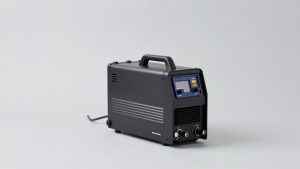
The best 110 volt plasma cutter for most home shops is the PrimeWeld CUT50D, a dual-voltage 50 amp inverter that cuts about 1/2 inch cleanly, while the Hypertherm Powermax30 XP and the Miller Spectrum 375 X-TREME are the premium choices when you want dependable cut quality and consumables support on a 120V outlet. The honest limit is physics: on household power, expect clean cuts in steel up to roughly 1/4 to 3/8 inch, not the full rating you see on the box.
Plasma cutters push a pressurized air stream through an electric arc to blow molten metal out of the kerf. Because the power comes from the wall, a 110V plasma cutter is limited by the circuit just as a welder is. This guide explains how that limit shows up in the specs and ranks the machines that handle it best.
What we cover
- Quick comparison of 110V plasma cutters
- The real limit: amps from a 120V outlet
- Best cut quality: Hypertherm Powermax30 XP
- Best auto-line performer: Miller Spectrum 375 X-TREME
- Best value: PrimeWeld CUT50D
- Best budget pilot arc: Lotos LTP5000D
- Air supply: the part most buyers underestimate
- How to choose with numbers
- Consumables and common mistakes
- Worked example: how long a cut takes on 120V
- Plasma versus other ways to cut metal at home
- Safety essentials
- Frequently Asked Questions
Quick comparison of 110V plasma cutters
| Pick | Best for | 120V performance (per manufacturer) | Weight | Price tier |
|---|---|---|---|---|
| Hypertherm Powermax30 XP | Best cut quality | 25 A max on 120V; 1/4 in at 19 ipm, 3/8 in at 8 ipm, 1/2 in at 3 ipm; 20% duty | About 21.4 lb | Premium |
| Miller Spectrum 375 X-TREME | Best 120V/240V auto-line | 27 A at 20% on a 20 A circuit, 20 A at 35% on 15 A; 3/8 in rated | 19 lb | Premium |
| PrimeWeld CUT50D | Best value | 20-40 A on 110V, 60% duty at 40 A; 1/2 in clean, 12 mm severance on 110V | About 23 lb | Budget |
| Lotos LTP5000D | Best budget pilot arc | 50 A dual-voltage with pilot arc; check adapter for 110V | Check listing | Budget |
The real limit: amps from a 120V outlet
Plasma cutting needs roughly 20-30 amps of output current at about 100 volts at the arc to cut 1/4 inch steel. That is 2,000-3,000 watts of output power. A 15 amp outlet supplies around 1,800 watts, and a 20 amp circuit about 2,400 watts, so a plasma cutter on 120V has to cap the output current. That is why a “50 amp” machine delivers only about 40 amps on 110V, and why the Hypertherm limits its 30 amp unit to 25 amps on 120V.
Here is the practical translation from the manufacturers’ own tables for the Powermax30 XP at its 120V maximum of 25 amps: about 1/4 inch at 19 inches per minute, 3/8 inch at 8 ipm and 1/2 inch at only 3 ipm. Cutting 1/2 inch is possible, but it is a slow crawl better treated as a severance cut.
- Thin sheet (under 16 gauge): any of the machines; lower the amperage to 20-30 to limit warp.
- 1/8 to 1/4 inch plate: the sweet spot on 120V.
- 3/8 inch and up: works but slowly, and benefits from a 240V connection.
Best cut quality: Hypertherm Powermax30 XP
Hypertherm’s 30 amp class machine accepts 120-240V single phase, produces 15-30 amps and weighs about 21.4 lb with a 15 foot torch. At 240V, the company lists a 3/8 inch recommended cut and a 5/8 inch severance cut. On 120V it requires the FineCut nozzle and deflector, as noted in the manufacturer’s capacity tables, and the duty cycle is 20% at 120V versus 35% at 240V. Consumables are widely available, and it supports mechanized torches.
Who it suits: fabricators who value kerf quality and parts availability. Main trade-off: price, and the 120V capacity is noticeably smaller than the headline number.
Best auto-line performer: Miller Spectrum 375 X-TREME
Miller’s Spectrum 375 uses Auto-Line input to accept 120-240V without relinking, with 5-15P and 6-50P plugs on the cord. Output is 30 amps at 240V (35% duty cycle), 27 amps at 120V on a 20 amp circuit at a 20% duty cycle, and 20 amps at 120V on a 15 amp circuit at 35%. Rated cut is 3/8 inch mild steel with a 5/8 inch severance, per Miller, for a 19 lb machine with an XT30 torch and a three-year warranty. It needs about 5 SCFM of air at 90 psi.
Who it suits: shops that move between 120V and 240V outlets. Main trade-off: premium price, and it needs a compressor that can deliver the air volume.
Best value: PrimeWeld CUT50D
This air inverter cutter runs on 110V or 220V. Per the spec table, output is 20-40 amps on 110V and 20-50 amps on 220V, with a 60% duty cycle at maximum. PrimeWeld rates a 1/2 inch clean cut, with severance of 16 mm on 220V but only 12 mm on 110V. It weighs about 23 lb, needs 5 CFM at roughly 80 psi, and uses lift or touch-start arc (the CUT50DP version adds a non-touch pilot arc). Beware: other brands sell look-alike “CUT50D” models on marketplaces with different specs.
Who it suits: home garages and weekend fabrication. Main trade-off: consumables and torch quality are a step below Hypertherm and Miller, and it is critical to check the plug adapter and input current requirement, which is listed at 40-45 amps on 110V in the manual table, meaning a dedicated 20 amp outlet is the realistic minimum.
Best budget pilot arc: Lotos LTP5000D
The Lotos LTP5000D is a 50 amp dual-voltage plasma cutter with a non-touch pilot arc, which makes it easier to cut over rust, paint and expanded metal than a touch-start model. Published roundups note a non-standard plug that requires the supplied adapter on 110V. Treat the 1/2 inch clean-cut rating as a 220V figure, and expect less on 110V as with the other machines here. Specs vary by retailer, so verify the current model before buying.
Who it suits: budget buyers who want a pilot arc. Main trade-off: brand support is thinner than the two premium options.
Air supply: the part most buyers underestimate
| Machine | Air needed | Compressor sizing hint |
|---|---|---|
| Spectrum 375 X-TREME | 5 SCFM at 90 psi | A 4 SCFM-at-90 psi compressor will only cut intermittently |
| PrimeWeld CUT50D | About 5 CFM at 80 psi | Needs a 20 gallon or larger tank for sustained cuts |
| Powermax30 XP | Clean, dry, oil-free air or nitrogen | Add a dryer or filter in humid shops |
Wet air shortens consumable life and causes sputtering. A moisture trap and inline filter are cheap insurance.
How to choose with numbers
- Mostly 1/4 inch or thinner on a garage outlet: CUT50D is the value choice.
- Daily use and clean edges: Powermax30 XP or Spectrum 375.
- You have both 120V and 240V: Miller’s auto-line is the least fuss.
- Frequent cutting of dirty or painted steel: choose a pilot-arc model.
Consumables and common mistakes
- Consumables: electrode and nozzle wear first. Replace them as a pair when the arc turns ragged, and keep spare sets.
- Standoff: hold the torch at the recommended gap. Dragging the tip too hard shortens consumable life.
- Travel speed: too fast leaves a sloped, dross-heavy cut; too slow widens the kerf and causes heavy dross.
- Dross: light bottom dross is a sign of too slow or too low amps. Adjust speed first.
- Safety: wear a shade 5 to 8 lens depending on amperage, gloves and flame-retardant clothing. Plasma fumes from galvanized steel need strong ventilation.
Worked example: how long a cut takes on 120V
Using Hypertherm’s published 120V figures for the Powermax30 XP at 25 amps, cutting 3/8 inch steel runs at about 8 inches per minute. A 24 inch straight cut therefore takes about three minutes of arc time, which at the machine’s 20% duty cycle (two minutes in ten) means one pause for cooling. The same cut in 1/4 inch plate at 19 inches per minute takes roughly 75 seconds, with no pause. Cut speed drops very quickly with thickness, which is why 1/2 inch plate at 3 inches per minute is a poor use of a 120V plasma cutter. Use these as planning numbers; torch height, consumables and air quality shift them.
Plasma versus other ways to cut metal at home
| Tool | Cut quality | Speed on 1/4 in steel | Needs |
|---|---|---|---|
| Plasma cutter (120V) | Clean, small heat-affected zone | Fast, about 19 ipm on a Powermax30 XP at 25 A | Compressed air, shade lens |
| Angle grinder with cut-off wheel | Straight lines only | Slow, consumable wheels | Guard, face shield |
| Oxy-acetylene torch | Good on thick steel | Moderate | Two cylinders, regulators, preheat |
| Metal-cutting bandsaw | Very square | Moderate | Bench space |
Plasma wins when you need curves, quick piercing and speed, and it works on any conductive metal including stainless and aluminum. Its limits are the air supply, consumable costs and a rougher edge on thick plate.
Safety essentials
- Cut over a non-flammable surface and keep sparks away from fuel and paint.
- Never cut galvanized or coated steel in a closed space; use ventilation and a suitable respirator.
- Wear gloves, long sleeves and a shaded lens. Hearing protection helps with the compressed air noise.
- Unplug before changing consumables, and wait for post-flow air to finish.
Frequently Asked Questions
How thick can a 110V plasma cutter cut?
Expect clean cuts to roughly 1/4 to 3/8 inch on a 120V outlet. Manufacturers rate thicker severance cuts, but they are slow, and the values usually apply at 240V.
Do I need an air compressor for a plasma cutter?
Yes. All the machines here use compressed air, typically 5 CFM or more at 80-90 psi, plus a filter or dryer to remove moisture.
Is a pilot arc worth it?
If you cut rusty, painted or perforated metal, yes. A pilot arc keeps the arc alive without touching the work, while touch-start cutters can struggle on dirty surfaces.
Can a plasma cutter run on a 15 amp circuit?
Some can at reduced output. Miller lists 20 amps at 35% duty on a 15 amp circuit for the Spectrum 375, but check each machine’s manual for the input requirements.
What shade lens do I need for plasma cutting?
Shade 5 for low-amperage cutting and up to shade 8 for higher currents is common guidance. Follow the manual’s recommendation for your amperage.
Can I use a plasma cutter on rusty or painted metal?
Yes, but poor work clamp contact is the usual cause of a failed arc. Grind a spot to bare metal for the clamp, and a pilot-arc model starts more reliably on dirty surfaces.
How long do plasma cutter consumables last?
It depends on air quality, amperage and how many pierces you make. Dry, clean air and correct standoff extend life considerably; replace electrode and nozzle together when the cut quality drops.