What's inside
As an Amazon Associate I earn from qualifying purchases. This post may contain affiliate links at no extra cost to you.
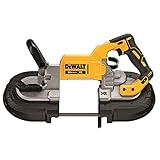
The best portaband saw for most buyers in 2026 is a deep-cut, brushless, 5×5-inch-capacity cordless model — specifically the Milwaukee 2729S-22 or DeWalt DCS374B — because 5-inch throat capacity is the dividing line between saws that can handle 2-inch angle iron and full EMT bundles in one pass, and those that force you to flip stock and cut twice.
As an Amazon Associate we earn from qualifying purchases at no extra cost to you.


What we cover
What Actually Separates These Saws: The Numbers That Matter
Portable band saws (portabands) are marketed on voltage and kit contents, but three specs determine what a portaband saw can really do on steel: throat depth (cutting capacity), strokes/blade feet per minute, and blade life per battery charge on common jobsite stock.
- Throat depth: Standard saws offer 4-3/4″ to 5″ x 5″ capacity. Compact models drop to 2-1/2″ or 3-1/4″. If you regularly cut 2-inch angle iron, unistrut, or bundled conduit, only the deep-cut class clears it in one pass.
- Blade speed: Steel cutting wants 200–350 surface feet per minute (SFPM); faster speeds burn through bimetal blades on thick stock. Variable-speed triggers matter more than headline RPM.
- Weight: Deep-cut cordless models run 12–15 lbs bare. Overhead cuts on EMT make that pound difference felt by the third hour.
Head-to-Head: 2026 Deep-Cut Cordless Portabands
| Model | Cut Capacity | Weight (bare) | Blade Length | Platform | Best For |
|---|---|---|---|---|---|
| Milwaukee 2729S-22 M18 Fuel | 5″ x 5″ | ~12.9 lbs | 44-7/8″ | M18 | All-around trades, highest cut count per charge |
| DeWalt DCS374B 20V Max | 5″ x 4-3/4″ | ~12.4 lbs | 44-7/8″ | 20V Max / FlexVolt | DeWalt fleets; slightly lighter frame |
| Makita XBP02Z 18V LXT | 4-3/4″ x 4-3/4″ | ~14.3 lbs | 44-7/8″ | 18V LXT | Quiet operation, Makita fleet owners |
| Milwaukee 2829 M18 Fuel Compact | 3-1/4″ x 3-1/4″ | ~8.9 lbs | 35-3/8″ | M18 | Overhead conduit work, tight quarters |
| DeWalt DCS377B Atomic Compact | 2-1/2″ x 2-1/2″ | ~6.8 lbs | 27-1/2″ | 20V Max | Single-stick EMT, threaded rod, one-hand cuts |
How They Perform on Real Stock
EMT Conduit (1/2″ to 2″)
Every saw here cuts EMT easily — thin-wall steel is the least demanding task. The real variable is bundle capacity: a 5×5 throat swallows a 4×4 bundle of 1/2″ sticks (around 20 pieces), while compact 2-1/2″ saws top out at 4–6 sticks or single-stick work. On bundles and overhead runs, the compact Milwaukee 2829 wins on fatigue: at under 9 lbs with battery it can be held one-handed at shoulder height, where a 14-lb deep-cut cannot.
Rebar (#4 to #6)
Rebar separates blades, not saws. All three deep-cut models will cut #5 rebar in roughly 15–25 seconds at moderate speed with a 14/18 TPI bimetal blade. Where they differ: Milwaukee and DeWalt’s brushless motors hold speed under load better, which keeps teeth from stalling and glazing — the main cause of early blade death. Expect roughly 40–80 cuts on #5 rebar per quality blade before tooth wear slows cutting noticeably.
2-Inch Angle Iron (1/4″ Wall)
This is the deep-cut saws’ purpose. A 2″ angle leg plus 1/4″ wall means you want the full 5″ throat for clean positioning and the torque to keep the blade moving. The Milwaukee 2729S and DeWalt DCS374 handle this routinely; the Makita XBP02 does it but its slightly smaller capacity leaves less room to angle the work. Compact saws cannot complete this cut — don’t buy one for fabrication work.
Decision Matrix: Match the Saw to Your Work
| Your Situation | Recommended | Why |
|---|---|---|
| Electrician, mostly conduit, overhead daily | Milwaukee 2829 or DeWalt DCS377B compact | Weight beats capacity; EMT never needs 5″ throat |
| Fabricator / ironworker, angle iron and flat bar | Milwaukee 2729S or DeWalt DCS374B | 5″ capacity cuts 2″ angle, channel, and bundles in one pass |
| General contractor, mixed stock, occasional use | Deep-cut model matching your existing battery platform | Battery compatibility outweighs minor spec differences |
| Budget-limited, light home-shop use | Corded portaband (DeWalt DWM120 class, $150–250 range) | Unlimited runtime; cordless premium isn’t justified for occasional cuts |
Ownership Realities: Blades, Wear, and Cost Per Cut
The saw is the cheap part. Blades are the running cost, and most premature failures are user error:
- TPI selection: Rule of thumb — keep at least 3 teeth in the material. Thin EMT wants 18–24 TPI; rebar and angle iron want 10–14 TPI. Using a fine blade on thick stock is the fastest way to strip teeth.
- Blade math: A quality 44-7/8″ bimetal blade runs roughly $8–15. At 60 cuts on #5 rebar, that’s about $0.15–0.25 per cut — but drop to 15 cuts from running too fast, and you’ve tripled your consumable cost.
- What wears first: Rubber guide tires (the blade rides on them) and blade guide bearings. Inspect both every blade change; wobble in a guide bearing ruins new blades quickly.
- Battery draw: Deep-cut saws on thick steel drain a 5Ah pack in roughly a session of heavy cutting. Keep a second pack for fabrication days.
FAQ
Cordless or corded?
Cordless dominates jobsites in 2026 — cut quality is equivalent, and corded models only win on price and unlimited runtime for fixed shop setups.
What blade should I buy first?
A 14/18 TPI variable-pitch bimetal blade handles EMT, rebar, and angle iron acceptably. Stock dedicated 10–14 TPI blades once you’re cutting thick stock regularly.
Can a compact portaband replace a deep-cut?
Only if your largest stock fits the throat — check the diagonal, not just the listed capacity. A 2-1/2″ saw cannot make a 2″ angle iron cut regardless of blade or technique.