What's inside
As an Amazon Associate I earn from qualifying purchases. This post may contain affiliate links at no extra cost to you.
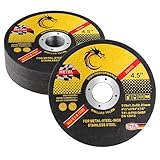
For most angle-grinder users cutting ordinary steel, the best cutoff wheel for metal is a 4½-inch, 0.045-inch-thick, Type 1 resin-bonded aluminum-oxide wheel rated for at least 13,300 rpm. Choose a thin wheel for fast, low-burr cuts; switch to a stainless-compatible wheel marked iron- and sulfur-free for stainless; and use a thicker wheel when handling rough work matters more than speed.
As an Amazon Associate we earn from qualifying purchases at no extra cost to you.



What we cover
Best picks by job
- Best all-around for steel: A reputable 4½-inch aluminum-oxide wheel, 0.045 inch thick, with a 7/8-inch arbor and a maximum speed rating of 13,300 rpm or higher. This common size fits many 4½-inch grinders and balances cutting speed with reasonable toughness.
- Best for stainless: A wheel explicitly labeled for stainless steel, preferably with an aluminum-oxide or zirconia-alumina abrasive and low-iron, low-sulfur formulation. A 0.045-inch wheel is a practical starting point; choose 0.060 inch if the cuts are less controlled or the stock is thick.
- Best for frequent, fast cuts: A quality 0.040- to 0.045-inch wheel, provided its diameter, arbor, and rpm rating match the grinder. Thin wheels remove less material and usually cut faster, but need steadier handling.
- Best for rough handling: A 0.060-inch wheel. It is generally less prone to damage from minor alignment errors, though it removes more material, creates a wider kerf, and may cut more slowly.
These are types and specifications, not claims that one brand is universally superior. Established manufacturers such as Norton, 3M, and Walter offer metal-cutting abrasives; always check the specific wheel’s label because product formulations and ratings vary.
What to match before buying
| Work and grinder | Wheel to look for | Why it suits the job | Trade-off |
|---|---|---|---|
| Light-gauge mild-steel tube or bar; 4½-inch grinder | 4½ × 0.040-0.045 × 7/8 in; aluminum oxide; Type 1; 13,300 rpm or higher | Narrow kerf and quick cutting in common steel | More sensitive to twisting or side pressure |
| Repeated cuts in mild steel; 5-inch grinder | 5 × 0.045-0.060 × 7/8 in; metal-rated; rpm rating at least the grinder’s maximum | More reach and cutting capacity than a 4½-inch wheel | Must fit the guard and grinder; do not assume a 5-inch wheel is allowed |
| Stainless sheet, tube, or angle | Wheel labeled for stainless; 0.040-0.060 in; low-iron/low-sulfur formulation | Reduces the risk of contaminating or rust-staining stainless | Keep it separate from wheels used on ordinary steel |
| Occasional cuts or less precise hand control | 0.060 in, if permitted by the grinder and guard | More tolerant of rougher handling than an ultra-thin wheel | Slower cuts and wider kerf; still unsafe to twist or side-load |
| Heavy section or repeated production cutting | Use a wheel and tool specifically rated for the diameter, material, and duty cycle | Matches the higher heat and workload | A handheld grinder may be the wrong tool for the job |
Abrasive composition: steel versus stainless
Aluminum oxide is a sensible, widely available choice for mild and carbon steel. Zirconia-alumina blends are often sold for more demanding metal work and can be a reasonable upgrade for repeated cuts, but performance depends on the complete wheel construction—not just the abrasive name.
Stainless steel needs extra care. Heat can discolor the cut, and embedded iron from a wheel previously used on carbon steel can contribute to surface contamination. Choose a wheel labeled for stainless and keep it dedicated to stainless work. If appearance or corrosion resistance matters, avoid forcing the cut; use a suitable cutting method and finish the edge as the material specification requires.
Thickness, cutting speed, and durability
A thin wheel cuts a narrow slot, so it has less material to remove and often makes a faster, cleaner cut. The compromise is reduced tolerance for bending loads. A thicker wheel can be more forgiving in imperfect setups, but it is not a license to push sideways. Cutoff wheels are designed to cut at their edge; side pressure can crack them.
Wheel life is affected by more than the abrasive. Excessive pressure, a pinched kerf, poor work support, and using a dull or unsuitable wheel all shorten useful life. A wheel that slows or rubs may be getting worn, glazed, or overloaded. Let the wheel do the work and replace it if damaged; do not try to extend its life by forcing it.
Check grinder compatibility before fitting
- Diameter: Use only the wheel size allowed by the grinder and its guard. Never remove or modify the guard to fit a larger wheel.
- Arbor: The wheel’s center hole must match the grinder’s flange arrangement. Do not improvise with loose adapters or a mismatched flange.
- Maximum speed: The wheel’s marked maximum rpm must be equal to or higher than the grinder’s no-load rpm. A typical 4½-inch wheel is commonly rated around 13,300 rpm, but the label—not the typical figure—decides.
- Wheel type and condition: Use a cutoff wheel, not a grinding wheel, for slicing. Check for cracks, chips, moisture damage, and an expired date where the manufacturer provides one.
- Tool instructions: Follow the grinder and wheel manufacturers’ instructions for flanges, guard position, and installation. Unplug a corded grinder or remove the battery before changing a wheel.
Setup and cutting method that protect the wheel
- Secure the work. Clamp the stock so the offcut cannot pinch the wheel as the cut closes. Support long pieces on both sides without trapping the kerf.
- Mark and plan the cut. Check for hidden wiring, nearby combustibles, and where sparks will travel. Keep bystanders clear.
- Install and inspect. Fit the correct wheel and guard, then rotate the wheel by hand to check for contact. Stand out of the wheel’s plane and run the grinder briefly at no load before cutting.
- Cut with light, steady pressure. Keep the wheel aligned with the cut and let it reach full speed first. Do not twist, pry, or use the wheel’s side to widen the slot.
- Finish safely. Keep a firm two-handed grip, wait for the wheel to stop before setting the grinder down, and allow hot metal to cool before handling.
Wear eye and face protection, hearing protection, and suitable work clothing; use respiratory protection when the material or workspace requires it. Keep sparks away from flammables, and do not cut material that may contain hazardous coatings unless you have identified and controlled that hazard. Stop if the wheel vibrates, binds, or is damaged.
Is a premium wheel worth it?
Compare cost per cut, not just the price of one wheel. For example, if a general-purpose wheel costs $2 and completes 20 comparable cuts, its cost is $0.10 per cut. A $4 wheel that completes 50 cuts costs $0.08 per cut. Those figures are illustrative—not promised life—because stock size, grinder, pressure, and cut technique change the result. Track a few batches of the same material to see whether a higher-priced wheel actually pays off in your shop.
For occasional home repairs, a correctly rated aluminum-oxide wheel is usually the practical choice. For repeated stainless work or a busy fabrication setup, paying more for a wheel suited to the material may make sense if it cuts consistently and lasts longer. In either case, correct fit, support, and technique matter more than buying the thinnest or most expensive wheel.