Our Top Picks



What's inside
As an Amazon Associate I earn from qualifying purchases. This post may contain affiliate links at no extra cost to you.
Burn-through is not a skill problem. It is a heat problem. Sheet metal in the 18 to 22 gauge range holds almost no thermal mass, so the puddle punches a hole the moment you sit still. Anyone learning how to weld thin sheet metal hits the same wall: the settings that felt fine on quarter-inch plate now blow a nickel-sized crater in a fender patch.
The fix is a stack of small decisions. Right process, low amps, short arc time, stitch instead of run, and something behind the joint to soak up heat. Get those four right and 20 gauge stops being scary. Get them wrong and you will spend more time filling holes than welding.
As an Amazon Associate we earn from qualifying purchases at no extra cost to you.


What we cover
Pick the Process Before You Pick the Settings
Every process can do sheet. They do not do it equally well.
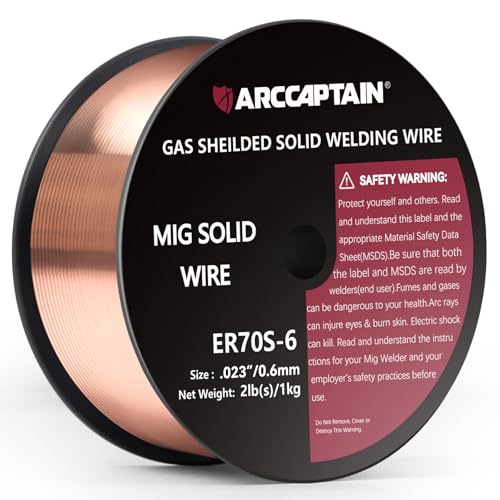
MIG (GMAW) with solid wire and shielding gas is the practical default for body panels, ductwork, and light brackets. Short-circuit transfer runs cool, wire feed gives you consistent filler, and you can stitch fast. Run .023 or .024 wire, not .030. Thin wire needs fewer amps to melt, and fewer amps means less heat dumped into the panel. Use 75/25 argon/CO2 rather than straight CO2 for a softer, less penetrating arc.
Flux-core is the wrong tool here. Self-shielded wire runs hot, splatters, and the smallest common diameters still overpower 20 gauge. It exists so you can weld dirty structural steel outdoors. Leave it there.
TIG (GTAW) gives the most control that exists. You set the amps with your foot, you add filler only where you want it, and the heat-affected zone stays tight. That matters on aluminum, stainless, and any panel that will be visible after paint. The trade is speed: TIG on sheet is slow, and it demands clean base metal and both hands.
Stick (SMAW) on sheet is a stunt. Minimum practical amperage on most rods is above what thin material tolerates. Skip it.
Duty cycle matters less than people expect on sheet, because you are welding in short bursts at low output. A machine rated 20 percent at max amperage is effectively 100 percent at the 40 to 70 amps you will actually use. Spend your money on arc quality and low-end stability instead of raw amperage.
| Process | Best For On Sheet | Heat Input | Skill Curve |
|---|---|---|---|
| MIG .023 solid wire | Body panels, brackets, ducting | Low with 75/25 gas | Moderate |
| TIG | Aluminum, stainless, visible seams | Lowest, fully adjustable | Steep |
| Flux-core | Not recommended under 16 gauge | High | Moderate |
| Stick | Avoid on thin sheet | Highest | Moderate |
How to Weld Thin Sheet Metal Without Blowing Through
Start below where you think you should be. On 20 gauge steel with .023 wire, most hobby and mid-tier inverter machines land somewhere in the low end of their range with wire speed dialed to match. Do not guess on the real part. Cut a coupon from the same material and burn test tacks until the sound is right: a fast, crisp crackle, not a hollow pop.
Then change how you weld, not just what the dials say.
Stitch, do not run. Lay a tack. Move an inch. Lay another. Come back and fill the gaps once the first ones have cooled enough to touch with a bare finger through a glove. A continuous bead on sheet is a heat accumulator, and accumulation is what opens holes.
Fit tight. A gap is a hole waiting to happen. Butt joints on sheet should be edge to edge with no daylight. If you can see light through the seam, stop and re-cut. Overlap joints are more forgiving because there is metal behind the arc, but they trap moisture and are ugly on visible work.
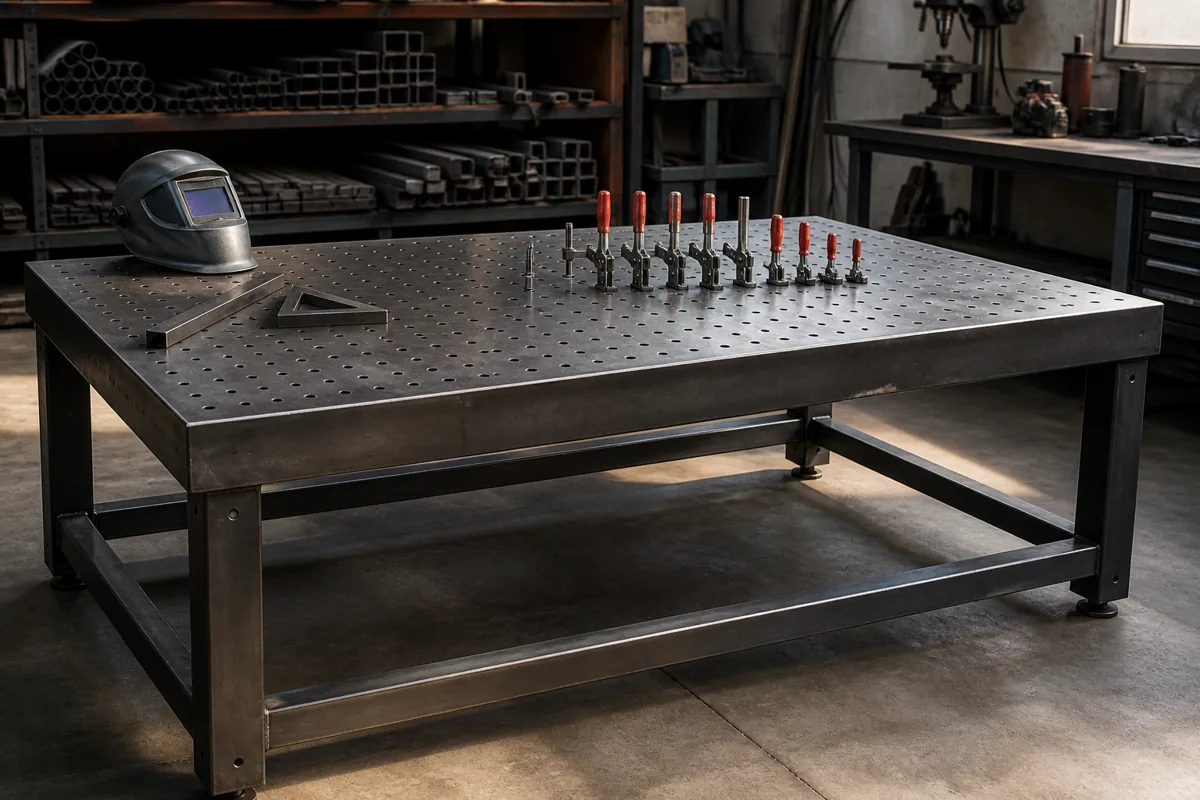
Use a backing bar. Copper is the shop favorite because steel will not fuse to it and it pulls heat out fast. Clamp a copper bar or a chunk of copper bus behind the joint and burn-through drops off dramatically. Aluminum backing works in a pinch. This one trick does more for beginners than any setting change.
Push, do not drag. On MIG, pushing the gun keeps the arc ahead of the puddle and reduces penetration. Hold the tip close, around a quarter inch of stickout, so the arc stays short and stable.
Clamp everything. Warping is the other half of the problem. Sheet distorts as it cools, and distortion pulls joints apart mid-weld. Magnets, intermittent clamps, sheet metal cleco fasteners, or a plywood buck all help.
MIG Welder for Thin Gauge Sheet Metal
Look for a 110V or dual-voltage inverter MIG that lists true gas MIG capability and a smooth low-amperage range. The spec that matters most is how stable the arc is at the bottom of the dial, not the headline max output. Confirm it accepts .023 wire and takes a standard gas regulator before you buy.
Consumables and Small Gear That Actually Change Results
Cheap consumables cause more burn-through than cheap machines. Wire that snags at the liner surges through the contact tip and dumps a spike of heat into the panel. Replace the contact tip when the bore goes oval. Keep the liner clean. Use a drive roll that matches your wire diameter, and set roller tension just tight enough that the wire does not slip in your gloved hand.
Prep matters more on thin material than thick. Grind to bright metal on both sides of the joint. Mill scale, paint, primer, seam sealer, and galvanizing all contaminate the puddle and force you to add heat to compensate. Galvanized coating deserves its own warning, covered below.
- ✔ Small wire diameter and 75/25 gas cut heat input immediately
- ✔ Copper backing bars nearly eliminate burn-through on butt joints
- ✔ Stitch welding controls both holes and warping
- ✔ Low-amp work means duty cycle is rarely the limit
- ✘ Tight fit-up takes real prep time, and shortcuts show
- ✘ TIG gives the best control but roughly triples the time per seam
- ✘ Cheap liners and worn tips cause feed surges that punch holes
- ✘ Thin material warps even when the weld itself is clean
Safety on Thin Metal Is Different, Not Optional
Sheet work happens in cars, in ductwork, and in tight corners. That changes the risk profile.
Fumes. Galvanized sheet releases zinc oxide when heated. Inhaling it causes metal fume fever: chills, aches, nausea, usually hours after the job. Grind the coating back an inch on both sides of the joint, put a fume extractor or box fan pulling air away from your face, and wear a respirator rated for welding fume if you cannot get the coating off. Do not weld galvanized in a closed garage.
Fire watch. Thin metal transmits heat through the panel fast, and sparks travel. On vehicles that means fuel lines, brake lines, wiring looms, undercoating, and seat foam. Pull or shield anything flammable within 35 feet, keep an extinguisher within arm’s reach, and stay on the job for 30 minutes after the last arc. Smoldering upholstery and undercoating routinely ignite long after the welder is off.
Eyes. Low-amp welding is still arc welding. Arc eye comes from UV, not brightness, and a 40-amp arc will burn corneas the same way. Use a helmet with an auto-darkening lens set around shade 9 to 11 for the amperage range on sheet, and check that the lens reacts reliably before you commit to a long session. Anyone else in the shop needs a screen or a helmet too.
Skin and hands. Thin gauge tempts people into thin gloves for dexterity, which is reasonable for TIG, but bare forearms will still get UV burn from a session of stitch welding. Long sleeves, cotton or leather, no synthetics that melt.
Auto-Darkening Welding Helmet
For sheet work you want variable shade coverage that reaches down to shade 9, a large viewing area, and grind mode. Low-amp arcs sometimes fail to trigger bargain-bin lenses, so prioritize sensor count and a solid reaction time spec over sticker graphics.
Fixing the Hole You Already Made
It happens. Do not chase it with more wire, because feeding filler into a hot hole just makes the hole bigger.
Stop. Let the panel cool completely. Then work the edges: tack at the rim of the hole, let it cool, tack the opposite rim, let it cool, and walk the tacks inward until the gap closes. If the hole is bigger than about a quarter inch, cut a patch from the same gauge, fit it tight, and weld the patch instead. Trying to bridge a large gap with filler leaves a thick, brittle blob that cracks and grinds badly.
For visible panels, plan on grinding and finishing. Stitch welds on sheet do not come out looking like a TIG stack of dimes, and pretending otherwise wastes time you could spend on a flap disc.
Copper Backing Bar and Sheet Metal Clamps
A copper backing bar plus a set of intermittent sheet metal clamps costs less than a spool of wire and prevents more holes than any settings change. Copper draws heat out of the joint and will not fuse to steel, so the back of the weld comes out flat instead of blown out.
FAQ
What wire size should I use for 20 gauge steel? Use .023 or .024 solid wire with 75/25 argon/CO2 shielding gas. Larger diameters need more current to melt, and that extra current is exactly what punches through. Keep stickout short, around a quarter inch, and push rather than drag.
Can I weld sheet metal with a flux-core welder? You can force it on 16 gauge and up, but under that you will fight burn-through, spatter, and slag on every joint. If flux-core is all you have, use a copper backing bar, run the shortest tacks you can manage, and expect a lot of cleanup. Switching to gas MIG with thin wire is a smaller investment than the time you will lose.
Is TIG worth learning just for sheet metal? Yes if you work on aluminum, stainless, or anything that will be visible after finishing. TIG puts heat exactly where you want it and nowhere else, which is the whole game on thin material. For structural brackets and hidden patches, MIG is faster and the result is just as strong.
Thin gauge rewards patience more than power. Small wire, cool gas, tight fit-up, copper behind the seam, and the discipline to stop and let the metal cool. Handle the fumes and the fire watch with the same seriousness you would on heavy work, because a car interior is more flammable than a steel table will ever be.
Check prices on Amazon →