Key takeaways
- Rpm on the box means nothing when you are closing scratches with compound, so here is what actually decides the finish: low-speed control, torque, a true collet and the right felt.
What's inside
As an Amazon Associate I earn from qualifying purchases. This post may contain affiliate links at no extra cost to you.
Most people find out their rotary tool is a toy the first time they load a felt bob with compound. The motor bogs. The speed dial has two settings, fast and faster. The mandrel chatters and prints swirl marks you now have to sand back out. The best rotary tool for metal polishing is not the one with the biggest rpm number on the box. It is the one that holds a low speed under load.
Polishing is not grinding. You are not removing metal, you are closing the scratches the abrasives left. That needs control, and it needs enough motor to keep the wheel turning when the compound grabs. Those two things pull against each other. That is the whole buying decision.
As an Amazon Associate we earn from qualifying purchases at no extra cost to you.


| Tool class | Typical speed range | Where it earns its keep |
|---|---|---|
| Corded pencil rotary tool | About 5,000 to 35,000 rpm | Tight welds, small parts, detail work |
| Cordless 12V rotary tool | Similar top speed, less stamina | Site work where the cord is the hazard |
| Flex shaft or hanging motor | About 0 to 18,000 rpm with real torque | Long sessions and mirror finishes on small parts |
| 1/4 inch die grinder, air or electric | About 20,000 to 25,000 rpm | Weld knockdown before you ever reach for felt |
What we cover
What Matters in the Best Rotary Tool for Metal Polishing
Low-end speed control. Read the bottom of the range, not the top. Small felt wheels and compound work down in the low thousands of rpm. A tool that idles at 10,000 rpm burns compound and blues stainless. Electronic feedback that holds the set speed under load beats another 5,000 rpm you will never use.
Torque. Torque is twisting force at the accessory. Rpm is just how fast it spins in the air. Corded pencil tools mostly draw under 2 amps, and amps is a rough measure of how much work a motor can do before it bogs and heats up. Under 2 amps buys speed and almost no torque. A fractional-horsepower flex shaft motor at 3,000 rpm still pushes. If the tool stalls the moment felt touches steel, that is not your technique.
Runout. Chuck a mandrel, run it, watch the tip. Wobble you can see will print into the finish and eat the bearings. Matched collets run truer than universal keyless chucks. Seat the shank fully and keep it short, because a long 1/8 inch shank whips.
Accessory fit. Pencil tools take 1/8 inch shanks and smaller. Die grinders take 1/4 inch. That decides which wheels you can buy. Every wheel and brush carries a maximum rpm rating. Respect it. A 2 inch wheel spun at 30,000 rpm is a grenade.
Corded, Cordless, or Flex Shaft
Corded pencil tools are the default. Cheap, accessories everywhere, and they do not quit halfway through a part. Buy one with a real collet set and a dial that goes genuinely slow.
Cordless 12V tools match the speed but not the stamina. They are for a handrail on site or a truck bed. Stay inside the battery family you already run, Milwaukee M12, DeWalt XR or Makita, and check what that platform actually offers first.
Flex shafts are the sleeper pick. Hanging motor, foot pedal, a light handpiece with no weight in your hand, and torque down where polishing happens. If you finish small stainless or brass parts often, you feel this upgrade immediately.
Corded Variable-Speed Rotary Tool
Buy on the low end of the speed dial and the collet system, not the top rpm. A slim body you can hold like a pencil and a full set of collets will do more for your finish than extra speed.
- ✔ Reaches into corners, tube and weld roots nothing else fits
- ✔ Cheap accessories, fast wheel changes
- ✔ Light enough for hours of detail work
- ✔ Low heat input at low speed
- ✘ Low torque bogs on hard steel and stainless
- ✘ Small wheels cover very little area
- ✘ Mandrels flex and chatter
- ✘ Compound spray goes everywhere
Wheels, Compound, and Speed
Compound does not remove scratches. It refines what the abrasive left. Knock the weld crown down with a carbide burr or coated abrasive first, then step through grits without skipping more than one: roughly 120, 180, 240, 320, 400, 600 and finer. Each step must erase the last step’s lines. Felt comes last.
Compounds in plain terms. Emery or brown cuts heavy. Tripoli suits aluminum, brass and copper. White or stainless compound handles hard steel and stainless. Green chrome oxide or rouge is the final pass. One wheel per compound, labeled. Drag coarse compound into your finish wheel and you start over.
Surface speed does the cutting, and surface speed climbs with wheel diameter. A 1/2 inch bob and a 3 inch buff at the same rpm are not the same tool. Start slow, light pressure, let the compound work. Smoking compound and a brown smear means too fast, too hard, or both.
Thickness, plainly. Sheet in the 22 to 18 gauge range is about 1/32 to 1/20 inch thick. It holds no heat, so it warps if you park the wheel in one spot. Keep moving, back the panel with wood or flat bar, and stop while you can still hold your hand on it. On 1/4 inch plate and heavier, warping is not the issue, but stainless still turns straw and blue, and that color is a sanding job.
Flex Shaft Rotary Tool with Foot Pedal
If polishing is regular work, this is the honest upgrade. Torque at low rpm, no tool weight in your hand, and speed on the pedal so you can back off the second the metal heats up.
PPE, Fume, and Fire
Face shield over safety glasses, not glasses alone. Felt sheds, wheels come apart, mandrels snap at the shoulder.
Wear a respirator. Polishing throws fine metal dust and vaporized compound. P100 cartridges if you have them, N95 at minimum. Stainless dust carries chromium and nickel. Old paint can be lead. Galvanized is zinc. If you do not know the coating, strip it or leave it alone. Move air, and wash up before you eat.
Fire is two problems. Abrasive sparks travel, so clear flammables back 35 feet, kill the solvents and rags, and keep a fire watch for at least half an hour after you stop. The one that gets missed is buffing lint loaded with compound and metal fines, which will smolder in a trash can. Empty it into a metal can with a lid. Never put aluminum fines in the same vacuum or collector as steel dust, because that mixture is thermite. Magnesium does not go near a rotary tool at all, and water makes a magnesium fire worse.
Clamp the work. Small parts held in bare fingers get grabbed and thrown. Loose gloves near a rotating shaft or handpiece are a trap, so snug or none, no rings, no flapping sleeves, hair tied back. Pull the plug or the battery before changing accessories.
Felt Bobs, Mandrels and Compound Kit
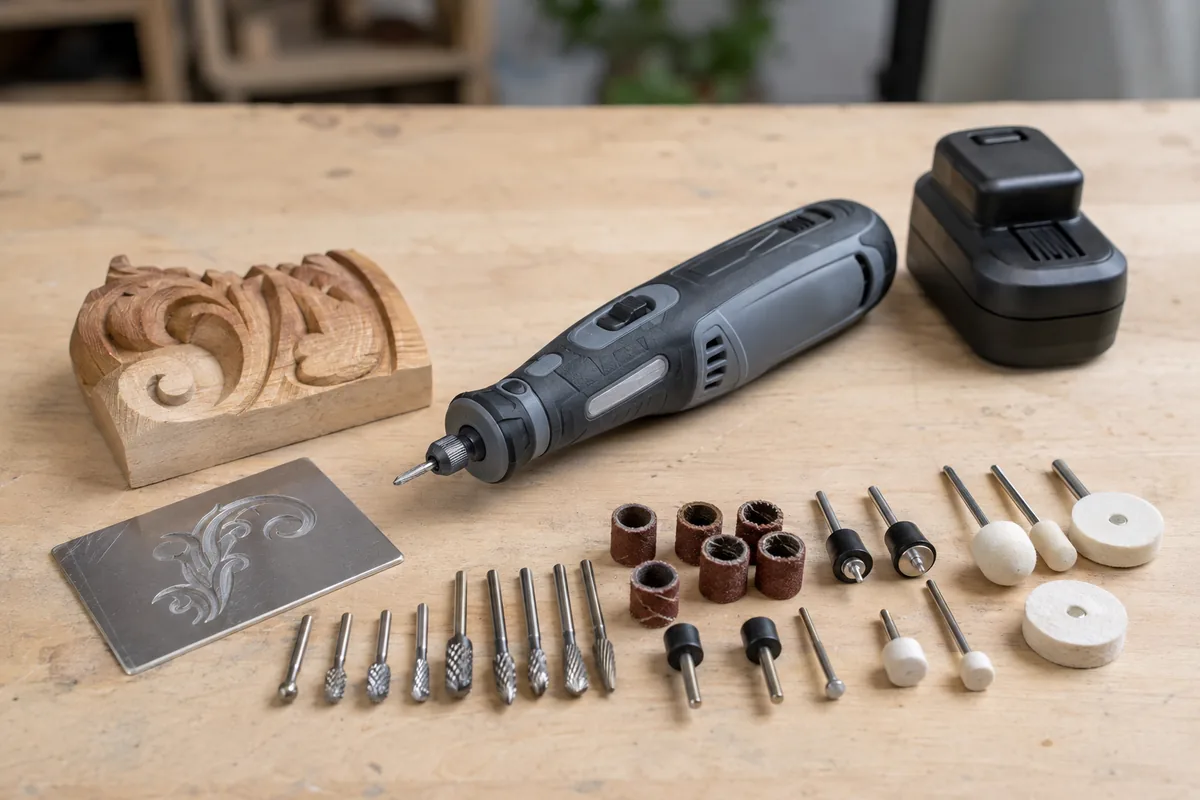
The accessories decide the finish more than the tool does. Get a spread of felt shapes, spare 1/8 inch mandrels, and a separate wheel for every compound grade.
Frequently Asked Questions
Can a rotary tool bring a weld to a mirror finish? On a small area, yes, if the abrasive work is done properly first. It is a detail and blending tool. For a whole panel or a long rail, step up to a variable-speed polisher with a larger buff.
What rpm should I polish at? Lower than you think. Start at the bottom of the dial, never exceed the accessory’s rated maximum, and let the compound cut instead of pressing harder. Small felt bobs live in the low thousands. Smoke or discoloration means slow down.
Do I still need a die grinder? If you clean welds, yes. Pencil rotary tools have no motor for stock removal on steel. Shape with the die grinder, then finish with the rotary tool.
Buy for the bottom of the speed range, the collet, and the torque. Ignore the rpm bragging on the package, then spend the rest on felt and compound, because that is what leaves the finish.
Check prices on Amazon →