Our Top Picks
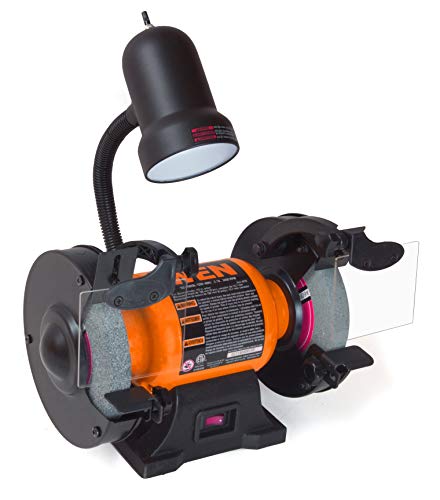
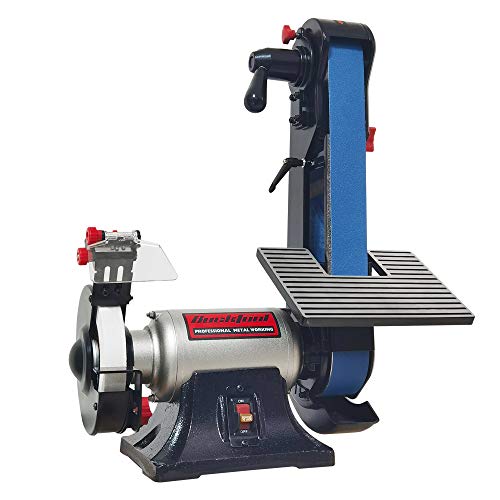 BUCKTOOL 2x42" Belt Sander 6" Bench Grinder Combo2" x 42" Belt + 6" Disc17.99 x 11.3 x 24.53 inchesCheck on Amazon



What's inside
As an Amazon Associate I earn from qualifying purchases. This post may contain affiliate links at no extra cost to you.
A bench grinder is the tool every shop owns and nobody sets up. It gets bolted to a flexing bench, still wearing the gray wheels it shipped with, then it blues the edge off every chisel that touches it. The best bench grinder for metalwork is not the one with the biggest horsepower sticker. It is the one with a motor that does not sag, wheels matched to the job, and rests and guards you can adjust as the wheel wears.
Two grinders beat one. A fast machine with a coarse stone and a wire wheel for scale, slag and rough deburring. A slow machine with a friable wheel or CBN for edges. Only room for one? Buy the heavier slow-speed unit and let a belt sander handle the rough work.
As an Amazon Associate we earn from qualifying purchases at no extra cost to you.


| Grinder class | Best for | Watch out for | |
|---|---|---|---|
| 6-inch at 3450 RPM | Light deburring, wire wheel work, cramped benches | Bogs on heavy stock, small wheels go out of round fast | |
| 8-inch at 3450 RPM | Weld cleanup, mower blades, general steel | High rim speed burns thin edges in seconds | |
| 8-inch slow speed at 1725 RPM | Chisels, plane irons, HSS lathe tools, drill bits | Slower on heavy removal, cheap wheels waste it | |
| Variable speed, 6 or 8-inch | Edges and cleanup on one machine | More to fail, some units sag under load | |
| 2× | 42 belt grinder | Deburring, blending welds, stainless | Belts are a running cost, needs bench space |
What we cover
What Makes the Best Bench Grinder for a Metal Shop
Weight is the cheapest spec to read. Cast housings and a real induction motor keep the machine still and hold RPM when you lean on it. Light stamped-steel grinders chatter, and chatter shows up as facets on your edge and a wheel that wears out of round in a month.
Then check the parts your hands touch. Rests should be cast and adjustable for both angle and gap, not stamped tin that folds the first time a part grabs. Eye shields should stay where you put them. Guards should open with two fasteners, or you will keep running a glazed wheel for years. Note the arbor size, usually 1/2 inch on 6-inch machines and 5/8 inch on 8-inch, because it decides which wheels you can buy.
Speed, Power and Duty Cycle in Plain Terms
Diameter times RPM sets rim speed, and rim speed sets heat. An 8-inch wheel at 3450 RPM travels roughly twice as fast at the rim as the same wheel at 1725. Fast wins on mill scale and plasma dross. Fast loses on a plane iron, because carbon steel loses its temper before it ever glows, and a straw or blue edge is soft steel you now have to grind away.
Horsepower on small grinders is often a peak number. Read the amps on the data plate instead. Grinders carry no duty cycle rating like a welder, but heat still limits them. If the housing is too hot to hold after ten minutes of hogging, let it cool or cook the windings. Variable speed solves the problem cleanly, provided the drive really holds RPM under load. Some do not.
- ✔ Slow speed keeps carbon steel and HSS edges from losing temper
- ✔ Wheels glaze and load more slowly at lower rim speed
- ✔ Quieter, and easier to hold a steady freehand angle
- ✘ Slow on weld cleanup and heavy stock removal
- ✘ Budget slow-speed units still ship with mediocre wheels
- ✘ Wrong tool for brushing thick mill scale
8-inch slow-speed bench grinder
If sharpening is the main job, a 1725 RPM 8-inch machine with cast rests is the sane starting point. Compare shipping weights between listings, and plan on replacing the stock wheels either way.
Wheels Are the Real Upgrade
Grinder bodies are commodities. Wheels do the work. Gray aluminum oxide is general purpose and runs hot. White or pink friable aluminum oxide breaks down as it cuts, runs cooler, and is the default for tool steel. Green silicon carbide is for carbide touch-ups and cast iron. CBN cuts hardened steel, stays flat, needs no dressing and throws almost no dust, but it works on steel only and costs real money. Check its RPM rating before it goes on a 3450 machine. Dress stone wheels often, because a glazed wheel is a heater, not a cutter.
Mounting is where people get hurt. Ring test a new stone by tapping it with a screwdriver handle, and scrap it if you hear a thud instead of a ring. Confirm the wheel is rated above your grinder speed. Use both flanges and both paper blotters, snug the nut without gorilla force, then stand off to the side and let it run a full minute. Never grind on the side of a straight wheel. Never put aluminum, brass or lead on a stone, because soft metal packs the pores until the wheel can come apart. Magnesium is worse. Magnesium dust in a spark stream is a fire that water makes bigger.
CBN grinding wheel
For chisels, plane irons and HSS lathe tools, this is the single change most shops notice. No dressing, no dust cloud, a face that stays flat. Match arbor size and speed rating to your machine.
Sharpening Versus Deburring
Two jobs, two setups. Sharpening wants slow speed, a friable or CBN wheel, and light passes with the tool moving across the face. Pressure is the enemy. Repeated dunking in a water pot can micro-crack HSS, so grind lighter instead of quenching more. Hollow-grind a chisel on the wheel and finish the last bit on a stone. Drill bits want roughly 118 degrees included for mild steel, 135 with a split point for stainless and hard stock, and a jig beats freehand until your hands learn it.
Deburring wants speed. Coarse stone for dross, knotted or crimped wire wheel for scale and slag, belt platen for blending a weld flat. Keep abrasives dedicated to stainless. Carbon steel particles embed and rust inside a week, and it looks like the stainless failed.
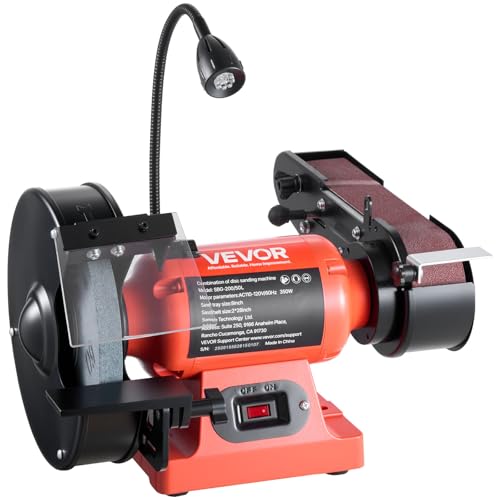
2x42 belt grinder
A small belt grinder takes over the rough work: deburring, blending welds, cleaning cut edges, breaking corners. Runs cooler than a stone on thin material, and belts are cheap enough to keep a set for stainless only.
Not Losing a Finger, an Eye or the Shop
Bolt it down, through a rubber mat or onto a pedestal, with the wheel centers near elbow height. A grinder that walks is a grinder that grabs.
Set the rest 1/16 inch from the wheel and the tongue guard 1/4 inch, then reset both as the wheel wears. That gap is what stops a small part from wedging and dragging your fingers in with it. Hold small work in locking pliers, never in a rag, never in a loose glove. Sleeves, rings, hoodie strings and long hair stay clear.
Face shield over safety glasses. The shields on the machine are spark deflectors, not PPE. Grit in a cornea gets drilled out, and that happens at low speed too.
Sparks carry twenty to thirty feet and they bounce. Point the stream at plate or a bare wall, not at the flammables cabinet, the oxy hoses or the parts washer. Extinguisher in reach, floor clear, fire watch for at least half an hour after you shut down near anything combustible. Dump the dust tray, because steel fines and buffing lint burn.
Bare steel is mostly nuisance dust. Coatings are not. Zinc off galvanized brings on metal fume fever, a night of chills and aches. Old paint can carry lead, plating can carry cadmium or chrome. Grind coatings back mechanically, run local exhaust or work outside, and wear a fitted respirator rather than a paper mask. Unplug before changing a wheel, and let the wheel coast down instead of braking it with a part.
Bench Grinder FAQ
Should I buy a 6-inch or an 8-inch grinder? Eight inches if the bench allows. Bigger wheels give a flatter hollow grind, more usable wheel life and usually a stronger motor. Six inches suits a cramped bench or a dedicated wire-wheel station.
Do I need a slow-speed grinder to sharpen? It makes burning an edge much harder, which is the failure mode that matters. You can sharpen at 3450 RPM with a friable white wheel and a light touch, but the margin for error is thin.
Can I grind aluminum or stainless on a bench grinder? Aluminum, no, not on a stone wheel. Use a belt or a file. Stainless is fine with abrasives kept for stainless only and light pressure to hold heat tint down.
Buy heavy, buy adjustable, then spend the rest on wheels. Set the rests and guards the day it lands on the bench and the machine will sharpen and deburr for decades without taking anything off you.
Check prices on Amazon →