Our Top Picks
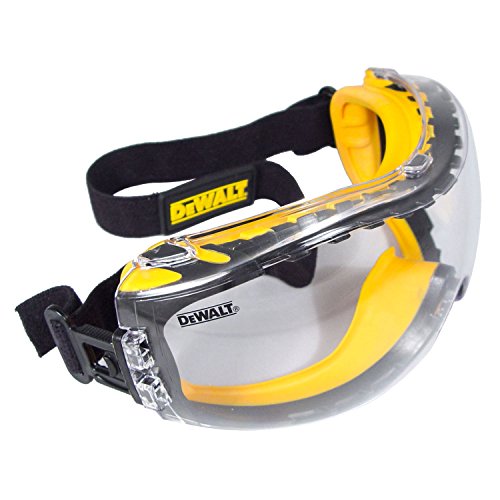 DEWALT DPG82-11 Concealer Clear Anti-Fog Dual Mold SafetyOne Size7.2 x 3.8 x 4 Inches0.1 PoundsCheck on Amazon


What's inside
As an Amazon Associate I earn from qualifying purchases. This post may contain affiliate links at no extra cost to you.
This is not a compliance page. It is the short list of things that actually injure people in metal shops, and the specific habits that prevent them.
Nearly every shop injury starts with a small, reasonable-sounding decision. The guard came off for one cut. The shield stayed on the bench because the job would only take a second. The wheel looked fine. Nobody plans to bleed on their own floor; they just make a run of tiny trades until one of them collects.
As an Amazon Associate we earn from qualifying purchases at no extra cost to you.


Keep the order of operations straight. PPE is the last line, not the first — guards, wheel choice and where you set a spinning tool down do more for you than any face shield ever will. But the last line matters precisely because the earlier ones fail, so this covers both: the habits that keep energy pointed away from your body, and how to buy the gear that catches whatever gets through.
What we cover
The three mistakes behind most grinder injuries
1. The guard came off. Almost always “just for one cut”. The guard is what stops a shattered wheel from going into your face and your femoral artery. It stays on.
Guards rotate — that is what the clamp collar is for. If it is in the way, loosen it, spin it so the covered side sits between the wheel and your body, retighten. If a job truly cannot be done with a guard fitted, the job needs a different tool: a die grinder, a smaller wheel, a reciprocating saw, a file. Once “I will just take it off” becomes routine, you are relying on luck, and luck has no rpm rating stamped on it.
2. The wheel was wrong or damaged. A wheel rated below the tool’s rpm, or one that has been dropped, can disintegrate. Check the rating printed on every wheel. Ring-test resin wheels if you suspect damage; if in doubt, bin it.
A common 4-1/2 inch grinder spins somewhere around 11,000 rpm, and the maximum safe speed is printed on the wheel or its paper blotter, so read it instead of assuming. Thin cut-off wheels are for cutting only; lean on the side of one and you are grinding away the thing holding it together. Use the flanges that came with the tool, the right way round, and never substitute washers. Store wheels flat and dry, check the expiry date most resin wheels carry, and when you fit a new one, run it up to speed pointed at nothing while you stand out of the plane of the disc. Wheels fail on start-up far more often than mid-cut.
3. Setting the tool down while it spun. A wheel takes several seconds to stop without a brake. Countless leg injuries come from this exact moment.
Two things fix this permanently. Buy grinders with a paddle switch, and an electric brake if the budget stretches — a paddle dies when your hand opens, and a brake stops the wheel in a second or two rather than ten. Then give the tool a home: a hook, a hanger, a bracket on the bench leg. Tools land where there is somewhere to land. Route the cord behind you rather than across the work, and remember that a pinched cut-off wheel kicks back along the cut faster than you can react, so stand where the wheel is not aimed at your groin or your face.
Face and eye protection
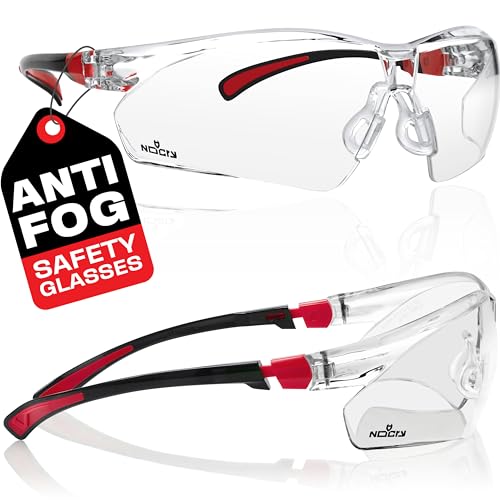
Safety glasses are the minimum and they are not enough for grinding. A full face shield over glasses is the standard, because wheel fragments and hot slag do not respect the gap around a pair of glasses.
Buying criteria, roughly in the order that matters:
- Impact marking. ANSI Z87.1 in the US, EN 166 in Europe, and prefer the high-impact designation over splash-only ratings. An unmarked visor is a guess.
- Visor material and thickness. Polycarbonate, and not the thinnest sheet on the shelf — economy visors distort your view and crack when knocked off a bench.
- Coverage below the jaw. Sparks bounce up off the floor. A visor that stops at your chin funnels them into your throat.
- Headgear. A ratchet adjuster, a decent crown pad and a brow seal decide whether you wear it all afternoon or take it off in ten minutes.
- Cheap replacement visors. The sleeper criterion, because scratched visors get lifted, and a lifted shield protects nothing.
At the bottom of the market you get thin visors, elastic straps and optical distortion, and the predictable result is that it lives on a shelf. The middle band — ratchet headgear, thicker replaceable visor, proper brow guard — is where the value sits for nearly everyone, and it is not expensive. Spend at the top only for a specific reason: a shield that mates to a welding helmet, or one designed to work with a powered respirator. Skip mesh visors for grinding entirely. They are excellent for brush and timber work where airflow matters, and useless against fine hot grit, which goes straight through the holes.
Face shields for grinding
Shield plus glasses, not shield instead of glasses. Replace scratched visors — you will lift a scratched one to see.
Respiratory protection
Grinding steel makes metal dust. Cutting galvanised makes zinc oxide fumes, which cause metal fume fever. Cutting concrete or masonry makes crystalline silica, which causes permanent lung damage. Each needs different protection, and none of them is optional.
Fit beats filtration. A top-grade filter on a mask that leaks at the cheekbones does less for you than a modest filter that seals, so buy by face shape first — half masks come in sizes because faces do. Check the seal every time you put it on: cover the inlets, inhale gently, and feel whether the mask pulls in or just whistles. If you have a beard, no elastomeric half mask will seal on it. That leaves a shave or a powered air-purifying respirator, and the second is genuinely expensive but the only honest answer for daily work.
Filter choice is simpler than the wall of boxes suggests. Particulates — steel dust, silica, grinding debris — want a P100 particulate filter. Metal fumes and solvent vapours want the appropriate cartridge; a particulate filter does nothing for vapour. Swap particulate filters when breathing gets noticeably harder or they get damp, and gas cartridges when you can smell or taste anything through them. Store the mask sealed in a bag, not hanging on a nail collecting the dust you are trying to avoid.
Who suits what: an occasional weekend grinder is well served by a mid-priced elastomeric half mask with cheap, widely stocked filters. Anyone cutting masonry or galvanised regularly should go straight to full-face or powered gear, because all-day comfort is what decides whether it stays on. Everyone should skip nuisance dust masks for this work.
Respirators for metal and dust work
P100 filters for particulates, appropriate cartridges for fumes. A dust mask is not a respirator.
Fire — the underestimated risk
Grinding sparks travel much further than people expect, land in sawdust, rags, insulation or floor gaps, and smoulder for hours before igniting. Professional hot-work procedures include a fire watch after the work stops, and there is a reason for that.
- ✔ Clear flammables 35 feet from hot work where possible
- ✔ Wet down or cover what cannot be moved
- ✔ Extinguisher within reach, not across the shop
- ✔ Check the area again 30 minutes after finishing
- ✔ Never grind above or near a floor drain or gap
Two additions. Keep a general-purpose ABC extinguisher within arm’s reach, and understand that a welding blanket rated for spatter is not the same product as a cheap fibreglass sheet. If your shop also cuts timber, treat wood and hot work as incompatible in the same room on the same day — airborne sawdust and grinding sparks are a bad combination, and a shop vac full of wood dust is a bomb with a hose on it. Set a phone timer for the fire watch, because memory is the least reliable tool in the building.
Clothing
Cotton or flame-resistant fabric. Synthetics melt onto skin and turn a minor burn into a serious one. Leather boots, no loose sleeves, no gloves in rotating machinery — gloves are correct for grinding, wrong for a drill press or lathe.
The details decide how a bad minute goes. Heavy cotton beats thin cotton; a light T-shirt burns through fast. Cuffs down and buttoned, never rolled, and trouser hems over the boot rather than turned up, because a rolled cuff is a spark trap you cannot see into. Leather boots with laces tucked and no synthetic mesh panels. Empty your chest pockets. Overhead grinding wants a leather cape or at least a bib, because gravity brings everything you cut back to your collarbone.
Welding and shop gloves
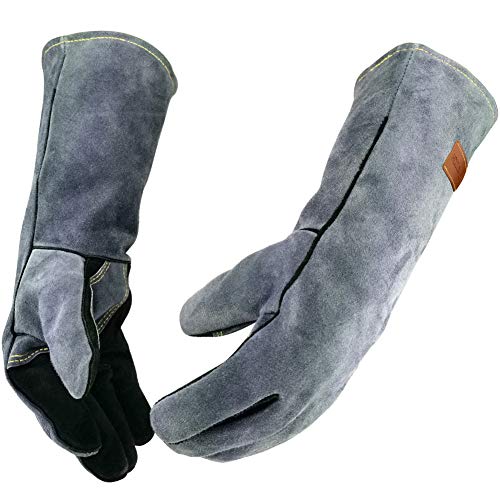
Leather for heat and sparks. Never wear gloves near rotating chucks or spindles — entanglement is worse than a burn.
Gloves are worth a moment, because most people buy on price and regret it. Split cowhide is the durable, heat-tolerant default for grinding and MIG. Goatskin or kidskin gives you the dexterity TIG needs and much less protection from radiant heat, so it is the wrong glove to reach for with a grinder. Check the thread: cotton-stitched seams burn out and the glove opens up, Kevlar-stitched seams hold. Cuff length matters more than the palm, since a short cuff leaves your wrist exposed exactly where sparks funnel in. And fit matters for the usual reason — a glove too clumsy to feel a paddle switch through comes off, and a bare hand is worse than an imperfect glove.
Hearing
Angle grinders and chop saws run well above safe exposure levels. Hearing loss is cumulative and permanent, and it happens quietly enough that nobody notices until it is done.
Muffs or plugs both work; the one you actually wear works better. Muffs go on and off quickly between cuts, which matters more than a couple of decibels on the label, while foam plugs are cheaper, cooler in summer and fit under a welding helmet. Ratings on general shop protection run from roughly the low twenties into the low thirties, and for the worst offenders — abrasive chop saws, long sessions with a big grinder — plugs under muffs get you further than either alone. Electronic muffs cost several times more and only earn it if you need to hear a phone or a workmate without stripping protection off your head every few minutes.
Building the kit without wasting money
Starting from nothing, buy in this order: impact-rated glasses you find comfortable, a mid-range shield with a replaceable visor, hearing protection you will not resent, a half mask with P100 filters, leather gloves with Kevlar seams, cotton or FR clothing you do not mind ruining, and an extinguisher within reach of the bench. The whole list costs less than one decent grinder, and the same trade-off runs through all of it: gear that gets worn beats a higher specification sitting in a drawer.
FAQ
Are cut-resistant gloves enough for grinding? No. They resist cuts, not heat and sparks. Use leather.
How long should a fire watch last? Standard practice is at least 30 minutes after hot work stops; an hour is safer with combustible surroundings.
Can I grind galvanised steel? Only with proper ventilation and respiratory protection. Grind the coating off the weld area first, outdoors if possible.
Do I still need a face shield if I am wearing a welding helmet? For grinding, yes. Helmets are built for arc light and spatter with your head down, not for a wheel letting go at close range. Use a grinding shield over or instead of the helmet.
See shop PPE →