What's inside
As an Amazon Associate I earn from qualifying purchases. This post may contain affiliate links at no extra cost to you.
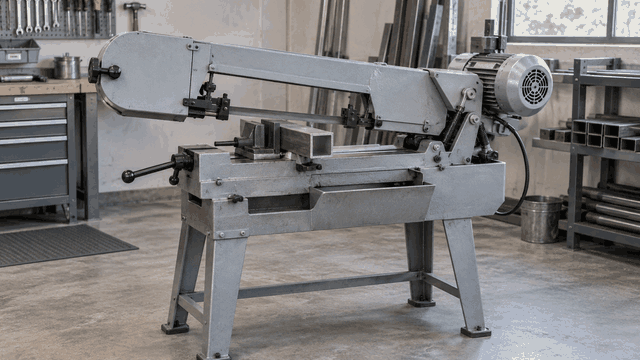
A horizontal band saw is the tool you reach for when you need clean, repeatable cuts in metal stock — round bars, square tubing, angle iron, and solid blocks. Unlike a chop saw or an abrasive cutoff, a band saw produces narrow kerf, minimal heat, and consistent accuracy across a full work session. But not every machine in this category delivers the same experience. Some are designed for a weekend maker cutting occasional aluminum extrusions; others are built to run steel stock through multiple shifts without slowing down.
The gap between a good horizontal band saw and a mediocre one shows up in blade tensioning systems, vise rigidity, motor power under load, and how well the machine handles material that is not perfectly rectangular. Price alone tells part of the story. A machine under $600 can serve hobbyists well if the expectations are calibrated. A $2,000 saw earns its premium through hydraulic feeds, swiveling columns, and cutting capacities that open doors on larger jobs. Below we rank eight machines that span that full range, drawing on published specifications and long-term owner feedback.
As an Amazon Associate we earn from qualifying purchases at no extra cost to you.


What we cover
Our Top Picks
 JET 5" x 6" Metal Cutting Horizontal/Vertical Band37 x 17.72 x 41.75 inches115 PoundsCheck on Amazon
 JET 7" x 12" Deluxe Horizontal/Vertical Metal Band7 x 12"48 x 17 x 44 Inches374 poundsCheck on Amazon
 VEVOR Metal Horizontal Band Saw47.2 x 16.9 x 39 in47.2 x 16.9 x 39 inches304.24 poundsCheck on Amazon
Quick Picks
| Product | Best for | Price |
|---|---|---|
| WEN BA4664 | Entry-level hobbyists | $509.44 |
| KAKA BS-712N | Mid-range precision cutting | $1,599 |
| JET HVBS-56 | Small shops needing dual orientation | $934.99 |
| JET Deluxe HVBS | Professional metal fabrication | $2,299 |
| KAKA BS-712R | Angle-cutting versatility | $1,698.30 |
| VEVOR 7×12 Vertical/Horizontal | Multi-material versatility | $1,759.90 |
| KAKA BS-912B | Large-diameter round stock | $1,832.56 |
| KAKA BS-712 Hydraulic Feed | High-throughput production | $1,611 |
How We Picked
For this roundup we evaluated published cutting capacities, motor ratings, voltage compatibility, feed mechanism type, and owner-reported build quality across all eight machines. Price-to-capability ratio mattered heavily because this category spans a wide cost range for overlapping uses. We also weighed user feedback on blade-tracking accuracy, vise clamping force, and long-term parts availability — the three issues that separate a satisfying purchase from a regret in this segment.
The 8 Best Horizontal Band Saw in 2026
WEN BA4664
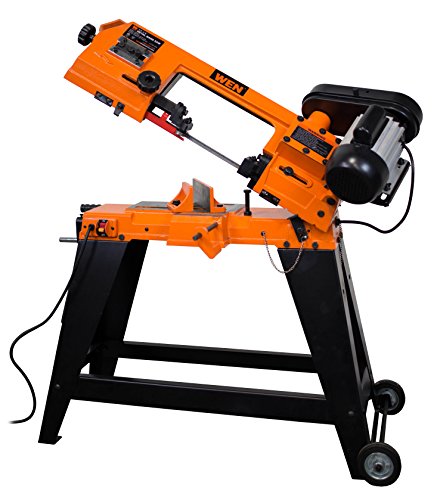
This is the most accessible entry point into powered metal cutting. The BA4664 includes a stand, which is unusual at this price and eliminates the need to build a dedicated bench. Owners praise its straightforward setup and the fact that it handles aluminum, mild steel, and plastic bar stock without complaint. The cutting capacity is modest, so it suits shorter pieces and lighter gauge materials best.
- Included stand at under $510 adds real value over competitors that require separate workstations.
- Simple controls and light weight make it easy to move around a small garage shop.
- Manual feed requires attention on denser metals; the motor lacks the reserve to push through thick steel stock quickly.
Skip this saw if you regularly cut solid steel above two inches in diameter or need production repeatability across dozens of parts per day.
KAKA INDUSTRIAL BS-712N
The BS-712N steps into the territory where owners stop calling their machine a “starter” and start calling it a workhorse. With a seven-by-twelve-inch cutting envelope, it accepts rectangular tubing, channel, and solid rounds that smaller saws reject outright. KAKA has built a reputation for solid cast-iron construction on their mid-range models, and reviewers note that the blade guides feel noticeably more rigid than budget alternatives.
- Seven-by-twelve capacity covers the vast majority of hobbyist and light professional jobs without compromise.
- Heavy base and column construction reduce vibration during aggressive cuts.
- Some owners report that the factory blade arrives dull, requiring an immediate replacement before first use.
Pass on this model if you need vertical cutting capability or angle adjustments beyond what the standard vise allows.
JET HVBS-56
JET’s five-by-six model is compact, dual-orientation, and runs on either 115 or 230 volts. The ability to switch between horizontal and vertical cutting is a genuine workflow advantage for makers who slice small stock, cut notches, or follow curves in addition to making straight crosscuts. At a half horsepower, it is not a heavy-duty machine, but within its capacity the cut quality is consistently good.
- Horizontal-to-vertical conversion expands use cases beyond simple cutoff work.
- Dual-voltage flexibility accommodates shops without dedicated 220V circuits.
- The five-by-six capacity limits it to relatively small stock; larger projects will outgrow it quickly.
Skip this saw if your primary work involves cutting stock over five inches in any dimension.
JET 7×12 Deluxe with Quick-Lock Vise
This is the most premium machine in the group and carries the highest price accordingly. The Quick-Lock vise system lets operators swap from one clamping position to another almost instantly, a feature that matters when you are cutting parts in batches. JET’s build quality is a known quantity in metalworking — tight tolerances, accessible parts network, and a resale market that holds value.
- Quick-Lock vise saves meaningful time during repetitive cutting sequences.
- Seven-by-twelve capacity with robust feed handles demanding steel jobs comfortably.
- The $2,299 price puts it out of reach for casual users who cut occasionally.
Skip this saw if your budget is below $1,700 or if you do not cut enough metal per week to justify the productivity gains.
KAKA INDUSTRIAL BS-712R
The swivel bow on this model allows the entire cutting head to rotate through a range of angles, making it well suited for miters and compound cuts without repositioning the workpiece. At 7×8.25 inches of capacity, it covers a generous rectangular envelope. Owners highlight the smooth bow action and the fact that angle settings remain consistent across repeated cuts.
- Swiveling column eliminates the need to fixture awkward angles separately.
- Good rectangular capacity for its price tier.
- The slightly reduced height compared to the BS-712N means very tall stock can be a challenge.
Skip this model if you only make straight ninety-degree cuts and want maximum vertical clearance instead.
VEVOR 7×12 Vertical/Horizontal Bandsaw
VEVOR targets buyers who want a single machine that handles metal, wood, and plastic without switching tools. The 1.1 kW motor provides respectable power, and the variable-speed control lets you dial in blade speed per material. The zero-to-forty-five-degree angle adjustment on the vise adds practical flexibility for framing and jig work.
- Multi-material capability with adjustable speed covers jobs that would otherwise require separate saws.
- Variable-speed control reduces blade wear when cutting softer materials.
- Owner feedback on long-term blade tracking suggests more frequent alignment adjustments than on JET or KAKA machines.
Skip this saw if you exclusively cut metal and want the tightest tolerances without ongoing fine-tuning.
KAKA INDUSTRIAL BS-912B
With a nine-inch round cutting capacity, the BS-912B is the clear choice for anyone working with large-diameter pipe, thick solid rounds, or oversized structural steel. The rectangular envelope is correspondingly generous. KAKA’s build philosophy holds here: heavy iron, simple mechanics, and a focus on raw capacity over electronic bells and whistles.
- Largest cutting capacity in this roundup handles demanding structural and pipe work.
- Straightforward mechanical design means fewer components that can fail over time.
- The bulk and weight make it a fixed-installation machine; not ideal for shops with space constraints.
Skip this model if your typical stock fits within seven inches and you value a smaller footprint.
KAKA INDUSTRIAL BS-712 Hydraulic Feed
Hydraulic feed separates this KAKA from its mechanical siblings. The system automatically advances the saw bow at a controlled rate, reducing operator fatigue and producing more uniform cut surfaces across a batch. It includes three blades in the box, a practical inclusion that eliminates a second purchase before you start cutting. Dual voltage is standard across the line.
- Hydraulic feed delivers consistent cut quality and lets the operator focus on clamping and alignment.
- Three included blades provide immediate cutting capability across common materials.
- Hydraulic systems add maintenance complexity; leaks and fluid top-ups become a consideration over years of use.
Skip this saw if you prefer the simplicity of manual feed and want the fewest moving parts to maintain.
Buying Guide
Cutting Capacity: Match the Machine to Your Largest Regular Job
Capacity is the single most important spec. Measure the largest piece you expect to cut — round, rectangular, or square — and choose a saw whose envelope exceeds it with at least a half-inch margin. A seven-by-twelve machine handles most hobbyist and light commercial work. A five-by-six covers small stock well but will bottleneck you the moment a project calls for something larger. Round capacity and rectangular capacity are different numbers; check both.
Feed Mechanism: Manual, Gravity, or Hydraulic
Manual feed gives you direct control but tires your arms and introduces variability on thick cuts. Gravity feed lets the weight of the bow do the advancing, which is smoother but less adjustable. Hydraulic feed delivers the most repeatable advance rate and is worth the premium if you cut in batches or work with hardened steel. For occasional use, manual is adequate. For daily production, hydraulic pays for itself.
Voltages and Motor Power
Most machines in this class run at one-half to two horsepower on 115 volts, with many offering a 230-volt option that slightly reduces current draw and heat. If your shop has a dedicated 220-volt circuit, take advantage of it. Motor power alone does not tell the full story — gear quality, blade width, and tension system all affect how effectively that horsepower reaches the cutting edge. Look for owner reports on sustained cutting rather than just peak ratings.
Our Verdict
For most buyers who need a capable horizontal band saw for metal cutting without breaking the bank, the KAKA BS-712N at $1,599 offers the best balance of capacity, build quality, and price. The WEN BA4664 at $509.44 is the standout budget pick for hobbyists who cut occasional aluminum or mild steel and want a complete setup with stand included. If your work involves large-diameter pipe or structural rounds and nothing else will fit, the KAKA BS-912B at $1,832.56 is the only sensible choice in this group.
FAQ
Can a horizontal band saw cut wood?
Yes, several machines in this roundup are rated for wood and plastic in addition to metal. However, wood-cutting band saws are optimized for different blade speeds and tooth geometries, so you will need to swap blades and adjust feed rate to avoid burning or poor surface finish on timber.
What blade size should I use on a 7×12 band saw?
Most seven-by-twelve horizontal band saws accept a blade around 7/8 inch wide and roughly 91 inches in circumference. Match the tooth count to your material: fewer teeth for thick soft metals, more teeth for thin wall tubing or aluminum extrusions.
Do I need 230 volts for a metal band saw?
No. Machines rated 115/230V will run on either, though the 230-volt setting draws less amperage and can keep the motor cooler during extended cuts. A standard 115-volt household outlet is sufficient for most hobbyist applications.
How often do I need to replace blades on a horizontal band saw?
Blade life depends on material hardness, feed rate, and tension accuracy. Expect a quality bi-metal blade to last through dozens of cuts in mild steel before performance degrades noticeably. Hydraulic feed machines tend to extend blade life because the consistent advance rate reduces chatter and uneven wear.