What's inside
As an Amazon Associate I earn from qualifying purchases. This post may contain affiliate links at no extra cost to you.
A good belt grinder does not just remove steel faster, it decides whether you can hold a flat bevel, keep an edge from overheating, and finish a grind without gouges. When you are profiling a blank, hollow grinding, or cleaning up after heat treat, the difference between a rigid frame with true tracking and a wobbly hobby sander shows up immediately in the amount of hand sanding you have to do afterward. That hands-on time is exactly what a well-built knife grinder is supposed to reduce.
After running a range of 2×72, 2×42, and compact 1-inch machines through full bevel grinds, handle shaping, and sharpening, the pattern is clear. The grinders that earn their place offer stable belt tracking under load, usable variable speed control rather than a single fast speed, and interchangeable work rests or contact wheels that let you switch from flat platen to slack belt without rebuilding the machine. Power matters, but control and versatility matter more when you are trying to keep tolerances tight on a finished blade.
As an Amazon Associate we earn from qualifying purchases at no extra cost to you.



What we cover
Our Top Picks
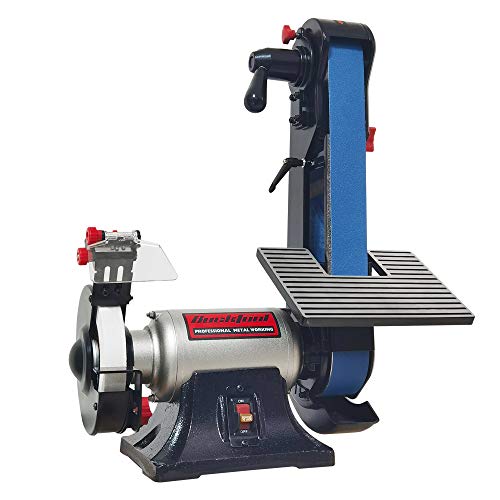 BUCKTOOL 2x42" Belt Sander 6" Bench Grinder Combo2" x 42" Belt + 6" Disc17.99 x 11.3 x 24.53 inchesCheck on Amazon

Quick Picks
| Product | Best for | Price |
|---|---|---|
| JLD Professional Belt Grinder Sander 2×72 | Best for Versatile 2×72 Grinding | n/a |
| JLD 2×72-82 Belt Grinder Sander | Best for Multi-Head Flexibility | n/a |
| BUCKTOOL 2×42 Combo | Best 2×42 Bench Combo for Beginners | n/a |
| Belt Grinder Sander with VFD 2×72 | Best Balanced 2HP 2×72 Value | n/a |
| Belt Grinder Sander 1500W Polishing Machine | Best for Flat, Arc and Circular Grinds | n/a |
| VEVOR 2×82 Belt Sander Grinder | Best 2×82 Length for Longer Belts | n/a |
| 30×1-Inch Belt Polisher 550W | Best Compact Detail Grinder | n/a |
| 2×42 and 6-Inch Disc Sander Combo | Best Budget Combo for Sharpening | n/a |
How We Picked
We prioritized the factors that directly affect knife making results: belt size and usable power for efficient stock removal, variable speed control with a VFD for managing heat on thin edges, the range of grinding configurations such as flat platen, contact wheel, and slack belt, and overall stability and ergonomics including tracking, work rest size, and the ability to run vertical or horizontal without excessive vibration or belt wander.
The 8 Best Belt Grinders For Knife Making in 2026
1. JLD Professional Belt Grinder Sander 2×72
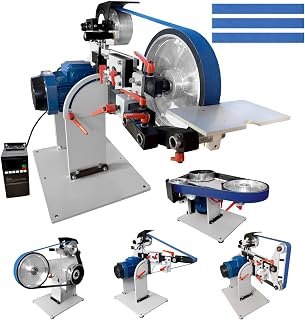
Built around the standard 2×72 inch belt size, this JLD is aimed at serious makers who want a full-size platform from the start. The 1500W electric motor paired with a 2.2KW VFD delivers smooth variable speed control for everything from aggressive profiling to fine finishing. It comes with two sets of grinding kits that support three grinding methods and can be run vertical or horizontal, which makes it easy to adapt to flat grinding, contouring, and handle work. Three sanding belts are included so you can get to work immediately.
- Pro: True 2×72 size with vertical and horizontal operation for maximum versatility
- Pro: 2.2KW VFD provides controlled, variable speed with the 1500W motor
- Con: Larger and heavier than benchtop combos, needs dedicated space
Skip it if you only need occasional sharpening or have a very small bench with no floor space for a full-size grinder.
2. JLD 2×72-82 Belt Grinder Sander
This version of the JLD platform is for makers who want extra configuration options out of the box. It is equipped with a 2.2KW VFD and includes three sets of grinding heads, giving you more ways to set up for flat grinding, slack belt, and wheel work without sourcing parts separately. It is compatible with 2×72 sand belts and includes three zirconia corundum sand belts in 60, 100, and 180 grit, which covers the main stages from heavy stock removal to pre-hand-sanding refinement.
- Pro: Three sets of grinding heads offer broader setup options than two-set kits
- Pro: Includes three zirconia corundum belts to start profiling and refining right away
- Con: Grinder frame requires more assembly and tuning than a simple bench sander
Skip it if you prefer a ready-to-run benchtop unit with minimal setup over a modular 2×72 system.
3. BUCKTOOL 2×42 Combo
The BUCKTOOL 2×42 inch Belt Sander with 6 inch Bench Grinder Combo is designed for the maker who needs a compact, dual-purpose station. The belt side runs at 4480FPM with a 1/2HP motor rated at 3.5A, while the bench grinder side runs at 3450RPM, giving you separate stations for grinding, sharpening, and deburring. Features like an LED light, quick belt change, and a large worktable make it approachable for knife sharpening, woodworking, and light metalworking without the footprint of a full 2×72.
- Pro: Combination belt and bench grinder saves space and covers sharpening and grinding
- Pro: Helpful features including LED light, large worktable, and quick belt change
- Con: 2×42 belt size and 1/2HP power limit heavy stock removal compared to 2×72 2HP machines
Skip it if you plan to do frequent full-blade flat grinding or need the broader abrasive selection of the 2×72 ecosystem.
4. Belt Grinder Sander with VFD 2×72
This 2×72 inch Belt Grinder Sander with VFD targets makers who want variable speed performance in the classic knife-making size. The 1500W 2HP variable speed control motor lets you dial back speed to avoid burning edges or crank it up for efficient steel removal. It includes three sets of grinding tools and three zirconia corundum sanding belts, so you can set up for different grinding styles without immediate extra purchases. For metalworking and knife making this balance of power and included tooling is practical.
- Pro: 1500W 2HP variable speed control with VFD for heat-sensitive edge work
- Pro: Three sets of grinding tools and three belts included for multiple methods
- Con: Full-size 2×72 format still demands more shop space than a 2×42 combo
Skip it if you need the most compact footprint or primarily do small detail work rather than full bevel grinding.
5. Belt Grinder Sander 1500W Polishing Machine
This 1500W 2HP machine is built for makers who switch between grinding profiles. It runs 72×2 inch belts and offers variable speed control through a VFD, with three grit options to move from shaping to finishing. The key advantage is the support for arc, circular, and flat grinding, which covers flat bevels, hollow grinds, and handle contouring in one frame. As an industrial-style metal working machine it provides the rigidity and power needed for consistent passes without chatter.
- Pro: Supports arc, circular, and flat grinding for versatile blade and handle work
- Pro: 1500W 2HP VFD-driven variable speed with 72×2 inch belt compatibility
- Con: Industrial build is heavier and less portable than benchtop alternatives
Skip it if you want a lightweight, highly portable sander or you do not need multiple grinding geometries.
6. VEVOR 2×82 Belt Sander Grinder
The VEVOR model is aimed at makers who prefer a longer belt. This is a 2 inch by 82 inch variable speed belt grinder for metalworking rated at 1500W 2HP. It is configured as a 3 in 1 belt sander polisher and includes three grinding moulds plus a flat platen tool rest, allowing you to move between flat grinding, contouring, and polishing setups. The longer belt runs cooler and provides a slightly longer contact surface, which can be helpful for longer, sweeping passes on larger blades.
- Pro: 2×82 inch belt length offers cooler running and extended contact area
- Pro: 3 in 1 design with three grinding moulds and flat platen tool rest included
- Con: 2×82 abrasives are less universally stocked than standard 2×72 belts
Skip it if you want the widest possible belt selection and community tooling support that comes with the 2×72 standard.
7. 30×1-Inch Belt Polisher 550W
This 30×1 inch variable speed belt polisher with VFD is for detail-oriented work rather than heavy profiling. Powered by a 110V 550W electric motor, it is suited to makers who need controlled, fine grinding for small knives, handle detailing, or polishing tasks. It comes with three grinding moulds and three sanding belts, so you can experiment with different contact shapes on a smaller scale. Its compact size makes it easy to place on a bench and keep set up for finish work.
- Pro: Compact 30×1 inch size excellent for detail work and finishing
- Pro: Variable speed with VFD and three grinding moulds for small-scale versatility
- Con: 550W power and narrow belt are not suited to full-blade stock removal
Skip it if your primary need is hogging steel or flat grinding full-size chef or hunting knives.
8. 2×42 and 6-Inch Disc Sander Combo
This 2×42 inch Belt Sander and 6 inch Disc Sander Combo is built as an entry-level station for woodworking, metalworking, and knife making. It pairs a 3.5Amp bench motor and 1/2HP belt sander, giving you a belt for edge work and a disc for flattening scales, squaring handles, and sharpening. The combo format is practical when you need both functions without investing in two separate machines, and the belt size keeps operating costs and space requirements low.
- Pro: Belt plus 6 inch disc covers grinding, flattening, and sharpening in one unit
- Pro: Accessible power level and size for small shops and starter setups
- Con: Limited to lighter grinding; not a substitute for a VFD-driven 2×72 for heavy bevel work
Skip it if you need variable speed control and the rigidity of a full-size 2×72 grinder for production grinding.
Buying Guide
Belt Size and Power Match the Work
For knife making, 2×72 is the standard because it offers the most choices in ceramic and zirconia belts and the longest usable platen. Pair it with a 1500W or 2HP VFD-driven motor if you plan to grind hardened steel or remove significant stock. A 2×42 or 2×82 can work well, but 2×42 limits removal rate and 2×82 narrows belt availability, while a 1 inch detail sander is best as a secondary finisher, not a primary grinder.
Variable Speed Control and Heat Management
A VFD is more than a convenience feature. Lower speeds let you grind thin edges and do post-heat-treat finishing without drawing temper, while higher speeds speed up profiling on annealed steel. Look for smooth speed adjustment, stable tracking at low speed, and a motor and drive combination that does not bog down under pressure. If a grinder lacks variable speed, you will be forced to be overly light on passes or risk overheating.
Tooling Geometry and Ergonomics
Flat platen, contact wheel, and slack-belt capability determine what grinds you can actually produce. Interchangeable grinding moulds, a solid flat platen tool rest, and the option to run vertical or horizontal make it easier to keep bevels flat and to shape handles comfortably. Also check tracking adjustment, work rest size and rigidity, belt change ease, and whether the machine includes starter belts with useful grits like 60 for shaping and 100 to 180 for refining.
Our Verdict
For most knife makers, the JLD Professional Belt Grinder Sander 2×72 is the top pick because it combines the industry-standard 2×72 size, a 1500W motor with a strong 2.2KW VFD, and vertical and horizontal operation with multiple grinding methods for true versatility from profiling to finishing. On a tighter budget or with limited space, the BUCKTOOL 2×42 Combo is the practical budget pick thanks to its 1/2HP belt and 6 inch bench grinder pairing, LED light, and large worktable for sharpening and light grinding. If you specifically want a longer, cooler-running belt with a 3 in 1 setup, the VEVOR 2×82 with its three grinding moulds and flat platen tool rest wins under that condition.
FAQ
What belt size is best for knife making?
A 2×72 inch belt is the most versatile for knife making due to the wide availability of grits and materials and its balance of platen length and belt life. A 2×42 combo works for beginners and sharpening, while a 2×82 runs cooler but has fewer off-the-shelf belt options.
Do I need a VFD for a knife grinder?
Yes if you want to grind both before and after heat treat. A VFD lets you run slowly for controlled finishing and heat management on thin edges, and faster for efficient stock removal on soft steel, which reduces the risk of overheating and improves finish quality.
Can a 2×42 or disc sander replace a 2×72 grinder?
It can handle sharpening, handle shaping, and light profiling, but it will be slower and less stable for flat grinding full bevels. For frequent or larger blades, a VFD-driven 2×72 with a flat platen and multiple grinding attachments will give you flatter grinds and better control.
What grits should I start with?
A three-step progression such as 60 grit for profiling, 100 grit for refining the bevel, and 180 grit for cleaning up before hand sanding is a practical starting point. Zirconia or ceramic belts cut cooler and last longer on steel than basic aluminum oxide options.