Our Top Picks
 BOSCH CO14B 14-Piece Cobalt Drill Bit Set With14-Piece Drill Bit Set7.2 x 5.6 x 1.8 inchesCheck on Amazon
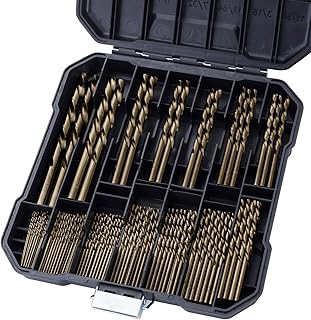
 Sinyeenglon Cobalt Drill Bits Set for Hardened Metal1/16-3/8 in (99 pcs)7.9 x 7.7 x 1.4 inchesCheck on Amazon


What's inside
As an Amazon Associate I earn from qualifying purchases. This post may contain affiliate links at no extra cost to you.
Hardened steel does not drill like steel. The bit skates, the hole glazes over, smoke comes up, and the tip rounds off in about four seconds. If your last three bits came out blue with the corners gone, the bit was never right for the job. Choosing the best drill bits for hardened steel starts with one question: how hard is the part, really?
Hardness gets rated on the Rockwell C scale, HRC. Mild plate sits under 20. A Grade 8 bolt runs in the mid to high 30s. Leaf spring and hardened set screws land around 45 to 50. Bearing races, files and heat treated tool steel sit near 60. A fresh high speed steel bit is only about 62 to 65 HRC, and it goes soft the second the edge gets hot. You are cutting something nearly as hard as your tool.
As an Amazon Associate we earn from qualifying purchases at no extra cost to you.



Short version, then the details.
| Bit type | Realistic ceiling | Use it on |
|---|---|---|
| Standard HSS | About 30 HRC | Mild steel, nothing hardened |
| Titanium coated HSS | About 35 HRC | Repeat holes in mild plate |
| Cobalt M35 or M42 | Roughly 45 to 50 HRC | Grade 8 bolts, spring steel, hand and mag drills |
| Carbide tipped | Hard skin over soft core | Case hardened surfaces, rusty mystery metal |
| Solid carbide | 55 HRC and up | Tool steel, bearing races, broken taps, press only |
What we cover
Why Ordinary Bits Quit On Hard Metal
Two things wreck a bit. Heat is first. High speed steel starts losing temper around 400 to 500 degrees F at the cutting edge, and a bit that rubs instead of cutting gets there in seconds. Once the edge softens it stops cutting, which makes more heat, which softens it further. That is why bits die fast instead of slowly.
Work hardening is second. Stainless and plenty of alloy steels get harder when you rub them. A dull bit at high rpm burnishes the bottom of the hole and leaves a glazed spot harder than the parent metal. Now nothing will start there. Grind past it with carbide or move the hole.
Thickness changes the plan. Under 1/8 inch the sheet flexes and the bit grabs, so clamp the work and back it with a scrap block. Past 1/2 inch the heat has nowhere to go and coolant stops being optional. Deeper than about three bit diameters, lift the bit to clear chips, then get back to cutting.
How To Choose The Best Drill Bits For Hardened Steel
Cobalt: the shop workhorse
Cobalt is not a coating. It is alloyed through the steel, so sharpening does not remove the good part. M35 runs about 5 percent cobalt, M42 about 8 percent. M42 holds an edge hotter and is the better buy for hard work, at the price of being more brittle. Cobalt handles Grade 8 fasteners, spring steel and light case hardening. Near 50 HRC it starts to lose.
M42 Cobalt Twist Drill Set
Look for 135 degree split points and skip the giant 100 plus piece kits. You will use eight sizes hard and lose the rest.
Carbide tipped: for a hard skin
Case hardened parts are hard outside and softer in the middle. A carbide tipped bit scratches through the crust, then the core drills normally. Same answer for rusty mystery metal. The tip is brittle, so the work has to be clamped solid and flat.
Solid carbide: for the genuinely hard
Above roughly 55 HRC, cobalt is finished. Solid carbide cuts hardened tool steel, bearing races and broken taps. It also snaps if you lean sideways or the part shifts. Treat it as a machine tool: drill press, mag drill or mill, work clamped, no handheld drilling.
- ✔ Cuts above 55 HRC where cobalt stalls
- ✔ Keeps its edge when the hole gets hot
- ✔ Leaves a round, sized hole in tool steel
- ✘ Brittle, snaps under any side load
- ✘ Needs a rigid setup, not a hand drill
- ✘ Several times the cost of cobalt
Solid Carbide Drill Bits For Hardened Steel
Buy two or three sizes, not a set. Keep them for the parts that laugh at cobalt, and never chuck one in a handheld drill.
Geometry that matters
Get a 135 degree split point. It self centers and will not walk on a hard surface the way a 118 degree point does. A thick web resists snapping. Anything over 1/2 inch should have a reduced shank so it fits a standard chuck.
Speed, Pressure And Coolant
Hard metal wants slow rpm and heavy, steady pressure. Slower than you think. Rough numbers for cobalt in hardened steel: 1/8 inch around 800 to 1,000 rpm, 1/4 inch around 400 to 600, 1/2 inch around 200 to 300. Bigger hole, slower speed.
Torque is twisting force, and this job runs on low speed and high torque. On a cordless drill that means low gear, brushless if you have it. On a corded drill the amp rating roughly tells you how much work the motor will do before it bogs down, so look for 7 amps and up. A drill press or mag drill beats any handheld: the bit stays square and the feed stays steady.
Pressure matters more than speed. Lean on it. The bit should peel a continuous curl. If the chips stop, stop drilling and find out why before you glaze the hole. Sulfurized dark cutting oil, not water, a drop every few seconds.
A grabbing bit twists a drill hard enough to sprain a wrist, so run the side handle and clamp the work every time. Hard chips come off sharp and hot and they go for your eyes, so wear a face shield over safety glasses. No gloves near a rotating chuck. Never wrap a rag around a spinning bit. Cutting oil smokes when the hole gets hot, so keep air moving, and put chips and oily rags in a metal can.
Sulfurized Cutting Oil
A few dollars of the right oil saves bits that cost a lot more. Keep it in a squeeze bottle at the press.
When The Bit Loses: Annealing And Other Ways In
Sometimes the fix is to take the hardness out. Heat the spot cherry red with a torch, then cool it as slowly as you can, buried in sand or lime. Plain carbon and spring steel soften enough to drill. Air hardening tool steels like A2 and D2 harden again on the way down. Annealing also kills the temper for good, which matters if the part is a spring or a cutting edge.
Torch work carries its own risk. Old hardware is often plated with zinc, cadmium or chrome, and heated plating throws fume that can land you in the hospital. Cadmium is the worst of the three. Wire wheel the plating off first, use real ventilation, and stay out of the plume. Clear the area before you light up: no oil, no fuel, no rags, nothing painted within reach of the sparks. Extinguisher in arm’s reach, and walk the area again twenty minutes after you shut down.
Other ways in: a carbide burr in a die grinder, plasma if the part can live with a heat affected zone, or a shop with a tap disintegrator for a snapped tap. Moving the hole half an inch is often the cheapest answer on the board.
Frequently Asked Questions
Will a masonry bit drill hardened steel? No. Masonry carbide is ground blunt to hammer through brick, not to cut metal. A metal cutting carbide tipped bit is a different tool with a different edge.
Can I sharpen cobalt bits? Yes, and you should. The cobalt runs through the whole bit, so regrinding does not throw the hardness away. Keep the point angle even and dip it often, because overheating on the grinder ruins the thing you are trying to save.
Why did my bit stop cutting halfway through? Either the edge is gone or you hit a hardened case and glazed it. Look at the tip under a light, then look at the bottom of the hole. Mirror smooth means work hardened.
Match the bit to the hardness, cut the speed, add pressure and oil, and clamp the work. A cobalt set covers most of what rolls into a metal shop. Keep a few solid carbide sizes on the shelf for the rest.
Check prices on Amazon →