Our Top Picks
 SEESII Reciprocating Saw Cordless with 2 x 4.0Ah13.77 x 10.62 x 3.54 inches7.7 poundsCheck on Amazon
 BLACK+DECKER 20V MAX* Cordless Reciprocating Saw KitOne Size15 x 3 x 7 inches4.5 poundsCheck on Amazon
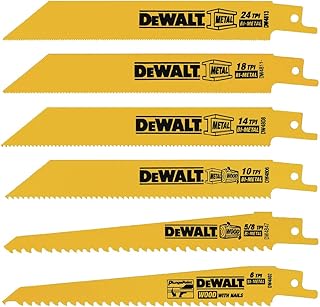
 DEWALT Reciprocating Saw Blade Set for Metal andOne Size6.5 x 6.5 x 0.09 Inches0.28 poundsCheck on Amazon

What's inside
As an Amazon Associate I earn from qualifying purchases. This post may contain affiliate links at no extra cost to you.
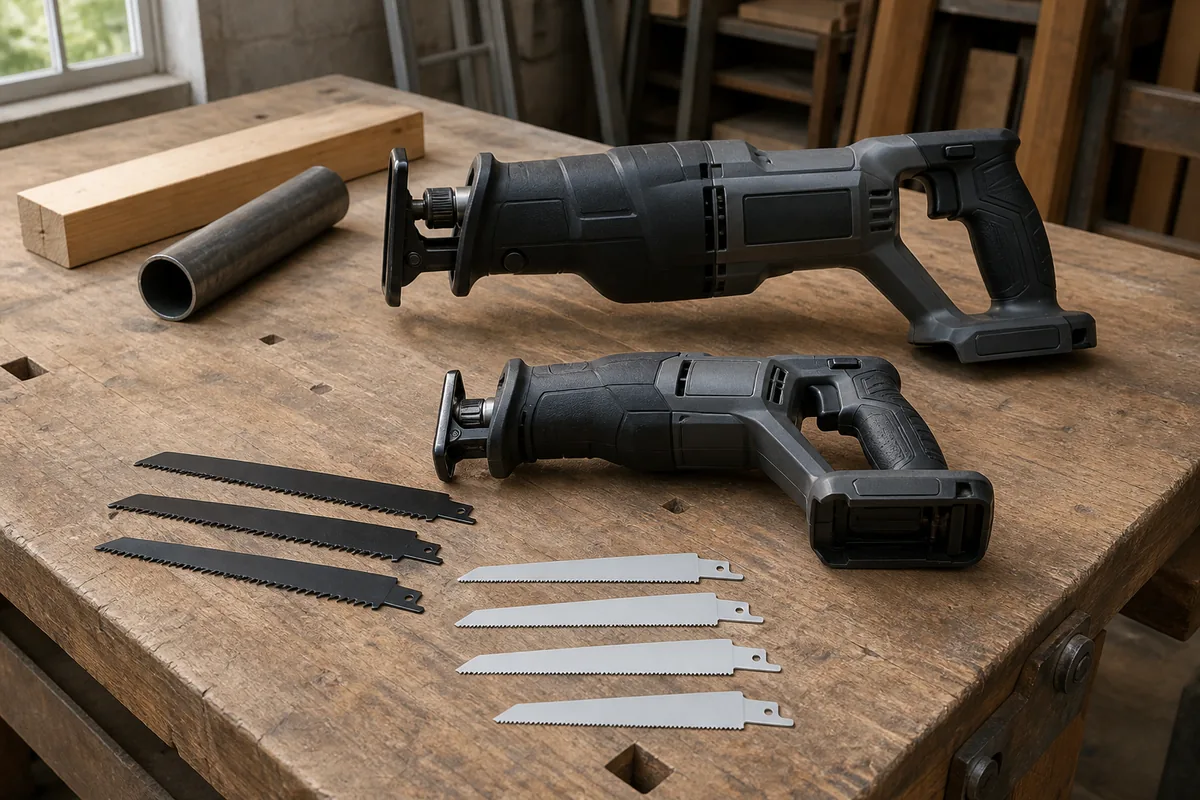
Most recip saws are sold to demo crews. Wood, nail-embedded studs, PVC. Cutting metal is a different job entirely, and the saw that flies through a 2×4 will glaze a bimetal blade on 1/4 inch angle iron in under a minute. If you are shopping for the best reciprocating saw for cutting metal, the spec sheet you care about is not raw stroke speed. It is speed control, stroke length, shoe design, and how well the tool holds a blade under load without wobbling.
Here is the short version before the detail: metal wants slow strokes, firm pressure, a rigid blade, and cutting fluid. Most people fail on the first and last of those. They run a saw wide open, the blade tips heat past their hardness limit, the teeth round over, and then they blame the blade.
As an Amazon Associate we earn from qualifying purchases at no extra cost to you.



What we cover
What Actually Matters In A Metal-Cutting Recip Saw
Variable speed with real low-end control. Wood cutting happens up around 2,800 to 3,000 strokes per minute. Steel wants far less. Thin sheet and conduit tolerate mid speed. Thick solid stock, hardened bolts and cast pieces want the trigger barely open. A saw with a dial-limited top speed plus a progressive trigger gives you repeatable slow cuts. A two-speed switch is workable. A saw with an on-off trigger and nothing else is a bad tool for this job.
Stroke length, and knowing when short is better. Long stroke, roughly 1-1/4 inch, clears chips well and cuts fast in thicker sections. Short stroke, closer to 3/4 to 1 inch, keeps more teeth in contact on thin wall material and reduces the snatching that shears teeth off. Some compact and one-handed saws use the shorter stroke on purpose, and that makes them genuinely better for unistrut, EMT, thin tube and sheet.
Orbital action off, or absent. Orbital mode is a wood feature. If your saw has it, switch it to straight reciprocation for metal. Orbit hammers the tooth tips and chews blades.
Shoe design. A pivoting shoe that stays flat against pipe or angle iron is the difference between a controlled cut and a bucking saw. Adjustable shoe depth also lets you shift wear onto a fresh section of blade teeth instead of retiring the whole blade because one inch is dull.
Rigidity and blade clamp. Cheap saws flex in the gearcase and the clamp. That flex becomes blade wander, which becomes a broken blade in a cut you cannot restart cleanly. Look for a tool-free clamp that grips in more than one orientation so you can run the blade inverted for flush and overhead work.
Comparing The Saw Categories
Pick by the metal you cut most, not by the biggest number on the box.
| Saw type | Best metal use | Stroke and speed | Watch out for | |
|---|---|---|---|---|
| Full-size cordless (DeWalt XR, Milwaukee FUEL, Makita LXT) | Angle iron, rebar, pipe, tank and body work | Around 1-1/8 to 1-1/4 in, variable to about 3,000 spm | Heavy on the arms overhead | battery drain under load |
| Compact one-handed cordless | EMT, unistrut, threaded rod, tight-space bolt cuts | Around 3/4 to 1 in, moderate speed | Not enough for thick solid stock | |
| Corded full-size | Shop bench work, long production cutting | Long stroke, sustained torque, no fade | Cord management around hot metal and sparks | |
| Orbital demo saw run in straight mode | Occasional metal on a mixed job | Long stroke, high top speed | Too fast at the low end for hardened material |
If you cut a mix, the honest answer is two saws: a full-size for structural steel, a compact for overhead and in-the-rack work. If you buy one, buy the full-size with the best low-speed control you can find.
Full-Size Cordless Reciprocating Saw (Brushless)
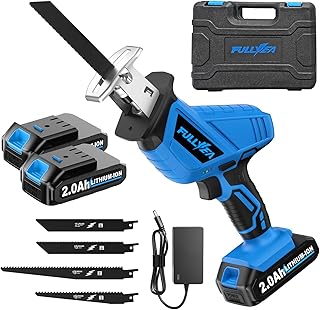
Get brushless, get a real variable-speed trigger, and match it to a battery platform you already own. Kit-versus-bare-tool pricing is where people overspend. If you have batteries, buy the bare tool and put the savings into a proper bimetal and carbide blade assortment, because blades are what determine your cut quality anyway.
Blades, Amperage And Material Thickness In Plain Terms
Tooth pitch to thickness. The rule that keeps blades alive: at least three teeth in the material at all times. For sheet metal and thin tube up to about 1/8 inch wall, run 18 to 24 TPI. For 1/8 to 1/4 inch, 14 to 18 TPI. For 1/4 inch and thicker solid stock, 10 to 14 TPI. Too coarse on thin wall and the teeth straddle the metal, catch, and snap off. Too fine on thick stock and the gullets pack with chips, heat builds, and the blade dies from friction.
Blade material. Bimetal with 8 percent cobalt is the default and it is fine for mild steel, conduit, rebar and pipe. Carbide-tooth blades cost several times more per blade but they hold up in cast iron, stainless, hardened bolts and abrasive work. On stainless, carbide is not a luxury, it is the only economical choice, because stainless work-hardens the instant you let the blade rub without cutting.
Speed, which people get wrong constantly. Mild steel: mid trigger. Stainless: low, slow and steady, with continuous feed pressure so the teeth keep cutting instead of burnishing. Aluminum: faster is fine, but use wax or fluid or the aluminum welds itself into the gullets. Cast iron: slow, no fluid needed, expect dust rather than chips. If you see blue or straw discoloration on the teeth, you were too fast, too dry, or too light on pressure.
Amperage and torque, translated. Corded saws are rated in amps, roughly 10 to 15 on decent units, and that number is a rough proxy for how hard the motor can pull without bogging. Cordless saws do not publish comparable numbers, so what you are really judging is whether the brushless motor and battery can hold stroke speed when you lean on the tool. Torque here means resistance to stalling mid-stroke. A saw that slows dramatically under pressure will cook blades because the blade dwells in the cut generating heat instead of removing metal. Higher amp-hour batteries, 5.0Ah and up, sag less under sustained load and get noticeably more cuts per charge on steel.
Cutting fluid. Wax stick or dark cutting oil, applied to the blade and the cut every few strokes. It can double or triple blade life on steel. It is the cheapest performance upgrade in the shop.
Bimetal And Carbide Metal Blade Assortment
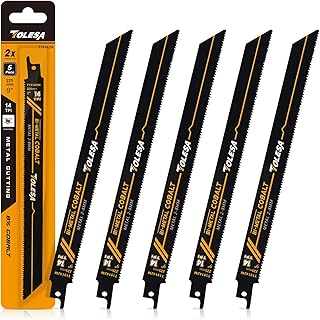
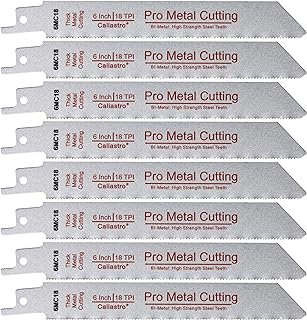
Buy blades in multi-packs by TPI, not in single-blade blister packs at hardware-store prices. Keep 18 TPI, 14 TPI and 10 TPI on hand plus a few carbide blades reserved for stainless and hardened stock. Blade cost per cut, not saw price, is the real long-term expense of metal cutting.
Cutting Safe: PPE, Sparks, Fumes And Fire
Recip saws throw hot chips and slivers, not the shower of sparks an abrasive chop saw makes, but the debris is sharp and it travels. Wear ANSI Z87.1 safety glasses at minimum, a face shield over them for overhead work, and cut-resistant gloves for handling stock. Do not wear loose gloves near the blade clamp. Long sleeves in natural fiber or leather, never synthetics, because synthetics melt into skin.
Hearing protection matters more than people admit. A recip saw in thin tube resonates the whole workpiece and easily exceeds 85 dB. Clamp the work. A clamped part is quieter, cuts straighter, and does not become a lever that whips your hand into the blade.
Fumes. Cutting is cooler than welding but coatings still off-gas. Galvanized steel releases zinc oxide fume, which causes metal fume fever. Painted, primed or oiled stock puts out whatever is in that coating. Old pipe can be lead-painted. Cut coated material outdoors or under local exhaust, and grind or wire-wheel coatings off the cut line first when you can. If you feel flu-like symptoms hours after cutting galvanized, that is zinc, and you needed ventilation.
Fire. Hot slivers land where you are not looking. Clear combustibles within 35 feet, cover what you cannot move, keep an extinguisher within reach, and do a fire watch for at least 30 minutes after you finish. Never cut into a drum, tank or pipe that held fuel or solvent without confirming it has been purged and tested. That mistake kills people.
- ✔ Cuts steel in place, no need to bring work to a chop saw
- ✔ Blade changes in seconds, blades are cheap in bulk
- ✔ Handles pipe, angle, rebar, threaded rod and sheet with one tool
- ✔ Far less spark hazard than an abrasive cutoff wheel
- ✘ Rough cut edge that usually needs deburring
- ✘ Blade life is short if speed and fluid are ignored
- ✘ Heavy vibration through the hands on long jobs
- ✘ Hard to hold a truly square cut without a guide or clamped fence
Compact One-Handed Recip Saw
The short stroke and light weight make these better than a full-size saw for conduit, strut, hangers and rusted fasteners in a rack. Not the tool for 1/2 inch plate. If you do a lot of overhead or in-place cutting, this earns its shelf space as a second saw rather than a replacement.
FAQ
Can a reciprocating saw cut hardened bolts and rebar? Yes. Rebar is easy with a 10 to 14 TPI bimetal blade at low speed. Hardened bolts and grade 8 fasteners need a carbide-tooth blade, slow speed and steady pressure. If the blade skates without biting, you are running too fast and work-hardening the surface.
How thick a steel plate can it handle? Realistically up to about 1/2 inch with a good saw, a coarse blade and cutting fluid, though it is slow and hard on blades. Beyond that, a bandsaw, plasma cutter or torch is the right tool. Recip saws shine on angle, tube, pipe and sheet where a fixed machine cannot reach.
Corded or cordless for shop metal work? Cordless if you cut in place, on ladders, or away from an outlet, which is most metal work. Corded if the saw lives on a bench and runs long production cuts, since there is no battery sag and no downtime. Either way, the low-speed control and the blade matter more than the power source.
Buy the saw with the best speed control you can afford, keep three tooth pitches on the shelf, use wax, and clamp your work. That combination beats a more expensive saw run badly.
Check prices on Amazon →