
Our Top Picks
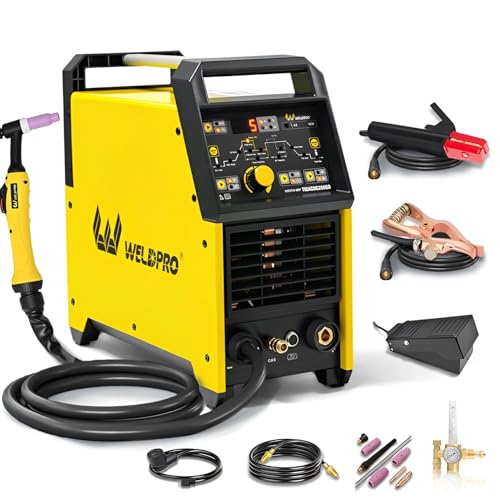 Weldpro 200A AC/DC TIG Welder with Pulse61.8 Pounds17.6 x 7.9 x 16.2 inches61.8 PoundsCheck on Amazon


What's inside
As an Amazon Associate I earn from qualifying purchases. This post may contain affiliate links at no extra cost to you.
An equipment repair shop buys a TIG welder for the jobs other processes leave behind: cracked castings, thin stainless guards, worn shafts, and aluminum housings that need a clean, controlled bead. The real decision is not the headline amperage but the arc control around it. AC output with adjustable balance opens up aluminum, pulse control tames heat on thin metal, and a foot pedal lets the operator ease current in and out of a repair without stopping. Duty cycle and input voltage decide whether the machine keeps up when three repairs queue up before lunch.
This guide is for equipment repair shops, maintenance welders, and mobile repair operators who need inverter TIG capability for mixed metals. Each machine below was chosen from the names and specifications shown on its Amazon product page, so the outputs, voltages, and TIG features listed here match what the listing itself states.
What we cover
Quick Picks
As an Amazon Associate we earn from qualifying purchases.
| Product | Best for | Key spec from title |
|---|---|---|
| AHP AlphaTIG 203Xi | Detailed AC control on aluminum repairs | 200-amp AC/DC TIG, 110/220V, pulse |
| ARCCAPTAIN TIG200P AC/DC | A compact AC/DC machine for mixed repair work | 200-amp AC/DC TIG, 110V/220V, pulse |
| Weldpro TIG200 AC/DC | A full kit with torch and foot pedal included | 200-amp AC/DC TIG, 110V/220V, CK17 torch |
| LOTOS TIG200ACDC | A square-wave machine with regulator in the box | 200-amp AC/DC TIG, 110/220V, foot pedal |
How to Choose
AC/DC output and pulse control
Repair work crosses metals, so AC/DC output is the first filter. DC handles steel and stainless, while AC is what lets you weld aluminum housings and cracked cast parts without fighting the oxide layer. Adjustable AC balance shapes how much cleaning the arc does versus how much penetration it delivers, and adjustable AC frequency tightens the arc for thin sections. Pulse control adds a second layer: by cycling between a high peak and a low background current, it limits heat input on thin guards and worn edges that would warp or burn through under a steady arc. Check that the listing states these controls rather than assuming they exist.
Input voltage and duty cycle for repair queues
A repair shop rarely welds one joint and stops. Look at input voltage first: dual-voltage machines run on a standard outlet for light bench repairs and switch to 220 volts for the full output on heavier castings. Then read the duty cycle at the amperage you will actually use, since a machine rated for short bursts at 200 amps still has to survive a long crack repair without overheating. A 60 percent duty cycle at a mid-range amperage covers most repair queues, while a machine that needs long cool-downs between beads slows the whole bench. Confirm the circuit and breaker behind the outlet can feed the machine at full output.
Torch, foot pedal, and gas setup
TIG welding is a hands-and-feet process, so the torch and pedal decide how the machine feels. A flexible torch with a comfortable head reaches into tight housings and around brackets, while a stiff torch fights the operator on every joint. A foot pedal gives current control for starting and ending a bead, which matters on thin edges and castings, so check whether one is included or sold separately. Argon is the shielding gas for TIG work, and the regulator and hose need to be in the box or on the shopping list before the first repair. Keep ventilation in mind as well, since repair welding on painted, oily, or galvanized parts produces fume that needs extraction or fresh air.
Where cheap TIG welders cut corners
Budget TIG machines usually save money in the places a repair shop feels first. Short torch leads and a short work clamp cable pin the machine to the bench and force awkward repositioning around large parts. A basic torch with few consumables in the box means an extra order before the machine is truly ready, and a foot pedal that only switches on and off gives no fine control over the arc. Some machines also lack a clear display of amperage and pulse settings, so the operator guesses instead of repeating a setting that worked. Read the included-components list carefully and compare the whole package, not the headline amperage.
The 4 Best Options
AHP AlphaTIG 203Xi
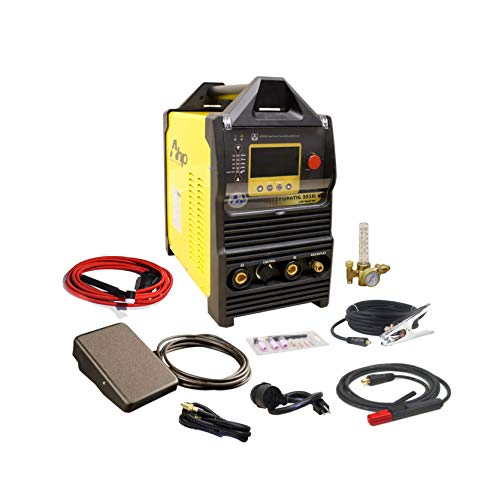
The AlphaTIG 203Xi fits a repair shop that welds aluminum often and wants to shape the arc rather than accept a fixed one. Adjustable AC balance and frequency give the operator real control over cleaning and penetration on cast housings and aluminum panels, and pulse settings help on thin sections that warp easily. High-frequency start means the arc lights without scratching the tungsten, and the digital interface keeps amperage and pulse values visible. With a foot pedal in the standard package and a three-year warranty stated on the listing, it is a serious bench machine for mixed-metal repair work.
Specs
- 200-amp AC/DC TIG output
- 110/220V dual-voltage input
- AC/DC TIG and Stick with pulse
- Adjustable AC balance and frequency
- High-frequency start
- Foot pedal included
- 3-year warranty
Best for: A repair shop that needs detailed AC control for aluminum castings and panels.
Watch out for: Confirm the exact model year and the foot pedal style in the listing, since bundles and revisions vary.
ARCCAPTAIN TIG200P AC/DC
The TIG200P AC/DC suits a repair shop that wants a compact machine with a wide control range. Its 10 to 200 amp output covers thin stainless guards at the low end and heavier brackets at the top, while pulse settings from 0.2 to 200 Hz and AC balance from 30 to 70 percent give the operator room to tune the arc. Square and triangular wave options add control on aluminum, and stick mode covers the outdoor or dirty-metal jobs where TIG is the wrong tool. At about 26.5 pounds it moves between benches and out to a job without a cart.
Specs
- 200-amp AC/DC TIG output
- 110V/220V dual-voltage input
- 10-200 amp output range
- Pulse 0.2-200 Hz, AC balance 30-70 percent
- Square and triangular wave
- AC/DC TIG, Stick, MMA, Spot TIG
- Large LED display
Best for: A compact AC/DC machine for a shop that repairs steel, stainless, and aluminum in rotation.
Watch out for: Check whether the foot pedal is included in the bundle you choose, since some packages list it separately.
Weldpro TIG200 AC/DC
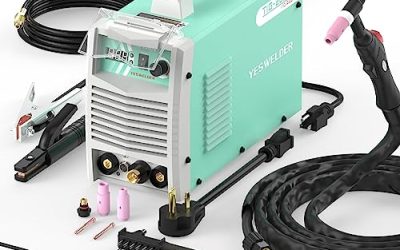
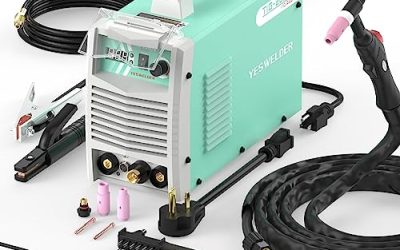
The Weldpro TIG200 fits a shop that wants the kit complete on arrival. The listing pairs the machine with a CK17 TIG torch and a foot pedal, so the operator can start real repair work without a second order, and the five modes cover AC TIG, DC TIG, AC pulse, DC pulse, and stick. A 40 percent duty cycle at 200 amps means it holds up on longer beads, and dual-voltage input lets it run from a standard outlet for light bench work or 220 volts for full output. The digital display keeps pulse and current settings visible between jobs.
Specs
- 200-amp AC/DC TIG output
- 110V/220V dual-voltage input
- AC TIG, DC TIG, AC Pulse TIG, DC Pulse TIG, Stick
- CK17 TIG torch included
- Foot pedal included
- 40 percent duty cycle at 200 amps
Best for: A repair shop that wants a complete AC/DC TIG kit with torch and pedal in one box.
Watch out for: The argon cylinder is not included, so arrange gas and a regulator before the first weld.
LOTOS TIG200ACDC
The LOTOS TIG200ACDC suits a shop that wants a straightforward square-wave AC/DC machine with the gas hardware sorted. The listing includes a foot pedal and an argon regulator, which removes two of the most common extra purchases, and the square-wave inverter handles aluminum and steel with a clean, stable arc. DC stick mode covers rough outdoor repairs where TIG is impractical, and dual-voltage input lets the machine work from a standard outlet or a 220-volt circuit. It is a practical choice when the budget has to cover the machine and its gas setup together.
Specs
- 200-amp AC/DC TIG output
- 110/220V dual-voltage input
- Square-wave inverter
- AC/DC TIG with DC Stick
- Foot pedal included
- Argon regulator included
Best for: A shop that wants an AC/DC TIG machine with the pedal and regulator already in the box.
Watch out for: Verify the torch length and the included tungsten size match the tight spaces your repairs involve.
Which One Fits Your Situation
Aluminum housings and castings dominate the bench
Choose the AHP AlphaTIG 203Xi. Adjustable AC balance and frequency are the controls that decide whether an aluminum casting cleans up or stays dirty, and the pulse settings protect thin sections from warping. The foot pedal in the package and the high-frequency start make it the most controlled machine here for aluminum-heavy repair work.
You need one compact machine for every metal
Pick the ARCCAPTAIN TIG200P AC/DC. The 10 to 200 amp range reaches thin stainless at the bottom and solid brackets at the top, while square and triangular waves add options on aluminum. Its light weight also suits a shop where the welder moves between benches and out to equipment in the yard.
You want the full kit in a single order
Take the Weldpro TIG200 AC/DC. The CK17 torch and foot pedal arrive in the box, so there is no second order before the first repair, and five TIG and stick modes cover the metals a repair shop meets. The 40 percent duty cycle at full output also suits longer crack repairs without forced cooling breaks.
The budget must cover machine, pedal, and gas hardware
Go with the LOTOS TIG200ACDC. The foot pedal and argon regulator are included, which keeps the total setup cost down, and the square-wave AC/DC inverter still handles aluminum and steel properly. Dual-voltage input means it can run wherever the repair happens. For a shop watching every dollar of setup cost, that included hardware is the deciding factor.
Common Mistakes
- Buying a DC-only TIG machine and discovering too late that aluminum repairs need AC output.
- Ignoring the duty cycle at the amperage you actually weld at, then waiting on cool-downs mid-repair.
- Starting a repair without checking whether the foot pedal, regulator, or argon cylinder is included.
- Welding painted, oily, or galvanized parts without ventilation or cleaning, which produces heavy fume and poor beads.
- Skipping the tungsten and cup check, then chasing arc instability that a fresh electrode would have fixed.
Frequently Asked Questions
Do I need AC output for equipment repair?
If you repair aluminum, yes. AC output breaks through the oxide layer on aluminum, which DC cannot do cleanly, so aluminum housings, cast parts, and panels need an AC/DC machine. Steel and stainless repairs work fine on DC alone. Shops that see both metals should buy AC/DC once rather than adding a second machine later.
What does pulse control do on a repair?
Pulse cycles the current between a high peak and a low background level, which limits total heat while keeping the puddle fluid. That matters on thin guards, worn edges, and heat-sensitive castings that warp or crack under a steady arc. It also helps the operator control the bead on vertical or overhead repairs.
Is a foot pedal necessary for TIG repair work?
It is close to essential for most repair welds. A pedal lets you ease current in at the start and taper it off at the end, which prevents craters and burn-through on thin sections. Machines without one force the operator to use fixed current, which works for straight seams but struggles on the varied joints repair work brings.
Can these welders run on a standard outlet?
All four are dual-voltage machines, so they run on a standard 110-volt outlet for light work and a 220-volt circuit for full output. The amperage available drops on the lower input, so heavy castings and long beads belong on the higher voltage. Check the outlet and breaker rating before running at full output.
Related guides
More from Amazon
Programs that pair well with the guide above. Offers and eligibility are set by Amazon and may change.
A free business account with business pricing and bulk-buying tools for work, shop or home office.
Create a business accountFree shipping on eligible items, Prime Video and more. Eligible new members can start with a free trial.
Start a Prime free trialAudiobooks and podcasts to listen to on the go. Eligible new members can start with a free trial.
Try Audible freeAd-free music streaming. Eligible new subscribers can start with a free trial.
Try Music Unlimited freeAs an Amazon Associate we earn from qualifying purchases.
Write Your Review
No reviews yet. Be the first to share your experience!