
Our Top Picks


What's inside
As an Amazon Associate I earn from qualifying purchases. This post may contain affiliate links at no extra cost to you.
An automotive fabrication shop welds thin sheet, tube, and aluminum panels where heat control is everything. One wrong amp setting blows through a door skin, and too little heat leaves a cold lap on a roll cage tube. That is why dual-voltage TIG machines earn their place: they run from a standard outlet for light bench work and switch to a 220-volt circuit when the job needs full output. AC output opens up aluminum, pulse control steadies thin stainless, and a foot pedal lets the fabricator feather current around a curve instead of stopping and restarting.
This guide is for automotive fabrication shops, chassis builders, and restoration welders who need dual-voltage TIG capability for steel, stainless, and aluminum. Each machine below was chosen from the names and specifications shown on its Amazon product page, so the outputs, voltages, and TIG features listed here match what the listing itself states.
What we cover
Quick Picks
As an Amazon Associate we earn from qualifying purchases.
| Product | Best for | Key spec from title |
|---|---|---|
| YESWELDER TIG-205DS HF | A light DC TIG machine for steel chassis work | 205-amp output, 110/220V, foot pedal |
| YESWELDER TIG-205P | Pulse TIG on thin sheet with auto-sensing voltage | 200-amp output, 110V/220V, pulse TIG |
| AHP AlphaTIG 203Xi | Detailed AC control on aluminum panels | 200-amp AC/DC TIG, 110/220V, pulse |
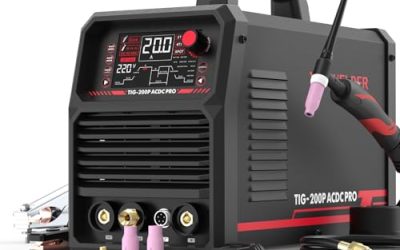
| ARCCAPTAIN TIG200P AC/DC | A compact AC/DC machine for mixed fab work | 200-amp AC/DC TIG, 110V/220V, pulse |
How to Choose
Dual-voltage input and real output on each voltage
Dual voltage only helps if you know what each input delivers. A machine rated at 200 amps on 220 volts may only reach a fraction of that on a 110-volt outlet, and the listing usually states both numbers. For automotive fabrication, that split matters: light bench work on brackets and patch panels runs fine on the lower input, while roll cage tube and thicker mounts need the full output of the higher one. Check the plug and breaker behind the outlet as well, since a standard circuit cannot feed a welder at full output no matter what the label promises. Plan which jobs run on which input before the machine arrives.
AC balance, frequency, and aluminum panels
Aluminum body panels and intake parts need AC output, and the quality of that AC output decides the result. Adjustable AC balance controls how much of the cycle cleans the oxide layer versus how much drives penetration, and adjustable frequency tightens the arc for thin panels that warp under a wide, hot arc. A machine with fixed AC settings can still weld aluminum, but it gives the fabricator no way to adapt when a panel is thin, dirty, or heavily oxidized. Look for balance and frequency controls stated in the listing, and check that the torch and tungsten size suit the panel thicknesses your shop welds most.
Pulse control and thin sheet work
Pulse is the control that separates a clean automotive weld from a warped panel. By cycling between a high peak current and a low background current, pulse limits total heat while keeping the puddle fluid, which protects door skins, floor pans, and stainless exhaust tube from distortion. It also helps on joints where the fabricator must pause to reposition, since the background current keeps the puddle alive without adding heat. Check the pulse frequency range in the listing: a wide range gives more room to tune, while a narrow one limits the machine to a few thicknesses. Pair pulse with a foot pedal for the finest control on curves and corners.
Torch, pedal, and the accessories that decide the buy
A fabrication TIG welder is only as good as its torch and pedal. A flexible torch head reaches into engine bays, around tube junctions, and under dashboards where a stiff torch cannot follow. A foot pedal with smooth, variable control lets the fabricator ease current in and out of a bead, which prevents craters at the end of a weld and burn-through at the start. Check whether the pedal is included or a separate purchase, and confirm the argon regulator, hose, and tungsten are in the box. Ventilation matters too: grinding and welding in a closed fab bay fills the air with dust and fume, so extraction or fresh air belongs in the setup.
The 4 Best Options
YESWELDER TIG-205DS HF

The TIG-205DS HF fits a fabrication shop that welds mostly steel and stainless and wants a light, simple DC TIG machine. High-frequency start lights the arc without scratching the tungsten, which keeps starts clean on visible chassis and exhaust work, and the included foot pedal gives variable current control for tapering beads around tube joints. At 205 amps with dual-voltage 110 and 220 volt input, it covers thin sheet at the low end and heavier brackets at the top, and the 60 percent duty cycle suits the stop-and-start rhythm of fabrication. It is the straightforward pick when aluminum is rare and steel dominates the bench.
Specs
- 205-amp maximum output
- 110/220V dual-voltage input
- HF TIG, Stick, Arc TIG
- High-frequency start
- Foot pedal included
- 60 percent duty cycle
Best for: A fabrication shop that welds steel and stainless and wants a simple dual-voltage DC TIG machine.
Watch out for: It is a DC-only machine, so aluminum panels need a different welder with AC output.
YESWELDER TIG-205P
The TIG-205P suits a fabricator who welds thin sheet and wants pulse control without a complicated panel. Its three modes cover DC TIG, pulse TIG, and stick, and the auto-sensing dual-voltage input switches between 110 and 220 volts without manual toggling, which helps when the machine moves between benches and out to a car on a lift. Pulse mode limits heat on floor pans and patch panels that warp easily, and the 200-amp maximum output still reaches brackets and mounts. The large LED display keeps the setting visible, and the compact inverter body fits on a crowded fabrication bench.
Specs
- 200-amp maximum output
- 110V/220V auto-sensing dual-voltage input
- DC TIG, Pulse TIG, Stick
- Pulse TIG mode
- Large LED display
- Digital inverter, IGBT
Best for: Thin sheet and patch panel work where pulse control limits warping.
Watch out for: It is a DC-only machine, so confirm your aluminum work has another machine before choosing it.
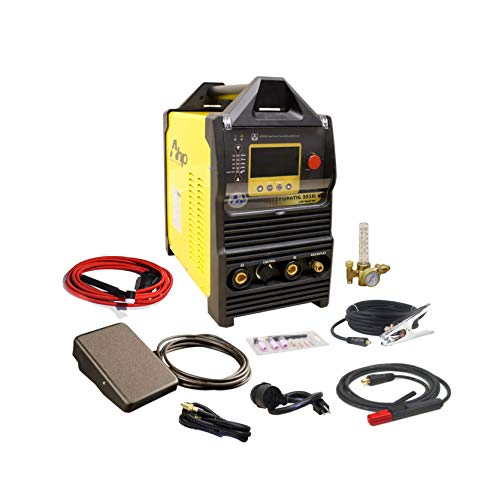
AHP AlphaTIG 203Xi
The AlphaTIG 203Xi fits a fabrication shop that welds aluminum panels often and wants to shape the AC arc. Adjustable AC balance and frequency give the fabricator control over cleaning and penetration on aluminum, while pulse settings protect thin sections from heat distortion. High-frequency start keeps arc strikes clean on visible work, and the digital interface shows amperage and pulse values clearly. A foot pedal comes in the standard package, and the three-year warranty stated on the listing suits a machine that will see daily use. It is the most controlled aluminum machine in this group.
Specs
- 200-amp AC/DC TIG output
- 110/220V dual-voltage input
- AC/DC TIG and Stick with pulse
- Adjustable AC balance and frequency
- High-frequency start
- Foot pedal included
- 3-year warranty
Best for: A fabrication shop that needs detailed AC control for aluminum panels and cast parts.
Watch out for: Confirm the exact model year and the foot pedal style in the listing, since bundles and revisions vary.
ARCCAPTAIN TIG200P AC/DC
The TIG200P AC/DC suits a fabrication shop that wants one compact machine for steel, stainless, and aluminum. Its 10 to 200 amp range reaches thin sheet at the bottom and solid tube at the top, while pulse settings from 0.2 to 200 Hz and AC balance from 30 to 70 percent give the fabricator room to tune the arc for each metal. Square and triangular wave options add control on aluminum panels, and stick mode covers the rough outdoor jobs where TIG is the wrong process. At about 26.5 pounds it moves from the bench to the car without a cart, and the large LED display keeps settings visible.
Specs
- 200-amp AC/DC TIG output
- 110V/220V dual-voltage input
- 10-200 amp output range
- Pulse 0.2-200 Hz, AC balance 30-70 percent
- Square and triangular wave
- AC/DC TIG, Stick, MMA, Spot TIG
- Large LED display
Best for: A compact AC/DC machine for a fabrication shop that rotates between steel, stainless, and aluminum.
Watch out for: Check whether the foot pedal is included in the bundle you choose, since some packages list it separately.
Which One Fits Your Situation
The shop welds mostly steel chassis and exhaust
Choose the YESWELDER TIG-205DS HF. High-frequency start and the included foot pedal suit visible steel work, and the 205-amp output covers tube and brackets. It is the simplest machine here, and its 60 percent duty cycle matches the stop-and-start rhythm of chassis fabrication. When aluminum is rare, its simplicity is a strength, not a gap.
Thin sheet and patch panels warp too easily
Pick the YESWELDER TIG-205P. Pulse TIG limits heat on floor pans and door skins, and the auto-sensing dual voltage means the machine adapts when it moves between outlets. It is the best fit for restoration work where the original metal is thin and unforgiving. That combination suits restorers who chase original panels rather than replace them.
Aluminum panels and intake parts are a weekly job
Take the AHP AlphaTIG 203Xi. Adjustable AC balance and frequency are the controls that decide whether an aluminum panel cleans up or stays dirty, and pulse protects thin sections from warping. The foot pedal and high-frequency start make it the most controlled choice for aluminum-heavy fabrication. For weekly aluminum work, that control pays for itself.
One machine must cover every metal in the shop
Go with the ARCCAPTAIN TIG200P AC/DC. The 10 to 200 amp range, pulse control, and AC/DC output handle steel, stainless, and aluminum in rotation, and its light weight suits a shop where the welder moves to the car. Square and triangular waves add options when aluminum panels need a finer arc.
Common Mistakes
- Buying a DC-only TIG machine and then discovering the next aluminum panel needs AC output.
- Welding thin sheet at full current instead of using pulse or the foot pedal to limit heat.
- Skipping the foot pedal check and ending up with an on-off switch instead of variable control.
- Running the machine on a standard outlet for a heavy job and blaming the welder for the low output.
- Grinding and welding in a closed bay with no ventilation, which fills the air with dust and fume.
Frequently Asked Questions
Why does dual voltage matter for automotive fabrication?
Because fabrication happens in two places: at the bench on a standard outlet and at the car on a heavier circuit. Dual voltage lets one machine serve both, with light panel work on the lower input and full-output tube and bracket work on the higher one. It also means the welder can travel to a customer’s garage without needing a special circuit.
Do I need pulse control for thin automotive sheet?
It helps a lot. Pulse cycles between high and low current, which limits total heat while keeping the puddle fluid, so door skins and floor pans warp less. A foot pedal adds further control. Shops that weld thin sheet daily should treat pulse as a core feature, not an extra.
Can these machines weld aluminum?
The two AC/DC machines here can: the AHP AlphaTIG 203Xi and the ARCCAPTAIN TIG200P AC/DC. The two YESWELDER machines are DC-only, so they handle steel and stainless but not aluminum. If aluminum panels are part of your work, choose an AC/DC machine and confirm the torch and tungsten suit the thicknesses you weld.
What gas do these TIG welders need?
Argon, supplied through a regulator and hose to the torch. None of these machines includes the cylinder itself, so arrange gas before the first weld. Keep the flow modest and steady, since too much gas wastes argon and too little leaves the bead exposed to air.
Related guides
More from Amazon
Programs that pair well with the guide above. Offers and eligibility are set by Amazon and may change.
A free business account with business pricing and bulk-buying tools for work, shop or home office.
Create a business accountFree shipping on eligible items, Prime Video and more. Eligible new members can start with a free trial.
Start a Prime free trialAudiobooks and podcasts to listen to on the go. Eligible new members can start with a free trial.
Try Audible freeAd-free music streaming. Eligible new subscribers can start with a free trial.
Try Music Unlimited freeAs an Amazon Associate we earn from qualifying purchases.

Write Your Review
No reviews yet. Be the first to share your experience!