
Our Top Picks

What's inside
As an Amazon Associate I earn from qualifying purchases. This post may contain affiliate links at no extra cost to you.
A home fabricator shopping for a pulse TIG welder is choosing how much heat control the machine hands over on thin material. Pulse alternates the arc between a high peak current that melts the joint and a low background current that lets the puddle cool, protecting thin-wall tubing, sheet brackets, and stainless trim from warping or burn-through. The decision comes down to true AC and DC output, adjustable pulse frequency and background current, duty cycle at your working amperage, and whether your garage has the 240-volt circuit a 200-amp machine needs for full output.
This guide is for home fabricators building brackets, frames, and exhaust parts in a garage shop, for hobby welders moving up from a stick or MIG machine, and for anyone who wants clean TIG beads on steel, stainless, and aluminum without an industrial machine. The four welders below were chosen from names and specifications on their Amazon product pages, focusing on pulse control, dual-voltage input, and the torch and pedal equipment in the box.
What we cover
Quick Picks
As an Amazon Associate we earn from qualifying purchases
| Product | Best for | Key spec from title |
|---|---|---|
| ARCCAPTAIN TIG200P AC/DC | Aluminum brackets and mixed-metal home projects | 200-amp AC/DC TIG welder with pulse, 110V/220V |
| YESWELDER TIG-200P ACDC | A first AC/DC pulse machine with a large display | 200-amp AC/DC aluminum TIG welder with pulse, large LED display |
| YESWELDER TIG-250P | Higher-output steel and aluminum fabrication | 250-amp AC/DC aluminum TIG welder with pulse, digital inverter |
| AHP AlphaTIG 203Xi | Detailed AC control on frequent aluminum work | 200-amp IGBT AC/DC TIG/stick welder with pulse, 110/220V |
How to Choose
Input voltage and duty cycle decide what you can actually weld
A 120-volt household circuit caps most inverter TIG welders well below their headline amperage, so a machine rated at 200 amps may only deliver around half of that on a standard garage outlet. If your projects include quarter-inch aluminum plate or long beads on steel tube, a 240-volt circuit is close to essential. Duty cycle tells you how long the machine can weld within a ten-minute window before its thermal protection cuts in, and the figure that matters is the one quoted at the amperage you plan to use. Check your breaker size, the outlet type, and whether the machine ships with a 240-volt adapter before ordering, since the wrong adapter leaves a capable welder running at reduced power.
AC/DC output and pulse range shape the metals you can join
DC-only TIG handles steel and stainless cleanly, yet aluminum needs alternating current to break up the oxide layer, so a fabricator planning any aluminum work should insist on AC/DC output. Pulse frequency matters too: a low rate gives a visible ripple and steady heat for thicker sections, while a high rate narrows the arc and limits distortion on thin sheet. Look for machines that adjust pulse frequency, peak current, and background current separately, because fixed presets hide the settings that make thin stainless or edge joints manageable. If a listing says pulse without giving a frequency range, confirm that gap with the seller before you commit.
Torch, foot pedal, and gas setup determine the real cost
The welder itself is only part of the purchase, since TIG work also needs an argon cylinder, a regulator, filler rod, and tungsten electrodes, none of which usually ship with the machine. Some packages include a foot pedal and a flex-head torch, while others sell the pedal separately, and that difference changes both the outlay and how precisely you can taper amperage at the end of a bead. A 17-series or 26-series torch suits most home fabrication, with the larger torch handling sustained high-amperage work better. Confirm the torch connector type, whether the regulator is included, and whether the pedal uses a standard multi-pin plug, since a pedal that does not fit your machine is an expensive paperweight.
Where budget welders cut corners, and how to spot it
Lower-cost inverter welders often cut the same handful of items: a short torch lead that keeps the machine close to the work, a basic ground clamp that loosens as it heats, thin cables, and a cooling fan that runs constantly and loudly. None of those flaws makes a machine unusable, yet each one shows up on long sessions when the torch cable drags or the clamp needs reseating mid-bead. Read the listing for lead lengths, clamp style, and fan behaviour, and favour a longer torch and sturdier clamp over slightly higher headline amperage. A welder that stays comfortable across a full afternoon of cutting, fitting, and welding earns its place more than a specification sheet ever will.
The 4 Best Options
ARCCAPTAIN TIG200P AC/DC

The ARCCAPTAIN TIG200P AC/DC suits a home fabricator who wants one machine for aluminum brackets, stainless trim, and occasional stick welding without dedicating a whole bench to separate units. Its seven-mode layout covers AC and DC TIG, both pulse variants, square and triangular AC waveforms, stick, and spot timing, which gives a garage builder room to experiment with settings as skills grow. At roughly twenty-six and a half pounds it moves easily from bench to driveway, and the large LED display keeps amperage, pulse, and balance settings visible in a dim shop.
Specs
- 200-amp maximum TIG output
- 110V/220V dual-voltage input
- AC/DC TIG with pulse from 0.2 to 200 Hz
- AC balance adjustable from 30 to 70 percent
- Square and triangular AC waveforms
- Stick welding and timed spot TIG modes
- 2T/4T trigger control
- High-frequency start
Best for: Home fabricators welding aluminum and steel in the same week.
Watch out for: Confirm whether the foot pedal is included in the exact bundle you order, since bundles vary and the pedal is sold separately in some listings.
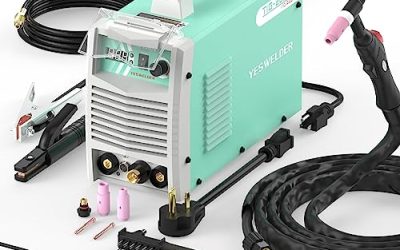
YESWELDER TIG-200P ACDC
The YESWELDER TIG-200P ACDC fits a garage welder buying a first AC/DC pulse machine and wanting the settings to be easy to read while learning. Its large LED display shows amperage and mode clearly, and the seven-mode layout includes AC and DC pulse TIG alongside stick, so one machine covers steel, stainless, and aluminum practice pieces. Dual-voltage input means it runs on a standard household circuit for light work and steps up on a 240-volt circuit when thicker material demands more heat.
Specs
- 200-amp maximum TIG output
- 110/220V dual-voltage input
- AC/DC TIG with pulse
- Large LED display
- Seven welding modes including AC/DC pulse TIG
- Stick welding capability
- Digital inverter design
- Foot pedal support
Best for: Beginners moving into aluminum TIG in a home garage.
Watch out for: Check the listing to confirm which accessories ship in the box, since torch and pedal contents differ between bundle versions.
YESWELDER TIG-250P

The YESWELDER TIG-250P fits a home fabricator who regularly pushes past 200 amps on thicker aluminum or long steel joints and wants headroom rather than a machine running at its limit. Its software-controlled square-wave AC/DC inverter delivers up to 250 amps for TIG, with pulse control, adjustable pre-gas and post-gas timing, upslope and downslope settings, and 2T/4T trigger control for longer beads. The extra output makes it a strong choice for chassis brackets, thick-wall tubing, and repair work where penetration matters more than portability.
Specs
- 250-amp maximum TIG output
- AC/DC TIG and stick welding
- Pulse TIG control
- Software-controlled square-wave AC/DC inverter
- Digital settings for pre-gas, start current, upslope, downslope, finish current, and post-gas
- 2T/4T trigger function
- 220V input
- 13-foot WP-26 TIG torch
Best for: Fabricators who need 250-amp output for thicker aluminum and steel.
Watch out for: The foot pedal is not included in the box, so budget for a compatible pedal if you want hands-free amperage control.
AHP AlphaTIG 203Xi
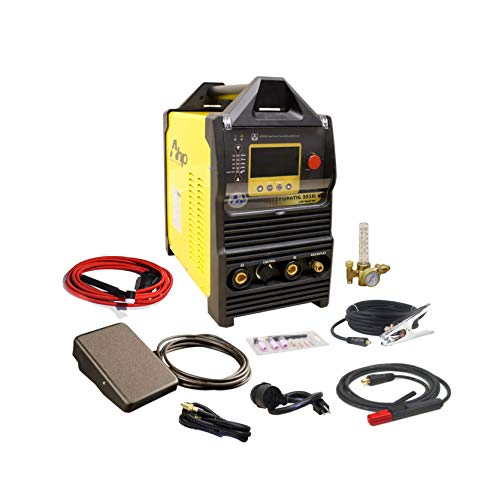
The AHP AlphaTIG 203Xi fits a home fabricator who welds aluminum often and wants to shape the AC arc rather than accept fixed factory settings. Adjustable AC frequency and AC balance let you tune cleaning action against penetration on oxidized or cast aluminum, while pulse settings, high-frequency start, and a foot pedal in the standard package cover the rest of the TIG workflow. Its 60 percent duty cycle at 155 amps gives it staying power on longer fabrication sessions, and the digital interface keeps those adjustments repeatable from one project to the next.
Specs
- 200-amp maximum AC/DC TIG output
- 110/220V dual-voltage input
- IGBT inverter design
- Pulse TIG settings
- Adjustable AC frequency and AC balance
- High-frequency start
- Foot pedal included in the standard package
- 60 percent duty cycle at 155 amps
Best for: Frequent aluminum fabrication where AC arc shaping matters.
Watch out for: The Amazon listing describes a 2024 revision, so verify the exact model year and supplied pedal against the listing before ordering.
Which One Fits Your Situation
You weld aluminum brackets and steel parts in the same garage
Choose the ARCCAPTAIN TIG200P AC/DC, because its seven modes and adjustable AC balance cover aluminum cleaning and steel penetration without swapping machines. The square and triangular waveform options give you two ways to shape the arc on aluminum, and the 200-amp ceiling handles most home fabrication thicknesses. Its portable weight also helps when a project moves from the bench to the driveway.
You are buying your first pulse TIG machine and learning as you go
Choose the YESWELDER TIG-200P ACDC, because the large LED display makes every setting visible while you learn what pulse frequency and background current actually do to a bead. Dual-voltage input lets you start on a household circuit and grow into a 240-volt setup later. The seven-mode layout means you will not outgrow the machine the first time an aluminum project appears.
Your projects regularly need more than 200 amps
Choose the YESWELDER TIG-250P, because its 250-amp ceiling gives you headroom on thick aluminum plate and heavy steel brackets instead of running a smaller machine flat out. The digital upslope, downslope, and gas timing controls help on long joints where heat builds up. Just remember the foot pedal is a separate purchase, so factor that into your setup.
Aluminum is your main material and you weld it weekly
Choose the AHP AlphaTIG 203Xi, because adjustable AC frequency and balance give you direct control over cleaning action and penetration on aluminum, and the included foot pedal means precise amperage control from day one. Its duty cycle at 155 amps supports longer sessions on frames and panels without repeated thermal cutouts.
Common Mistakes
- Buying a DC-only machine and then discovering it cannot weld aluminum, which needs AC output to clean the oxide layer.
- Running a 200-amp welder on a 120-volt circuit and expecting full output, then blaming the machine for weak penetration on thick material.
- Ignoring duty cycle at your real welding amperage and hitting thermal shutdown halfway through a long joint.
- Ordering without checking whether the foot pedal, regulator, and torch are included, then finding the welder cannot run until extra parts arrive.
- Welding in a closed garage without ventilation or an extraction fan, letting argon displace air and fumes build up around the work area.
Frequently Asked Questions
Do I need AC/DC output for home fabrication projects?
Yes, if aluminum is anywhere on your project list, because DC-only TIG cannot break through the oxide layer on aluminum and leaves weak, dirty beads. Steel and stainless weld fine on DC, so a DC-only machine works when you never touch aluminum. For a home shop that mixes materials, AC/DC output is the safer single purchase and avoids buying a second welder later.
What pulse frequency should a beginner start with?
Start with a low pulse rate, around one to two pulses per second, so you can see the puddle form and freeze in rhythm with the arc. That slow pulsing teaches heat control on thin material without the arc feeling frantic. As your travel speed steadies, raise the frequency to narrow the arc and reduce distortion on sheet metal and edge joints.
Can I run a 200-amp pulse TIG welder on a household outlet?
You can run it, but only at reduced output, because a standard 120-volt circuit cannot supply the current a 200-amp machine needs at full power. Light work on thin steel and stainless is fine on household power. For full output on aluminum or thick steel, install or use a 240-volt circuit with the correct breaker and receptacle for the machine.
What else do I need besides the welder itself?
You need an argon cylinder and regulator, tungsten electrodes, filler rod matched to your base metal, a welding helmet, gloves, and a clean, ventilated workspace. A foot pedal is highly recommended for tapering amperage at the end of beads. Check the listing carefully, because some bundles include the pedal and regulator while others leave them out entirely.
Related guides
More from Amazon
Programs that pair well with the guide above. Offers and eligibility are set by Amazon and may change.
A free business account with business pricing and bulk-buying tools for work, shop or home office.
Create a business accountFree shipping on eligible items, Prime Video and more. Eligible new members can start with a free trial.
Start a Prime free trialAudiobooks and podcasts to listen to on the go. Eligible new members can start with a free trial.
Try Audible freeAd-free music streaming. Eligible new subscribers can start with a free trial.
Try Music Unlimited freeAs an Amazon Associate we earn from qualifying purchases.
Write Your Review
No reviews yet. Be the first to share your experience!