What's inside
As an Amazon Associate I earn from qualifying purchases. This post may contain affiliate links at no extra cost to you.
What we cover
Best Bench Grinders with Belt Sanders: Choose by the Work You Do
The best bench grinder with belt sander is the one whose belt angle, tracking, and working capacity suit your projects—not simply the model with the highest horsepower. For general workshop use, a 6-inch grinder with a compact, adjustable belt attachment is a sensible space-saving choice; for frequent metal shaping, look for a sturdier 8-inch machine or a dedicated belt grinder.
Combination machines pair a grinding wheel with an abrasive belt, making them useful for sharpening, deburring, and shaping small parts without switching tools. But their belt dimensions and adjustment range vary considerably, and a belt sander for a bench grinder is not automatically interchangeable between brands. Check the exact model’s parts and instructions before buying an add-on.
As an Amazon Associate we earn from qualifying purchases at no extra cost to you.
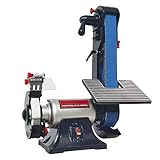


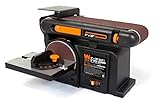
Combination grinders compared
The figures below are representative specifications for established combination models. Verify the current listing and manual before purchase: versions and regional specifications can change, and manufacturers do not always publish weight or belt-angle details consistently.
| Model | Motor | Wheel and belt | What to consider |
|---|---|---|---|
| JET JBG-6A belt-and-disc bench grinder | 1/2 HP | 6-inch grinding wheel; 2 × 28-inch belt; 5-inch disc | A versatile combination, but the disc and belt assembly need more bench depth than a basic grinder. |
| RIKON 80-805 8-inch slow-speed bench grinder with belt sander | 1/2 HP; 1,750 RPM | 8-inch wheels; 1 × 30-inch belt | Lower wheel speed favors controlled sharpening; the narrow belt is less convenient for broad, flat work. |
| Grizzly T27960 8-inch bench grinder with sanding belt | 1 HP | 8-inch wheels; 2 × 27-inch belt | More motor capacity and a wider belt suit heavier shaping, but demand more space and secure mounting. |
These are not like-for-like machines: the JET includes a sanding disc, while the RIKON prioritizes slow-speed grinding and the Grizzly offers a wider belt and more motor power. Belt length, wheel diameter, and motor rating alone do not reveal how well a machine tracks, how much it vibrates, or whether its work rests are useful. Those are worth checking in the manual, parts diagrams, and return policy.
Pick by situation
| Your situation | Best fit | Why |
|---|---|---|
| Occasional deburring, small shop, limited bench space | Compact 6-inch combination machine | Smaller wheel guards and a short belt unit are easier to accommodate. Confirm the assembled footprint, not just the shipping dimensions. |
| Sharpening tools and controlling heat | Slow-speed 8-inch model, such as the RIKON 80-805 | Its 1,750-RPM wheel speed is slower than common 3,450-RPM bench grinders, giving you more time to manage the work. It does not eliminate the need for light passes and cooling. |
| Frequent shaping of metal parts | Higher-power machine with a 2-inch-wide belt | The wider abrasive supports more of the work and the stronger motor is less likely to bog down under pressure. |
| Long weld cleanup or large flat surfaces | Dedicated belt grinder, used alongside a bench grinder | A combination unit’s short belt and compact work area can make sustained, even stock removal awkward. |
What matters beyond the headline specs
Motor power and wheel size
More horsepower helps a grinder maintain speed when you apply pressure, but it cannot compensate for a flimsy stand or poor belt tracking. A 6-inch wheel reaches the work differently from an 8-inch wheel; the larger diameter has a longer working arc and loses diameter more slowly as it wears. For tool sharpening, also consider wheel speed, wheel type, and whether compatible replacement wheels are readily available.
Do not treat a combination grinder as a heavy stock-removal machine just because its motor rating looks generous. Belt width, contact area, platen support, and frame rigidity all affect how much pressure the machine can handle without flex or vibration.
Belt dimensions and angle adjustment
A 1-inch belt is economical and useful for narrow edges, but can leave uneven results on wider surfaces if your hand pressure varies. A 2-inch belt provides more support for general shaping. The belt’s length determines which replacement abrasives fit; match width and length exactly, and check that the chosen grit and backing are suitable for your material.
Angle adjustment is especially important for sharpening and repeatable bevels. Some belt assemblies tilt or pivot; others offer only a fixed working position or limited adjustment. Check whether the work rest adjusts independently and whether the assembly locks firmly at the chosen angle. A mechanism that shifts under load can ruin consistency and create a safety hazard.
Footprint, vibration, dust, and assembly
Measure room for the wheel guards, belt path, workpieces, and your hands—not only the base. Leave access to change belts and dress or replace wheels. A compact machine can still need substantial clearance around its abrasive surfaces.
Vibration often comes from an uneven bench, loose mounting, an out-of-round wheel, or an abrasive installed incorrectly. Bolt the machine to a rigid surface, use suitable washers, and check that wheels and belts track freely before working. If vibration persists, stop and inspect rather than trying to compensate by gripping the work harder.
Grinding sparks and belt sanding dust are different cleanup problems. A spark deflector does not collect fine dust, and many compact combination machines offer limited dust extraction. Keep combustible materials away, use eye and face protection appropriate to the task, and arrange ventilation or suitable extraction for the material being worked. Do not assume ordinary shop-vac equipment is safe for hot sparks or fine metal dust.
Assembly quality matters because the belt frame, guards, and rests must stay aligned. Inspect castings and brackets for damage, check fasteners for looseness, and make sure guards do not rub. If the belt will not track centrally after following the maker’s adjustment procedure, do not keep running the machine in the hope that it will settle.
Setup and ownership costs that listings leave out
Before the first workpiece, mount the grinder securely, install only manufacturer-approved wheels and belts, and check that each abrasive is undamaged and correctly seated. Run the machine briefly without a workpiece while standing clear. Confirm that the belt tracks, guards are secure, and nothing contacts the abrasive. Follow the manual for wheel inspection and any belt-tension or tracking adjustment; procedures differ by model.
Budget for consumables, not just the machine. Belts wear faster when used at the wrong angle, clogged with material, or pressed too hard. Wheels need inspection and periodic dressing when appropriate, and eventually replacement. Keep the area clean: accumulated abrasive dust can affect tracking and conceal cracks or loose hardware. Never use a wheel or belt beyond its rated speed or outside its intended material range.
A combination grinder saves bench space and tool changes, but its compromises become more noticeable with daily use. If you routinely grind long edges, remove substantial metal, or need precise repeatable bevels, compare the cost of a dedicated belt grinder and separate bench grinder with the combination machine’s convenience.
Bottom line
Choose a compact 6-inch combo for light, mixed jobs; a slow-speed 8-inch model for controlled sharpening; or a wider-belt, higher-power option for more frequent shaping. If belt work is the main task, a dedicated machine is usually the better long-term choice. Before ordering, confirm the belt size, adjustment range, assembled footprint, mounting requirements, replacement-abrasive availability, and the manufacturer’s dust and safety guidance.