Our Top Picks
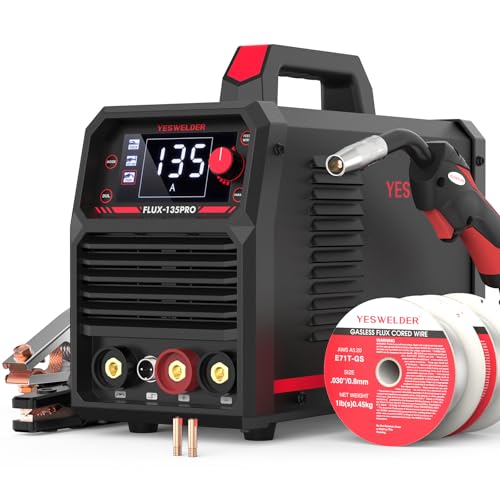
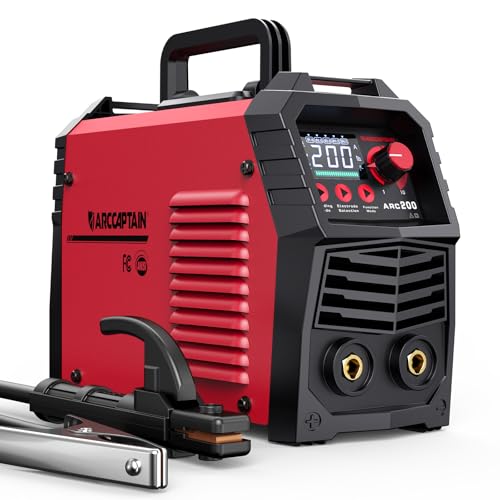
 YESWELDER 205Amp Stick Welder Digital Inverter IGBT ARCARC-205DS15.35 x 13.07 x 7.8 inches8.8 poundsCheck on Amazon


What's inside
As an Amazon Associate I earn from qualifying purchases. This post may contain affiliate links at no extra cost to you.
A welding machine for home garage work fails for one of two reasons. The circuit can’t feed it, or it can’t reach the metal you actually weld. Most people shop the amp number on the box, haul home a 140 amp flux-core unit, then try to weld quarter inch angle for a trailer tongue. What they get is cold gray welds that snap in a vise.
Buy in this order. The power at your wall. The thickness you actually weld. Whether you can keep a gas bottle in the space. Everything else is preference.
As an Amazon Associate we earn from qualifying purchases at no extra cost to you.


| Process | Best for | Power needed | Tradeoff |
|---|---|---|---|
| Flux-core | Rusty or outdoor steel | 120V dedicated circuit | Spatter and slag cleanup |
| Gas MIG | Clean steel, 22 gauge to 1/4 in | 120V light, 240V for duty | Bottle and refills |
| Stick | Thick steel and farm repair | 240V preferred | Slag and more feel required |
| TIG | Stainless, chromoly, aluminum | 240V for AC aluminum | Slow, highest entry cost |
What we cover
Match The Welding Machine For Home Garage To Your Power
A standard 120V, 20 amp garage circuit gives you about 2,400 watts. That is a hard ceiling. It puts you in the 90 to 140 amp class, and less than the sticker implies. Share that circuit with the fridge and the compressor and you will trip the breaker mid bead. Give the welder its own line. If you need a cord, run 12 gauge or heavier, under 25 feet, uncoiled.
240V changes what is possible. A 30 to 50 amp circuit on a NEMA 6-50 receptacle opens up 180 to 250 amp machines, longer duty cycles, and single pass welds on 3/16 and quarter inch steel. Installing it is electrician work in most homes. Price that first. It beats buying a small machine and replacing it in a year. Dual voltage machines are the honest hedge.
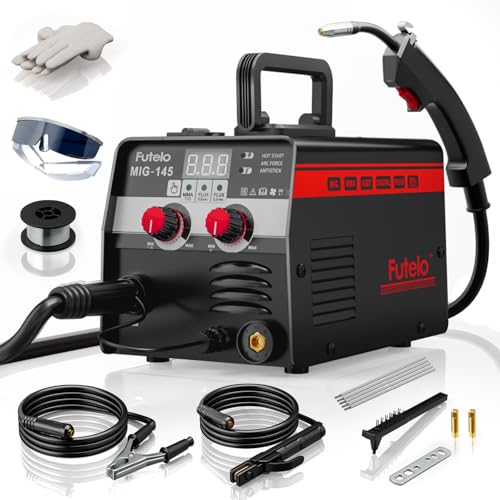
Dual Voltage Multiprocess Welder (120V/240V)
One box running gas MIG, flux-core and stick covers most home garage work. Look for a real 240V input, a duty cycle printed on the spec plate, and a spool gun port if aluminum is in your future. Walk past anything that hides its duty cycle.
Amperage, Thickness And Duty Cycle In Plain Terms
Amperage is heat. More amps means more melted metal and deeper penetration. The shop rule for mild steel is roughly one amp per thousandth of an inch. Eighth inch steel measures 0.125 inch, so figure around 125 amps for a single pass. Sixteenth inch sheet wants closer to 60. Quarter inch wants 200 or more, or a beveled joint and multiple passes on a smaller machine.
Thickness claims are marketing. Welds up to 1/2 inch means the machine can stack passes on half inch plate, not that one pass will hold weight. For anything structural, bevel the joint, preheat heavy sections, and run multiple passes.
Duty cycle is rest time. Twenty percent at 90 amps means two minutes of arc in a ten minute window, then the machine cools. Fine for tacking brackets. Miserable on a long fence rail. Look for 30 percent or better at the amps you plan to live at.
Flux-Core, MIG, Stick Or TIG
Flux-core for rust and wind
Self-shielded flux-core carries its shielding in the wire. No bottle, no wind screen. It tolerates mill scale and light rust. It also throws spatter, smokes hard, and leaves slag you chip and brush off. Cheapest working arc you can buy.
- ✔ No gas bottle to rent or store
- ✔ Handles dirty and outdoor steel
- ✔ Runs on a 120V circuit
- ✘ Heavy spatter and slag cleanup
- ✘ More fume than gas MIG
- ✘ Struggles below 18 gauge sheet
Gas MIG for clean, fast work
Short circuit MIG with 75/25 argon CO2 is the workhorse for clean steel from about 22 gauge to quarter inch. Low spatter, no slag, easiest to self teach. The tradeoffs are the bottle and the breeze. A fan across the puddle strips the shielding gas and you get porosity.
120V Gas MIG Welder For Sheet And Light Fab
If most of your work is 22 gauge to 1/8 inch, a 120V gas MIG is the least frustrating start. Prioritize a smooth wire drive with metal drive rolls and fine voltage steps over a big headline amp number.
Stick for thick and nasty
Stick does not care much about rust, wind or awkward angles. 6011 digs through junk. 7018 lays strong structural beads and has to stay dry. It is the cheapest way to put real amperage into thick steel, and it demands the most feel.
TIG when it has to look right
DC TIG gives tight control on steel, stainless and chromoly with no spatter. Aluminum needs AC, which costs more. TIG is two hands and a foot, and it is slow. For aluminum on a budget, a spool gun on a MIG machine gets there faster.
Gas, Consumables And The Rest Of The Bill
The machine is maybe 60 percent of a working corner. Budget for a bottle, a flowmeter regulator, a ground clamp and lead you trust, wire, contact tips, and a grinder with cutting and flap discs. Wire sizing is simple. Use .024 for sheet, .030 for general work, .035 on thicker stock. For flux-core, .030 E71T-GS is the usual starting wire.
Torque, plainly
Torque is twisting force, and it matters in three places here. The regulator nut on the cylinder valve gets snug with the right wrench, not gorilla tight, because brass threads strip and a weeping fitting empties a bottle overnight. Drive roll tension is set by feel: enough grip to feed without slipping, light enough that a gloved hand can stop the wire without flattening it. The ground clamp needs bare metal bite. Loose grounds cause wandering arcs people blame on the machine.
PPE, Fume And Fire In A Closed Garage
Start with an auto-darkening hood, shade 9 to 13, with fast sensors. Add leather gloves, a cotton or leather jacket with no synthetics near the arc, leather boots, pant legs over the boots, and safety glasses under the hood for grinding. Cuffs down, pockets closed. Sparks find every opening.
Fume is the risk people ignore. Manganese comes off mild steel, hexavalent chromium off stainless, zinc off anything galvanized. Grind galvanized coating back an inch from the joint, or do not weld it in an enclosed garage. Metal fume fever feels like the flu and it is avoidable. Cross ventilate. One fan pulling air out a door, arc between you and the exhaust. A P100 respirator for long sessions.
Fire next. Sparks and hot slag travel 30 feet and roll under things. Sweep the floor, move gas cans, aerosols and brake cleaner out, shut down anything with a pilot light. Lay scrap plate or a fire blanket under the work, since hot concrete can pop. Keep an ABC extinguisher within arm’s reach. Fire watch 30 minutes after the last arc. Never weld on a drum or tank that held fuel.
Auto-Darkening Helmet And PPE Kit
A slow hood is how people end up with arc burn. Look for a true color lens, four sensors, adjustable delay and sensitivity, and grind mode. Pair it with leather gloves and a jacket. This is not the line item to shave.
Frequently Asked Questions
Can I run a welder on a normal garage outlet? Within limits. A dedicated 120V, 20 amp circuit runs a 120 to 140 amp class machine for light fab and sheet metal. Expect short duty cycles and no single pass welds on quarter inch.
What thickness can a 140 amp machine really handle? Comfortably around 1/8 inch, and up to 3/16 inch with a beveled joint and multiple passes. Structural work in quarter inch and heavier belongs on 240V or a stick machine with real amperage.
Flux-core or gas MIG first? If your steel is clean and you can keep a bottle, gas MIG is easier to learn and cleaner to finish. If you weld outdoors or on rusty equipment, flux-core earns its place. A dual-capable machine skips the argument.
Buy for the circuit you have or will install, the thickness you actually weld, and a duty cycle that lets you finish a joint without waiting on a thermal light. Then practice on scrap of the same thickness before anything carries a load.
Check prices on Amazon →