What's inside
As an Amazon Associate I earn from qualifying purchases. This post may contain affiliate links at no extra cost to you.
The best budget welding jacket and gloves for most hobbyists and occasional MIG welders is a flame-resistant cotton jacket paired with split cowhide MIG gloves, while heavy stick and flux-core work is better served by a full leather cape sleeve or jacket with heavy-duty gauntlet gloves — you get adequate spark protection without paying for premium elkskin or full-grain leather coverage you don’t need for light use.
As an Amazon Associate we earn from qualifying purchases at no extra cost to you.


What we cover
How to Choose a Budget Jacket and Glove Set
Budget does not mean the same construction. Under $75 total, you are choosing between two protection systems, and the right one depends on process and amperage more than brand.
1. Jacket Construction: Fabric vs. Leather
Flame-resistant (FR) cotton or cotton-blend jackets: Usually 7.5 to 9 oz FR cotton, often treated with a flame retardant. They breath much better than leather, weigh 30-40% less, and protect well against MIG spatter and light stick sparks. They will not stop prolonged grinding sparks or large molten blobs — they char and eventually wear through at the cuffs and collar. Most need re-treatment or replacement after 1-2 years of frequent washing.
Split cowhide leather jackets, cape sleeves, or bibs: Split cowhide is the budget leather standard. It is thicker and more spark-resistant than FR cotton but stiffer and hotter. Budget jackets often use split cowhide on the sleeves and shoulders with FR cotton backs to save weight and cost. Full leather jackets offer the best overhead and out-of-position protection but can be too hot for summer garage work.
Seam durability clue: Look for Kevlar stitching on any leather panel. Standard cotton thread chars and snaps along shoulder seams and underarms first. Kevlar-thread seams double the service life on budget leather. On FR cotton jackets, double-stitched seams and reinforced snaps matter more than thread type.
2. Glove Construction: Dexterity vs. Heat Blocking
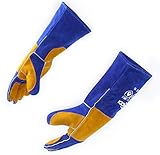
MIG gloves: Typically split cowhide back with grain cowhide or pigskin palm, 13 to 14 inches long, with light fleece or cotton lining. They balance stick protection with enough finger feel to feed wire and handle a MIG gun.
Heavy stick/TIG hybrid sets: Budget stick gloves are all split cowhide with full sock lining and extra palm reinforcement. They block heat to about 450-500°F for short contact but you lose dexterity for TIG or fine work. True TIG gloves use thin goatskin or deerskin and are not budget-friendly for spark protection — avoid them if you primarily MIG/stick weld.
Sizing runs large. A glove marked L often measures 10.5 to 11 inches hand circumference. If you are between sizes, size down for MIG and up for heavy stick gloves that have thick insulation.
Budget Jacket and Glove Sets Compared
These are common budget-priced pairings found from established welding brands in 2026. Specs are based on manufacturer listings for standard size Large.
| Set / Type | Jacket Material & Weight | Sizes Available | Seam Thread | Glove Model Type | Glove Leather & Cuff | Approx. Set Weight |
|---|---|---|---|---|---|---|
| Black Stallion FR Cotton + Tillman 850 MIG | 9 oz FR cotton, 26 oz jacket | S to 3XL | Cotton, double-stitched | Tillman 850L | Split cowhide back, grain pigskin palm, 14″ cuff | 34 oz |
| Lincoln Electric FR Cloth K2985 + K2981 MIG Gloves | 7.5 oz FR cotton blend, 22 oz jacket | M to 2XL | Cotton | Lincoln K2981 | Grain cowhide palm, split back, 13.5″ cuff | 30 oz |
| Revco Weldas Cape Sleeve 44-2800 + 10-1000 Gloves | Split cowhide sleeves, FR cotton body, 38 oz | M to 2XL | Kevlar on leather | Weldas 10-1000 | Full split cowhide, fleece lined, 14″ cuff | 48 oz |
| Hobart Leather Sleeve Combo + Hobart 770547 MIG Gloves | Split cowhide sleeves, FR back, 36 oz | One size (adjustable) | Kevlar on leather | Hobart 770547 | Split cowhide, cotton lined, 13″ cuff | 44 oz |
| Steiner 9213 Split Leather + Caiman 1878 MIG Gloves | Full split cowhide, 60 oz jacket | M to 3XL | Kevlar throughout | Caiman 1878 | Top-grain cowhide palm, split back, 14″ cuff | 70 oz |
Takeaway: FR cotton sets are the lightest and coolest at 30-34 oz total, cape-sleeve hybrids add about 12-16 oz but put Kevlar-stitched leather exactly where overhead sparks land, and full split leather is more than twice as heavy. If you weld outdoors in summer, weight and breathability will decide more than spark rating.
Decision Matrix: Which Budget Set Fits Your Situation
| Your Situation | Best Value Pick | Why It Works |
|---|---|---|
| Occasional MIG on cart or bench, <130 amps, garage with ventilation | FR cotton jacket + MIG split/pigskin gloves (Lincoln or Black Stallion type) | Maximum airflow, cuffs protect forearms, pigskin palm gives trigger control, lowest total cost |
| MIG and flux-core, frequent overhead or vertical, lots of spatter | Cape sleeve with bib + heavy MIG gloves (Weldas or Hobart type) | Leather sleeves and Kevlar seams where sparks concentrate, FR body keeps heat down, easy to take off between beads |
| Stick welding, farm repair, grinding between passes | Full split leather jacket + full split stick gloves (Steiner type) | Full coverage against heavy slag and grinding sparks, longer cuff seals over jacket sleeve |
| Tight budget, one set for everything, limited storage | FR cotton jacket + two glove pairs: one light MIG, one heavy split | Swap gloves by process instead of buying two jackets; costs less than a leather jacket alone |
| Hot climate or sweats easily | FR cotton jacket or cape sleeve only, not full leather | Reduces heat stress risk; leather apron can be added later for heavy jobs |
Total Cost and Cost Per Use Calculation
Budget pricing in 2026 typically falls in these general ranges: FR cotton jackets $28-45, cape sleeves/bibs $35-55, full split leather jackets $55-95, MIG gloves $15-28, heavy stick gloves $18-32. A complete budget set therefore runs $45 to $110 before tax.
To compare value, calculate cost per use:
Example: A $38 FR cotton jacket + $22 MIG gloves = $60 total. If you weld twice a month and the jacket lasts 18 months before the collar and cuffs wear thin (36 uses) and the gloves last 9 months before the palm hardens (18 uses, so you buy a second pair at $22), total 18-month cost is $82 for 36 sessions.
82 / 36 = $2.28 per session. A $75 full leather jacket + $28 gloves = $103 total. If that leather lasts 36 months (72 uses) and gloves last 12 months (24 uses, so three pairs total = $84 in gloves), total is $159 for 72 uses = $2.21 per session. The leather is slightly cheaper long-term if you weld weekly, but more expensive upfront and much hotter for infrequent use. For under 20 sessions per year, the FR cotton set is almost always cheaper because you will outgrow or replace gear before wearing out leather.
Durability and Ownership Realities
What wears first on budget gear is predictable, so you can extend life with a few habits:
- Jacket cuffs and collar: FR cotton frays where the glove cuff rubs. Turn cuffs under and wash inside-out on gentle with no fabric softener or bleach — softener coats FR fibers and reduces flame resistance. Hang dry; high dryer heat accelerates shrinkage and weakens treatment.
- Leather seams: Budget split leather dries and cracks if left in a hot truck. Wipe with a damp cloth after use, never soak, and store flat. Check underarm Kevlar stitching monthly; a single popped seam exposes skin to spatter.
- Glove palms: The thumb crotch and index finger wear through first on MIG gloves. Rotating two cheap pairs lasts longer than one expensive pair because sweat dries between uses. If palms get hard or glazed, they transfer heat faster — replace them.
- Sizing mistakes: A jacket that is too tight pulls at the shoulders and pops snaps when you reach overhead. Size so you can cross your arms without pulling at the back. Sleeves should cover your wrist with arms extended; glove gauntlets should overlap the jacket by at least 2 inches.
- Common safety mistake: Rolling jacket sleeves up or wearing short cuffs with a fabric jacket. Sparks funnel into the gap. Keep gauntlets over sleeves, not under, and button the collar.
Cleaning: FR cotton can be washed, but frequency matters. Wash after heavy smoke or grinding dust, otherwise brush off and air out. Leather should never be machine washed — spot clean only. All FR treatments degrade with repeated laundering; follow the label for re-treatment intervals, usually every 25 washes for treated cotton.
What to Buy by Budget Tier
Under $60 Total
Choose an FR cotton jacket in 9 oz cotton and Tillman 850-style or Hobart-style split MIG gloves. This covers 90% of 120V MIG and light flux-core work. Spend the savings on a second pair of gloves rather than a heavier jacket.
$60 to $90 Total
Step up to a split-leather cape sleeve and bib with Kevlar-stitched seams plus a mid-grade MIG glove like the Caiman 1878 or Lincoln K2981. This is the sweet spot for hobbyists who do overhead joints or switch between MIG and stick.
$90 to $120 Total
A full split cowhide jacket like the Steiner 9213 paired with heavy split gloves gives full front and arm coverage. Worth it only if you stick weld weekly or grind often. Be aware of heat — many buyers in this tier end up adding a lightweight FR shirt underneath and wishing they had stayed with a cape sleeve.
FAQ
Can I just wear a denim jacket and leather work gloves?
Untreated denim is not flame resistant and can ignite with prolonged spatter. Heavy denim is better than a t-shirt but chars through faster than FR cotton and offers no consistent protection rating. Leather work gloves without gauntlets leave a gap at the wrist where sparks enter. A proper FR jacket and 13-inch-plus welding gloves close that gap.
Do I need different gloves for MIG and stick on a budget?
If you only MIG weld under 140 amps, one pair of split/pigskin MIG gloves is enough. If you stick weld above 90 amps, a second pair of fully lined split cowhide stick gloves is worth the $18-25 — they block heat longer and save your MIG gloves from premature hardening.
How do I know if the jacket fits correctly?
With the jacket buttoned, raise both arms overhead. The hem should stay at your waist and the cuffs should still cover your wrists. If the collar gaps at the back of your neck, size up. Gloves should allow you to pinch a welding wire between thumb and forefinger without bunching; if you cannot make a fist comfortably, they are too small.