What's inside
- Thermal Dynamics Plasma Cutters Compared: Which Model Fits Your Work?
- Start with the job, not the maximum cut rating
- Cutmaster comparison at a glance
- Which model fits your situation?
- Input power and shop installation
- Torch options and consumables: check the package closely
- Ownership realities that affect cut quality
- Bottom line
- Related Guides
- Thermal Dynamics Plasma Cutters Compared: Which Model Fits Your Work?
- Start with the job, not the maximum cut rating
- Cutmaster comparison at a glance
- Which model fits your situation?
- Input power and shop installation
- Torch options and consumables: check the package closely
- Ownership realities that affect cut quality
- Bottom line
- Related Guides
As an Amazon Associate I earn from qualifying purchases. This post may contain affiliate links at no extra cost to you.
What we cover
- Thermal Dynamics Plasma Cutters Compared: Which Model Fits Your Work?
- Start with the job, not the maximum cut rating
- Cutmaster comparison at a glance
- Which model fits your situation?
- Input power and shop installation
- Torch options and consumables: check the package closely
- Ownership realities that affect cut quality
- Bottom line
- Related Guides
Thermal Dynamics Plasma Cutters Compared: Which Model Fits Your Work?
For occasional light fabrication on a 120V outlet, choose a Thermal Dynamics model that supports 120V input; for regular shop work, prioritize a 230V-capable cutter with enough output for your usual material and a torch suited to your cutting position. Thermal Dynamics’ Cutmaster family spans compact machines through higher-output shop units, but exact specifications vary by generation and regional package—check the nameplate and the manual for the specific unit before buying.
Start with the job, not the maximum cut rating
Plasma-cutter listings commonly distinguish between a recommended cut and a maximum severance rating. The latter means the machine can separate thicker material under favorable conditions; it does not promise a clean, efficient production cut. For repeated work, size the cutter around the thickness you expect to cut cleanly, with some headroom for rusty steel, less-than-ideal power, and worn consumables.
As an Amazon Associate we earn from qualifying purchases at no extra cost to you.



Thermal Dynamics Cutmaster models are often identified by their approximate amperage class: for example, Cutmaster 30+, 40, 60i, and 80. These figures identify different output tiers, not a guarantee that every version shares the same input, torch, or duty-cycle specifications. Use the comparison below as a selection guide, then confirm the exact model revision’s manual.
Cutmaster comparison at a glance
| Model | Output class | Power and portability | Best fit |
|---|---|---|---|
| Cutmaster 30+ | 30A class | Compact entry-level format; verify whether the package supports 120V, 230V, or both | Light repair, thin sheet, and users who need a smaller machine |
| Cutmaster 40 | 40A class | Small-shop range; check the particular unit’s input-voltage options and plug requirements | General fabrication where portability matters but 30A-class capacity feels limiting |
| Cutmaster 60i | 60A class | 230V-oriented shop capability; heavier and more demanding of the electrical supply than compact units | Frequent cutting, thicker stock, and longer shop sessions |
| Cutmaster 80 | 80A class | Higher-output shop machine; plan for a suitable 230V circuit and more room for the equipment | Production-minded work and cuts where additional amperage reduces slowdown |
Amperage alone cannot establish cut capacity in inches: material type, travel speed, air pressure and quality, torch condition, and duty cycle all matter. Consult the current manual for rated cut thickness, severance thickness, duty cycle, and input current. Those are the figures to compare—not a seller’s isolated “maximum thickness” claim.
Which model fits your situation?
| Your situation | Shortlist | Why |
|---|---|---|
| Occasional repairs; mostly thin sheet; limited circuit access | 30A-class model, if its input matches your outlet | Lower output can be easier to power and move; confirm actual 120V capability rather than assuming it. |
| Mixed DIY and small-shop fabrication | 40A-class model | A useful middle ground when jobs vary, provided your circuit can meet the machine’s requirements. |
| Frequent cuts or recurring work on thicker plate | 60i-class model | More output helps avoid relying on slow severance cuts for routine work. |
| Long sessions, heavy material, or production pace | 80A-class model | Higher output can better suit demanding work, but it brings greater electrical and installation demands. |
If you’re between two sizes, make the choice based on how often you cut at your thickest routine material. A larger machine is not automatically better if you cannot supply it properly or rarely use its extra capacity. Conversely, buying right at the limit can mean slower travel, rougher edges, and more time spent cleaning up cuts.
Input power and shop installation
Before ordering, identify the outlet and breaker available at the intended work area. A 120V outlet is not interchangeable with a properly sized 230V circuit, and an adapter does not create extra circuit capacity. Higher-output units generally require more electrical service; verify voltage, phase, breaker and cable requirements, and plug type against the machine’s manual and local electrical code. Have a qualified electrician install or assess a dedicated circuit when needed.
Also budget space for the air supply and cable routing. Plasma cutting needs clean, dry compressed air at the pressure and flow specified by the manufacturer. A small compressor may keep up with short cuts yet fall behind during longer ones, causing inconsistent arcs or interruptions. Check the compressor’s delivered airflow at working pressure, not just its advertised tank size. Keep the cutter’s ventilation openings clear, and place the machine where sparks, dust, and metal debris will not be drawn into it.
Torch options and consumables: check the package closely
Cutmaster packages can differ in torch, lead length, and included accessories. A hand torch is the practical choice for repair and freehand cutting; a machine torch may suit a mechanized table, but confirm compatibility with the specific cutter and the table’s mounting and control requirements. A longer lead improves reach but adds weight and can snag or drag around the workpiece.
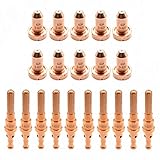
Consumables are not one-size-fits-all. Electrodes, tips, shields, and related parts must match the torch and cutting process; confirm the torch model and part numbers before treating a lower-priced machine as cheaper to own. Compare local availability of genuine compatible parts, and keep a small stock of the wear items your jobs use most. For clean cuts, inspect consumables when the arc becomes erratic, the cut widens, or dross increases—rather than waiting for a complete failure.
Ownership realities that affect cut quality
- Electrodes and tips wear: Starting arcs with the torch too far from the work, dragging the tip when the setup is not designed for it, or cutting with poor air can shorten consumable life.
- Air quality matters: Drain the compressor tank and maintain its filters and moisture control. Water or oil in the air stream can impair cutting and damage torch components.
- Work lead contact matters: Clamp to clean, conductive metal near the cut. A poor connection can make the arc unstable and encourage operators to blame the torch or power source.
- Portability has limits: A compact unit is easier to move, but the compressor, air hose, power lead, and torch lead still have to come along. Consider the whole setup’s weight and reach.
For a sensible operating-cost estimate, divide the cost of a compatible consumable set by the number of productive cutting hours you expect from it, then add electricity and air-system upkeep. There is no reliable universal hours-per-set figure: settings, material, operator technique, and air quality change wear substantially.
Bottom line
Choose a 30A-class Cutmaster for light work only if its verified input fits your power supply; consider the 40A class for varied small-shop jobs; move to the 60i or 80A class when frequent thicker-material work justifies the circuit and installation. Before purchasing, confirm the exact revision’s cut ratings, duty cycle, input requirements, torch package, and compatible consumables. Those details—not the model name alone—determine whether the cutter fits your shop.