What's inside
- Lincoln Plasma Cutter Lineup at a Glance
- Input Power and Practical Cut Thickness: What You Can Actually Run
- Portability and Torch Setup
- Consumable Costs: The Real Long-Term Expense
- Decision Matrix: Which Lincoln Plasma Cutter Fits Your Situation
- Durability and Ownership Realities
- Which Lincoln Plasma Cutter Should You Buy?
- FAQ
- Related Guides
- Lincoln Plasma Cutter Lineup at a Glance
- Input Power and Practical Cut Thickness: What You Can Actually Run
- Portability and Torch Setup
- Consumable Costs: The Real Long-Term Expense
- Decision Matrix: Which Lincoln Plasma Cutter Fits Your Situation
- Durability and Ownership Realities
- Which Lincoln Plasma Cutter Should You Buy?
- FAQ
- Related Guides
As an Amazon Associate I earn from qualifying purchases. This post may contain affiliate links at no extra cost to you.
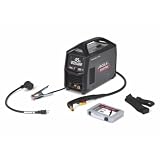
The best Lincoln plasma cutter for most home shops is the Tomahawk 375 Air for its built-in compressor and 120V portability, while the Tomahawk 625 is the best value for 230V shop power and true 5/8-inch cutting, and the Tomahawk 1000 is the right pick for frequent 3/4-inch to 1-inch cutting on thicker steel.
As an Amazon Associate we earn from qualifying purchases at no extra cost to you.



What we cover
- Lincoln Plasma Cutter Lineup at a Glance
- Input Power and Practical Cut Thickness: What You Can Actually Run
- Portability and Torch Setup
- Consumable Costs: The Real Long-Term Expense
- Decision Matrix: Which Lincoln Plasma Cutter Fits Your Situation
- Durability and Ownership Realities
- Which Lincoln Plasma Cutter Should You Buy?
- FAQ
- Related Guides
Lincoln Plasma Cutter Lineup at a Glance
Lincoln Electric focuses its plasma cutting line on the Tomahawk series in 2026. All are inverter-based, pilot-arc start machines designed for drag cutting and contact starts, but they differ significantly in input power requirements, duty cycle, and whether you need an external air compressor. Understanding those differences is the key to not overbuying or underpowering your first lincoln plasma cutter.
| Model | Input Power | Rated Cut Capacity | Maximum Severance | Weight (Power Source Only) | Torch | Built-in Air Compressor |
|---|---|---|---|---|---|---|
| Tomahawk 375 Air | 120V, 1-phase (20A) / 230V, 1-phase | 3/8 in (10 mm) on mild steel | 1/2 in (12 mm) | ~33 lbs (15 kg) | LC25 | Yes |
| Tomahawk 625 | 208-230V, 1-phase (40A circuit recommended) | 5/8 in (16 mm) on mild steel | 7/8 in (22 mm) | ~49 lbs (22 kg) | LC65 | No – Requires external compressor (65 PSI @ 5 CFM) |
| Tomahawk 1000 | 208-230V / 460V, 1/3-phase auto-reconnect | 3/4 in (19 mm) on mild steel, 1 in (25 mm) with edge start | 1-1/4 in (30 mm) | ~97 lbs (44 kg) | LC105 | No – Requires external compressor (80 PSI @ 7.5 CFM) |
| Tomahawk 1538 | 460V or 575V, 3-phase (industrial) | 1-1/2 in (38 mm) on mild steel | 2 in (50 mm) | ~430 lbs (195 kg) system | LC125M mechanized / LC125HD hand | No – Requires shop air (85 PSI @ 9+ CFM) |
Note on capacity: Lincoln’s “rated cut” means a clean, production-quality cut at 10-15 inches per minute on mild steel. Severance is a slow, rough separation cut where you will need significant grinding afterward. For practical fabrication, always buy based on rated cut, not severance.
Input Power and Practical Cut Thickness: What You Can Actually Run
120V vs. 230V Reality
The Tomahawk 375 Air is the only true dual-voltage Lincoln plasma cutter that is usable on a standard household outlet. On 120V, expect about 25 amps of cutting output, which limits you to about 1/8 to 3/16-inch clean cuts. Switch it to 230V and you get the full 30-40 amp output and the full 3/8-inch rated capacity. If you only have 120V in a garage and need to cut patch panels, exhaust, or 1/8-inch brackets, it works without tripping breakers if wired on a 20A dedicated circuit.
The Tomahawk 625 and larger require 230V single-phase at minimum. The 625 draws up to 40 amps at full output, so it needs a 50A breaker and 6-gauge wiring in most installations to meet electrical code for duty cycle. The 1000 can run on 230V single-phase but is often wired for 230V/460V three-phase in commercial shops to reduce amperage draw and improve duty cycle.
Duty Cycle Matters More Than Peak Amps
Cut thickness is tied to duty cycle. At maximum output:
- Tomahawk 375 Air: ~35% duty cycle at 40A (3.5 minutes cutting in 10 minutes before thermal shutdown). At 25A on 120V, it approaches 60%.
- Tomahawk 625: ~35% duty cycle at 60A. Dropping to 40-45A for 1/4-inch steel pushes duty cycle above 60%.
- Tomahawk 1000: ~60% duty cycle at 60A, and 100% at 40-45A. This is why it is preferred for longer continuous cuts on 1/2-inch plate and CNC tables.
If you make long, continuous cuts on 1/4-inch or thicker material, a 35% duty cycle machine will force you to pause frequently. For short cuts, brackets, and automotive work, it is rarely an issue.
Portability and Torch Setup
All Tomahawk power sources are inverter-based and far lighter than older transformer units, but the full system weight matters.
The 375 Air is the most portable lincoln plasma cutter because you do not carry a compressor. At 33 pounds with an internal compressor and a 12.5-foot LC25 hand torch, it is a one-trip carry to a jobsite or driveway. The trade-off is a shorter duty cycle and higher internal heat, and you cannot adjust air pressure as precisely as with an external compressor with a regulator and dryer.
The 625 and 1000 use Lincoln LC-series torches with a standard consumable stack: shield cup, tip/nozzle, electrode, and swirl ring. The LC25 on the 375 uses a compact consumable set with fewer parts, while the LC65 and LC105 allow for both drag cutting and standoff cutting with included standoff guides. Torch leads are typically 25 feet on the 625/1000, which helps when cutting on the floor or around a vehicle. All three use a pilot arc that can re-establish without touching the workpiece, which helps when cutting expanded metal, rusty steel, or painted surfaces without misfires.
Air quality is critical regardless of model. Even the 375 Air benefits from an external air filter/dryer if you work in humid climates. For the 625 and 1000, use a dedicated compressor that can maintain steady CFM at 65-80 PSI with a Motor Guard or desiccant filter. Dirty or wet air is the fastest way to destroy electrodes and produce beveled, dross-heavy cuts.
Consumable Costs: The Real Long-Term Expense
Lincoln consumables are not interchangeable across torch families. You must buy LC25 parts for a 375, LC65 for a 625, and LC105 for a 1000. A standard replacement set includes an electrode and a cutting tip (nozzle); the shield and swirl ring last much longer unless damaged by crashing the torch.
| Cost Factor | Tomahawk 375 Air (LC25) | Tomahawk 625 (LC65) | Tomahawk 1000 (LC105) |
|---|---|---|---|
| Electrode + Tip Kit (pair) | General market range $18 – $28 | General market range $22 – $35 | General market range $30 – $45 |
| Average Life (clean, dry air) | 80-120 starts / 30-45 minutes of arc time | 100-150 starts / 45-60 minutes of arc time | 150-200 starts / 60-90 minutes of arc time |
| Main Wear Indicator | Pitted electrode center, orifice rounding | Electrode hafnium pit > 1/32-inch deep | Electrode pit > 1/16-inch deep, nozzle orifice out-of-round |
| What Shortens Life Fastest | Low air pressure, cutting with compressor overheating | Wet air, dragging without shield, piercing too close | Excessive piercing on 3/4-inch+, inadequate air volume |
Worked Calculation: Cost Per Foot of Cut
This helps compare machines beyond the purchase price. Take a common job: cutting 1/4-inch mild steel.
On a Tomahawk 625 at 45 amps, Lincoln’s cut chart speed is roughly 45 inches per minute on 1/4-inch steel. One electrode/tip set lasting 50 minutes of arc time will cut approximately:
45 inches/min x 50 minutes = 2,250 inches = 187.5 feet of cut.
If the pair costs $28, the consumable cost is $28 / 187.5 = $0.15 per foot. Dragging the tip, piercing instead of edge-starting, or using wet air can cut that life to 25 minutes, doubling the cost to $0.30 per foot. Over a year of 1,000 feet of cutting, that is the difference between $150 and $300 in tips and electrodes.
The 375 Air on the same 1/4-inch material runs at its maximum, so speed is slower at about 25-30 inches per minute and consumables wear about 30% faster due to higher heat per inch. It will cost roughly $0.22 to $0.35 per foot when run continuously. The 1000, run at a conservative 50 amps for the same thickness, will be slightly cheaper per foot than the 625 because its larger nozzle runs cooler.
Practical takeaway: If you cut less than 2 hours per month, consumable cost differences are minor. If you cut weekly or run a CNC table, the 625 or 1000 pays back in lower cost per foot and less downtime changing parts.
Decision Matrix: Which Lincoln Plasma Cutter Fits Your Situation
| Your Situation | Best Match | Why |
|---|---|---|
| Home garage, only 120V outlets, auto body / sheet metal up to 3/16 in, need maximum portability, occasional use | Tomahawk 375 Air | No external compressor, runs on household power, easiest to move, adequate for thin material |
| Small fabrication shop with 230V, cutting 1/8 to 1/2 in steel regularly, budget-conscious | Tomahawk 625 | Best balance of rated 5/8-in capacity, 60A output, and moderate weight without industrial power |
| Farm / heavy maintenance, cutting 1/2 to 3/4 in plate, long cuts, considering CNC table later | Tomahawk 1000 | Higher duty cycle, 1-in edge-start capacity, supports mechanized torch and three-phase efficiency |
| Industrial / production with three-phase power, 1-in+ plate, mechanized or automated cutting | Tomahawk 1538 | 100A+ output and factory mechanized support, not practical for single-phase shops |
Durability and Ownership Realities
What wears first is almost never the power source. Inverter boards are reliable if kept clean and dry. The torch lead, consumables, and air system wear first. Common mistakes that shorten life:
- Piercing thick plate with the tip touching the metal. Start with a 1/16 to 1/8-inch standoff and use the edge-start method when possible to avoid blowback into the nozzle.
- Running air pressure too low to save compressor noise. Low pressure creates a narrow, unstable arc that gouges the nozzle orifice oval. Set pressure to the spec on the front panel while the air is flowing, not at idle.
- Not draining the compressor tank and not using a desiccant dryer. One day of wet air can pit an electrode beyond use.
- Dragging an unshielded tip on the 625/1000. Use the drag shield/cup for hand cutting to keep the correct standoff and prevent double-arcing.
Cleaning is simple but often skipped: Blow out dust from the power source louvers with dry compressed air monthly, wipe the torch threads clean when changing consumables, and never over-tighten the shield cup. Hand-tight plus 1/8 turn is sufficient; over-tightening cracks the swirl ring. Store torch leads in large loops, not tight kinks, to prevent gas leaks and pilot arc faults.
Which Lincoln Plasma Cutter Should You Buy?
If you need a lincoln plasma cutter that works anywhere without a big compressor and you rarely exceed 1/4-inch steel, the Tomahawk 375 Air saves space and setup time despite higher per-foot consumable cost at its limit. If you have 230V and regularly cut 1/4 to 1/2-inch steel, angle iron, or trailer repairs, the Tomahawk 625 gives you a true step up in speed, duty cycle, and cut quality with the most affordable long-term consumable cost for a single-phase shop. Choose the Tomahawk 1000 only if you consistently cut 5/8-inch and thicker or need high duty cycle for fabrication or a future CNC table, as its price and air requirements are wasted on thin sheet metal work.
FAQ
Do I need a separate air compressor for a Lincoln plasma cutter?
Only the Tomahawk 375 Air has a built-in compressor. All other Tomahawk models require an external compressor capable of sustained pressure and CFM at the torch. Even with the 375 Air, a small external dryer or filter is recommended in humid environments.
Can a Lincoln plasma cutter cut aluminum and stainless steel?
Yes. All Tomahawk models cut aluminum and stainless at roughly 60-70% of their rated mild steel thickness. Use clean, dry air and reduce amperage and travel speed slightly. Aluminum requires faster travel to avoid dross and needs more amperage per inch than steel.
Are Lincoln consumables interchangeable with other brands?
No. Use Lincoln LC-series consumables matched to your torch model. Aftermarket consumables for LC25, LC65, and LC105 exist but often have inconsistent hafnium depth and orifice tolerances, which reduces cut quality and can cause misfires.