What's inside
- Stick Welding Electrode Positive or Negative: Which Polarity Works Best?
- What “positive” and “negative” mean on a stick welder
- Polarity comparison: common stick electrodes
- How polarity changes the weld
- Choose by rod, position, and workpiece
- A practical setup check before striking an arc
- Polarity mistakes that waste rods
- Bottom line
- Related Guides
- Stick Welding Electrode Positive or Negative: Which Polarity Works Best?
- What “positive” and “negative” mean on a stick welder
- Polarity comparison: common stick electrodes
- How polarity changes the weld
- Choose by rod, position, and workpiece
- A practical setup check before striking an arc
- Polarity mistakes that waste rods
- Bottom line
- Related Guides
As an Amazon Associate I earn from qualifying purchases. This post may contain affiliate links at no extra cost to you.
What we cover
- Stick Welding Electrode Positive or Negative: Which Polarity Works Best?
- What “positive” and “negative” mean on a stick welder
- Polarity comparison: common stick electrodes
- How polarity changes the weld
- Choose by rod, position, and workpiece
- A practical setup check before striking an arc
- Polarity mistakes that waste rods
- Bottom line
- Related Guides
Stick Welding Electrode Positive or Negative: Which Polarity Works Best?
For most common stick electrodes, start with electrode positive (DCEP)—also called reverse polarity—but use the polarity printed on the rod’s packaging or data sheet whenever it specifies one. Electrode negative (DCEN, or straight polarity) can suit certain rods and thin-material situations, while AC is required or permitted for others. There is no single polarity that works best for every rod and job.
What “positive” and “negative” mean on a stick welder
Polarity describes the direction of current in a DC welding circuit. With DCEP, the electrode holder connects to the positive terminal and the work clamp connects to the negative terminal. With DCEN, those connections are reversed. On AC, current alternates direction, so neither connection stays positive.
As an Amazon Associate we earn from qualifying purchases at no extra cost to you.


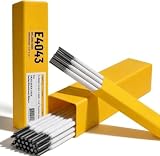
That also answers the common question, “stick welding ground positive or negative?” The work clamp—often casually called the ground clamp—is connected to negative for DCEP and positive for DCEN. It is a work lead, not a safety ground. Follow your welder’s instructions for its protective grounding and never substitute the work clamp for it.
Polarity comparison: common stick electrodes
The chart gives common starting guidance, not a replacement for the electrode manufacturer’s instructions. Amperage depends on rod diameter, position, joint, and machine; the ranges below are typical starting ranges for general-purpose work.
| Electrode | Common polarity options | Typical current for 1/8 in (3.2 mm) | Penetration and heat balance | Position and practical result |
|---|---|---|---|---|
| E6010 | DCEP; usually not AC | About 75–135 A | Forceful, deep penetration; digging arc | All-position, including vertical and overhead; useful for roots and dirty or rusty steel when the procedure allows |
| E6011 | AC or DCEP | About 75–135 A | Strong arc and relatively deep penetration | All-position; a common alternative when an AC machine cannot run E6010 |
| E6013 | AC, DCEP, or DCEN, depending on product | About 80–130 A | Usually a softer arc and moderate or shallower penetration than 6010/6011 | All-position on suitable sizes; often chosen for light fabrication and a smoother, easier-running bead |
| E7014 | AC, DCEP, or DCEN, depending on product | About 100–150 A | Moderate penetration; iron powder supports a higher deposition rate | Flat and horizontal are common uses; some sizes are rated for additional positions |
| E7018 | DCEP; some versions also allow AC | About 90–160 A | Moderate penetration with a smooth, controlled arc | All-position versions are common; low-hydrogen handling and dry storage matter |
Amperage ranges vary by brand and product, and the same classification can have different recommended settings. Check the label or technical data sheet, especially for position limits and AC compatibility. A rod marked for AC is not automatically suitable for DCEN, or vice versa.
How polarity changes the weld
Changing polarity can affect arc stability, bead shape, spatter, and penetration, but it does not create a reliable universal rule that “most heat goes to the positive side.” Heat distribution depends on the electrode, current, arc characteristics, and welding conditions. In practice, the rod maker’s approved polarity and a stable arc are more useful guides than trying to predict heat from polarity alone.
- DCEP: A common choice for general-purpose DC stick welding and required by many electrodes, including E6010 and standard E7018. It often produces a firm, penetrating arc with those rods.
- DCEN: An option only when the electrode permits it. Some rods may run with a softer arc or a different bead profile on DCEN; the change can also affect penetration and fusion. Do not assume it will prevent burn-through on thin metal.
- AC: Useful when the electrode is AC-rated or the power source does not provide suitable DC. Because polarity reverses repeatedly, it can help address arc blow in some setups, though it may feel less smooth with certain rods.
Choose by rod, position, and workpiece
If you are welding with a specific rod: Start with its packaging or manufacturer data sheet. If it lists only DCEP, set the holder to positive and the work lead to negative. If it lists AC and DCEP, either may work; select the one that gives a steady arc and acceptable bead on a practice piece.
If you are choosing a rod for an AC-only machine: Look for an electrode explicitly rated for AC, such as suitable E6011, E6013, E7014, or AC-rated E7018 products. Do not buy E6010 expecting it to run properly on a typical AC-only welder.
If the work is thin: Use a smaller electrode and the lowest amperage that maintains a stable arc, with a tight fit-up and controlled travel. A polarity change is not a substitute for correct rod size and settings. Practice on scrap of similar thickness before welding the actual part.
If you are welding overhead or vertical: Confirm the rod’s position rating and use the manufacturer’s recommended settings. A rod that runs smoothly in the flat position may be unsuitable overhead, regardless of polarity. For example, E7014 is commonly used flat or horizontal, while all-position electrodes such as E6010 and many E7018 products are intended for broader position use.
If the arc wanders or blows to one side: Check cable connections, work-clamp contact, and the welding area before changing polarity. Magnetic arc blow can also be reduced by moving the work connection, changing the welding direction, or using AC when both the machine and electrode permit it.
A practical setup check before striking an arc
- Read the electrode label. Confirm polarity, diameter, position rating, and amperage range.
- Connect the leads accordingly. For DCEP, holder to positive and work clamp to negative. For DCEN, holder to negative and work clamp to positive. For AC, use the welder’s AC output connections.
- Set current for rod size and position. Use the rod maker’s range as a starting point, then adjust in small increments on scrap. An arc that repeatedly sticks may be too cold or started poorly; excessive spatter, undercut, or an overly fluid puddle can indicate settings or technique need attention.
- Check the result, not just the bead’s appearance. Look for consistent fusion at both toes, appropriate penetration, and no obvious cracks or trapped slag. A tidy-looking bead alone does not prove a sound weld.
Polarity mistakes that waste rods
- Guessing from the electrode number: Classification gives useful information, but the exact product’s polarity instructions take priority.
- Reversing leads to fix every problem: Poor contact, incorrect amperage, long arc length, damp electrodes, and magnetic arc blow can all cause trouble. Change one variable at a time.
- Ignoring low-hydrogen storage: E7018 electrodes can absorb moisture if left exposed. Follow the manufacturer’s storage and exposure limits; use an electrode oven only as specified.
- Using the wrong rod for the position: Polarity cannot make an electrode suitable for a position or application it is not rated for.
Bottom line
For a general starting point, DCEP is the usual choice when the electrode calls for it, and it is required for common rods such as E6010 and standard E7018. DCEN is appropriate only for electrodes that explicitly allow it; AC is a sound option for AC-rated rods and AC-only machines. Match polarity to the electrode first, then tune current, technique, and fit-up for the material and welding position.