
What's inside
As an Amazon Associate I earn from qualifying purchases. This post may contain affiliate links at no extra cost to you.
For most beginners, MIG is the easiest process to learn, flux-core is the most portable and forgiving of dirty metal, and stick is the most versatile outdoors and on thick or rusty steel. There is no universal winner; the right choice depends on where you weld, what you weld and what you can afford. This guide compares the three and lists consumables worth knowing, based on specifications and reviewer feedback.
| Pick | Best for | Key feature |
|---|---|---|
| Lincoln Electric AC225 Tombstone Stick Welder | Learning stick on a budget | Simple AC stick machine with a long history |
| Lincoln Electric Fleetweld 180 E6011 Electrodes | Stick on dirty or rusty steel | Deep-penetrating, forgiving rod |
| Lincoln Electric NR-211-MP Flux-Cored Wire | Gasless flux-core welding | Self-shielded wire for outdoor use |
| Lincoln Electric SuperArc L-56 MIG Wire | Gas-shielded MIG welding | Solid wire for clean welds |
| Harris Argon/CO2 Flowmeter Regulator | Shielding gas control | Regulator with a flowmeter for MIG |
What we cover
MIG welding in plain terms
MIG feeds a continuous wire through a gun while shielding gas protects the weld. You pull a trigger and the machine does much of the work, which makes it the friendliest process for beginners. It excels on thin to medium steel, produces clean welds with less spatter and is quick to learn.
The downsides are the gas and wind. A cylinder, regulator and refill supply add cost, and the gas can blow away outdoors. MIG also prefers clean metal, so you must grind off rust and paint. Lincoln Electric SuperArc L-56 MIG Wire is a common solid wire for mild steel, and you will need a regulator such as the Harris Argon/CO2 Flowmeter Regulator to control gas flow.
Flux-core welding in plain terms
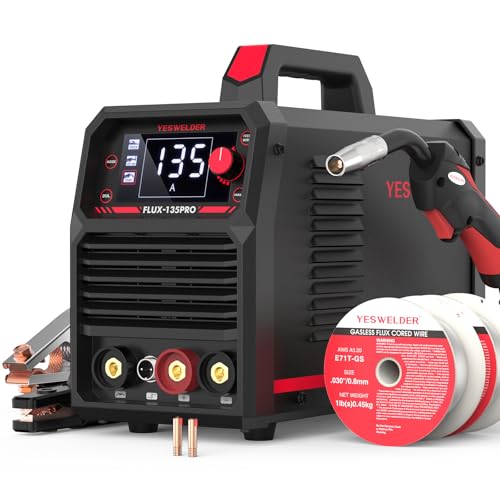
Flux-core uses a tubular wire filled with flux that creates its own shielding gas. You can run it without a cylinder, which makes it popular for outdoor, farm and repair work. It tolerates dirtier metal and wind better than gas MIG and offers good penetration on thicker steel.
The tradeoffs are more smoke, more spatter and slag to clean. It also tends to look rougher than gas MIG. For a beginner on a tight budget, it is a good way to start. Lincoln Electric NR-211-MP Flux-Cored Wire is a familiar gasless wire for light-duty machines.
Stick welding in plain terms
Stick welding uses a coated electrode that is consumed as you weld. It is the oldest of the three, simple in equipment terms, and works outdoors in wind and on rusty, painted or dirty steel. Machines can be basic and rugged, such as an AC unit like the Lincoln Electric AC225 Tombstone.
The challenge is technique. You must keep the right arc length and travel speed while the rod shortens, and you chip slag between passes. It takes more practice to produce neat welds, but it builds skill that carries over. Rods such as Lincoln Electric Fleetweld 180 E6011 Electrodes are forgiving on less-than-perfect surfaces.
Which process fits which person?
- You weld in a garage on clean steel: gas MIG gives the neatest results.
- You weld outdoors or on farm equipment: flux-core or stick handles wind and dirt.
- You weld thick, rusty or dirty steel: stick is hard to beat.
- You have a tight budget: a basic stick or flux-core machine is the cheapest way in.
- You want to progress to TIG later: stick builds arc control, while MIG builds speed.
Cost and setup differences
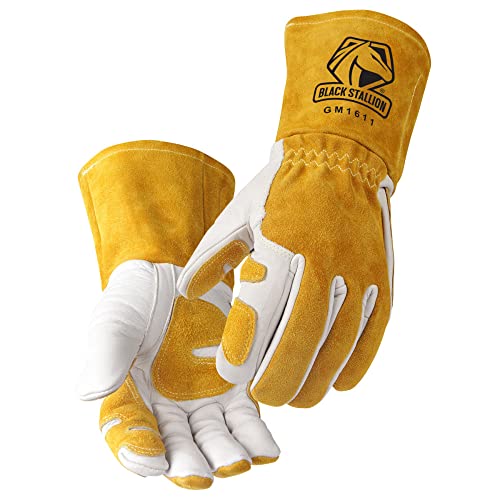
MIG with gas requires a machine, wire, cylinder, regulator and gas refills. Flux-core drops the gas, which lowers the entry cost. Stick needs only the machine and electrodes, so it is often the most economical to begin with. Remember that safety gear, including a helmet, gloves and protective clothing, is a must for all three and should be in your budget from the start.
Power needs differ as well. Many small MIG and flux-core machines run on household power, while stick machines for thick steel often need 240V. Check your electrical supply before you commit.
Project examples for each process
Thinking about specific projects helps. A MIG welder is an excellent match for building a steel workbench, a trailer bracket, a fire pit ring or sheet metal repairs on a vehicle. Flux-core suits fixing a gate in a field, repairing a farm implement, or welding outdoors where a breeze would blow gas away. Stick welding works well for thick brackets, repairs on rusty equipment, structural steel and anything that must be done in poor conditions.
If your list is mostly small furniture and garage projects, you will likely appreciate MIG. If you maintain tools, trailers and fences, you may find stick or flux-core more practical. Write your top five projects and mark which process fits best; the pattern usually tells you what to buy.
Common mistakes
- Choosing a process based on the machine price alone.
- Trying to weld rusty metal with gas MIG without cleaning.
- Skipping practice on scrap before real projects.
- Ignoring ventilation for flux-core and stick.
Safety differences between processes
All three processes demand a proper helmet, gloves and protective clothing. Flux-core and stick produce more smoke, so ventilation is especially important. Stick electrodes and flux-core wire can create slag that flies off when chipped, so wear safety glasses. Gas MIG requires secure cylinders and leak checks. Whatever process you choose, clear flammables from the area and keep an extinguisher close.
Electrical safety matters too: inspect cables, keep them dry and avoid welding in damp conditions or standing in water.
Frequently asked questions
Which is easiest to learn?
Most people find gas MIG easiest, then flux-core, then stick. Individual experience varies.
Can one machine do all three?
Multi-process machines can, but they cost more and have more settings.
Is stick welding outdated?
No. It remains widely used for field repair, pipelines and structural work.
Which is best for car bodywork?
Gas MIG on thin sheet metal is the common choice, though technique matters.
How skills carry across processes
Learning one process helps with the others. Joint preparation, fit-up, clamping and safety habits are the same everywhere. Reading the puddle, controlling travel speed and keeping a consistent distance transfer too. Stick welding in particular trains you to watch the arc closely because the rod shortens as you work, and that awareness helps when you later pick up a MIG gun.
Many welders start with MIG or flux-core, add stick for outdoor and repair work, and eventually try TIG for precision projects. There is no wrong order. What matters is regular practice, good safety habits and honest assessment of your results. Cut and bend-test samples occasionally to make sure your welds are fusing properly, not just looking good.
If you are still undecided, a short class or a visit to a local shop where you can try each process is the best investment you can make. Spending an hour with each process teaches you more than hours of reading, and it helps you spend your money on the equipment that suits you rather than the equipment that looks best online. Take notes on how each process felt, how much cleanup it needed and whether you enjoyed the rhythm of the work.
Conclusion
Pick MIG for clean, easy welds in a garage, flux-core for portability and dirty steel, and stick for rugged outdoor and thick-metal work. Start with the process that matches your first projects, and add others as your skills grow.
As an Amazon Associate we earn from qualifying purchases.
Related guides
More from Amazon
Programs that pair well with the guide above. Offers and eligibility are set by Amazon and may change.
A free business account with business pricing and bulk-buying tools for work, shop or home office.
Create a business accountFree shipping on eligible items, Prime Video and more. Eligible new members can start with a free trial.
Start a Prime free trialAudiobooks and podcasts to listen to on the go. Eligible new members can start with a free trial.
Try Audible freeAd-free music streaming. Eligible new subscribers can start with a free trial.
Try Music Unlimited freeAs an Amazon Associate we earn from qualifying purchases.






Write Your Review
No reviews yet. Be the first to share your experience!