
What's inside
- 1. Lincoln Electric Handy MIG
- 2. Forney Easy Weld 140 FC-i
- 3. Hobart Handler 125EZ
- 4. Lincoln Electric Easy MIG 180
- 5. YesWelder Flux-135
- What flux-core does well, and what it does not
- How to choose
- Wire, polarity and settings
- Common mistakes
- Power and duty cycle in practice
- Frequently asked questions
- Cleanup and finishing
- Conclusion
As an Amazon Associate I earn from qualifying purchases. This post may contain affiliate links at no extra cost to you.
A flux-core welder is the simplest way to start welding because it needs no gas cylinder, works outdoors in light wind and plugs into household power. The cost is a messier weld with more smoke and slag. The five machines below are chosen based on specifications and reviewer feedback for repair jobs, farm fixes and basic fabrication, and each has limits worth knowing.
| Pick | Best for | Key feature |
|---|---|---|
| Lincoln Electric Handy MIG | Light repairs and portability | Compact and easy to carry |
| Forney Easy Weld 140 FC-i | Beginners on a tight setup | Simple controls and lightweight body |
| Hobart Handler 125EZ | Dedicated flux-core use | Straightforward gasless design |
| Lincoln Electric Easy MIG 180 | More power with gas option | Handles thicker steel |
| YesWelder Flux-135 | Budget-minded hobbyists | Compact inverter design |
What we cover
- 1. Lincoln Electric Handy MIG
- 2. Forney Easy Weld 140 FC-i
- 3. Hobart Handler 125EZ
- 4. Lincoln Electric Easy MIG 180
- 5. YesWelder Flux-135
- What flux-core does well, and what it does not
- How to choose
- Wire, polarity and settings
- Common mistakes
- Power and duty cycle in practice
- Frequently asked questions
- Cleanup and finishing
- Conclusion
Our Top Picks


1. Lincoln Electric Handy MIG
This small welder is built for quick repairs and occasional projects. It is easy to move, fits in a shelf and plugs into a standard outlet. It suits thin steel for brackets, gates and small repairs. The limit is power and duty cycle: heavier work and long runs will tax it. Treat it as a handy second welder or a first machine for light jobs. Lincoln Electric Handy MIG Welder
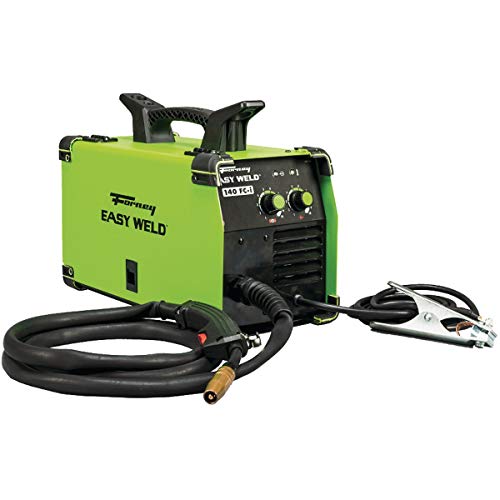
2. Forney Easy Weld 140 FC-i
A flux-core-oriented inverter machine that is light and beginner friendly. Its controls are simple enough for new users, and it is easy to carry to a work site. As with most lightweight inverter units, it favors small to mid-size projects, and you should confirm the wire sizes it supports. Forney Easy Weld 140 FC-i Welder
3. Hobart Handler 125EZ
This welder skips the gas hardware and sticks to flux-core wire, which keeps things simple. It suits people who weld outdoors or on farm equipment and do not want to deal with cylinders. Without a gas option, it cannot produce the cleaner welds that gas can, so it is less ideal for visible work. Hobart Handler 125EZ Welder
4. Lincoln Electric Easy MIG 180
This is a step up for people who want flux-core capability today and gas capability tomorrow. The extra amperage helps with thicker steel, and the controls remain approachable. It is bigger and heavier than the compact units, and it makes sense if you plan to expand beyond basic repairs. Lincoln Electric Easy MIG 180 Welder
5. YesWelder Flux-135
A compact inverter aimed at budget-minded hobbyists. It handles basic gasless jobs and is easy to store. Expect modest output and a lighter build, so inspect the cable and drive system when it arrives, and keep expectations realistic for thick plate. YesWelder Flux-135 Welder
What flux-core does well, and what it does not
Flux-core wire carries its own shielding in the core, so wind is less of a problem than with gas. It also penetrates well on slightly dirty or rusty steel, which is handy for repairs. It is forgiving for beginners who are still learning prep and technique.
The downsides are obvious once you run a bead. There is more smoke, more spatter and a layer of slag that must be chipped and brushed away between passes. Welds on thin sheet metal can burn through easily. If you need clean, visible welds for furniture or automotive panels, a gas setup will serve you better.
Ventilation is not optional. Flux-core produces significant fumes, so weld outdoors or with strong airflow, and wear suitable respiratory protection as advised by safety guidance.
How to choose
- Power source. Check whether you have 120V only or also 240V.
- Wire diameter. Thinner wire suits thin steel, thicker wire suits heavier work.
- Duty cycle. It controls how long you can weld before cooling.
- Portability. A light inverter is handy if you move between jobs.
- Future gas option. If you may later want gas, choose a machine that supports it.
Wire, polarity and settings
Most flux-core wire needs electrode negative polarity, the reverse of gas MIG. On many machines this means swapping the lead inside the cabinet, so read the manual and confirm the setup before your first bead. Wire diameter should match your metal: thinner wire suits lighter sections, while thicker wire carries more current for heavier work. Use the settings chart on the welder as a starting point, then adjust by sound and appearance.
Technique differs from gas MIG too. Drag the gun rather than pushing it, hold a slightly longer stickout, and keep a steady travel speed so slag trails behind the puddle instead of getting ahead of it. If the arc crackles and spatters, check voltage and wire speed. If the bead looks piled up and narrow, you may be moving too slowly or running the wire too fast.
Keep wire dry. Flux absorbs moisture from humid air, which causes porosity and poor arcs. Store spools in a sealed container with desiccant if your garage is damp, and replace the contact tip when the hole wears oval.
Common mistakes
- Welding indoors without ventilation or fume protection.
- Using the wrong polarity, which is reversed for most flux-core wire.
- Skipping slag removal between passes and trapping slag in the weld.
- Expecting flux-core to match the appearance of gas welds.
Power and duty cycle in practice
Small flux-core welders often advertise a high maximum output but a modest duty cycle at that level. In practice, this means you may weld for a short time at full power and then wait while the machine cools. For thin repairs this rarely matters, but on long seams it can slow you down. Plan your work in short runs and let the machine rest instead of pushing it until it trips a thermal protector.
Use a dedicated circuit if you can, and avoid thin extension cords that cause voltage drop. A weak supply makes the arc unstable and tempts you to blame the machine.
Frequently asked questions
Can I use flux-core wire in any MIG welder?
Only if the machine supports it, which usually means the right polarity setting and a suitable drive roll.
Is flux-core strong enough for structural work?
It can be, but structural work needs proper procedures and qualified welders. For hobby use, follow the manufacturer’s limits.
Why do I get so much spatter?
Spatter can come from wrong voltage, poor technique or dirty metal. Adjust settings and practice on scrap.
Do I need a helmet for flux-core?
Yes. Always wear a proper welding helmet, gloves and protective clothing for any arc welding.
Cleanup and finishing
Slag covers every flux-core weld, and it must come off before the next pass or before painting. Tap it with a chipping hammer, then use a wire brush to clear the remaining residue. Wear eye protection during chipping, because hot fragments can fly a long way. For a neat finish, a flap disc on an angle grinder smooths the bead, though you should not grind away so much that you weaken the joint.
Bare steel rusts quickly, so prime or paint finished work soon after cleaning. Wipe off dust first and use a primer suitable for the project. If you plan to powder coat or galvanize later, check what the coating shop requires, since flux residue can interfere with adhesion.
Plan on cleanup time as part of every job. Flux-core is quick to lay down but slower to finish, and that is a fair price for the convenience of welding without a gas bottle.
Conclusion
For repairs, farm work and learning, a flux-core welder is a practical choice. Pick a machine that matches your power supply and your thickest material, ventilate well, and expect to clean slag. If you want cleaner welds later, choose a model that can add gas.
As an Amazon Associate we earn from qualifying purchases.
Related guides
More from Amazon
Programs that pair well with the guide above. Offers and eligibility are set by Amazon and may change.
A free business account with business pricing and bulk-buying tools for work, shop or home office.
Create a business accountFree shipping on eligible items, Prime Video and more. Eligible new members can start with a free trial.
Start a Prime free trialAudiobooks and podcasts to listen to on the go. Eligible new members can start with a free trial.
Try Audible freeAd-free music streaming. Eligible new subscribers can start with a free trial.
Try Music Unlimited freeAs an Amazon Associate we earn from qualifying purchases.





Write Your Review
No reviews yet. Be the first to share your experience!