
What's inside
- 1. Lincoln Electric FR Welding Jacket
- 2. Miller Classic Cloth Welding Jacket
- 3. Tillman Flame-Retardant Cotton Jacket
- 4. Revco Black Stallion Leather Welding Sleeves
- 5. Lincoln Electric Leather Welding Apron
- Layering and what to wear underneath
- How to choose
- Fabric weights and hot weather
- Common mistakes
- Don’t forget the lower body and feet
- Frequently asked questions
- Caring for protective clothing
- Conclusion
As an Amazon Associate I earn from qualifying purchases. This post may contain affiliate links at no extra cost to you.
The best welding jacket is flame-resistant, fits closely without restricting movement and covers your arms and neck, with leather added where spatter is heaviest. Cotton FR jackets are comfortable and cool for MIG and TIG, while leather jackets, sleeves and aprons suit overhead and stick work. The five options below are described based on specifications and reviewer feedback.
| Pick | Best for | Key feature |
|---|---|---|
| Lincoln Electric FR Welding Jacket | All-round shop wear | Flame-resistant cotton and a snug collar |
| Miller Classic Cloth Welding Jacket | MIG and TIG in warm shops | Lightweight cloth with good coverage |
| Tillman Flame-Retardant Cotton Jacket | Value-conscious hobbyists | Comfortable FR cotton |
| Revco Black Stallion Leather Welding Sleeves | Overhead and out-of-position work | Leather arm protection over regular clothing |
| Lincoln Electric Leather Welding Apron | Stick welding and heavy grinding | Chest and lap coverage |
What we cover
- 1. Lincoln Electric FR Welding Jacket
- 2. Miller Classic Cloth Welding Jacket
- 3. Tillman Flame-Retardant Cotton Jacket
- 4. Revco Black Stallion Leather Welding Sleeves
- 5. Lincoln Electric Leather Welding Apron
- Layering and what to wear underneath
- How to choose
- Fabric weights and hot weather
- Common mistakes
- Don’t forget the lower body and feet
- Frequently asked questions
- Caring for protective clothing
- Conclusion
Our Top Picks

1. Lincoln Electric FR Welding Jacket
A familiar choice for general shop use. Flame-resistant cotton lets air move better than leather and protects against spatter in typical MIG and stick work. The snug collar helps keep sparks off your neck. As with any FR garment, follow the care instructions, because some detergents and fabric softeners can reduce flame resistance. Lincoln Electric FR Welding Jacket
2. Miller Classic Cloth Welding Jacket
This jacket suits welders who work in warm environments and want something lighter. It protects against spatter and is comfortable across long sessions. It is not the best choice for overhead welding with heavy slag falling, where leather offers more protection. Miller Classic Cloth Welding Jacket
3. Tillman Flame-Retardant Cotton Jacket
A value-oriented FR option for hobbyists. It gives you a flame-resistant layer without the stiffness of leather. Check the fit and sleeve length so that your wrists stay covered when your arms are extended, and make sure the buttons or snaps close firmly. Tillman Flame-Retardant Cotton Welding Jacket
4. Revco Black Stallion Leather Welding Sleeves
Leather sleeves are a flexible add-on. They slip over regular clothing and provide extra protection for forearms and biceps, especially when you weld overhead or in awkward positions. They are warm in summer. Pair them with an FR shirt or jacket and make sure sleeves overlap your gloves. Revco Black Stallion Leather Welding Sleeves
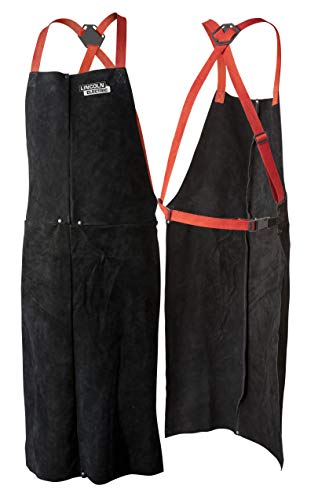
5. Lincoln Electric Leather Welding Apron
An apron guards your torso and lap, which is useful for sitting welds, heavy grinding and stick work. It does not protect your arms, so combine it with sleeves or a jacket. Check that it ties securely and does not hang loosely where sparks can catch. Lincoln Electric Leather Welding Apron
Layering and what to wear underneath
Protective gear works as a system. Wear natural fibers such as cotton or wool beneath your jacket, since synthetic fabrics can melt and stick to skin if sparks penetrate. Avoid shorts and open shoes, and wear leather boots with long pants that cover the tops of the boots. Keep pockets buttoned or empty, because open pockets can catch sparks, and avoid cuffs on pants where sparks can lodge.
Fit matters. A jacket that is too loose can snag and catch debris; one that is too tight restricts movement and may lead you to adopt unsafe positions. Button the collar to protect your neck, and make sure the sleeves fall over your gloves rather than leaving a gap. Replace garments that have burn holes or worn fabric, since damaged protection is not reliable.
How to choose
- Pick by process. Cotton FR for MIG and TIG, leather for stick, overhead and heavy spatter.
- Check flame resistance. Make sure the garment is labeled as flame resistant.
- Look for coverage. Neck, wrists and chest should be protected.
- Consider climate. Leather is hot, so lighter FR cotton helps in summer.
- Follow care instructions. Washing methods can affect flame resistance.
Fabric weights and hot weather
Flame-resistant cotton comes in different weights. Heavier fabric offers more protection from spatter and sparks but is warmer, while lighter fabric breathes better and suits MIG and TIG in controlled conditions. For overhead or stick welding, where molten drops fall freely, thicker material or leather is a better match.
In hot weather, many welders are tempted to remove protective layers. Instead, pick lighter FR fabrics, vented designs and moisture-wicking natural-fiber shirts underneath, and take frequent breaks in the shade. Drink water regularly, since heat stress can creep up when you are focused on a weld.
For cold weather, layer natural fibers or wool under your jacket, and avoid bulky synthetic fleece, which can melt. Make sure extra layers do not restrict your movement or crowd the helmet, and check that sleeves still overlap your gloves.
Common mistakes
- Welding in synthetic clothing under the jacket.
- Leaving the jacket unbuttoned at the collar.
- Using oily or greasy clothing, which is more flammable.
- Continuing to wear a jacket that has burn-through holes.
Don’t forget the lower body and feet
Protection should not stop at the waist. Wear long pants made of natural fiber or flame-resistant fabric, worn over the boots rather than tucked in, so sparks cannot fall inside. Choose leather boots with a steel or composite toe, and avoid canvas shoes. For overhead work, consider leather chaps or leggings, and a welding cap to protect hair and ears.
Taken together, a good jacket, sleeves, apron and boots form a complete system that protects most of the body from spatter and radiation.
Frequently asked questions
Is leather better than cotton for welding?
Leather resists heavy spatter and slag better, while FR cotton is cooler and more flexible. The right choice depends on your work.
Do I need a jacket for MIG welding?
A flame-resistant long-sleeved layer is strongly recommended, since MIG can throw spatter and UV radiation burns skin.
How should I wash an FR jacket?
Follow the label. Avoid bleach and fabric softener unless the manufacturer says it is safe.
Can sleeves replace a jacket?
Sleeves protect your arms but not your torso, so combine them with an FR shirt or apron.
Caring for protective clothing
Treat welding clothing as safety equipment. Wash FR garments according to the label, using mild detergent and avoiding bleach and fabric softeners, which can reduce flame resistance. Dry them fully, and inspect them for thin spots, burn holes and frayed seams. Leather should be brushed off, kept away from heat sources and stored dry.
Keep oil, grease and solvents away from your clothing, because contamination can make fabric more flammable. If a jacket gets soaked with something flammable, wash or replace it before welding again. Check buttons and snaps, and replace missing fasteners so the jacket closes fully at the collar.
Replace garments after a significant burn-through, and do not patch them with ordinary fabric. A modest investment in good protective clothing will keep you comfortable and safe through many projects.
When shopping, check sizing charts carefully. Protective jackets should allow you to raise your arms overhead without the hem lifting, and sleeves should stay in place when you reach. If you are between sizes, choose the one that allows full movement without excess fabric. A well-fitted garment is far more likely to be worn consistently, which is the whole point of protective clothing. Try it on with your usual layers and helmet before you start work.
Conclusion
Choose protective clothing that suits your process and climate, wear natural fibers beneath, and cover all skin. Replace worn garments, and treat protective gear as part of your welding setup rather than an afterthought.
As an Amazon Associate we earn from qualifying purchases.
Related guides
More from Amazon
Programs that pair well with the guide above. Offers and eligibility are set by Amazon and may change.
A free business account with business pricing and bulk-buying tools for work, shop or home office.
Create a business accountFree shipping on eligible items, Prime Video and more. Eligible new members can start with a free trial.
Start a Prime free trialAudiobooks and podcasts to listen to on the go. Eligible new members can start with a free trial.
Try Audible freeAd-free music streaming. Eligible new subscribers can start with a free trial.
Try Music Unlimited freeAs an Amazon Associate we earn from qualifying purchases.






Write Your Review
No reviews yet. Be the first to share your experience!