
What's inside
- 1. Weldas Lava Brown Welding Gloves
- 2. Tillman 750 Top Grain Cowhide Gloves
- 3. Lincoln Electric Traditional MIG/Stick Gloves
- 4. Revco Black Stallion 350 Cowhide Stick Gloves
- 5. Tillman 24 Top Grain Goatskin TIG Gloves
- Leather types in plain terms
- How to choose
- Sizing, break-in and care
- Common mistakes
- Gauntlet length and wrist coverage
- Frequently asked questions
- Handling hot work safely
- Conclusion
As an Amazon Associate I earn from qualifying purchases. This post may contain affiliate links at no extra cost to you.
The best welding gloves match the process: thick, lined cowhide or split leather for stick and heavy MIG, and thinner goatskin or deerskin for TIG where finger feel matters. Fit, stitching and lining matter as much as the leather. The five options below are described based on specifications and reviewer feedback, with the usual tradeoff between protection and dexterity.
| Pick | Best for | Key feature |
|---|---|---|
| Weldas Lava Brown Welding Gloves | Heavy-duty stick and MIG | Thick lined leather with long cuffs |
| Tillman 750 Top Grain Cowhide Gloves | All-round shop use | Durable cowhide with a good balance of feel |
| Lincoln Electric Traditional MIG/Stick Gloves | General MIG and stick welding | Straightforward design with a reinforced palm |
| Revco Black Stallion 350 Cowhide Stick Gloves | Hot, heavy stick work | Insulated lining and thick leather |
| Tillman 24 Top Grain Goatskin TIG Gloves | Precision TIG welding | Thin, supple goatskin for finger control |
What we cover
- 1. Weldas Lava Brown Welding Gloves
- 2. Tillman 750 Top Grain Cowhide Gloves
- 3. Lincoln Electric Traditional MIG/Stick Gloves
- 4. Revco Black Stallion 350 Cowhide Stick Gloves
- 5. Tillman 24 Top Grain Goatskin TIG Gloves
- Leather types in plain terms
- How to choose
- Sizing, break-in and care
- Common mistakes
- Gauntlet length and wrist coverage
- Frequently asked questions
- Handling hot work safely
- Conclusion
Our Top Picks
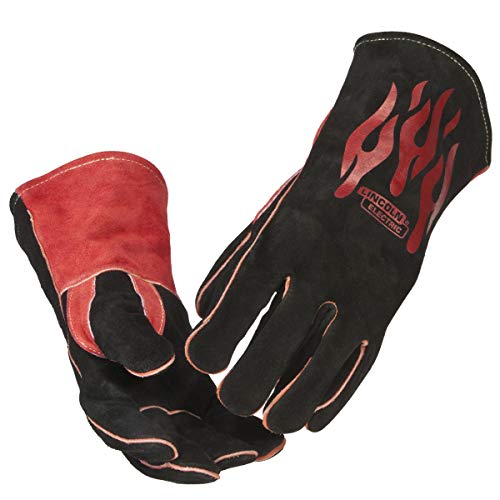 Lincoln Electric Traditional MIG/Stick Welding GlovesOne Size (Pack of 2)13 x 7 x 1 inches0.76 poundsCheck on Amazon

1. Weldas Lava Brown Welding Gloves
These are a popular choice for welders who want serious protection. The thick leather and lining help guard against radiant heat and spatter, and the long cuff covers the wrist. The cost of that protection is stiffness, particularly when new, so they are better for stick and heavy MIG than for fine work. Give them time to break in. Weldas Lava Brown Welding Gloves
2. Tillman 750 Top Grain Cowhide Gloves
A widely used shop glove that balances durability and feel. Top-grain cowhide resists wear, and the design suits MIG and general fabrication. They are less heavily insulated than thick stick gloves, so for sustained high-heat work consider a heavier option. Tillman 750 Top Grain Cowhide Welding Gloves
3. Lincoln Electric Traditional MIG/Stick Gloves
A familiar pair from a major welding brand, aimed at general MIG and stick use. They are designed to be a straightforward, durable choice for garage welders. Check the fit carefully, since sizing can vary between brands, and examine the stitching after the first few uses. Lincoln Electric Traditional MIG/Stick Welding Gloves
4. Revco Black Stallion 350 Cowhide Stick Gloves
For stick welding with high heat, an insulated lining and thick leather help keep your hands comfortable. These gloves are made for demanding work and offer sturdy protection. They are bulky, so they are not ideal for tasks that need delicate finger control. Revco Black Stallion 350 Cowhide Stick Gloves
5. Tillman 24 Top Grain Goatskin TIG Gloves
TIG welding needs finger control to feed filler rod, so thin goatskin is the common choice. These gloves are supple and comfortable. They give up some heat protection, which is acceptable because TIG produces less spatter, but they are not suited to heavy stick work. Tillman 24 Top Grain Goatskin TIG Gloves
Leather types in plain terms
Cowhide is the standard for stick and MIG. It is tough, affordable and resists abrasion. Split leather, which is the lower layer of the hide, is often used on the back of the glove and is more heat resistant but less supple. Goatskin and deerskin are softer and give better feel, which TIG welders prize. Pigskin is breathable and resists moisture better, though it varies in quality.
Lining matters too. Cotton or fleece liners add comfort and insulation, while Kevlar thread adds strength to the seams. Look for gloves that have the seams covered or sewn with heat-resistant thread, since cotton thread can burn through and cause gloves to fail at the stitches.
How to choose
- Match the process. Thick for stick, thinner for TIG, in between for MIG.
- Check fit. Gloves that are too large reduce control and can slip.
- Look at stitching. Heat-resistant thread lasts longer.
- Consider cuff length. Longer cuffs protect wrists and forearms.
- Think about break-in. Stiff gloves soften with use.
Sizing, break-in and care
Measure your hand around the knuckles and compare it with the maker’s chart, then allow for the lining. A glove that is too big wrinkles and snags on the torch, while one that is too tight restricts blood flow and tires your hand. If you are between sizes, try the larger one with a liner, or choose a brand known to run small.
New leather gloves are stiff. Wear them for light tasks first, and flex your hand to soften the leather. Avoid soaking them to speed up break-in, since water can make leather brittle once it dries. After use, brush off dust and let them dry naturally, away from heaters, and store them flat or hanging in a dry place.
Inspect the seams and fingertips before each session. A hole on the thumb or palm, which takes the most abuse, is a warning to replace the pair. Keeping two pairs is a good idea: one for heavy stick work and one for lighter MIG or TIG tasks.
Common mistakes
- Using thin TIG gloves for stick welding and getting burned.
- Wearing wet gloves, which can conduct heat quickly.
- Ignoring damaged gloves with worn leather or broken stitching.
- Choosing the wrong size and losing dexterity.
Gauntlet length and wrist coverage
The cuff, or gauntlet, protects the gap between glove and sleeve. Longer gauntlets are better for stick and overhead work, where sparks and slag can drop toward your forearms. Shorter gauntlets give more freedom for TIG and fine work. Whatever length you choose, make sure your jacket sleeve overlaps the glove so there is no exposed skin.
Some gloves add a Kevlar-stitched seam or a reinforced thumb to resist wear in the highest-stress areas. These details are worth looking for if you weld often.
Frequently asked questions
How do I know what size to buy?
Measure the width of your hand and compare it with the manufacturer’s size chart. Welding gloves should be snug but not tight.
How long do welding gloves last?
It depends on usage and the leather. Replace them when they show holes, thin spots or stiff, cracked leather.
Can I wash welding gloves?
Most leather gloves should not be machine washed. Brush off dirt and let them air dry away from heat.
Should I wear liners?
Some welders do for comfort or added insulation. Make sure they do not reduce your control.
Handling hot work safely
Gloves are only part of hand protection. Never pick up freshly welded metal with bare hands, and remember that heat lingers in steel long after the glow fades. Use pliers or magnetic holders to move hot parts, and mark hot pieces with soapstone so no one grabs them by mistake.
If your gloves get wet, stop and replace them, since moisture can conduct heat quickly and cause steam burns. Keep gloves away from oil and solvents, which can make leather flammable. When welding overhead, tuck the cuffs under sleeves or use sleeves that overlap, so molten spatter does not drop inside.
Finally, use the right glove for non-welding tasks. Grinding, chipping and handling sharp edges all call for separate gloves in some cases, since heat-resistant leather is not always cut resistant. A small set of task-specific gloves protects your hands better than one pair used for everything.
Conclusion
Pick gloves for the process you weld most. Heavy cowhide with insulation suits stick, mid-weight leather works for MIG, and soft goatskin helps TIG. Check fit and stitching, replace worn pairs and keep a spare set in the shop.
As an Amazon Associate we earn from qualifying purchases.
Related guides
More from Amazon
Programs that pair well with the guide above. Offers and eligibility are set by Amazon and may change.
A free business account with business pricing and bulk-buying tools for work, shop or home office.
Create a business accountFree shipping on eligible items, Prime Video and more. Eligible new members can start with a free trial.
Start a Prime free trialAudiobooks and podcasts to listen to on the go. Eligible new members can start with a free trial.
Try Audible freeAd-free music streaming. Eligible new subscribers can start with a free trial.
Try Music Unlimited freeAs an Amazon Associate we earn from qualifying purchases.





Write Your Review
No reviews yet. Be the first to share your experience!