What's inside
As an Amazon Associate I earn from qualifying purchases. This post may contain affiliate links at no extra cost to you.
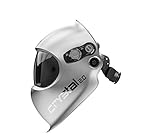
The best Optrel welding helmet depends on your process: choose the crystal2.0 for the clearest all-round view, the e684 for versatile shop work, the Panoramaxx CLT for maximum peripheral coverage, and the Helix CLT for frequent professional welding where battery control and comfort matter most.
Optrel helmets sit toward the premium end of the auto-darkening market, but their differences are practical rather than cosmetic. Optical clarity, the light-state shade, viewing area, adjustment range, and how the helmet balances on your head can matter more than the maximum dark shade printed on the box.
As an Amazon Associate we earn from qualifying purchases at no extra cost to you.


What we cover
Optrel welding helmet comparison
The figures below are useful buying references, but exact weight and battery details can vary by regional package, headgear, and revision. Check the manual for the particular part number before ordering replacement parts.
| Model | Optical/light-state focus | Dark shade range | Approx. weight | Battery arrangement | Best suited to |
|---|---|---|---|---|---|
| Optrel crystal2.0 | 1/1/1/2 optical class; very bright shade 2.0 light state | Shade 4–12 | About 500 g | Solar-assisted rechargeable system with replaceable backup battery, depending on version | MIG, TIG, stick, fabrication, and users who prioritize a bright inactive view |
| Optrel e684 | 1/1/1/2 optical class; conventional clear light state | Shade 4–13 | About 450 g | Solar-powered with replaceable coin-cell battery | One helmet for mixed-process workshop use |
| Optrel Panoramaxx CLT | 1/1/1/2 optical class; wide peripheral field and bright CLT view | Shade 4–12 | About 550–600 g | Rechargeable battery system; solar charging supports operating time | Out-of-position welding, large assemblies, and users who dislike turning their head |
| Optrel Helix CLT | 1/1/1/2 optical class; wide view with bright CLT light state | Shade 4–12 | About 550 g | Rechargeable lithium-ion battery with charging connection | Frequent professional welding and long sessions |
An optical class of 1/1/1/2 is strong: the first three “1” ratings refer to optical sharpness, scattered light, and shade homogeneity. The final “2” indicates angular dependence. In practice, fit, lens cleanliness, lighting, and correct shade selection still affect how clear a helmet appears.
Head-to-head: which Optrel helmet wins each decision?
Best for the clearest inactive view: crystal2.0
The crystal2.0’s defining feature is its unusually bright shade 2.0 light state. That is valuable when positioning a joint, finding a tack, moving around a large workpiece, or inspecting a weld without lifting the helmet. It is particularly attractive to people who alternate between welding and setup work.
Its shade range covers common MIG, MAG, stick, and TIG applications, but it is not the automatic choice for every high-amperage process. If your work regularly requires shade 13, the e684 offers more upper-range flexibility. For low-amperage TIG, verify that the specific crystal2.0 version reliably triggers at your machine’s minimum current.
Best mixed-process value: e684
The e684 is the more conventional choice. It provides a broad shade 4–13 range, separate controls for shade, sensitivity, and delay, and a comparatively light package. That combination makes it suitable for a shared workshop where one person may weld mild steel with MIG in the morning, repair equipment with stick in the afternoon, and use higher-output processes later.
The trade-off is the ordinary light-state view compared with Optrel’s CLT and shade 2.0 designs. It is still suitable for setup and inspection, but the lens will appear darker when inactive. Its replaceable battery is simple to maintain, while solar assistance reduces battery drain during regular use.
Best peripheral vision: Panoramaxx CLT
The Panoramaxx CLT is built around a large, extended viewing area. This helps when welding inside frames, along long seams, or in positions where turning your head would disturb your posture. The benefit is not merely a larger rectangular window: the lens and shell are shaped to improve the view toward the sides and downward.
That coverage can be especially useful for pipe work, vehicle fabrication, and large structures. The downside is size. A broad panoramic helmet can feel more noticeable in cramped spaces, and its larger lens area may cost more to replace. Check clearance around overhead fixtures and make sure your respirator, ear protection, and safety glasses do not interfere with the shell.
Best for intensive daily use: Helix CLT
The Helix CLT targets users who spend many hours welding and want a modern rechargeable power system, bright inactive viewing, and broad coverage. A rechargeable battery avoids frequent coin-cell replacement, although it introduces a new ownership task: keeping the helmet charged and replacing the battery pack when it eventually loses capacity.
It makes the most sense for a professional or highly active home fabricator. For occasional weekend use, the extra battery hardware may not repay its higher purchase cost over a simpler solar-assisted model.
Decision matrix by welding situation
| Your situation | Recommended direction | Why |
|---|---|---|
| Occasional home repairs and a limited budget | e684, if available at a favorable market price | Broad shade 4–13 range and replaceable battery keep ownership simple |
| Frequent setup, tacking, and inspection between welds | crystal2.0 | Bright shade 2.0 view reduces the need to lift the helmet |
| Long welds on large frames or structures | Panoramaxx CLT | Peripheral coverage helps maintain sight of the joint and surroundings |
| Professional daily use with charging discipline | Helix CLT | Rechargeable power system and CLT viewing suit extended sessions |
| Low-amperage TIG work | crystal2.0 or Helix CLT, after checking trigger-current specifications | Prioritize reliable arc detection and fine sensitivity adjustment |
| High-output welding where shade 13 is preferred | e684 | Its upper shade range provides more adjustment headroom |
Controls that matter more than marketing terms
Shade control should match the process and amperage. Do not simply choose the darkest available setting. Excessive darkness makes it harder to see the puddle, while too little protection is unsafe. Use the shade chart supplied with the helmet and follow the applicable workplace safety standard.
Sensitivity determines how readily the lens detects an arc. Increase it for low-current TIG, but reduce it if nearby welders or bright work lights cause unwanted triggering.
Delay controls how long the lens remains dark after the arc stops. A short delay helps when making rapid tack welds. A longer delay is more comfortable after high-amperage welds, when the glowing puddle and hot metal remain bright.
Grind or cut mode is useful, but it does not turn a welding helmet into a complete face shield. Use the correct impact-rated eye and face protection for grinding, chipping, and cutting, particularly where flying particles are possible.
Fit and comfort: the overlooked buying test
Helmet weight is only part of comfort. A well-balanced 550 g helmet may feel less tiring than a lighter model that sits far forward. Adjust the headgear so the shell stays close to your face without touching your nose, safety glasses, or respirator.
- Set the crown strap before tightening the rear knob; this controls helmet height.
- Position the pivot so the lens stops at a comfortable viewing angle rather than dropping onto your chest.
- Test the helmet with the actual safety glasses, respirator, hearing protection, and hood you wear.
- Check that the shell clears your shoulders when fully raised.
- After adjustment, bend forward. The helmet should remain stable without excessive pressure from the rear band.
A useful fit calculation is simple: if the helmet sits 40 mm farther forward than another model, its leverage on your neck is roughly proportional to that extra distance. That is why published weight alone cannot predict fatigue. Balance and pivot position deserve equal attention.
Ownership costs and maintenance
Lens protection covers usually wear before the auto-darkening cartridge. Replace a cover when it is scratched, cloudy, heat-discolored, or covered with spatter. A damaged outer cover can make a premium lens appear defective by scattering light across the viewing area.
- Wipe covers with a clean, soft cloth and mild soapy water; avoid abrasive compounds and solvents.
- Keep grinding dust out of the headgear pivots and adjustment mechanism.
- Do not weld with a cracked cover lens or damaged shell.
- Store the helmet away from direct heat, welding spatter, and heavy objects that can press on the lens.
- For coin-cell models, remove or replace the battery according to the manual if the helmet will be stored for a long period.
- For rechargeable models, charge before a major job and inspect the charging connection periodically.
Replacement covers, batteries, sweatbands, and headgear are the consumables most likely to affect long-term cost. A rough ownership example: if a cover costs $15–$30 and lasts 3–6 months in a busy shop, replacing two to four per year adds approximately $30–$120 annually before batteries or headgear are considered.
Final recommendation
Choose the Optrel crystal2.0 when a bright view between arcs is your priority. Choose the e684 for a lighter, versatile helmet with a shade 13 option and straightforward battery ownership. Choose the Panoramaxx CLT when peripheral vision and awkward-position work justify its larger design. Choose the Helix CLT for intensive daily use and a rechargeable system.
Whichever Optrel welding helmet you select, confirm the exact shade range, trigger-current behavior, battery type, replacement-cover availability, and compatibility with your other protective equipment. Those details determine whether the helmet remains comfortable and dependable after the initial purchase.