
Our Top Picks


What's inside
As an Amazon Associate I earn from qualifying purchases. This post may contain affiliate links at no extra cost to you.
As an Amazon Associate, we earn from qualifying purchases.
A trade workshop lives on other people’s deadlines. The same week can bring a stainless handrail repair, an aluminum sign frame, a batch of mild-steel brackets and a call-out to a customer’s premises where the only available supply is an ordinary outlet. Dual voltage is what lets one TIG machine cover both halves of that life: full output on the workshop’s higher-voltage circuit for fabrication work, and reduced but usable output on a standard supply when the job is on site.
Unlike a home garage, a trade workshop also has to think about repeatability and turnaround. Settings that can be recalled, a duty cycle that survives a production run of parts, a torch package that does not need immediate upgrading, and a pedal arrangement that suits bench work all affect how many billable jobs a machine completes in a day. The four welders below are all dual-voltage models as stated in their listings, chosen for different trade profiles — from a light pulse machine for varied repair work to heavier AC/DC units for workshops that weld aluminum week in, week out.
What we cover
Quick Picks
| Product | Best for | Key spec |
|---|---|---|
| YESWELDER TIG-205P | Light, varied trade repair work with pulse | 200A DC pulse TIG/Stick, 110/220V — ASIN B0BVYHBQZ6 |
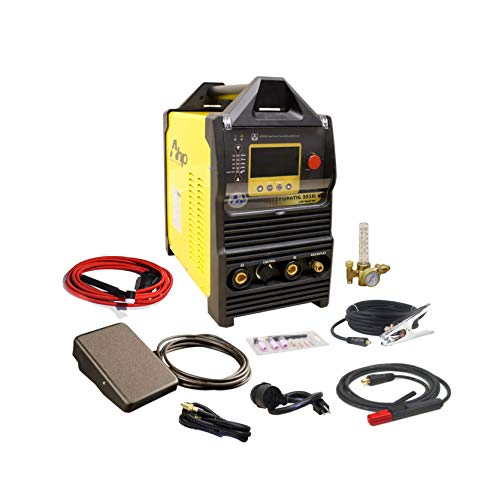
| AHP AlphaTIG 203Xi | Aluminum-heavy workshops needing long duty cycle | 200A AC/DC pulse TIG/Stick, 110/220V, pedal included — ASIN B076BSD6PG |
| PrimeWeld TIG225X | Fabrication shops wanting a quality torch package | 225A AC/DC TIG/Stick with pulse, CK17 torch — ASIN B07BXHRBQ8 |
| LOTOS TIG200ACDC | A complete AC/DC package with pedal and regulator | 200A AC/DC TIG/Stick, 110/220V, pedal included — ASIN B00AFM33R0 |
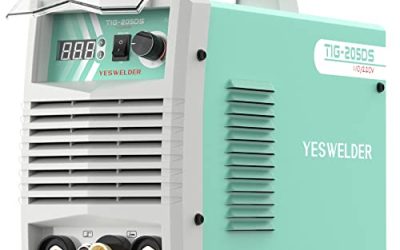
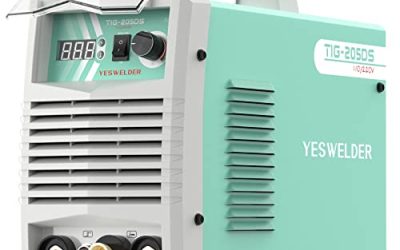
YESWELDER TIG-205P

The TIG-205P suits the mobile end of trade work. Listing and manual figures describe Stick, DC TIG and Pulse TIG processes, up to 200A on 220V and up to 160A DC TIG output on 110V, in a machine of about 10.7 pounds. For a tradesperson moving between the workshop and customer sites, that weight — plus dual voltage — means the same machine handles a stainless repair on site in the morning and bench work back at base in the afternoon.
Pulse control, adjustable from 0.5 to 200 Hz in the manual figures, helps on the thin stainless and sheet work that trade shops see constantly: catering and wash-down fittings, thin guards, duct and trim repairs where excess heat means distortion and rework. The listing also describes an automatic memory function that restores settings after power-off, a small feature that saves real time across a day of interrupted jobs. Be accurate about the pedal: coverage of the listing describes a 5-pin foot pedal port with the pedal sold separately.
- Model: YESWELDER TIG-205P
- Processes: Stick, DC TIG, Pulse DC TIG
- Output: Up to 200A on 220V; up to 160A DC TIG on 110V, per manual figures
- Input: 110V/220V dual voltage
- Pulse: 0.5–200 Hz, per the manufacturer manual figures
- Foot pedal: Compatible via 5-pin port; sold separately
- Amazon: https://www.amazon.com/dp/B0BVYHBQZ6
Pros
- Very light for site work, with full trade-relevant output back in the workshop
- Pulse mode limits distortion on thin stainless customer work
- Settings memory suits a day of varied, interrupted jobs
Cons
- DC only, so aluminum jobs need a different machine
- Pedal is an extra cost for bench work
AHP AlphaTIG 203Xi
The AlphaTIG 203Xi is built for workshops where aluminum is regular, billable work. Its standard Amazon listing describes a 200-amp AC/DC TIG and stick machine with pulse, dual-voltage 110/220V input, a high-visibility LCD, a Nova Rotaflex 9/17 TIG torch and a Nova foot pedal with a 25-foot cord in the box. Published specifications give a 60% duty cycle at 200A — a figure that matters when a trade shop is running repeated parts rather than single repairs.
Adjustable AC balance and frequency, documented for the model, let the operator tune cleaning action and arc focus for different aluminum jobs, from thin sheet to thicker castings. Output on the lower-voltage supply is listed at up to 150A, which keeps site work realistic. Note that AHP also sells a separate wireless-pedal bundle under a different listing; the ASIN here is the standard pedal package described above, so check the exact bundle before ordering.
- Model: AHP AlphaTIG 203Xi
- Processes: AC/DC TIG, Stick, with pulse
- Output: 200A; up to 150A on 120V in published specifications
- Input: 110/220V dual voltage (120/240V in published specifications)
- Duty cycle: 60% at 200A, per published specifications
- Included: Nova foot pedal and Nova Rotaflex torch, per the listing’s included components
- Amazon: https://www.amazon.com/dp/B076BSD6PG
Pros
- AC/DC with pulse covers aluminum, steel and stainless trade work in one machine
- 60% duty cycle at full output suits repeated production-style jobs
- Foot pedal and quality torch included in the standard listing
Cons
- Heavier than the compact DC-only machines, so it suits a bench or cart
- Model revisions change over time; confirm the exact listing’s contents and terms
PrimeWeld TIG225X
The TIG225X is the fabrication-shop choice in this group. The Amazon listing describes a 225-amp AC/DC TIG and stick welder with pulse, IGBT inverter technology, a CK17 flex-head torch with CK cable and DINSE connector, AC balance from 30–70%, AC frequency from 40–200 Hz, and adjustable pre-flow, up-slope, down-slope and post-flow. That level of sequence control is what a trade workshop uses to produce consistent, presentable welds on customer-facing work — handrails, frames, tanks and display fabrication.
Listing coverage also describes a foot pedal included for heat control, which pairs well with bench fabrication. The trade-offs are size and weight: 90 pounds and 24 x 19 x 12 inches per the listing, so this machine lives on a cart in the workshop. Its dual-voltage input still provides a fallback for lighter work on a standard supply, but its value is concentrated at full output on the workshop circuit.
- Model: PrimeWeld TIG225X
- Processes: AC/DC TIG, Stick, with pulse
- Output: 225A, as stated in the listing
- Input: 110/220V dual voltage
- Torch: CK17 flex-head torch included, per the listing title
- Controls: AC balance, AC frequency, slope and gas timing adjustments as listed
- Amazon: https://www.amazon.com/dp/B07BXHRBQ8
Pros
- Full weld-sequence control for consistent, customer-quality results
- Respected CK-series torch package included in the listing
- Highest output here for thicker fabrication work
Cons
- 90 lb weight makes it a workshop machine, not a site machine
- Settings take time to learn; occasional users will not use its full range
LOTOS TIG200ACDC
The TIG200ACDC offers trade workshops a complete AC/DC starting package: the listing title includes a foot pedal and an argon regulator, with 200-amp AC/DC square-wave TIG and stick output, HF start and automatic dual-voltage 110/220V operation described in its manual. For a small trade shop adding TIG capability — or a second TIG station — a package that arrives with pedal and regulator reduces the accessory hunt before the first billable job.
The manual describes welding capacity up to 3/8 inch and a weight of about 58 pounds with the torch, placing it between the light DC machines and the heaviest fabrication units: movable on a cart, but not a carry-to-site tool. Its control set is simpler than the PrimeWeld or AHP panels, which some workshops will read as a limitation and others as one less thing to mis-set between jobs.
- Model: LOTOS TIG200ACDC
- Processes: AC/DC TIG, Stick
- Output: 200A AC/DC, as stated in the listing
- Input: 110/220V dual voltage, automatic switching as described in the manual
- Included: Foot pedal and argon regulator, per the listing title
- Start: High-frequency start
- Amazon: https://www.amazon.com/dp/B00AFM33R0
Pros
- Pedal and regulator included, so the package is close to ready to work
- AC/DC output covers aluminum as well as steel and stainless
- Simpler controls suit a shared workshop machine
Cons
- About 58 lb, so portability is cart-level rather than carry-level
- Fewer fine-tuning controls than the AHP or PrimeWeld panels
How to Choose a Dual Voltage TIG Welder for a Trade Workshop
Separate workshop work from site work. If most revenue is bench fabrication, prioritise duty cycle, torch quality and control range, and treat dual voltage as a useful fallback. If most work is on customer premises, weight and lower-voltage output move to the top of the list.
Let your metals decide DC or AC/DC. Stainless and steel-only trade work is well served by a DC pulse machine. Regular aluminum work — signage, marine, transport, food equipment — justifies AC/DC with adjustable balance and frequency.
Read duty cycle as a productivity figure. A workshop running batches of parts loses money to thermal cut-outs. Compare duty cycle at your typical working amperage, not just maximum output.
Cost the complete station, not the box. Pedal included or separate, regulator included or not, torch quality, and adapter plugs all change the real price of a working TIG station. The listings here differ on every one of those points.
Confirm the exact bundle and revision. Several of these models are sold in multiple packages and have been revised over time. The ASIN identifies the exact listing; verify its included components and terms before committing workshop money.
FAQs
How much output do I lose on a standard outlet?
It varies by model. Published figures here include up to 160A DC TIG on 110V for the YESWELDER TIG-205P and up to 150A on 120V for the AHP 203Xi. That is enough for thin and medium work on site, but plan thick fabrication for the higher-voltage workshop supply.
Is AC/DC worth it for a general trade workshop?
If aluminum jobs appear regularly, yes — turning them away or subcontracting them costs more than the capability. If your intake is steel and stainless only, a DC pulse machine is simpler and lighter.
What duty cycle should a trade workshop look for?
For repeated parts and longer seams, a published figure around 60% at high output, such as the AHP listing describes, reduces interruptions. For single repairs and short runs, lower figures rarely cause problems.
Should a trade TIG machine have a foot pedal?
For bench work, a pedal gives the fine amperage control that tidy, customer-visible welds benefit from. For site and positional work, a torch switch is often more practical. Check whether each listing includes the pedal or sells it separately.
Can one dual voltage machine replace two workshop welders?
For many small trade shops, yes: one dual-voltage TIG/stick machine can cover bench fabrication at full output and lighter site repairs at reduced output, provided its process range — DC or AC/DC — matches the work you actually take on.
Conclusion
Trade workshops should choose by workload, not headline amps. The YESWELDER TIG-205P fits mobile, varied repair work with pulse control in a very light package. The AHP AlphaTIG 203Xi suits aluminum-heavy shops that need duty cycle and a complete pedal-and-torch package. The PrimeWeld TIG225X is the fabrication bench option, with the deepest controls and a quality torch, while the LOTOS TIG200ACDC offers a simpler AC/DC package with pedal and regulator included. All four share the trade essential: full capability in the workshop, and honest, usable TIG power wherever a customer’s job happens to be.
Related guides
More from Amazon
Programs that pair well with the guide above. Offers and eligibility are set by Amazon and may change.
A free business account with business pricing and bulk-buying tools for work, shop or home office.
Create a business accountFree shipping on eligible items, Prime Video and more. Eligible new members can start with a free trial.
Start a Prime free trialAudiobooks and podcasts to listen to on the go. Eligible new members can start with a free trial.
Try Audible freeAd-free music streaming. Eligible new subscribers can start with a free trial.
Try Music Unlimited freeAs an Amazon Associate we earn from qualifying purchases.
Write Your Review
No reviews yet. Be the first to share your experience!