What's inside
- Top 3 Picks
- Quick Comparison
- How We Chose
- 1. Focusrite Scarlett Solo 3rd Gen – Best for one-mic songwriting and voice work
- 2. Rode AI-1 – Best for a rugged single-input rig for one performer
- 3. Focusrite Scarlett Solo 4th Gen – Best for future-proofing a one-input setup
- 4. Focusrite Scarlett 2i2 4th Gen – Best for two-microphone and stereo recording
- 5. PIYONE 2X2 – Best for lowest-cost stereo recording on PC, Mac or iOS
- 6. MAONO PS22 Lite – Best for streaming guitar and vocals from a PC
- 7. Jolgoo 2×2 – Best for budget phantom-powered microphone recording
- 8. M-Audio M-Track Solo – Best for absolute beginners tracking one source
- 9. M-Audio M-Track Duo – Best for two-input demos on a tight budget
- 10. MAONO P2 Hybrid – Best for phone and tablet creators using two XLR microphones
- Related Guides
- Top 3 Picks
- Quick Comparison
- How We Chose
- 1. Focusrite Scarlett Solo 3rd Gen – Best for one-mic songwriting and voice work
- 2. Rode AI-1 – Best for a rugged single-input rig for one performer
- 3. Focusrite Scarlett Solo 4th Gen – Best for future-proofing a one-input setup
- 4. Focusrite Scarlett 2i2 4th Gen – Best for two-microphone and stereo recording
- 5. PIYONE 2X2 – Best for lowest-cost stereo recording on PC, Mac or iOS
- 6. MAONO PS22 Lite – Best for streaming guitar and vocals from a PC
- 7. Jolgoo 2×2 – Best for budget phantom-powered microphone recording
- 8. M-Audio M-Track Solo – Best for absolute beginners tracking one source
- 9. M-Audio M-Track Duo – Best for two-input demos on a tight budget
- 10. MAONO P2 Hybrid – Best for phone and tablet creators using two XLR microphones
- Related Guides
As an Amazon Associate I earn from qualifying purchases. This post may contain affiliate links at no extra cost to you.
If you want the short answer: for most home studios the Focusrite Scarlett 2i2 4th Gen is the best overall Black Friday audio interface deal, because two combination inputs let you track a vocal and a guitar at the same time, the 4th Gen preamps deliver enough clean gain for low-output dynamic microphones, and the loopback and Auto Gain features make it equally useful for streaming and podcasting. It suits singer-songwriters, two-person podcasts and anyone who expects to add a second microphone within a year. If your budget is tighter, the M-Audio M-Track Duo is the best value two-input option in this roundup, and if you want the most flattering single-input front end, the Universal Audio Volt 1 is the premium pick. Below, twelve currently listed interfaces are compared on input count, microphone preamp quality, connection type, monitoring features and how well each one fits a real home recording setup.
What we cover
- Top 3 Picks
- Quick Comparison
- How We Chose
- 1. Focusrite Scarlett Solo 3rd Gen – Best for one-mic songwriting and voice work
- 2. Rode AI-1 – Best for a rugged single-input rig for one performer
- 3. Focusrite Scarlett Solo 4th Gen – Best for future-proofing a one-input setup
- 4. Focusrite Scarlett 2i2 4th Gen – Best for two-microphone and stereo recording
- 5. PIYONE 2X2 – Best for lowest-cost stereo recording on PC, Mac or iOS
- 6. MAONO PS22 Lite – Best for streaming guitar and vocals from a PC
- 7. Jolgoo 2×2 – Best for budget phantom-powered microphone recording
- 8. M-Audio M-Track Solo – Best for absolute beginners tracking one source
- 9. M-Audio M-Track Duo – Best for two-input demos on a tight budget
- 10. MAONO P2 Hybrid – Best for phone and tablet creators using two XLR microphones
- Related Guides
Top 3 Picks
Best overall: Focusrite Scarlett 2i2 4th Gen. Two combination XLR/TRS inputs, up to roughly 69 dB of preamp gain, 24-bit/192 kHz conversion and hardware loopback cover vocals, guitar, stereo pairs, podcasting and streaming without an upgrade for years. It is the safest single purchase for a home studio that will grow.
Best budget: M-Audio M-Track Duo. It gives you two combination inputs, switchable +48V phantom power and zero-latency direct monitoring for a budget-tier outlay. Conversion tops out at 24-bit/48 kHz, but that is more than enough resolution for demos, voice work and streaming.
Best premium: Universal Audio Volt 1. A single combination input with the Vintage Mic Preamp mode, 24-bit/192 kHz conversion and a bus-powered metal build. It is the pick when one excellent channel matters more than two adequate ones.
Quick Comparison
Every interface below is a real, currently listed product. Price tiers are general market bands — budget, mid-range and premium — because promotional pricing changes daily during Black Friday week.
| Product | Best for | Key specs | Price tier |
|---|---|---|---|
| Focusrite Scarlett Solo 3rd Gen | One-mic songwriting and voice work | 1 XLR mic input + 1 instrument input, 2 outputs, 24-bit/192 kHz, USB-C, +48V, direct monitoring, metal chassis | Mid-range |
| Rode AI-1 | A rugged single-input rig for one performer | 1 combination XLR/TRS input, 2 outputs, 24-bit/96 kHz, USB-C bus power, +48V, zero-latency monitoring, all-metal body | Mid-range |
| Focusrite Scarlett Solo 4th Gen | Future-proofing a one-input setup | 1 mic input + 1 instrument input, 2 outputs, 24-bit/192 kHz, up to ~69 dB gain, USB-C, Air mode, Auto Gain, Clip Safe, loopback | Premium |
| Focusrite Scarlett 2i2 4th Gen | Two-microphone and stereo recording | 2 combination inputs, 2 outputs, 24-bit/192 kHz, up to ~69 dB gain, USB-C, Auto Gain, Clip Safe, loopback, metal chassis | Premium |
| PIYONE 2X2 | Lowest-cost stereo recording on PC, Mac or iOS | 2 inputs / 2 outputs, 24-bit/192 kHz, USB bus power, phantom power, mobile device support | Budget |
| MAONO PS22 Lite | Streaming guitar and vocals from a PC | Microphone and instrument inputs, USB bus power, streaming-oriented control layout, PC-focused | Mid-range |
| Jolgoo 2×2 | Budget phantom-powered microphone recording | 2 inputs / 2 outputs, 24-bit/192 kHz, USB bus power, +48V phantom power | Budget |
| M-Audio M-Track Solo | Absolute beginners tracking one source | 1 combination input + 1 instrument input, 2 outputs, 24-bit/48 kHz, bus-powered USB, +48V, zero-latency monitoring | Budget |
| M-Audio M-Track Duo | Two-input demos on a tight budget | 2 combination inputs, 2 outputs, 24-bit/48 kHz, bus-powered USB, +48V, zero-latency monitoring | Budget |
| MAONO P2 Hybrid | Phone and tablet creators using two XLR mics | Dual XLR inputs, guitar input, USB to PC, phone and iPad, direct monitoring | Mid-range |
| MAONO P1 | Gain-hungry dynamic microphones | 70 dB of gain, USB to PC, phone and iPad, guitar input, direct monitoring | Premium |
| Universal Audio Volt 1 | Vintage-flavoured tone on a single channel | 1 combination input, 2 outputs, 24-bit/192 kHz, USB-C bus power, +48V, Vintage Mic Preamp mode, metal build | Premium |
How We Chose
This roundup is built from published specifications, manufacturer documentation and the practical requirements of small recording setups — not from bench testing. Each interface was assessed on four things. First, hardware specification: input count, connector type, preamp gain range, maximum sample rate and whether phantom power is switchable or permanently on. Second, category fit: whether the unit is genuinely a recording interface rather than a USB microphone in a box, and whether its driver situation is class-compliant or requires a download. Third, monitoring and workflow: direct or zero-latency monitoring, headphone amplifier behaviour, separate output level control, and loopback for streaming. Fourth, upgrade path and ownership: chassis material, whether the case is bus-powered, how the unit behaves when you add a second microphone, and how long the feature set stays useful. Where a listing does not publish an exact figure, the interface is described by specification class rather than an invented number.
1. Focusrite Scarlett Solo 3rd Gen – Best for one-mic songwriting and voice work
As an Amazon Associate we earn from qualifying purchases at no extra cost to you.

The Scarlett Solo 3rd Gen is the classic entry point into the Focusrite ecosystem. It pairs a single XLR microphone input with a separate quarter-inch instrument input, so you can leave a guitar or bass cable plugged in permanently and switch between a microphone and a DI without unplugging anything. It suits a solo songwriter, a voiceover artist or a podcaster who records one source at a time and wants a metal-bodied interface from a brand with a long track record of driver support.
Key specs
- One XLR microphone input with the 3rd Gen Scarlett preamp, and one instrument input on a quarter-inch jack
- Two outputs — a stereo pair for studio monitors plus a headphone output with its own level control
- 24-bit/192 kHz conversion
- USB-C connection, bus powered, so no separate power supply is needed
- Switchable +48V phantom power for condenser microphones
- Air mode, which lifts the upper midrange for a brighter, more forward vocal tone
- Direct monitoring for latency-free listening while tracking
- Metal chassis with a gain halo ring around the input level control
Strengths
The Solo 3rd Gen’s real strength is that nothing about it gets in the way. The input layout is self-explanatory, the gain halo makes it obvious when you are approaching clipping, and the driver support is mature enough that it works reliably across Windows, macOS and class-compliant mobile devices. The preamp gain sits in the mid-50 dB range, which is comfortable with condenser microphones and with many dynamic microphones, though the quietest broadcast-style dynamics will need to be pushed hard. Build quality is a genuine advantage at this price band: the chassis is metal, the knobs have detents, and the combination of a dedicated instrument input plus a microphone input means you never have to compromise between the two.
Pros
- Separate microphone and instrument inputs, so both can stay connected
- Metal chassis and solid controls that survive being moved around
- Mature, reliable drivers and broad software compatibility
- Air mode adds usable character to vocals without extra plug-ins
- Bus powered — one cable to the computer
Cons
- Only one microphone input, so two-person recording is impossible
- Preamp gain is lower than the 4th Gen models, which limits very quiet dynamic microphones
- No loopback, so routing computer audio into a stream takes software workarounds
- Maximum monitoring flexibility is limited compared with two-input units
How it compares
The nearest alternative in this list is the Scarlett Solo 4th Gen, which keeps the identical one-mic-plus-one-instrument layout but adds a noticeably higher gain range, Auto Gain, Clip Safe and loopback. If you only ever record one source, the 3rd Gen remains the cheaper way into the same ecosystem and the audio difference in typical home conditions is small. Against the M-Audio M-Track Solo, the Solo 3rd Gen costs more but offers 24-bit/192 kHz conversion instead of 48 kHz, a metal body and a stronger software bundle — the M-Track Solo is the better buy only when the budget is the deciding factor.
2. Rode AI-1 – Best for a rugged single-input rig for one performer

The Rode AI-1 is a one-channel interface built around a single Neutrik combination jack that accepts either an XLR microphone or a quarter-inch line or instrument source. Rode’s background is in microphones, and the AI-1 reflects that: the preamp is clean and quiet, the headphone output has enough level to drive demanding headphones, and the whole thing is housed in a metal body that feels more expensive than its tier suggests. It suits a solo vocalist, a guitarist who records one part at a time, or anyone who already owns a Rode microphone and wants a matching front end.
Key specs
- One combination XLR/TRS input handling microphone, line and instrument sources
- Two outputs for powered monitors plus a headphone output
- 24-bit/96 kHz conversion
- USB-C connection with bus power
- Switchable +48V phantom power
- Zero-latency direct monitoring
- All-metal enclosure with a compact desktop footprint
- Discrete headphone amplifier stage with independent level control
Strengths
The combination jack is the AI-1’s most practical feature: because the quarter-inch centre of the connector handles instrument and line signals, you get one input that does everything rather than two dedicated inputs. The preamp is quiet, and the headphone amplifier is the standout — it drives high-impedance studio headphones to sensible listening levels, which is something many budget interfaces cannot do. The 24-bit/96 kHz ceiling is not a practical limitation for home recording; the difference between 96 kHz and 192 kHz is largely academic for microphones and monitoring that roll off well below 48 kHz anyway. The metal chassis and the compact footprint make it a good travelling companion for a laptop-based setup.
Pros
- Genuinely quiet preamp with a strong headphone amplifier
- One combination input handles mic, line and instrument without adapters
- All-metal construction and a small footprint
- Simple, uncluttered control layout
- Reliable class-compliant behaviour with mobile devices
Cons
- Only one input, so stereo or two-person recording is out
- 96 kHz maximum sample rate rather than 192 kHz
- No loopback for streaming computer audio back into the interface
- Fewer bundled software extras than the Focusrite equivalents
How it compares
Against the Focusrite Scarlett Solo 3rd Gen, the AI-1 trades a dedicated second instrument input for a single combination jack, but gains a stronger headphone stage and a slightly quieter preamp. If you frequently swap between a guitar cable and a microphone, the Solo’s separate jacks are more convenient; if you mostly record voice and care about monitoring quality, the AI-1 is the better choice. The Universal Audio Volt 1 sits a tier above with 24-bit/192 kHz conversion and a tone-shaping preamp mode, but it costs more and its character is deliberately coloured rather than neutral, which is not what everyone wants on every source.
3. Focusrite Scarlett Solo 4th Gen – Best for future-proofing a one-input setup

The Scarlett Solo 4th Gen keeps the familiar one-microphone-plus-one-instrument layout but rebuilds almost everything around it. The 4th Gen preamp offers substantially more gain than the 3rd Gen, and the added Auto Gain, Clip Safe and loopback features turn a simple interface into a workflow tool. It suits someone who records one source at a time but wants the interface to stay useful for years — particularly if they use a low-output dynamic microphone or plan to stream.
Key specs
- One microphone input with the 4th Gen Scarlett preamp, plus one instrument input
- Up to roughly 69 dB of preamp gain — enough for low-output dynamic microphones
- 24-bit/192 kHz conversion
- USB-C bus-powered connection
- Switchable +48V phantom power
- Air mode with Presence and Harmonic Drive options
- Auto Gain, which sets a sensible recording level automatically, and Clip Safe, which rides the gain if you get loud
- Loopback for sending computer audio back into the interface for streaming and content creation
- Dynamic gain halos that show level at a glance
Strengths
The gain increase is the headline change and it matters more than any specification sheet suggests. A quiet dynamic microphone that sounded thin and hissy on a mid-50 dB preamp becomes perfectly usable on a 69 dB one, because you reach a healthy recording level without pushing the input stage into its noisy region. Auto Gain removes the guesswork for beginners: play or sing for a few seconds, and the interface sets the level. Clip Safe is the safety net that catches the one loud take that would otherwise be unusable. Loopback is the feature that most obviously separates the 4th Gen from the 3rd Gen for anyone who streams or makes videos, because it removes the need for virtual audio cable software. The metal chassis and USB-C connection are carried over unchanged.
Pros
- Roughly 69 dB of gain opens the door to demanding dynamic microphones
- Auto Gain and Clip Safe genuinely reduce ruined takes
- Loopback makes streaming and screen recording far simpler
- Air mode with two voicing options adds useful flexibility
- Metal body, USB-C and mature driver support
Cons
- Still only one microphone input
- Premium-tier pricing for a single-channel interface
- Auto Gain and Clip Safe are conveniences rather than necessities for experienced engineers
- Costs close to the two-input Scarlett 2i2 4th Gen, which is the harder comparison to justify
How it compares
The obvious rival is the Scarlett 2i2 4th Gen. Both share the same 4th Gen preamps, the same 24-bit/192 kHz conversion and the same feature set, but the 2i2 adds a second combination input for a modest step up in price. If there is any chance you will record two microphones, a stereo pair or a vocal and guitar simultaneously, the 2i2 is the smarter purchase. Against the 3rd Gen Solo, the 4th Gen is a clear generational improvement in gain, workflow and streaming features — the older model only makes sense if the discount is substantial.
4. Focusrite Scarlett 2i2 4th Gen – Best for two-microphone and stereo recording

The Scarlett 2i2 4th Gen is the default answer for a reason: two combination inputs, the 4th Gen preamps, and a feature set that covers tracking, podcasting and streaming without needing a second box. Each input accepts an XLR microphone or a quarter-inch line or instrument source, so a stereo pair of microphones, two vocalists, or a vocalist plus a guitarist can all be captured at once. It suits the widest range of buyers in this roundup — singer-songwriters, interview podcasters, duos and anyone who wants to buy once.
Key specs
- Two combination XLR/TRS inputs, each switchable between microphone, line and instrument
- Up to roughly 69 dB of preamp gain per channel
- 24-bit/192 kHz conversion
- USB-C bus-powered connection
- Independent +48V phantom power switching and gain control per channel
- Air mode with Presence and Harmonic Drive
- Auto Gain and Clip Safe on both channels
- Loopback for streaming and content creation
- Balanced outputs for studio monitors plus an independent headphone output
Strengths
Two combination inputs is the single most valuable specification in home recording, because it removes the ceiling that one-input interfaces impose. Recording a guitar and vocal at the same time, capturing a stereo pair of overheads, or interviewing a guest in the same room all become possible with no extra hardware. The 4th Gen preamps are quiet and high in gain, so both condenser microphones and low-output dynamics work well. Auto Gain and Clip Safe reduce the number of takes lost to poor levels, and loopback covers the streaming case that would otherwise require virtual routing software. The metal chassis, USB-C connection and independent monitoring controls make it a piece of equipment that will not need replacing as your skills develop.
Pros
- Two combination inputs cover almost every home recording scenario
- High-gain, low-noise preamps work with a wide range of microphones
- Auto Gain, Clip Safe and loopback add real workflow value
- Independent gain, phantom power and monitoring per channel
- Robust metal build with mature, well-supported drivers
Cons
- Premium-tier price, and the highest in the Focusrite range here
- More interface than a true beginner needs if they only ever record one microphone
- No onboard DSP processing — all effects run in the computer
- Competes directly with its own cheaper 3rd Gen predecessors, which are still capable
How it compares
Compared with the Scarlett Solo 4th Gen, the 2i2 buys a second identical input channel for a relatively small premium, which makes it the better value of the two unless you are certain you will always record alone. Compared with the M-Audio M-Track Duo, the 2i2 offers 24-bit/192 kHz conversion instead of 48 kHz, substantially more preamp gain, loopback and a metal chassis — but at several times the price. The M-Track Duo is the right call for a first interface on a strict budget; the 2i2 is the right call for the interface you keep.
5. PIYONE 2X2 – Best for lowest-cost stereo recording on PC, Mac or iOS

The PIYONE 2X2 is a budget-tier interface that advertises two inputs, two outputs and 24-bit/192 kHz conversion, along with support for PC, Mac and iOS devices. That combination of specifications at a budget price is exactly what makes it interesting: on paper it delivers the sample rate of a premium interface for a fraction of the cost. It suits a beginner who wants to record two sources, a podcaster on a minimal budget, or a mobile creator who wants to capture audio on an iPhone or iPad without buying a premium unit.
Key specs
- Two inputs and two outputs in a desktop chassis
- 24-bit/192 kHz conversion, per the manufacturer’s specification
- USB bus power, so no separate power supply is required
- Phantom power for condenser microphones
- Stated compatibility with PC, Mac and iOS devices
- Compact, lightweight housing designed for desktop use
- Direct monitoring of input signals
Strengths
The specification sheet is the selling point. A 24-bit/192 kHz converter in a budget enclosure means the raw recording quality ceiling is high, and the two-input layout lets you record a microphone and an instrument, or a stereo pair, at the same time. Mobile support is genuinely useful: many people who would never buy a dedicated interface for a laptop will happily record into a phone or tablet, and a bus-powered unit with an appropriate adapter makes that straightforward. The small footprint means it takes up almost no desk space, and the price tier makes it a low-risk first purchase — if you decide recording is not for you, you have not spent much finding out.
Pros
- 24-bit/192 kHz conversion at a budget-tier price
- Two inputs allow simultaneous microphone and instrument recording
- Bus powered with PC, Mac and iOS compatibility
- Very small desktop footprint
- Low financial risk as a first interface
Cons
- Build quality and control feel will not match premium metal-bodied units
- Preamp gain figures are not published, so quiet dynamic microphones are a gamble
- Driver and firmware support from a smaller brand is less predictable long term
- Fewer workflow features — no auto gain, no loopback, no per-channel monitoring controls
How it compares
The closest alternative in this list is the Jolgoo 2×2, which occupies the same budget 24-bit/192 kHz, two-input territory. The two are functionally similar, so the deciding factors are which one’s connector layout suits your microphones and which one has clearer documentation for your operating system. Against the M-Audio M-Track Duo, the PIYONE wins on sample rate and mobile compatibility but loses on brand track record, preamp specification transparency and long-term driver support — the M-Track Duo caps at 48 kHz, yet it is a known quantity with published gain and phantom power behaviour. Choose the PIYONE when the specification sheet and the price matter most; choose the M-Audio when predictability matters more.
6. MAONO PS22 Lite – Best for streaming guitar and vocals from a PC

The MAONO PS22 Lite is positioned as a USB audio interface for PC-based streaming with a guitar and vocals. That framing matters: it is designed for the creator workflow — plug a microphone and an instrument in, monitor yourself, and go live — rather than for multi-track studio production. It suits streamers, singer-songwriters who perform live to an audience, and anyone building a first content setup around a desktop computer.
Key specs
- Microphone input plus an instrument input for guitar or bass
- USB bus-powered connection designed around PC use
- Direct monitoring of the input signal while recording or streaming
- Phantom power for condenser microphones
- Streaming-oriented control layout with easily reached level controls
- Compact desktop housing
Strengths
The PS22 Lite’s value is in its focus. A streamer does not need eight inputs or 192 kHz conversion; they need a microphone input that sounds good on voice, an instrument input for a guitar, reliable direct monitoring so they can hear themselves without a distracting delay, and controls they can adjust mid-stream without fumbling. That is what this unit provides. The MAONO ecosystem is well established in the streaming and podcasting space, so setup guides and troubleshooting advice are easy to find, and the software companion tools are oriented towards voice and broadcast use rather than studio engineering. For someone whose output is a live stream rather than a finished mix, this is a more appropriate purchase than a studio interface with features they will never touch.
Pros
- Purpose-built for streaming guitar-and-vocal setups
- Microphone and instrument inputs in one small box
- Direct monitoring avoids distracting latency while performing live
- Simple controls that can be adjusted during a broadcast
- Budget-conscious positioning within the MAONO range
Cons
- PC-focused, so mobile recording is not its strength
- Fewer published specifications than the established studio brands
- Not intended for multi-microphone or stereo pair recording
- Upgrade path is limited if you later want more inputs
How it compares
Within the MAONO range, the P2 Hybrid and the P1 both offer broader device support including phones and iPads, and the P1 adds a much higher published gain figure. If you stream exclusively from a PC and want the simplest possible route to going live, the PS22 Lite is the most focused of the three. If you might also record on a phone or need to drive a quiet dynamic microphone, the P1 is the better long-term buy. Against the Focusrite Scarlett 2i2 4th Gen, the PS22 Lite is cheaper and more streaming-oriented, but the 2i2 offers higher-gain preamps, higher sample rate conversion and loopback — the difference between a creator appliance and a recording tool.
7. Jolgoo 2×2 – Best for budget phantom-powered microphone recording

The Jolgoo 2×2 is a budget-tier two-input interface with 24-bit/192 kHz conversion and phantom power for condenser microphones. It targets the same buyer as the other budget 2×2 units in this roundup: someone who wants two inputs and a high sample rate ceiling without paying premium prices. It suits a first-time home recordist, a student building a dorm-room setup, or anyone who needs a second interface for a secondary location.
Key specs
- Two inputs and two outputs
- 24-bit/192 kHz conversion, per the manufacturer’s specification
- Phantom power for condenser microphones
- USB bus-powered operation
- Compact desktop housing
- Direct monitoring of input signals
Strengths
Two inputs and phantom power at a budget price is a genuinely useful combination, because it lets you run a condenser microphone and a guitar at the same time without an external preamp or a mixer. The 24-bit/192 kHz specification means the converter is not the limiting factor in a beginner’s signal chain — the microphone, the room and the performance will be. The unit is bus powered, so there is no power supply to lose, and the desktop footprint is small enough to sit alongside a laptop. For the price tier, the specification list is competitive, and it provides an accessible route into two-channel recording for someone who is not yet ready to commit to a premium interface.
Pros
- Two inputs with phantom power at a budget price
- 24-bit/192 kHz conversion specification
- Bus powered with a small footprint
- Enables simultaneous microphone and instrument recording
- Low cost of entry for experimenting with two-channel audio
Cons
- Preamp gain and noise figures are not published
- Plastic-bodied construction typical of the price tier
- Driver and long-term support from a smaller brand is less certain
- No loopback, auto gain or advanced monitoring features
How it compares
The PIYONE 2X2 is the nearest equivalent, with the same input count, the same 24-bit/192 kHz claim and a similarly budget-tier price. The difference comes down to small details: connector layout, whether the instrument input is on a separate jack or shares the combination connector, and how clearly the manufacturer documents driver installation for your operating system. Against the M-Audio M-Track Duo, the Jolgoo offers a higher sample rate ceiling but a much weaker support story — M-Audio publishes gain ranges, documents phantom power behaviour and has decades of driver history. If you are comfortable troubleshooting and want the highest specification for the money, the Jolgoo is worth considering; if you want the interface to simply work, the M-Track Duo is the safer purchase.
8. M-Audio M-Track Solo – Best for absolute beginners tracking one source
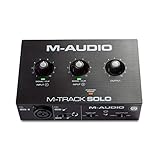
The M-Track Solo is a budget-tier, one-microphone interface with an additional instrument input, switchable phantom power and zero-latency direct monitoring. It is deliberately simple, and that simplicity is the point: there is very little to configure, which makes it a sensible first interface for someone who has never recorded before. It suits a beginner recording vocals or a guitar, a podcaster on a minimal setup, and anyone who wants a spare interface for travel.
Key specs
- One combination XLR/TRS input plus one dedicated instrument input
- Two outputs for monitors, plus a headphone output
- 24-bit/48 kHz conversion
- Bus-powered USB connection
- Switchable +48V phantom power for condenser microphones
- Zero-latency direct monitoring
- Compact, lightweight housing
Strengths
The M-Track Solo’s advantage is that it does the basics properly for very little money. A combination input means a condenser microphone, a dynamic microphone or a line-level source all connect without adapters, and the dedicated instrument input lets a guitar stay plugged in. Zero-latency direct monitoring means you hear yourself in real time rather than with the distracting delay that software monitoring introduces. The 24-bit/48 kHz conversion ceiling is the specification most often criticised, but in practice 48 kHz captures everything the human ear can hear with headroom to spare — the standard sample rate for music distribution is 44.1 kHz. For a first interface, the limitations are unlikely to be the reason a recording does not sound good.
Pros
- Very low cost of entry with a genuine brand behind it
- Combination input accepts both microphone types without adapters
- Separate instrument input for guitar or bass
- Zero-latency direct monitoring
- Simple enough that a beginner can be recording within minutes
Cons
- 48 kHz maximum sample rate limits future headroom for sound design work
- Only one microphone input, so no two-person recording
- Preamp gain is modest, which restricts very quiet dynamic microphones
- No loopback and no advanced workflow features
How it compares
The M-Track Duo is the obvious alternative and adds a second combination input for a small premium — if there is any chance you will record with someone else, the Duo is the better buy. Against the Focusrite Scarlett Solo 3rd Gen, the M-Track Solo costs less but gives up 192 kHz conversion, the metal chassis and the stronger software bundle. The M-Audio is the right choice when the goal is to start recording today with the least possible outlay; the Focusrite is the right choice when the goal is to start recording and not think about the interface again for several years.
9. M-Audio M-Track Duo – Best for two-input demos on a tight budget

The M-Track Duo takes everything simple and likeable about the M-Track Solo and doubles the input count. Two combination XLR/TRS inputs, switchable phantom power and zero-latency monitoring make it the cheapest credible route into simultaneous two-source recording. It suits a duo recording a podcast, a singer-songwriter tracking vocals and guitar together, and any beginner who has been told — correctly — that two inputs are worth having.
Key specs
- Two combination XLR/TRS inputs, each accepting microphone or line-level sources
- Two outputs for studio monitors plus a headphone output
- 24-bit/48 kHz conversion
- Bus-powered USB connection
- Switchable +48V phantom power
- Zero-latency direct monitoring
- Independent gain control per input
- Compact, lightweight housing
Strengths
The value proposition is straightforward: this is the least expensive way in this roundup to get two microphone inputs with phantom power from an established brand. That matters because two inputs is the threshold at which a home studio stops being a single-person operation. You can record a podcast interview with two microphones, capture a stereo pair, or track a vocal and an acoustic guitar at the same time. The direct monitoring is genuinely zero-latency, so performers hear themselves naturally. M-Audio also publishes its gain specifications and has a long driver history across Windows and macOS, which reduces the risk that a cheap interface becomes an unsupported one in two years’ time. For a first serious setup, that reliability is worth more than a higher sample rate figure.
Pros
- Two combination inputs with phantom power at a budget price
- Established brand with documented specifications and driver history
- Zero-latency direct monitoring on both channels
- Independent gain control per input
- Small, light and bus powered — easy to move between locations
Cons
- 24-bit/48 kHz conversion rather than 96 kHz or 192 kHz
- Modest preamp gain compared with the Focusrite 4th Gen models
- Plastic-bodied construction with a lighter feel
- No loopback for streaming computer audio
How it compares
Against the PIYONE 2X2 and the Jolgoo 2×2, the M-Track Duo gives up sample rate — 48 kHz versus a claimed 192 kHz — but gains published specifications, a recognised brand and predictable driver support. For most beginners that trade is worth making, because the practical difference between 48 kHz and 192 kHz is far smaller than the practical difference between an interface that works reliably and one that does not. Against the Focusrite Scarlett 2i2 4th Gen, the M-Track Duo is several times cheaper but gives up high-gain preamps, 192 kHz conversion, loopback, auto gain and the metal chassis. The Duo is the starting point; the 2i2 is the destination.
10. MAONO P2 Hybrid – Best for phone and tablet creators using two XLR microphones

The MAONO P2 Hybrid is a dual-XLR interface with a guitar input and USB connectivity for PC, phone and iPad. The “hybrid” in the name refers to that cross-device flexibility: the same box that plugs into a desktop can also connect to a phone or tablet, which is unusual in this price band. It suits mobile-first creators, live streamers who work from a phone, and duos who want two XLR microphone inputs without a computer-based studio setup.
Key specs
- Dual XLR microphone inputs
- Instrument input for guitar or bass
- USB connectivity for PC, phone and iPad
- Direct monitoring of input signals
- Phantom power for condenser microphones
- Desktop housing with accessible level controls
Strengths
Two XLR inputs on a device that works with a phone is the P2 Hybrid’s defining advantage. Most two-input interfaces assume a computer; most phone-friendly interfaces assume one microphone. The P2 Hybrid does both, which makes it useful for interview podcasts recorded in the field, two-person streams, and creators who edit on a phone or tablet. The guitar input means a solo performer can run a microphone and an instrument together. Because it is part of the MAONO ecosystem, it also benefits from the brand’s focus on live content creation — the controls are laid out for adjustment during a session rather than for a studio engineer’s workflow, and setup guides for phone-based recording are readily available. For anyone whose primary device is a phone rather than a laptop,