What's inside
- Top 3 Picks
- Quick Comparison
- How We Chose
- 1. Guermok Video Capture Card — Best for Budget 1080p60 Streaming
- 2. Elgato 4K X — Best for High-Refresh HDMI 2.1 Passthrough
- 3. acer USB 3.0 HDMI Capture Card — Best for Mid-Range Streaming With a Loop-Out
- 4. AVerMedia Live Gamer Ultra S (GC553Pro) — Best for 4K60 Capture With RGB24 Colour
- 5. Elgato Game Capture Neo — Best for Portable 4K60 HDR Passthrough
- 6. Fifine AmpliGame Video Capture Card — Best for Audio-First Streaming Rigs
- 7. Monster Video Capture Card — Best for Budget Console Recording
- 8. XIIXMASK USB 3.0 HDMI Capture Card — Best for 1080p60 Capture With 4K Pass-Through
- 9. mvthenxi 4K Audio Black Video Capture Card — Best for the Lowest-Cost 4K HDMI Input Path
- 10. Elgato 4K Pro — Best for Internal PCIe Capture With 8K60 Passthrough
- 11. AVerMedia Live Gamer Mini — Best for Plug-and-Play 1080p60 With Hardware Pass-Through
- 12. Elgato HD60 S+ — Best for 4K60 HDR10 Passthrough With 1080p60 HDR Capture
- Related Guides
- Top 3 Picks
- Quick Comparison
- How We Chose
- 1. Guermok Video Capture Card — Best for Budget 1080p60 Streaming
- 2. Elgato 4K X — Best for High-Refresh HDMI 2.1 Passthrough
- 3. acer USB 3.0 HDMI Capture Card — Best for Mid-Range Streaming With a Loop-Out
- 4. AVerMedia Live Gamer Ultra S (GC553Pro) — Best for 4K60 Capture With RGB24 Colour
- 5. Elgato Game Capture Neo — Best for Portable 4K60 HDR Passthrough
- 6. Fifine AmpliGame Video Capture Card — Best for Audio-First Streaming Rigs
- 7. Monster Video Capture Card — Best for Budget Console Recording
- 8. XIIXMASK USB 3.0 HDMI Capture Card — Best for 1080p60 Capture With 4K Pass-Through
- 9. mvthenxi 4K Audio Black Video Capture Card — Best for the Lowest-Cost 4K HDMI Input Path
- 10. Elgato 4K Pro — Best for Internal PCIe Capture With 8K60 Passthrough
- 11. AVerMedia Live Gamer Mini — Best for Plug-and-Play 1080p60 With Hardware Pass-Through
- 12. Elgato HD60 S+ — Best for 4K60 HDR10 Passthrough With 1080p60 HDR Capture
- Related Guides
As an Amazon Associate I earn from qualifying purchases. This post may contain affiliate links at no extra cost to you.
If you want the best Black Friday gaming capture card deal for the widest range of setups, the card to watch is the Elgato 4K X. It is the only external model on this list that pairs an HDMI 2.1 input with 4K144 passthrough and 4K60 capture over a single USB cable, so a PlayStation 5, an Xbox Series X, a gaming PC or a docked handheld can all keep their high-refresh output while you record or stream. If your budget is the hard limit, the Guermok and XIIXMASK sticks do the one job most beginners actually need — clean 1080p60 capture from a 4K console — for the least money. If you want the strongest premium option and have a free PCIe slot, the Elgato 4K Pro adds 8K60 passthrough and takes USB bandwidth out of the equation entirely. Everything below is sorted by resolution ceiling, frame rate, passthrough behaviour, connection type and console compatibility, so you can match a deal to the machine you already own rather than the one in the marketing render.
What we cover
- Top 3 Picks
- Quick Comparison
- How We Chose
- 1. Guermok Video Capture Card — Best for Budget 1080p60 Streaming
- 2. Elgato 4K X — Best for High-Refresh HDMI 2.1 Passthrough
- 3. acer USB 3.0 HDMI Capture Card — Best for Mid-Range Streaming With a Loop-Out
- 4. AVerMedia Live Gamer Ultra S (GC553Pro) — Best for 4K60 Capture With RGB24 Colour
- 5. Elgato Game Capture Neo — Best for Portable 4K60 HDR Passthrough
- 6. Fifine AmpliGame Video Capture Card — Best for Audio-First Streaming Rigs
- 7. Monster Video Capture Card — Best for Budget Console Recording
- 8. XIIXMASK USB 3.0 HDMI Capture Card — Best for 1080p60 Capture With 4K Pass-Through
- 9. mvthenxi 4K Audio Black Video Capture Card — Best for the Lowest-Cost 4K HDMI Input Path
- 10. Elgato 4K Pro — Best for Internal PCIe Capture With 8K60 Passthrough
- 11. AVerMedia Live Gamer Mini — Best for Plug-and-Play 1080p60 With Hardware Pass-Through
- 12. Elgato HD60 S+ — Best for 4K60 HDR10 Passthrough With 1080p60 HDR Capture
- Related Guides
Top 3 Picks
Best overall: Elgato 4K X. It covers the most setups at once — HDMI 2.1 in, high-refresh passthrough so your monitor or TV keeps its frame rate, and 4K60 capture for archiving or streaming. If you own a current-generation console and a USB 3.x port, this is the one card that will not force you to choose between playing properly and recording properly.
Best budget: Guermok Video Capture Card. A 4K HDMI input, 1080p60 or 2K30 capture and a USB 3.0-to-USB-C connection at the budget tier. It has no hardware loop-out, so you play through the software preview, but for a starter stream or a second-camera feed it removes almost all of the cost barrier.
Best premium: Elgato 4K Pro. An internal PCIe card with 8K60 passthrough and 4K60 capture. It suits a permanent desk build where the capture card lives inside the case, never needs a USB port, and never gets unplugged mid-session.
Best mid-range console card: AVerMedia Live Gamer Ultra S (GC553Pro). 4K60 capture with RGB24 colour handling, which keeps on-screen text and fine detail crisper than compressed-colour budget sticks at the same resolution.
Quick Comparison
| Product | Best for | Key specs | Price tier |
|---|---|---|---|
| Guermok Video Capture Card | Budget 1080p60 streaming from a 4K console | 4K HDMI in, 1080p60 / 2K30 capture, USB 3.0 to USB-C, no loop-out | Budget |
| Elgato 4K X | High-refresh HDMI 2.1 passthrough with 4K60 capture | HDMI 2.1 in, 4K144 passthrough, 4K60 capture, USB-C, bus-powered | Premium |
| acer USB 3.0 HDMI Capture Card | Mid-range streaming with a hardware loop-out | 4K HDMI loop-out, 1080p60 capture, USB 3.0 | Mid-range |
| AVerMedia Live Gamer Ultra S (GC553Pro) | 4K60 capture with uncompressed RGB24 colour | 4K60 HDMI capture, RGB24, USB, HDMI passthrough | Premium |
| Elgato Game Capture Neo | Portable 4K60 HDR passthrough | 4K60 HDR passthrough, 1080p60 capture, USB, compact body | Mid-range |
| Fifine AmpliGame Video Capture Card | Audio-first streaming rigs | 4K HDMI in, 1080p60 capture, USB, audio-brand ecosystem | Mid-range |
| Monster Video Capture Card | Cheapest console recording path | 4K HDMI in, 1080p60 capture, USB 3.0 | Budget |
| XIIXMASK USB 3.0 HDMI Capture Card | Budget card with 4K pass-through | 4K pass-through, 1080p60 capture, USB 3.0 | Budget |
| mvthenxi 4K Audio Black Video Capture Card | Lowest-cost 4K HDMI input path | 4K HDMI in, 1080p60 recording, USB | Budget |
| Elgato 4K Pro | Internal PCIe capture with 8K60 passthrough | PCIe internal, 8K60 passthrough, 4K60 capture | Premium |
| AVerMedia Live Gamer Mini | Plug-and-play 1080p60 with hardware pass-through | 1080p60 capture, HDMI pass-through, USB, driver-free setup | Mid-range |
| Elgato HD60 S+ | 4K60 HDR10 passthrough with 1080p60 HDR capture | 4K60 HDR10 passthrough, 1080p60 HDR10 capture, USB-C | Premium |
How We Chose
This roundup is built from published manufacturer specifications, connection standards and the way each card’s input, passthrough and output chain is described on its own listing — not from physical use of the hardware. The first filter was category fit: every card here must accept a modern console or PC over HDMI and deliver a usable signal to a host computer over USB or PCIe. The second was specification honesty. Where a listing names a resolution and frame rate, we treat that as the ceiling; where it names only a passthrough figure, we say so and explain what the capture side can realistically carry over the stated connection.
The third criterion was upgrade path. A capture card is usually bought once and kept through at least one console generation, so we weighted HDMI 2.1 support, high-refresh passthrough, HDR handling and colour format support more heavily than a slightly lower headline price. The fourth was situation: internal versus external, bus-powered versus wall-powered, loop-out versus preview-only. A card that is wrong for your desk is a bad deal at any discount, so the picks below are grouped by the setup they fit rather than by a single ranking.
1. Guermok Video Capture Card — Best for Budget 1080p60 Streaming
As an Amazon Associate we earn from qualifying purchases at no extra cost to you.

The Guermok Video Capture Card is the right buy when your whole goal is to get a console or a second PC onto a stream for as little as possible, and you have already accepted that the finished video will be 1080p at 60 frames per second. It is a bus-powered stick that accepts a 4K HDMI source and sends 1080p60 or 2K30 out over USB. The listing names USB 3.0 with a USB-C connector on the capture side, which matters more than it sounds: USB 3.0 gives roughly ten times the headroom of USB 2.0, so a 1080p60 stream arrives looking clean rather than smeared when the camera pans or the scene fills with motion.
- Input: HDMI, accepts sources up to 4K
- Capture ceiling: 1080p at 60 fps, or 2K at 30 fps
- Host connection: USB 3.0 with a USB-C connector
- Passthrough: none named — you play through the software preview
- Power: bus-powered from the host USB port
- Sources: HDMI consoles, gaming PCs, cameras, docks
- Audio: embedded HDMI audio travels on the same cable
Its strength is that it does not ask you to think. There is no driver disc, no external power brick, no PCIe slot and no second HDMI cable, so a laptop with a single free USB port is enough to start. The 2K30 mode is a genuine option rather than a footnote — if you record strategy games, turn-based titles or talking-head footage where motion is slow, dropping to 1440p at 30 fps buys you more visible detail per frame than 1080p60 does, at the cost of smoothness in fast pans.
The honest limitation is the missing loop-out. With no HDMI output to your monitor, you watch the game through the capture software’s preview window, and that preview carries a small delay. For slower games it is invisible. For competitive shooters or rhythm games it is the difference between a good session and a frustrating one, and it is the single reason to step up to the XIIXMASK or the Acer card below.
Pros
- Lowest realistic entry point into 1080p60 capture
- USB 3.0 bandwidth keeps 1080p60 looking clean under motion
- Bus-powered, so no wall adapter or extra cable clutter
- Works with consoles, PCs and cameras without a driver install
- Small enough to live in a laptop bag permanently
Cons
- No hardware passthrough, so you play through a delayed preview
- Capped at 1080p60 or 2K30 — no 4K recording at all
- Needs a true USB 3.0 port; a USB 2.0 port will limit quality
- No HDR handling, so HDR games must be switched to SDR
Against the XIIXMASK card, the Guermok trades away 4K pass-through in exchange for the USB-C connector and the 2K30 capture mode. If you play on a monitor and want to see the native signal while recording, the XIIXMASK is the better budget pick. If you capture a laptop screen, a camera or a handheld and just want a file at the end, the Guermok is cheaper and simpler, and it is the budget card most people should default to.
2. Elgato 4K X — Best for High-Refresh HDMI 2.1 Passthrough

The Elgato 4K X suits the player who refuses to give up their display’s refresh rate in order to record. Its listing names HDMI 2.1 and 4K144 ultra-low latency, which puts it in a different class from every other external card here: HDMI 2.1 carries far more bandwidth than HDMI 2.0, so a 4K display can run at high refresh rates through the card while the capture side records 4K60. If you own a PlayStation 5, an Xbox Series X, a high-refresh gaming monitor or a current gaming PC, this is the card that keeps the experience intact.
- Input: HDMI 2.1, accepting high-bandwidth, high-refresh sources
- Passthrough: named as 4K144 with ultra-low latency
- Capture: up to 4K at 60 fps
- Host connection: USB-C to a USB 3.x port
- Power: bus-powered from the host
- Console fit: PS5, Xbox Series X|S, Switch, PC, docked handhelds
- Software: Elgato’s capture utility plus OBS and other third-party apps
The practical benefit of HDMI 2.1 is not the headline number — almost nobody plays at 4K144 — it is the headroom. HDMI 2.0 tops out around 18 Gbps, which is enough for 4K60 but leaves little room for HDR, higher refresh rates or 1440p at high frame rates all at once. HDMI 2.1 roughly triples that ceiling, so 1440p at 120 Hz, 1080p at 240 Hz and 4K60 with HDR all pass through cleanly. You keep variable refresh behaviour on your display instead of watching the card silently renegotiate it down.
The capture side is the part to understand before buying. A USB 3.x link carries a finite amount of data, so recording at 4K60 almost always means the card sends a compressed or chroma-subsampled stream rather than a raw one. That is normal across the category and not a flaw specific to this card, but it is why 4K60 recordings look slightly softer than a native screenshot when you freeze the frame. For 1080p60 recording the same link is generous, and the result is clean.
Pros
- HDMI 2.1 input keeps high-refresh and HDR signals alive through the card
- 4K144-class passthrough means no refresh-rate compromise on your display
- External and bus-powered, so it works with laptops and consoles
- 4K60 capture covers streaming and archiving without a second device
- Widest console compatibility of any external card in this roundup
Cons
- Premium tier pricing, even discounted
- Requires a genuine USB 3.x port; a hub or USB 2.0 port will cap it
- 4K60 capture uses compressed colour, so pixel-perfect 4K frames are not guaranteed
- Overkill if you only ever stream at 1080p60
Compared with the Elgato 4K Pro, the 4K X gives up 8K60 passthrough and the internal PCIe slot, but it gains portability and works on a laptop with no free slot. Compared with the AVerMedia Live Gamer Ultra S, it is the stronger choice for a high-refresh display, while the AVerMedia is the stronger choice if uncompressed RGB24 colour at 4K60 matters more to you than refresh headroom. For most console-and-monitor setups, the 4K X is the better all-rounder.
3. acer USB 3.0 HDMI Capture Card — Best for Mid-Range Streaming With a Loop-Out
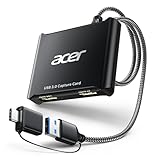
The acer USB 3.0 HDMI Capture Card is aimed at the streamer who wants the two things budget sticks lack: a hardware HDMI loop-out so the game reaches the monitor with no software delay, and a brand name they recognise at the mid-range tier. The listing names 4K HDMI loop-out and 1080p60 capture for streaming over USB 3.0, which is the classic, well-proven combination for a single-console setup.
- Input: HDMI, accepting sources up to 4K
- Loop-out: 4K HDMI output to a TV or monitor
- Capture: 1080p at 60 Hz for streaming
- Host connection: USB 3.0
- Power: bus-powered from the host
- Console fit: PS5, Xbox Series X|S, Switch, PC
The loop-out is the whole point. Your console plugs into the card, the card passes the signal straight to your display, and the capture side taps that signal for your PC. Because the display path is hardware, the delay you feel while playing is the display’s own latency, not the capture pipeline’s. That single difference fixes the main complaint people have with preview-only budget cards, and it costs far less than a premium HDMI 2.1 model.
The trade-off is the ceiling. Loop-out runs at 4K, but capture stops at 1080p60, so this is a card for someone whose output is a 1080p60 stream rather than a 4K archive. If you later decide you want 4K60 recordings, you will be buying again — which is why the upgrade path matters as much as the discount. For a first or second year of streaming, though, 1080p60 is what the major platforms deliver to most viewers anyway, and the loop-out means your gameplay stays smooth while you learn.
Pros
- Hardware HDMI loop-out keeps gameplay latency at display level
- 4K signal passes through to the TV even though capture is 1080p60
- USB 3.0 connection is enough for a clean 1080p60 stream
- Mid-range pricing rather than premium, with a recognisable brand behind it
- Simple two-cable setup that suits a single-console desk
Cons
- No 4K capture, so archiving at 4K means replacing the card later
- No HDMI 2.1, so 4K120 and 1440p144 passthrough are out of reach
- Needs a real USB 3.0 port to hold 60 fps reliably
- Fewer advanced colour and HDR options than the premium cards
Against the Guermok, the Acer card costs more and buys you exactly one thing: the loop-out. That is a fair trade for anyone playing on a monitor in real time, and a waste of money for anyone capturing a camera or a laptop screen. Against the Elgato Game Capture Neo, the Acer is the cheaper route to hardware passthrough, while the Neo adds portability and HDR passthrough at a higher tier. If your setup is a console, a TV and one PC, the Acer card is the value pick in the middle of this list.
4. AVerMedia Live Gamer Ultra S (GC553Pro) — Best for 4K60 Capture With RGB24 Colour

The AVerMedia Live Gamer Ultra S, sold as the GC553Pro, targets the creator who wants 4K60 capture and cares about colour accuracy. The listing names 4K60 HDMI capture with RGB24, and that colour format is the detail worth understanding: many capture pipelines convert incoming video to a compressed chroma format such as 4:2:0, which halves colour detail and can make small on-screen text, HUD elements and fine textures look slightly muddy. RGB24 keeps full colour information per pixel, so recordings and streams stay crisp where detail is dense.
- Capture: 4K at 60 fps over HDMI
- Colour handling: RGB24 support for uncompressed colour detail
- Passthrough: HDMI passthrough to your display
- Host connection: USB to a modern PC or laptop
- Console fit: PS5, Xbox Series X|S, Switch, PC
- Software: AVerMedia’s own utility plus OBS and similar apps
This is a premium-tier card and the price reflects a genuinely higher specification ceiling rather than a brand badge. RGB24 at 4K60 is a demanding target, and it is the reason the card appeals to people who record gameplay for editing rather than only for live streaming — editors notice colour banding and soft text far more than a live viewer does, because they are looking at still frames and slow-motion replays.
Where it fits best is a dedicated desk with a modern PC, a current console and a monitor that can show the passthrough signal at full quality. It is not a travel card, and it is not the cheapest way to get 1080p60 onto Twitch. It is the card you buy when 4K60 recording is the point and you want the colour pipeline to hold up under a critical eye.
Pros
- 4K60 capture covers both streaming and archiving in one device
- RGB24 colour keeps text, HUDs and fine textures sharp
- Hardware passthrough so gameplay stays responsive
- Works with consoles and PCs on the same desk
- Strong editing-friendly output for highlight reels and reviews
Cons
- Premium tier, so the discount matters more than the list price
- RGB24 at high resolution demands a capable host machine and USB link
- More card than a 1080p60-only streamer will ever use
- Larger and heavier than the stick-style budget cards
Compared with the Elgato 4K X, the AVerMedia leans toward colour fidelity and 4K60 recording, while the 4K X leans toward HDMI 2.1 refresh headroom. If your display runs at 120 Hz or higher and you want to keep that, choose the 4K X. If your priority is the cleanest possible 4K60 file for editing, the Live Gamer Ultra S is the stronger pick. Against the Elgato 4K Pro, it gives up internal mounting and 8K60 passthrough but keeps the external, portable form factor.
5. Elgato Game Capture Neo — Best for Portable 4K60 HDR Passthrough

The Elgato Game Capture Neo is the mid-range Elgato that fits in a pocket. Its listing names 4K60 HDR passthrough on a portable USB capture card, which makes it the natural choice for someone who moves between a desk, a living-room TV and a friend’s setup without wanting to rewire anything. If you stream from a laptop and play on whatever screen happens to be in front of you, this is the shape of card that suits your life.
- Passthrough: 4K60 with HDR support named on the listing
- Capture: 1080p-class capture over USB for streaming
- Form factor: compact external body, bus-powered
- Host connection: USB to a laptop or desktop
- Console fit: PS5, Xbox Series X|S, Switch, PC
- Software: Elgato’s capture application and third-party apps
HDR passthrough is the headline feature at this tier. If your TV or monitor is HDR-capable and your console outputs HDR, a card without HDR handling will either force the console into SDR or produce a washed-out, grey-looking image. The Neo keeps the HDR signal intact on the display path, so the game looks the way the console intended while your capture records a standard-dynamic-range file for the stream — which is what most platforms deliver anyway.
The capture ceiling is the sensible compromise. Recording at 1080p60 while passing 4K60 HDR through is exactly the split that a single USB link handles comfortably, and it matches what live viewers actually receive. If you need a 4K60 recording file for editing, this is not the card for you; if you need a card that always works and never weighs you down, it is.
Pros
- 4K60 HDR passthrough keeps the display image looking correct
- Portable, bus-powered body that travels easily
- Mid-range tier rather than premium pricing
- Elgato software ecosystem with broad third-party app support
- Straightforward setup for laptops with limited ports
Cons
- Capture tops out at 1080p-class resolution, not 4K
- No HDMI 2.1, so very high refresh rates are not passed through
- Premium features like RGB24 colour are reserved for the higher tiers
- Bus-powered design means a weak USB port can cause dropouts
Against the Acer card, the Neo costs more but adds HDR passthrough and a more portable body, and it comes from a company whose entire catalogue is capture hardware. Against the Elgato HD60 S+, the Neo is the newer, lighter option, while the HD60 S+ adds HDR10 capture at 1080p60 rather than passthrough only. If you want one card that does everything competently and travels well, the Neo is the pick; if HDR in the recording file matters, step up.
6. Fifine AmpliGame Video Capture Card — Best for Audio-First Streaming Rigs

The Fifine AmpliGame Video Capture Card makes most sense for the streamer who already owns Fifine audio gear and wants their video path to come from the same ecosystem. The listing names HD 1080p60 capture for audio and video, with 4K HDMI to USB conversion, so the video side is the familiar 4K-in, 1080p60-out arrangement at the mid-range tier, and the value is in how neatly it slots into a desk that already runs an AmpliGame microphone or interface.
- Input: HDMI, accepting sources up to 4K
- Capture: 1080p at 60 fps
- Host connection: USB
- Audio: embedded HDMI audio captured alongside video
- Console fit: PS5, Xbox Series X|S, Switch, PC
- Ecosystem: pairs with Fifine’s AmpliGame microphone line
Audio is where most beginner streams fall apart, and it is rarely the capture card’s fault. The usual failure is a mix that clips, echoes or buries the game sound under a microphone that was never gain-staged. Buying video and audio hardware from one brand does not fix that by itself, but it does mean one set of software, one support channel and one consistent set of level conventions, which shortens the learning curve considerably.
On the video side this is a solid mid-range performer: 1080p60 over USB is the reliable sweet spot for live streaming, and the 4K HDMI input means you can plug a current console straight in without a downscaler in the chain. It is not a card for 4K recording, and it does not advertise HDMI 2.1 passthrough, so a high-refresh display setup should look at the Elgato 4K X instead.
Pros
- 1080p60 capture is the dependable standard for live streaming
- Accepts 4K HDMI sources directly from modern consoles
- Natural fit for an existing Fifine audio setup
- Mid-range pricing rather than premium
- Simple, single-cable host connection
Cons
- No 4K capture option
- No advertised HDMI 2.1 high-refresh passthrough
- Its main advantage only applies if you already use the brand’s audio gear
- Less detailed colour-handling information published than the premium cards
Against the Monster and XIIXMASK budget cards, the Fifine sits a tier higher and offers a more cohesive package for a talking-head-plus-gameplay stream. Against the Acer card, it trades the hardware loop-out for audio-ecosystem integration — so if you play on a monitor in real time, choose the Acer, and if your priority is a tidy one-brand audio and video desk, choose the Fifine.
7. Monster Video Capture Card — Best for Budget Console Recording

The Monster Video Capture Card is a budget-tier option for recording console gameplay at 1080p60 from a 4K HDMI source. The listing names 4K HDMI input, 1080p60 recording and USB 3.0, which is the same formula the other budget sticks follow, wrapped in a brand name that has been associated with consumer audio and video accessories for decades. It suits a first-time recorder who wants a known label on the box and does not need HDR, high refresh rates or 4K files.
- Input: HDMI, accepting sources up to 4K
- Recording: 1080p at 60 fps
- Host connection: USB 3.0
- Power: bus-powered from the host port
- Console fit: PS5, Xbox Series X|S, Switch, PC
- Setup: driver-free plug-and-play with standard capture software
USB 3.0 is the specification that keeps this card honest. The difference between USB 2.0 and USB 3.0 at 1080p60 is visible the moment anything moves quickly: USB 2.0 sticks must compress harder, and fast camera pans or particle-heavy scenes turn into blocks. A USB 3.0 link carries the same frame comfortably, so the recorded file holds up in editing and looks clean on a stream.
What you give up at this tier is control. There is no HDR handling, no HDMI 2.1 passthrough and typically no hardware loop-out, so you either play through the software preview with its small delay or you split the console signal with a separate HDMI splitter. For single-player games and recorded content, neither limitation bites. For competitive play, it does, and that is the point at which the Acer or the Elgato 4K X becomes the better purchase.
Pros
- Budget tier pricing with a long-established brand name
- USB 3.0 connection supports clean 1080p60 capture
- Accepts 4K HDMI input from current consoles
- Driver-free setup with common capture applications
- Good first card for recorded gameplay and clips
Cons
- No 4K recording and no HDR support
- No hardware passthrough advertised, so preview delay applies
- Limited published detail on colour format and bitrate handling
- Will not pass through high-refresh or variable-refresh signals
Against the Guermok, the Monster is the same class of card with a different brand and a different connector arrangement; the Guermok’s USB-C port and 2K30 mode give it a slight edge for laptop users, while the Monster appeals to buyers who prefer a familiar name. Against the mvthenxi, both sit at the bottom of the price ladder, and the choice between them comes down to which listing offers the cable and connector you actually need.
8. XIIXMASK USB 3.0 HDMI Capture Card — Best for 1080p60 Capture With 4K Pass-Through

The XIIXMASK USB 3.0 HDMI Capture Card is the budget card to choose if you want to keep playing on your TV or monitor while you record. Its listing names 1080p60 capture, 4K pass-through and USB 3.0, and that combination is the important one: pass-through means the console signal reaches your display directly rather than through a software preview, so you are not fighting a delayed window while you play.
- Capture: 1080p at 60 fps
- Pass-through: 4K HDMI signal to your display
- Host connection: USB 3.0
- Power: bus-powered from the host port
- Console fit: PS5, Xbox Series X|S, Switch, PC
- Software: works with standard capture applications
At this price tier, pass-through is the feature that changes how the card feels in use. Budget cards without it force a choice between playing well and recording well. With it, the display path stays hardware-fast and the capture side simply observes. The 4K pass-through figure means a current console can still send its full-resolution signal to a 4K television, even though the recording itself is 1080p60 — which is what most streaming platforms deliver to most viewers anyway.
The limits are the usual ones for this class. There is no 4K recording, no HDR, and no HDMI 2.1, so 120 Hz and variable refresh rates are not preserved through the card. USB 3.0 remains essential: plug this into a USB 2.0 port and the 60 fps capture will stutter or drop frames, which is the single most common mistake buyers make with budget capture hardware.
Pros
- 4K pass-through keeps gameplay on the display without software delay
- 1080p60 capture over USB 3.0 is clean and widely supported
- Budget tier price for a feature usually found a tier higher
- Straightforward plug-and-play setup
- Works with consoles, PCs and cameras
Cons
- No 4K or HDR recording
- Pass-through is 4K but not high refresh, so 120 Hz displays are not fully served
- Requires a genuine USB 3.0 port to hold frame rate
- Minimal published detail on colour format and latency figures
Against the Guermok, the XIIXMASK wins on pass-through and loses the 2K30 capture mode and USB-C connector. Against the Acer card, it is the cheaper route to the same core benefit, with the Acer offering a recognised brand and a mid-range build in exchange for more money. If you play on a TV, record at 1080p60 and want to spend as little as possible, this is the strongest budget compromise on the list.
9. mvthenxi 4K Audio Black Video Capture Card — Best for the Lowest-Cost 4K HDMI Input Path
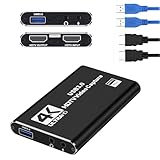
The mvthenxi 4K Audio Black Video Capture Card is the entry-level option for someone who needs a 4K HDMI input and 1080p60 recording and nothing else. The listing names 4K HDMI input support and 1080p full HD 60 fps recording for gameplay, with audio carried over HDMI. It is the sort of card bought for a specific, narrow job: getting one HDMI source into a computer reliably and cheaply.
- Input: HDMI, accepting 4K sources
- Recording: 1080p at 60 fps
- Audio: HDMI-embedded audio captured with video
- Host connection: USB
- Console fit: PS5, Xbox Series X|S, Switch, PC
- Setup: plug-and-play with standard capture software
Its case is straightforward: the cheapest reliable way to add an HDMI input to a computer. That is useful well beyond gaming — capturing a camera feed for a video call, digitising a media player’s output, recording a second PC’s screen for a tutorial, or turning a tablet or handheld dock into a streamable source. For those jobs, 1080p60 is plenty, and paying premium prices for 4K60 or HDMI 2.1 would be wasted money.
The caution is the same one that applies to every card at this tier: the specification list is thin, so treat the published figures as the ceiling and confirm the return policy before buying. Budget capture hardware varies more between units than premium hardware does, and a card that works perfectly on one machine’s USB controller can behave differently on another’s. Buying from a seller with a clear returns process is part of the deal at this price.
Pros
- One of the lowest-cost ways to add a 4K-capable HDMI input
- 1080p60 recording is enough for streaming, calls and tutorials
- Captures HDMI audio alongside video with no separate cable
- Compact, bus-powered and easy to store
- Useful outside gaming — cameras, media players, second PCs
Cons
- No 4K recording, HDR or high-refresh passthrough
- Thin published specification detail compared with major brands
- Unit-to-unit consistency is less predictable at this tier
- No ecosystem software, so you rely on third-party apps
Against the Monster and XIIXMASK cards, the mvthenxi competes purely on price and availability; if the other two cost about the same, the XIIXMASK’s advertised 4K pass-through makes it the more useful card for a console setup. Choose the mvthenxi when your job is simply to get a signal into a computer and you would rather not pay for features you will never switch on.
10. Elgato 4K Pro — Best for Internal PCIe Capture With 8K60 Passthrough

The Elgato 4K Pro is the card for a permanent desk build. Its listing names internal PCIe mounting, 8K60 passthrough and 4K60 capture, and that combination solves the two problems external cards cannot: it never occupies a USB port, and it never depends on USB bandwidth to carry a high-resolution signal. If your streaming PC lives under the desk and stays there, an internal card is simply the better engineering choice.
- Mounting: internal PCIe card, installed inside the case
- Passthrough: up to 8K at 60 Hz to a display
- Capture: up to 4K at 60 fps
- Host connection: PCIe slot, no USB link required
- Console fit: PS5, Xbox Series X|S, Switch, PC
- Upgrade path: designed to serve more than one console generation
8K60 passthrough is future-facing rather than immediately practical for most people, and that is exactly why it matters in a purchase like this. A capture card is usually kept for years, and passthrough headroom is what determines whether the card becomes a bottleneck when the next display or console arrives. Buying a card that already passes 8K60 means you are unlikely to replace it because of the video path.
The trade-offs are structural. An internal card needs a free PCIe slot, a case with room for it, and a desktop rather than a laptop. It is not portable, and installation means opening the machine. In exchange, you get the most stable capture environment available: no USB controller contention, no hub problems, no cable working loose mid-stream, and a card that simply appears as a device every time the computer boots.
Pros
- PCIe connection removes USB bandwidth limits entirely
- 8K60 passthrough future-proofs the display path
- 4K60 capture suits both streaming and archiving
- Never competes for a USB port or suffers hub dropouts
- Best long-term reliability for a fixed streaming desk
Cons
- Premium tier pricing
- Requires a desktop with a free PCIe slot and physical space
- Not portable and not usable with a laptop
- Installation requires opening the case, which some buyers avoid
Against the Elgato 4K X, the 4K Pro gives up portability and gains stability and passthrough headroom. If you stream from a laptop, or you move between rooms, the 4K X is the right card and the 4K Pro is unusable. If your setup is a fixed desktop, the 4K Pro removes an entire category of problems — dropped frames from a shared USB bus, cables knocked loose, and ports that are already full.
11. AVerMedia Live Gamer Mini — Best for Plug-and-Play 1080p60 With Hardware Pass-Through

The AVerMedia Live Gamer Mini is the simplest card in this roundup. Its listing names 1080p60 capture with HDMI pass-through, plug-and-play operation, and compatibility with OBS, Xbox Series X|S and PlayStation consoles. There is no configuration to get wrong: connect the console to the input, the display to the pass-through, the USB cable to the computer, and the card appears as a standard video device.
- Capture: 1080p at 60 fps
- Pass-through: HDMI output to your display
- Setup: driver-free plug-and-play
- Host connection: USB
- Console fit: Xbox Series X|S, PlayStation consoles, Switch, PC
- Software: works with OBS and other standard capture applications
Its appeal is reliability rather than specification. Because the capture ceiling is 1080p60 and the connection demands are modest, the card works on a very wide range of machines, including older laptops that would struggle to ingest a 4K60 stream. The hardware pass-through keeps gameplay on the television at full responsiveness, so the card never becomes the reason a session feels wrong.
This is also the card to consider when the person streaming is not the person maintaining the computer. Plug-and-play hardware that needs no driver install and no software update is worth more than a higher specification that requires troubleshooting. For a console in a living room with a modest PC or laptop nearby, that simplicity is the feature.
Pros
- Driver-free plug-and-play setup with no configuration steps
- HDMI pass-through keeps gameplay responsive on the TV
- 1080p60 capture matches what streaming platforms deliver
- Runs on modest hardware, including older laptops
- Broad console and software compatibility
Cons
- No 4K capture and no HDR support
- Pass-through is limited to 1080p60-class signals
- Modest colour-handling specification compared with premium cards
- Not the right card if you plan to archive in 4K later
Against the Acer card, the Live Gamer Mini offers the same core promise — 1080p60 capture with a hardware loop-out — with the emphasis on zero-configuration operation rather than 4K signal pass-through. Against the Elgato HD60 S+, it is the simpler and cheaper choice, while the HD60 S+ adds 4K60 HDR10 passthrough and HDR capture. Buy the Mini for reliability, the HD60 S+ for headroom.
12. Elgato HD60 S+ — Best for 4K60 HDR10 Passthrough With 1080p60 HDR Capture
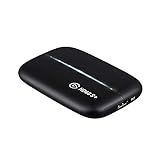
The Elgato HD60 S+ is the long-standing premium external card, and its listing names the combination that made it a standard recommendation: 4K60 HDR10 passthrough, 1080p60 HDR10 capture, ultra-low latency and an external USB-C connection. It suits the streamer who wants HDR in both directions — the game looking correct on an HDR display and the