Our Top Picks
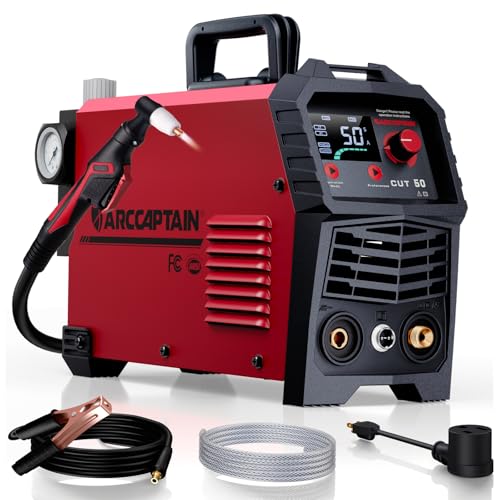


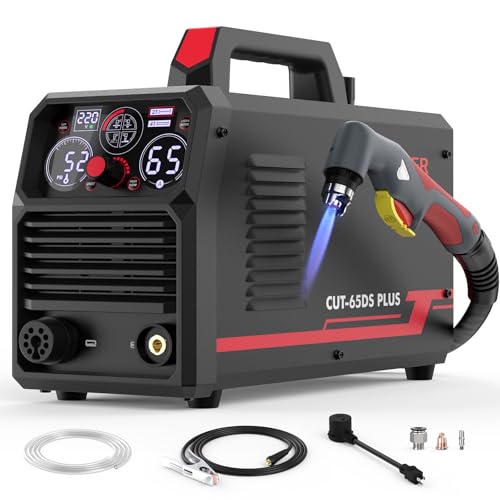

What's inside
As an Amazon Associate I earn from qualifying purchases. This post may contain affiliate links at no extra cost to you.
Most plasma cutter review roundups are copied spec sheets. The headline number is the severance cut, and severance is not a cut you can weld. It means the arc got through and left a ragged, dross-loaded edge you have to grind. The clean cut rating is the honest one. Buy on the big number and you will own a machine that bogs on 3/8 in plate.
What matters on a shop floor: amps against real thickness, duty cycle, air quality, consumable cost per hour, and the fume and fire risk that comes with an arc hotter than 20,000 F. Everything below is buying logic, not bench data on a specific machine.
As an Amazon Associate we earn from qualifying purchases at no extra cost to you.




| Amp class | Clean cut in mild steel | Severance cut | What it is really for |
|---|---|---|---|
| 20-30 A | up to about 1/4 in | about 3/8 in | sheet metal, body panels, brackets |
| 40-50 A | about 1/2 in | about 3/4 in | general fab, trailer and gate repair, 1/4 in all day |
| 60-70 A | about 3/4 in | about 1 in | structural steel, small CNC tables |
| 80-105 A | 1 in and up | 1-1/2 in and up | heavy plate, demo work, production cutting |
What we cover
What a Straight Plasma Cutter Review Looks At
Rated clean cut. The thickness it will cut with an edge you can weld. Treat the rest as marketing.
Duty cycle. How much of a ten minute stretch the machine can run at full output. Forty percent means four minutes of arc and six of cooling. Long cuts eat duty cycle, not peak amps.
Input power. On 120 V, most dual voltage machines lose about half their output and still want a solid 20 A circuit. If you have 240 V in the shop, use it.
Arc start. High frequency start throws electrical noise and can upset nearby electronics. If a CNC table is in your future, buy blowback or pilot arc start.
Consumables. A common torch pattern with parts stocked in more than one place. Proprietary consumables are a slow tax.
Entry 30-45 A dual voltage cutters
The right buy if your work is sheet, tube and light brackets. Expect a modest duty cycle, and plan on a real air filter instead of the plastic bowl in the box.
Amps, Thickness and Travel Speed
Rough rule: clean capacity in mild steel runs about 1 amp per thousandth of an inch. Thirty amps handles 1/4 in. Forty-five amps is a working 1/2 in machine. Sixty-five amps is where 3/4 in stops being a fight. Derate 20 to 25 percent on stainless and aluminum for the same edge quality.
Set amps for the material, then fix your speed. Too slow and the kerf widens, the edge bevels, and dross welds to the bottom. Too fast and the arc trails, sparks blow back at your hands, and you get no penetration. Watch the spark stream. It should exit the bottom angled slightly back. Sparks coming up at you means too fast or too far off the plate.
Drag tips ride on thin sheet. Above 1/4 in, hold about 1/16 in of standoff with a guide. Pierce at an angle so the first blast of molten metal clears the nozzle, and near capacity start from the edge.
Air Supply Is Where Cheap Cutters Die
Air is the consumable nobody budgets for. A 40 A machine usually wants 4 to 6 CFM at 60 to 90 psi. A 65 A machine wants more. Read the plate on the machine, then find out what your compressor actually delivers at 90 psi, not its peak horsepower sticker. A pancake unit will quit halfway through a 4 ft rip: pressure sags, the arc goes unstable, the nozzle burns.
Water and oil kill consumables faster than hard use. Moisture blows the nozzle orifice out of round. Oil from a lubricated compressor tracks inside the torch. Run a water separator and a coalescing filter at the machine, drain the tank daily, keep the hose short and full size, and watch the regulator while the arc is live.
Air prep: separator, coalescing filter, dryer
Twenty minutes of plumbing that can double consumable life. If you buy one accessory with the machine, buy this.
Consumables, Standoff and Torque
Torque on a plasma torch means hand tight. The retaining cap holds the swirl ring, nozzle and electrode in line with each other. Snug it with fingers only. A wrench distorts the cap and cocks the swirl ring, the gas stops spinning true, and you get a beveled cut that no amp setting will fix.
Pull the parts and look at them. The electrode wears a pit in the hafnium insert; when it goes deep the arc wanders and cut quality falls off a cliff. The nozzle orifice should be round. Change parts as a set. Squeezing one more foot out of a worn electrode is how you kill a nozzle.
- ✔ Fast on 1/4 in and under with no preheat
- ✔ Cuts stainless, aluminum and coated steel
- ✔ Narrow kerf, small heat affected zone
- ✔ Portable, and 120/240 V input is common
- ✘ Needs clean dry air every single time
- ✘ Consumable cost per hour adds up
- ✘ Low duty cycle on budget units
- ✘ Loud, bright and heavy on fume
Fume, Fire and PPE
Eye protection scales with amperage. Guidance runs around shade 5 at low amps and shade 8 or 9 past 60 A. Use the chart in AWS Z49.1 or on your hood, and go darker if you are squinting. Shade 5 goggles are not enough at 65 A.
Fume is the real hazard. Galvanized releases zinc and gives you metal fume fever. Stainless produces hexavalent chromium, a known carcinogen. Paint and cadmium plating are worse. Cut outdoors or over local exhaust, a downdraft bench or a water table, and wear a fitted P100. An open garage door is not ventilation.
Fire risk beats a grinder. Dross and sparks carry 30 ft and roll under benches. Clear combustibles from a 35 ft radius, keep an extinguisher in reach, and hold a fire watch for half an hour after the last cut. Do not cut on bare concrete; trapped moisture spalls and pops. Never cut a drum or tank that held fuel.
Wear leather gloves and sleeves, no synthetics against skin, pants over boots, ear plugs. Clamp the work lead to clean bare metal near the cut, and keep the torch off your legs when you pull the trigger.
Shop grade 60-70 A machines
Step up here if you cut plate for a living or plan a CNC table. Duty cycle, torch quality and parts availability matter more than the number on the box.
Plasma Cutter FAQ
Can I run a plasma cutter on a small pancake compressor? For short cuts on sheet, sometimes. For anything continuous, no. The tank empties, pressure drops below spec, and consumables burn. Size the compressor to the CFM listed on the machine plate at 90 psi.
How thick before I switch to oxy-fuel? Past about 1 in, oxy-fuel gets cheaper and more portable, and a track torch beats freehand plasma on long straight cuts. Oxy-fuel only cuts carbon steel, so stainless and aluminum stay with plasma.
Do I need to grind the edge before welding? On mild steel cut at proper speed, a wire wheel to knock down light dross is usually enough. On stainless, grind the cut face. Plasma leaves a nitrogen-rich layer that causes porosity.
Match the amperage to the thickest plate you cut regularly, then buy one class up so duty cycle is not the bottleneck. Spend the rest on clean air and a torch with consumables you can get on a Saturday.
Check prices on Amazon →