What's inside
As an Amazon Associate I earn from qualifying purchases. This post may contain affiliate links at no extra cost to you.
The best welder for aluminum welding for most home and small-shop users in 2026 is a multi-process AC/DC TIG machine or a MIG welder with a dedicated spool gun, and the deciding factor is simple: aluminum needs either AC output (for TIG) or a spool gun / push-pull system (for MIG) — a welder lacking both will not weld aluminum no matter how many amps it claims.
As an Amazon Associate we earn from qualifying purchases at no extra cost to you.


What we cover
Why aluminum welding machines are different
Aluminum conducts heat roughly five times faster than steel, oxidizes the moment it’s exposed to air, and its wire is too soft to push reliably through a standard 10-foot MIG gun liner. That creates three hard requirements any welding machine for aluminum must meet:
- AC output for TIG: alternating current blasts through the aluminum oxide layer during the electrode-positive half of each cycle. DC-only TIG machines cannot weld aluminum, period.
- Spool gun or push-pull drive for MIG: soft aluminum wire bird-nests in a standard liner within a few feet. A spool gun holds a 1-lb spool right at the torch head, cutting feed distance to about 8 inches.
- Fine heat control: aluminum goes from not-melted to blown-through fast. Adjustable AC balance, AC frequency, and pulse settings matter more here than raw amperage.
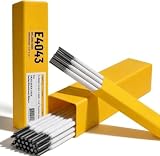
Arc welding aluminum with a stick welder is technically possible using electrodes like E4043, but the slag is aggressive, the arc is unstable, and results are poor on anything under 3/16 inch. It’s a field-repair option, not a reason to buy a stick welder for aluminum work.
Key specs compared
| Welder | Type | Aluminum Method | Rated Output | Max Aluminum Thickness | AC Balance / Freq. | Weight | Street Price Range |
|---|---|---|---|---|---|---|---|
| Miller Multimatic 220 AC/DC | Multiprocess | AC TIG + MIG w/ optional spool gun | 230A MIG / 210A TIG | 3/8 in. (MIG spool gun) | 60–80% / 60–150 Hz | 56 lb | $3,000–3,500 |
| ESAB Rebel EMP 205ic AC/DC | Multiprocess | AC TIG + MIG w/ spool gun option | 235A MIG / 200A TIG | 3/8 in. | Adjustable / up to 400 Hz | 49 lb | $3,500–4,000 |
| Primeweld TIG225X | AC/DC TIG + stick | AC TIG only | 225A TIG | 1/4 in. comfortably, 3/8 in. at duty limit | 10–90% / 20–250 Hz | 90 lb | $800–900 |
| YesWelder TIG-205P AC/DC | AC/DC TIG + stick | AC TIG only | 205A TIG | 1/4 in. | Adjustable / 40–200 Hz | 43 lb | $400–500 |
| Hobart Handler 210 MVP | MIG only | MIG w/ optional spool gun | 210A MIG | 3/8 in. w/ spool gun | N/A | 79 lb | $1,000–1,200 (gun extra ~$250) |
| Lincoln Power MIG 210 MP | Multiprocess (no AC TIG) | MIG w/ spool gun option | 230A MIG | 3/8 in. | N/A | 40 lb | $1,300–1,500 |
Picks by situation
Best overall: Miller Multimatic 220 AC/DC
It does AC TIG, MIG with an optional spool gun, DC TIG, and stick on either 120V or 240V. Auto-Set Elite dials in reasonable starting parameters from material type and thickness, which flattens the learning curve considerably. The AC TIG arc is stable enough for 1/16-inch sheet, and the unit is light enough to carry to the work. The trade-off is price — it costs what two budget TIGs cost, and the spool gun is another ~$400.
Best budget path to aluminum: Primeweld TIG225X
For roughly a quarter of the Miller’s price, you get true AC TIG with pulse, adjustable AC balance and frequency, and 225 amps — enough for 1/4-inch plate. The downsides are real: it weighs 90 lb, the included foot pedal and torch are functional rather than refined, and there’s no MIG function. If your aluminum work is boat parts, brackets, and fabrication at a bench, this is the value leader among welding machines for aluminum.
Best for bodywork and sheet metal: ESAB Rebel EMP 205ic
The Rebel’s AC frequency reaches 400 Hz — higher than most competitors — which tightens the arc cone and reduces the heat-affected zone on thin material. Welders doing 0.040–0.080-inch aluminum sheet (fuel tanks, intercooler piping, auto body panels) benefit most from this. Its sMIG mode also adapts wire feed to your travel speed, helping when running the spool gun.
Best MIG-only route: Hobart Handler 210 MVP
If your goal is welding 1/8-inch-plus aluminum at production pace — trailers, gates, marine dock repair — a MIG with a spool gun beats TIG on speed by a wide margin. The 210 MVP is transformer-based, dead simple to set up, and dual-voltage. Note the spool gun adds roughly $250, and dual-shielded wire plus 100% argon gas are non-negotiables.
Cheapest legitimate option: YesWelder TIG-205P AC/DC
Pulse TIG, AC balance, and AC frequency adjustment at a price where nothing else offers all three. Quality control and long-term support are the open questions; treat it as a capable hobby machine rather than shop equipment.
Decision matrix
| Your situation | Best choice | Why |
|---|---|---|
| Mostly aluminum, budget under $1,000 | Primeweld TIG225X | Full AC control, no MIG compromise |
| Mixed steel + aluminum, one machine | Miller Multimatic 220 or ESAB Rebel | Both processes without swapping machines |
| Thin sheet, decorative or precision work | ESAB Rebel (400 Hz AC) | Tighter arc, less warping |
| Speed on 1/8 in.+, occasional aluminum | MIG + spool gun (Hobart or Lincoln) | 3–5× faster deposition than TIG |
| Budget under $500, willing to learn | YesWelder TIG-205P | Pulse + AC at entry price |
| 120V outlets only | Miller Multimatic 220 | Dual voltage; most AC TIGs need 240V |
Ownership realities a listing won’t tell you
- Gas is a recurring cost: aluminum MIG and TIG both need 100% argon, not the C25 mix used for steel. A full 80 cu ft cylinder runs $70–90 to fill and lasts roughly 4–6 hours of arc time at typical flow rates.
- Consumables differ: MIG aluminum uses U-groove drive rolls, a Teflon or nylon liner, and 4043 or 5356 wire. TIG uses 2% lanthanated or ceriated tungsten — never pure tungsten on modern inverters.
- The first thing that wears: on spool guns, the drive rolls and inlet guides; on TIG, the torch head consumables (collets, cups). Budget for a consumables kit up front.
- Cleaning is half the weld: aluminum must be wire-brushed with a dedicated stainless brush and degreased with acetone immediately before welding. Skip this and you’ll get black, porous welds and blame the machine.
- Duty cycle shrinks fast: a machine rated 225A at 40% duty cycle gives you about 4 minutes of welding per 10-minute window at full output. On a hot day at high amperage, expect thermal shutdowns on cheaper units.
- Setup complexity order: MIG + spool gun (easiest, ~15 minutes) < AC TIG without pulse < AC TIG with pulse (steepest curve, but best results).
FAQ
Can a regular MIG welder weld aluminum without a spool gun?
Barely, and only with a Teflon liner, oversized contact tips, U-groove rolls, wire 3/64 inch or larger, and a gun cable kept dead straight — and even then it jams regularly. For anything beyond a quick repair, buy the spool gun.
What amperage do I need for a welding machine for aluminum?
The rule of thumb is roughly 1 amp per 0.001 inch of thickness, plus a starting surge. For 1/8 inch (0.125″), plan on ~125–140 amps TIG or the equivalent MIG settings. A 200A-class machine handles most hobby and light-fab work.
Is TIG or MIG better for aluminum?
TIG for precision, thin material, and appearance; MIG with a spool gun for speed and thicker sections. Many shops own both — which is exactly why the multiprocess AC/DC machines above command their prices.