Our Top Picks
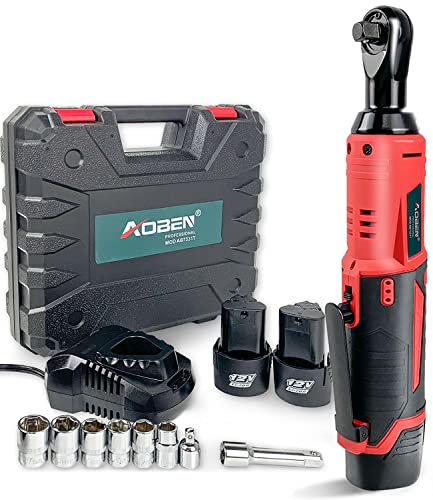 AOBEN Cordless Electric Ratchet Wrench Set3/8" 12V with 2 Batteries12 x 10 x 3.5 inches4.4 poundsCheck on Amazon
 Milwaukee 2457-20 M12 Cordless 3/8" Sub-Compact 35 ft-Lbs3/8"9.47 x 2.94 x 1.76 inches1 PoundsCheck on Amazon


What's inside
As an Amazon Associate I earn from qualifying purchases. This post may contain affiliate links at no extra cost to you.
Tools do not fail on easy jobs. They fail on a seized exhaust bolt at 9 p.m. with a cut-off wheel screaming and oil in your glove. That is the real question behind the best power tool brand for mechanics. Not which drill feels good in the aisle. Which battery platform is still strong, still stocked and still serviceable in eight years, when your first impact dies and you need a replacement that afternoon.
We run a metal shop, and a lot of what rolls in is automotive. Rusted subframes. Patch panels. Cracked brackets. Exhaust. So tools get judged on heat, side load, grinding dust and fluid, not on the spec sheet.
As an Amazon Associate we earn from qualifying purchases at no extra cost to you.


| Platform | Where it wins for mechanics | Watch out for |
|---|---|---|
| Milwaukee M18 and M12 FUEL | Deepest automotive lineup: stubby impacts, cordless ratchets, tight-quarter tools | Priciest big-box brand |
| DeWalt 20V MAX XR and FlexVolt | Huge tool count, easy service, strong grinders and cut-off tools | Automotive specialty tools trail Milwaukee |
| Makita LXT and XGT | Smooth, cool-running motors on long grinding runs | Two platforms, no shared batteries |
| Ridgid 18V | Lifetime service agreement on registered tools | Home Depot only, narrower range |
| Snap-on, Matco, Mac | Service at your bay, fast warranty turnaround | Two to three times the money |
| Air tools | Unlimited duty cycle on grinders and cutters | Needs 90 psi and real CFM |
What we cover
What actually kills a mechanic’s power tools
Heat first. A die grinder or cut-off wheel pulls current until the tool hits thermal shutdown, and the battery usually taps out before the motor does. Run 5.0 Ah packs and up on impacts and grinders. They sag less and stay cooler. Keep the small packs for ratchets, lights and inflators. Then dust. Grinding dust is steel, and steel dust conducts. It gets pulled through the vents and settles on the electronics. Blow tools out with low-pressure air, and wipe brake cleaner and penetrating oil off the housing before they eat the trigger seal.
Best power tool brand for mechanics, brand by brand
Milwaukee: the automotive default
Milwaukee built its lineup around people working under hoods. M12 FUEL stubby impacts and cordless ratchets solve the problem nothing full-size solves, which is four inches of clearance around a manifold bolt. M18 FUEL covers the high-torque end. You pay a premium for all of it. For a full-time mechanic it is still the safest single bet.
Milwaukee M18 FUEL high-torque impact wrench
The tool that changes your day on rusted suspension and axle hardware. If this is your first M18 purchase, buy the kit with two large batteries instead of a bare tool. Keep a torque wrench next to it for final specs.
DeWalt: best all-around shop platform
If you fabricate as much as you wrench, DeWalt is hard to beat. The 20V MAX XR grinders, cut-off tools and band saws are genuinely good, FlexVolt handles corded-class loads, and service centers are everywhere. Impact wrenches are strong. Tight-quarter automotive tools are the weak spot.
Makita: smoothest runner, thinnest automotive bench
Makita motors and brakes feel better than anyone’s, and LXT tools stay cool through long grinding and sanding. The catch is XGT, a separate 40V platform with its own batteries and chargers. Pick one and stay there. Automotive-specific tools are thin.
Budget brands and the tool truck
Ridgid’s registered lifetime service agreement is real money back for a home or side-hustle shop. Ryobi is fine for lights, inflators and occasional use, not flat-rate abuse. Truck brands cost two to three times more, and you buy them for the service and the guy who shows up Tuesday, not for extra power.
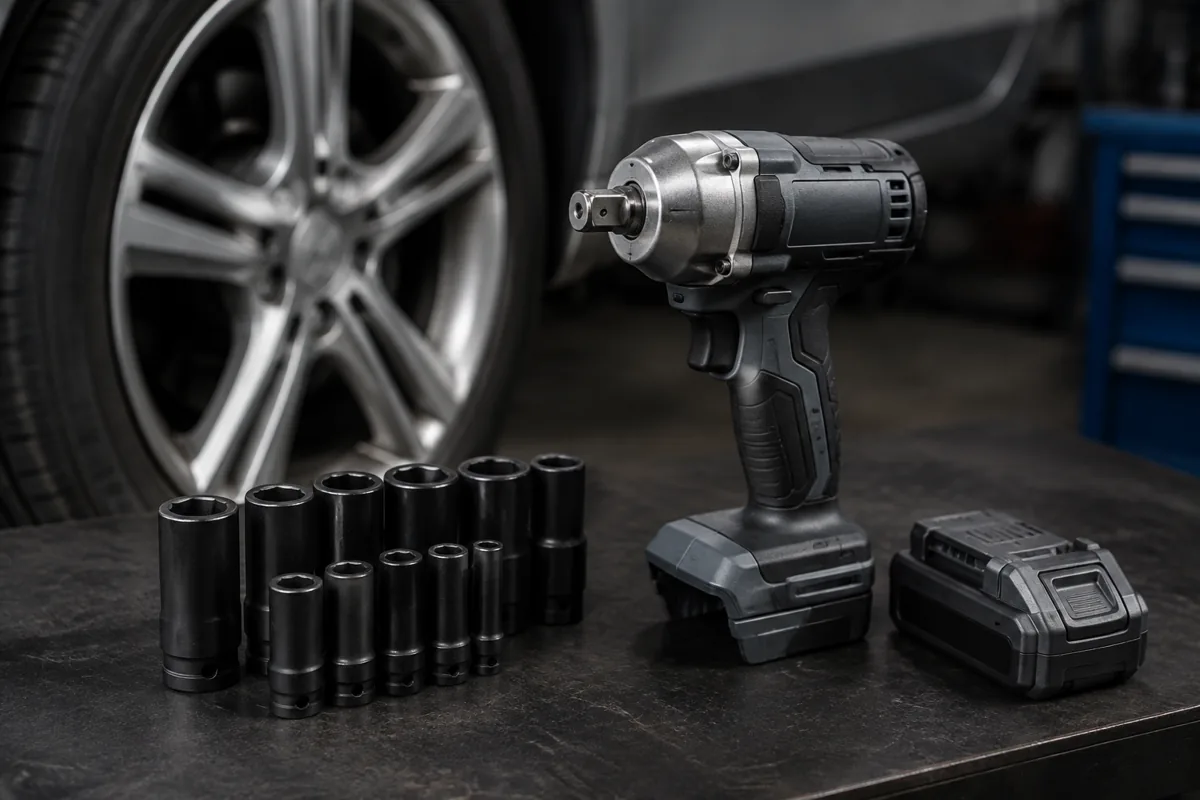
Milwaukee M12 FUEL stubby impact wrench
Not a replacement for a big impact. It reaches starter bolts and manifold nuts without an extension and a prayer. Mid-torque class output in a body short enough to run one-handed.
Torque, amps and metal thickness in plain numbers
Advertised numbers are breakaway torque, also called nut-busting. Fastening torque is the honest figure and it is always lower. Most car lug nuts want 80 to 100 ft-lbs, light trucks up to about 140. A mid-torque half-inch impact in the 300 to 500 ft-lb fastening range removes almost everything on a car. High-torque tools are for axle nuts, crank bolts, rusted suspension and truck work. Never set final torque with an impact. Snug it, then finish with a click-type torque wrench. Torque sticks are a ceiling, not a spec.
Amps are just the current a motor can pull. On a corded 4.5 inch grinder, under 7 amps bogs down in weld cleanup; 9 to 11 amps holds speed under pressure. Cordless pulls the same work out of the pack, which is why small batteries quit mid-cut. On the welding side, a 120V machine on a 20 amp circuit tops out near 140 amps of output.
Thickness sets the rest. Body panels run 22 to 18 gauge, roughly 0.030 to 0.048 inch. Brackets are usually 1/8 inch. Mounts and plate start at 1/4 inch. Rough MIG math is about 1 amp per 0.001 inch of steel, so 1/8 inch wants around 125 amps and 1/4 inch wants 250 or a bevel and multiple passes. Cut with 0.045 inch wheels and clean welds with a 40 to 60 grit flap disc.
Fume, sparks and fire under a vehicle
ANSI Z87+ glasses under a full face shield for grinding. A wheel that lets go at 10,000 rpm goes through a shield edge on, so wear both. Leather gloves and sleeves for overhead work, because sparks find the gap at your cuff. Hearing protection too: impacts and die grinders run past 100 dB. N95 minimum for grinding dust, P100 cartridges when the steel is painted, primed or coated.
Galvanized coating puts off zinc oxide and gives you metal fume fever. Grind it back an inch on both sides of the joint and pull air out of the space instead of blowing a fan across your face. Old plated hardware can contain cadmium, so do not torch it in a closed bay. Chlorinated brake cleaner near an arc can produce phosgene gas. Keep it out of the welding bay and switch to non-chlorinated. Scrape undercoating and seam sealer off before heat.
Sparks travel 30 feet and bounce off concrete. Under a car you are next to fuel lines, plastic tanks, wiring and oil-soaked insulation. Disconnect the battery negative before welding on a vehicle, and clamp your ground within inches of the weld so current does not run through a wheel bearing or a control module. Shield tanks and lines with a welding blanket, never cardboard. Keep an ABC extinguisher in reach and stand a 30 minute fire watch. Seat foam smolders quietly.
DeWalt 20V MAX XR cordless angle grinder with brake
Get one with an electronic brake and a paddle switch you have to hold down. Cordless beats dragging a cord through spark range under a vehicle, and the brake stops the wheel fast when you let go.
Pick one platform and commit. That call matters more than any single tool you buy on it.
- ✔ One battery size and one charger family to stock
- ✔ Bare tools get cheap once you own packs
- ✔ One counter for warranty and service
- ✔ Complete platforms hold resale value
- ✘ You inherit that brand’s weak spots
- ✘ A new voltage line can orphan your chargers
- ✘ Some specialty tools only exist on the tool truck
- ✘ Price hikes hit your whole kit at once
FAQ
Is Milwaukee really better than DeWalt for automotive work? For tight-quarter tools, yes, mostly on the M12 side. For grinders, cut-off tools, band saws and general shop work, DeWalt is even or ahead. If you weld and fabricate as much as you wrench, that changes the answer.
Do I need a high-torque impact or is mid-torque enough? Mid-torque handles lug nuts, brakes and most fasteners on passenger cars, and it fits where the big tool will not. Add high-torque for axle nuts, rusted suspension and trucks. Most people end up with both. Buy mid-torque first.
Can cordless replace air tools in a working bay? For most jobs it already has. Air still wins on duty cycle for die grinders and long cutting sessions because it does not care about heat. If you have a compressor with real CFM, keep the air lines for grinding and go cordless for everything else.
Buy for the work you do most, not for the biggest number on the box. Wrenching in tight spaces points to Milwaukee. Cutting, grinding and fabricating points to DeWalt or Makita. A weekend shop should look hard at Ridgid’s service agreement. Then buy batteries, not more brands.
Check prices on Amazon →