What's inside
- Lincoln 220V welder comparison
- Best choices by workshop situation
- Head-to-head: the portable multiprocess welders
- When a 260A machine is worth the circuit and space
- Why duty cycle changes the buying decision
- Material thickness: practical limits, not marketing limits
- Ownership realities: consumables, maintenance, and common mistakes
- Final recommendation
- Lincoln 220V welder comparison
- Best choices by workshop situation
- Head-to-head: the portable multiprocess welders
- When a 260A machine is worth the circuit and space
- Why duty cycle changes the buying decision
- Material thickness: practical limits, not marketing limits
- Ownership realities: consumables, maintenance, and common mistakes
- Final recommendation
As an Amazon Associate I earn from qualifying purchases. This post may contain affiliate links at no extra cost to you.
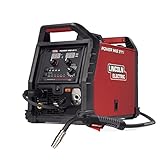
The best Lincoln 220 welder depends on the work: choose the POWER MIG 211i or 215 MPi for portable MIG fabrication, the POWER MIG 260MP for sustained heavy production, the Square Wave TIG 200 for clean precision work, and the AC/DC 225 stick welder for outdoor repair and thick steel.
As an Amazon Associate we earn from qualifying purchases at no extra cost to you.



What we cover
- Lincoln 220V welder comparison
- Best choices by workshop situation
- Head-to-head: the portable multiprocess welders
- When a 260A machine is worth the circuit and space
- Why duty cycle changes the buying decision
- Material thickness: practical limits, not marketing limits
- Ownership realities: consumables, maintenance, and common mistakes
- Final recommendation
Lincoln 220V welder comparison
“220V” usually means a 208–240V single-phase circuit, not a single fixed voltage. The machines below cover the most useful Lincoln Electric options for a serious home or small professional workshop. Amperage and duty-cycle figures are representative published ratings; always confirm the nameplate and current manual for the exact model revision.
| Model | Process | Input | Output range | Duty cycle | Approx. weight | Practical steel thickness |
|---|---|---|---|---|---|---|
| POWER MIG 211i | MIG, flux-core | 120/230V | 25–210A | 30% at 200A | About 41 lb | Up to 3/8 in. in multiple passes |
| POWER MIG 215 MPi | MIG, flux-core, DC TIG, stick | 120/230V | 25–215A | About 25% at 200A | About 41 lb | Up to 3/8 in. in multiple passes |
| POWER MIG 210 MP | MIG, flux-core, DC TIG, stick | 120/230V | 25–200A | About 25% at 200A | About 40 lb | Up to 5/16 in. in multiple passes |
| Square Wave TIG 200 | AC/DC TIG, stick | 120/230V | 10–200A | 25% at 200A | About 46 lb | About 1/4 in. TIG; thicker with stick or multiple passes |
| AC/DC 225/125 | AC/DC stick | 230V | 30–225A AC; 30–125A DC | About 20% at maximum AC output | About 100–110 lb | 1/2 in. and more with suitable electrodes and passes |
| POWER MIG 260MP | MIG, flux-core, DC TIG, stick | 230V | 30–260A | About 40% at 250A | About 100 lb | 1/2 in. steel in multipass work |
Best choices by workshop situation
| Your situation | Best starting choice | Why | Main compromise |
|---|---|---|---|
| First serious welder, mixed repairs | POWER MIG 211i | Simple MIG controls, dual-voltage input, useful 210A ceiling | Does not provide the full multiprocess range of an MP machine |
| One machine for occasional MIG, TIG, and stick | POWER MIG 215 MPi | Broad process coverage in a compact package | Light-duty TIG and stick features compared with dedicated machines |
| Thin stainless, aluminum, or visible welds | Square Wave TIG 200 | AC TIG capability and finer arc control | Slower than MIG and requires more skill and accessories |
| Outdoor gates, farm repairs, dirty steel | AC/DC 225/125 | Stick tolerates wind, surface contamination, and long leads | Heavy, less convenient, and slower for sheet metal |
| Frequent production on thick material | POWER MIG 260MP | Higher output and better sustained capacity | Requires a dedicated 230V circuit and substantial floor space |
Head-to-head: the portable multiprocess welders
POWER MIG 211i versus POWER MIG 215 MPi
These machines occupy the same practical class: roughly 40-pound inverter welders that can run from either 120V or 230V. On a 230V circuit, both are suitable for automotive repair, brackets, trailers, equipment frames, and general mild-steel fabrication.
The POWER MIG 211i is the better choice when MIG and flux-core are your main processes. Its simpler control layout reduces setup time, and the 210A output is enough for most workshop projects. Select it if you already own, or do not expect to need, TIG and stick equipment.
The POWER MIG 215 MPi is more flexible. It adds DC TIG and stick capability, making it a useful single-machine solution for a small shop. However, “multiprocess” does not make it equivalent to a dedicated TIG machine: it is not the right choice for AC aluminum TIG, and its TIG package may require additional torch, regulator, foot-control, and gas equipment.
POWER MIG 210 MP versus the newer compact options
The POWER MIG 210 MP remains attractive when found at a favorable market price because it combines MIG, flux-core, DC TIG, and stick in a portable chassis. Its approximately 200A ceiling is close to the 211i and 215 MPi, so the difference in real work is usually controls, included accessories, arc behavior, and availability rather than a dramatic thickness advantage.
For any of these compact machines, treat 3/8-inch steel as a multipass job rather than a one-pass promise. Joint preparation, preheating, electrode or wire selection, and access to both sides matter more than the final number printed on a box.
When a 260A machine is worth the circuit and space
The POWER MIG 260MP is a more convincing heavy-duty workshop choice when welding occupies a significant part of every week. Its higher output gives more margin for 1/2-inch plate, larger fillet welds, and repeated passes. The larger cabinet also normally accommodates a full-size spool and more substantial internal cooling than a compact portable welder.
That extra capacity has costs beyond the purchase price. Plan for a 230V circuit commonly protected around 50A, subject to the machine’s nameplate and local electrical code. A compact 200–215A welder may operate on a 30A circuit under its published input requirements, while a 260A model often needs more. Have the circuit, receptacle, grounding, and disconnect installed or checked by a qualified electrician.
Do not buy the 260MP merely because its maximum amperage is higher. If you weld for ten minutes and then spend an hour fitting parts, a portable 211i or 215 MPi may be easier to live with and adequate for the work.
Why duty cycle changes the buying decision
Duty cycle is the percentage of a ten-minute period that a welder can produce its rated output before the specified thermal limit. A 30% duty cycle means three minutes of welding followed by seven minutes of cooling at that particular amperage. It does not mean the machine can weld continuously at a lower setting without limit.
Consider a frame project requiring 18 minutes of actual arc time at a setting near 200A. A welder rated at 30% permits about three arc minutes per ten-minute window, so the theoretical minimum is roughly six cooling windows, or about one hour of machine time. In practice, fitting and repositioning reduce the delay, but a higher-duty-cycle machine still matters when the arc is running repeatedly rather than intermittently.
Also compare duty-cycle ratings at the amperage you use. “40% at 250A” is more meaningful for heavy fabrication than a higher percentage measured at a much lower output.
Material thickness: practical limits, not marketing limits
- 18-gauge to 1/8-inch steel: A 120/230V MIG machine is comfortable territory. Use smaller wire, short-circuit transfer, and careful heat control.
- 3/16 to 1/4 inch: Most 200A-class Lincoln MIG machines handle this well with correct joint preparation and often a single pass or modest multipass weld.
- 3/8 inch: Use a bevel, root opening, suitable wire size, and multiple passes. Do not confuse machine output with guaranteed penetration.
- 1/2 inch and larger: A 260A MIG or a stick machine with suitable electrodes gives more practical headroom. Verify the joint design and required weld size before selecting equipment.
Aluminum is a separate consideration. The Square Wave TIG 200 offers AC TIG for aluminum, but a spool-gun-capable MIG setup may be faster for thicker aluminum production. A DC-only multiprocess machine is not an aluminum TIG solution.
Ownership realities: consumables, maintenance, and common mistakes
The parts that wear first are usually contact tips, liners, drive rolls, gun nozzles, stick electrode holders, TIG tungsten, and gas hoses—not the power source. Keep replacement tips matched to the wire diameter, replace a liner when wire feeding becomes erratic, and remove spatter from the nozzle before it restricts shielding gas.
Blow dust from ventilation openings periodically with the machine disconnected and follow the manufacturer’s cleaning guidance. Keep the wire dry, store electrodes properly, and protect a portable inverter from rain and grinding debris. A long extension cord can cause voltage drop; use the conductor size and maximum length specified for the machine rather than assuming a household cord is sufficient.
Common setup errors include using solid MIG wire without shielding gas, connecting the work clamp to painted metal, leaving the wrong polarity after switching to flux-core, and judging penetration only by a neat-looking bead. Clean the joint to bright metal, confirm polarity, set gas flow without excessive drafts, and practice on the same material thickness before welding a structural part.
Final recommendation
For most homeowners and small fabrication shops, the POWER MIG 211i is the best all-around Lincoln 220 welder when MIG is the priority. Choose the POWER MIG 215 MPi if process flexibility matters more than the simplest controls. Move to the POWER MIG 260MP when thick material and frequent arc time justify a dedicated 230V circuit. Choose the Square Wave TIG 200 for precision and AC aluminum TIG, or the AC/DC 225/125 when rugged outdoor stick welding matters more than portability.