What's inside
- Quick comparison of leading gas engine welders
- Head-to-head: which gas stick welder makes the most sense?
- Match the machine to your actual welding situation
- Output and electrode sizing
- Worked runtime and generator calculation
- Outdoor performance details that matter
- Ownership costs and maintenance
- Bottom line
- Quick comparison of leading gas engine welders
- Head-to-head: which gas stick welder makes the most sense?
- Match the machine to your actual welding situation
- Output and electrode sizing
- Worked runtime and generator calculation
- Outdoor performance details that matter
- Ownership costs and maintenance
- Bottom line
As an Amazon Associate I earn from qualifying purchases. This post may contain affiliate links at no extra cost to you.
The best gas stick welder for heavy-duty outdoor work is usually the Miller Bobcat 250 for balanced portability, the Lincoln Ranger 330MPX or Miller Trailblazer 330 for higher welding output and generator capacity, and the Hobart Champion Elite for lower-cost farm and repair work.
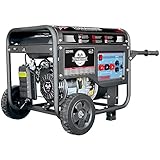
A gas-powered stick welder combines an engine-driven welding power source with an auxiliary generator. That makes it useful where a mains outlet is unavailable, but the right choice depends on more than maximum amperage: electrode size, duty cycle, engine runtime, generator capacity, weight, noise, and how well the machine tolerates dust, wind, cold starts, and uneven ground all matter.
As an Amazon Associate we earn from qualifying purchases at no extra cost to you.



What we cover
- Quick comparison of leading gas engine welders
- Head-to-head: which gas stick welder makes the most sense?
- Match the machine to your actual welding situation
- Output and electrode sizing
- Worked runtime and generator calculation
- Outdoor performance details that matter
- Ownership costs and maintenance
- Bottom line
Quick comparison of leading gas engine welders
| Machine | Maximum welding output | Approx. generator output | Fuel tank and runtime | Approx. machine weight | Best fit |
|---|---|---|---|---|---|
| Miller Bobcat 250 | 250 A DC, 100% duty cycle at rated output | Approximately 11,000 peak / 9,500 continuous watts | About 12 gal; roughly a full workday at typical mixed use | About 501 lb | General fabrication, farm repair, structural maintenance |
| Lincoln Ranger 330MPX | 330 A class output, 100% duty cycle at rated output | Approximately 12,000 peak / 11,000 continuous watts | About 12 gal; commonly rated for extended jobsite operation | About 520 lb | Frequent heavy welding and high auxiliary-power demand |
| Miller Trailblazer 330 | 330 A class output, 100% duty cycle at rated output | Approximately 11,000 peak / 9,500 continuous watts, depending on configuration | About 12 gal; approximately a long shift under mixed load | About 500 lb | Contractors wanting high output with efficient engine operation |
| Hobart Champion Elite | 225 A class output, suitable for common farm and repair electrodes | Approximately 11,000 peak / 9,500 continuous watts | About 12 gal; typically several hours of intermittent welding | About 455 lb | Budget-conscious owners and occasional outdoor repairs |
Specifications can vary by model revision, engine, fuel system, and accessory package, so confirm the manufacturer’s data sheet before purchase. Weight also changes when a running gear, battery, protective cover, or wire-feed accessories are fitted.
Head-to-head: which gas stick welder makes the most sense?
Miller Bobcat 250: the balanced all-rounder
The Bobcat 250 is a strong choice when one machine must cover gates, trailers, equipment repairs, brackets, and general maintenance. Its 250-amp output handles common 1/8-inch and 5/32-inch electrodes comfortably, while the generator section can power grinders, lights, drills, and moderate jobsite tools.
Its main advantage is balance. It is powerful enough for serious repair work without moving into the largest and heaviest class of engine welders. A 250-amp machine is also easier to feed from a pickup ramp or trailer than a large 330-amp unit. Choose it when portability matters but you still need a dependable full-size generator welder rather than a small hobby machine.
Lincoln Ranger 330MPX: best for demanding production work
The Ranger 330MPX is the better choice when thick material, long welds, or simultaneous auxiliary loads are routine. Its higher output gives more headroom for large-diameter low-hydrogen electrodes and for maintaining an arc on heavy steel in windy outdoor conditions.
The additional generator capacity is valuable for crews that need to run a powerful grinder, magnetic drill, lighting, or a separate wire feeder. The trade-off is cost, size, and transport weight. Buying a 330-amp machine for occasional 1/8-inch electrode repairs adds expense without improving every weld.
Miller Trailblazer 330: high output with jobsite efficiency
The Trailblazer 330 targets contractors who weld frequently and care about fuel consumption as much as peak amperage. Its engine-driven design is intended to reduce engine speed when full output is not required, which can lower noise and fuel use during intermittent work.
It is a compelling gas powered stick welder for service trucks and mobile crews that alternate between welding and powering tools. Before selecting it, compare the exact generator rating and receptacle arrangement with your equipment list. “330 amps” describes welding capability; it does not automatically mean the machine can supply every large electric tool at the same time.
Hobart Champion Elite: the economical repair option
The Champion Elite suits owners who weld a few times a month and mainly use 1/8-inch or 5/32-inch electrodes. It provides useful auxiliary power and a conventional engine-welder layout without the price of the premium contractor machines.
It is less attractive for continuous structural production, long high-amperage passes, or crews that transport the unit daily. For farm maintenance, trailers, fencing equipment, and occasional outdoor fabrication, however, its lower purchase cost can be more important than advanced controls.
Match the machine to your actual welding situation
| Your situation | Recommended class | Why |
|---|---|---|
| Occasional repairs, limited budget, mostly 1/8-inch electrodes | 200–225 A gas engine welder | Lower purchase and transport cost; adequate output for common maintenance work |
| Mixed farm, trailer, and fabrication work | 250 A class | Good balance of electrode range, generator power, and portability |
| Daily service work or thick structural steel | 300–330 A class | More arc headroom and better tolerance for long, demanding welds |
| Frequent use of grinders, drills, lights, or a wire feeder | 330 A class with 10–12 kW generator capacity | Higher continuous auxiliary output reduces nuisance overloads |
| Small storage area or frequent loading by hand | Compact 200–250 A unit, preferably with running gear | Several hundred pounds becomes a major ownership issue without a trailer or hoist |
Output and electrode sizing
For many outdoor repairs, 1/8-inch 6010, 6011, or 7018 electrodes require roughly 90–140 amps, depending on the specific product and welding position. A 5/32-inch electrode commonly needs approximately 140–220 amps. A 250-amp machine therefore covers a broad range of field work, while a 330-amp unit becomes useful when larger electrodes, heavier sections, or long continuous passes are involved.
Do not select solely by maximum amperage. Check the duty cycle at the output you will actually use. A machine rated for 250 amps at 100% duty cycle has more practical capacity for repeated welds than a smaller unit that reaches its headline amperage only briefly.
Worked runtime and generator calculation
Suppose a machine has a 12-gallon tank and consumes about 0.7 gallons per hour during mixed welding, idling, and tool use. The estimated running time is:
12 gallons ÷ 0.7 gallons per hour = about 17 hours.
That does not mean 17 hours of nonstop welding. High-amperage welding consumes more fuel than low-load idling, and the engine may use more fuel while powering a grinder or heater. If your real consumption averages 1 gallon per hour on a demanding day, the same tank provides closer to 12 hours. Use the manufacturer’s fuel curve rather than assuming the tank size predicts a full shift.
For auxiliary power, add running watts and starting watts separately. A grinder using 1,800 running watts but 3,500 starting watts can coexist with a small light load, but a second motor may push the generator beyond its surge rating. Leave operating headroom instead of sizing the generator exactly to the nameplate.
Outdoor performance details that matter
- Wind: Stick welding is more forgiving than gas-shielded processes because the flux creates its own shielding, but strong wind can still disturb the arc and cool hot welds too quickly. Use a windbreak and keep electrodes dry.
- Wet ground: Keep the machine, leads, and connections out of standing water. Wear dry insulating footwear and follow the manufacturer’s grounding and electrical instructions.
- Dust: Construction dust blocks cooling passages and coats alternators. Blow out vents with clean, dry low-pressure air according to the maintenance instructions.
- Cold weather: Check the recommended oil viscosity, battery condition, and fuel-system procedure. Avoid prolonged cranking, which can overheat the starter.
- Heat: Do not cover ventilation openings or place the welder against a wall. A hot engine and a hot welding power section both need airflow.
Ownership costs and maintenance
The first parts likely to wear are not usually the main transformer or alternator. Expect maintenance on engine oil, filters, spark plugs, battery terminals, starter components, electrode holders, work clamps, cable lugs, and running-gear tires. Leads are especially vulnerable to cuts and crushed sections when dragged across steel or driven over.
Inspect the work clamp regularly: a loose or corroded connection creates arc instability and excess heat. Keep the electrode holder clean, tighten cable connections, change oil at the prescribed interval, and drain or stabilize fuel before long storage. On machines used near saltwater, rinse appropriate external surfaces, dry them thoroughly, and inspect fasteners for corrosion.
A common mistake is leaving electrodes in an open truck box overnight. Moisture-sensitive low-hydrogen electrodes can absorb humidity and produce porosity or hydrogen-related cracking. Store them as the electrode manufacturer directs, and use a proper heated storage container when the application requires controlled exposure.
Bottom line
Choose the Hobart Champion Elite for occasional, budget-focused repairs; the Miller Bobcat 250 for the best general-purpose balance; and the Lincoln Ranger 330MPX or Miller Trailblazer 330 when high output, long duty cycles, or substantial generator loads justify the extra size and cost. Whichever gas stick welder you choose, prioritize continuous output, lead quality, service support, and safe transport over a maximum-amperage number that you may rarely use.