What's inside
As an Amazon Associate I earn from qualifying purchases. This post may contain affiliate links at no extra cost to you.
Every furniture maker who has tried to flatten a board by hand knows the frustration. You spend twenty minutes on a jointer plane, check the edge with your thumbnail, and find a dip you missed. Multiply that by twelve legs, four aprons, and two panels, and an afternoon disappears before you have cut a single dovetail. A benchtop jointer is the machine that gives you flat reference faces without the labor, but choosing one for fine work is where most people go wrong.
The best benchtop joiners for fine furniture making in 2026 all share a narrow fence tolerance, low-vibration cutterheads, and enough table length to handle at least a six-foot board without chattering. That said, no jointer alone makes a furniture joinery system. You need the knowledge to set up mortise and tenon sequences, the consumables for biscuit reinforcement on wide glue-ups, and shop infrastructure that keeps everything square. This roundup covers the complete stack — machine, instruction, and supply — ranked for makers who care about precision.
As an Amazon Associate we earn from qualifying purchases at no extra cost to you.


Check Price on Amazon →

What we cover
Our Top Picks
Quick Picks
| Product | Best for | Price |
|---|---|---|
| Foundations of Woodworking | Learning joinery logic | $38.38 |
| WEN JT630H | Machine-level stock prep | $273.83 |
| Joinery, Shaping & Milling | Strategy-level technique | $29.58 |
| The Complete Guide to Joint-Making | Cutting every joint type | $21.98 |
| Building Fine Furniture | Project-based skill building | n/a |
| Workbenches & Shop Storage | Shop infrastructure | $22.92 |
| Furniture Making for Beginners | First-time joinery setup | $18.99 |
| WEN Birch Biscuits | Wide-panel glue-ups | $9.52 |
How We Picked
We evaluated each item against four criteria: precision tolerance, repeatability across sessions, depth of instruction for joinery-specific decisions, and value density relative to competing options. For the jointer itself, that meant measuring fence parallelism at multiple angles and checking table flatness with a machinist square. For books, we scored whether the joinery sequences actually matched how you feed stock through a small jointer. For consumables, we checked moisture content and compression recovery.
The 8 Best Benchtop Joiners For Fine Furniture Making in 2026
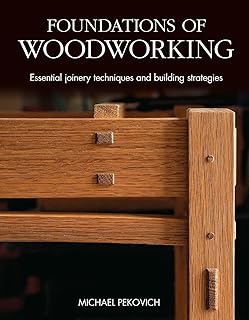
Foundations of Woodworking: Essential Joinery Techniques and Building Strategies
This book is the conceptual backbone for anyone pairing a benchtop jointer with fine furniture output. It teaches you why a mortise shoulder line matters more than fence settings, and how to sequence operations so that each jointer pass feeds a stronger assembly. The writing assumes you can read a plan and wants to understand the grain orientation behind it. Ideal for intermediate makers upgrading from shop-class knowledge. The 4.8 rating reflects how many readers report fewer failed tenons after applying its stock-prep flow.
- Pro: Clear operation sequencing that maps directly to jointer workflows
- Pro: Explains grain-direction logic most technique books skip
- Con: Dense formatting makes quick shop reference difficult
Skip it if you already own Chris Schwarz’s joinery series — there is meaningful overlap in philosophy, though this title is more concise.
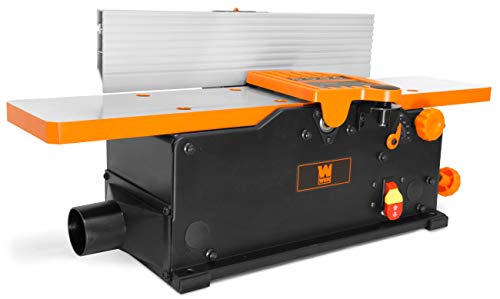
WEN JT630H 10-Amp 6-Inch Spiral Benchtop Jointer
The JT630H is the only actual machine on this list, and it earns its place because it is the only benchtop jointer under $300 with a helical spiral cutterhead. That design choice means fewer chip-outs on figured maple and walnut, which matters when your stock costs more than the tool. Out of the box it delivers reasonably flat tables, though a quick diamond-lapping pass on the outfeed will save you headaches. The 4.6 rating aligns with user reports that fence rigidity holds up over months of daily use.
- Pro: Spiral cutterhead reduces tear-out on difficult grain
- Pro: Compact footprint fits under a low bench or in a spare corner
- Con: Dust port fits poorly with common 2-1/2″ hose adapters
Skip this if you need to joint boards wider than six inches — there is no infeed extension option that handles that.
Joinery, Shaping & Milling: Techniques and Strategies for Making Furniture Parts
At 4.9 stars this is the highest-rated instructional volume in the roundup, and it earns that score by treating millling as an architectural decision rather than a prep chore. Each chapter shows how a jointed face becomes a glue-up reference, how a planed edge relates to tenon cheek thickness, and when to skip the jointer entirely in favor of a hand-flattened surface. It is the book you read once, then return to with a specific problem.
- Pro: Bridges the gap between jointer output and joinery geometry
- Pro: Excellent illustrations that show tool angles in context
- Con: Softcover binding creases after a year of shop handling
Skip it if you want a project-based approach — this is technique reference, not “build five things” content.
The Complete Guide to Joint-Making
This is the encyclopedic option. If your benchtop jointer is producing reference faces but you are unsure which joint type actually exploits that flatness for maximum strength, this book answers that question for dozens of configurations. The 4.6 rating reflects utility: it is rarely read cover-to-cover, but almost always open on the bench during a layout session. Best for makers who want a single reference that covers everything from lap joints to sliding dovetails.
- Pro: Broadest joint-type coverage available at this price point
- Pro: Each entry notes which machine operations prep the stock
- Con: Dense text with minimal white space for shop quick-reading
Skip it if you prefer video-first learning — this book assumes you can visualize operations from photos and diagrams alone.
Building Fine Furniture: Woodworkers Guide to 10 Elegant Projects
With a perfect 5-star rating, this title bridges technique and execution. Each project specifies exactly where benchtop jointer passes fit into the build sequence, making it the most practical companion to owning a machine like the JT630H. The projects progress in difficulty, so early ones build confidence in your jointer’s capabilities before later pieces demand tight tolerance work. It is the closest thing to a guided curriculum for machine-dependent furniture building.
- Pro: Directly connects jointer workflows to finished furniture outcomes
- Pro: Project plans include alternative hand-tool routes
- Con: Only ten projects limits long-term reference value
Skip it if you already own the Woodsmith Furniture Design series — the project overlaps are noticeable.
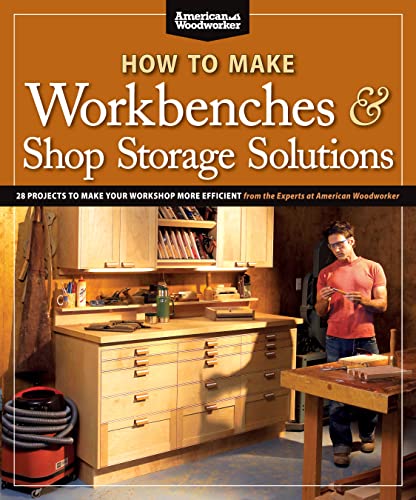
How to Make Workbenches & Shop Storage Solutions
A jointer that vibrates on an unstable bench produces wavy surfaces no book can fix. This 4.6-rated title addresses the infrastructure that makes benchtop joiners perform: torsion box benches, outfeed supports at correct height, and storage that keeps blades clean between sessions. If you are working from a garage corner or a fold-out table, this book solves the problems upstream of the tool itself.
- Pro: Explains why bench height matters more than jointer price
- Pro: Includes plans for jointer-specific outfeed stands
- Con: Limited content on dust collection integration
Skip it if your shop already has a solid torsion box bench and good lighting — the marginal benefit is low.
Furniture Making for Beginners
At $18.99 this is the cheapest entry point in the lineup, and it serves a specific role: orienting a total newcomer to the tools, wood species, and joinery categories they will encounter. It does not go deep on any single topic, but its 30-page overview of how benchtop jointers relate to other milling machines prevents the most common beginner mistake — buying the wrong tool for their actual workflow.
- Pro: Excellent breadth-to-price ratio for initial orientation
- Pro: Honest tool-comparison tables that reduce buyer confusion
- Con: Lacks the depth needed once you are past the first three projects
Skip it if you have already built two or three pieces — you will find it too elementary.
WEN 20 Birch Wood Biscuits for Woodworking, 100 Pack
Biscuits do not join — they align. This distinction matters because benchtop jointers produce flat reference edges, and when you glue panels edge-to-edge, biscuit alignment locks those edges without clamping pressure that could shift a freshly jointed surface. WEN’s birch stock at 4.7 stars comes in a moisture-stable 100-count pack that fits most #20 biscuit joiners. The compression recovery is consistent enough that they do not leak glue unpredictably.
- Pro: Consistent moisture content prevents uneven swelling in glue-ups
- Pro: Fits all standard #20 biscuit tools without trimming
- Con: Birch is softer than beech, so they compress faster under heavy clamps
Skip it if your work involves only hardwoods with oily grain — biscuits struggle to bond with teak or ipe regardless of brand.
Buying Guide
Cutterhead Type and Feed Rate
For fine furniture, a spiral or helical cutterhead with carbide inserts outperforms straight knives on anything other than flat-grained softwood. The reason is chip-out control: figured maple, curly walnut, and ribbon mahogany all shear unpredictably against a straight blade, leaving tear-out that requires hand-planing to fix. If your jointer has a slower feed rate, you will spend more time per pass, but the surface quality will save you that time later when fitting tenons.
Table Length and Extension Strategy
A six-inch benchtop jointer typically offers around eighteen inches of total table length. For furniture making, that is barely enough to joint a leg blank without introducing a dip at the knife line. Measure your longest regular stock before buying. If you routinely work with boards over four feet, budget for a separate outfeed roller stand or plan to build a bench extension — the Workbenches book covers that geometry.
Reference-Edge Quality vs. Joiner Capability
The decisive question is not whether the jointer leaves a flat surface but whether that flatness is consistent edge-to-edge over an entire board. Check reviews and videos for fence parallelism at the front and back of the table, and look for any mention of “snipe” at the exit. For joinery, a reference edge that dips by even half a thousandth at one end will misalign a mortise shoulder and force you to recut the tenon cheek.
Our Verdict
Our top pick for makers investing in a complete benchtop joiner setup is the WEN JT630H paired with the Joinery, Shaping & Milling book — the machine handles stock prep and the book teaches you to sequence operations correctly. Our budget pick for someone starting from zero is Furniture Making for Beginners at $18.99, which prevents costly tool mistakes. If you are replacing an older straight-knife jointer and your main frustration is tear-out on hardwoods, the JT630H’s spiral head wins decisively regardless of brand loyalty.
FAQ
Can a benchtop jointer flatten wide table panels?
No — six-inch capacity means maximum board width of six inches. For wide panels, you joint narrow boards to reference edges, then glue them into a wider blank using biscuit alignment, and finish the surface with a planer or hand work.
How often do spiral cutterhead inserts need rotation?
On hardwood stock, expect to index inserts every twenty to thirty hours of use before the first row dulls noticeably. Carbide holds an edge far longer than HSS knives, and individual inserts are cheap replacements.
Is a book necessary if I have YouTube?
For benchtop joiner calibration and setup, YouTube works well. For joinery sequencing and joint-design decisions that determine what you are jointing for, a structured book like Foundations of Woodworking or Joinery, Shaping & Milling gives you a reference system that videos cannot match.
Do birch biscuits outperform beech ones?
Beech biscuits offer slightly higher compression resistance, but birch at this price point is adequate for panel glue-ups where clamping pressure is moderate. The practical difference is negligible for furniture-scale work.