What's inside
As an Amazon Associate I earn from qualifying purchases. This post may contain affiliate links at no extra cost to you.
Butcher block countertops are unforgiving. Leave a wet glass overnight, slice a tomato directly on the surface, or let cooking oil sit, and you will see exactly how well your finish is working. A good finish keeps water beading, prevents dark stains around the sink, and still feels like wood under your hands instead of plastic. A bad one either peels, turns gummy, or lets moisture soak in and raise the grain after the first real cleanup.
After living with, recoating, and abusing oiled and varnished tops through daily cooking, what separates the best finishes for butcher block countertops is not shine but practicality: how easy it is to apply without streaks, how well it resists water and everyday food acids with minimal upkeep, and whether you can spot-repair it without sanding the whole counter. For our 2026 roundup we focused on food-safe options that real owners will actually maintain, from simple wipe-on oils to more durable sealer-finish blends.
As an Amazon Associate we earn from qualifying purchases at no extra cost to you.




What we cover
Our Top Picks
 Howard Products Butcher Block Conditioner and Food Grade7.9"L x 1.8"W1.85 x 3 x 7.9 inches0.6 poundsCheck on Amazon


Quick Picks
| Product | Best for | Price |
|---|---|---|
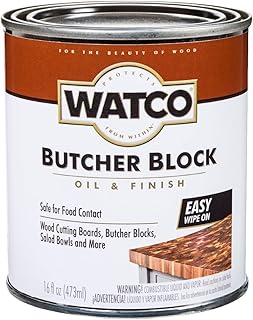
| Watco Butcher Block Clear Oil & Finish | Best Wipe-On All-Rounder | $18.54 |
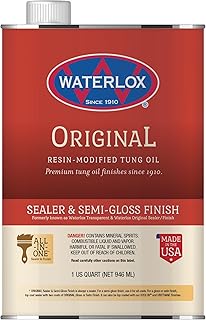
| Waterlox Original Sealer and Finish | Best Film-Building Protection | $44.94 |
| Howard Products Butcher Block Conditioner | Best Budget Conditioner | $9.18 |
| Watco Butcher Block Ebony Oil & Finish | Best Tinted Finish | $22.65 |
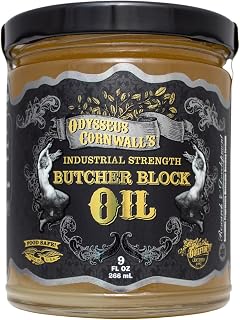
| Odie’s Butcher Block Oil | Best Low-Odor Curing Oil | $39.50 |
| Thirteen Chefs Mineral Oil | Best Simple Mineral Oil | $9.99 |
| Tried & True Original Wood Finish | Best Natural Oil & Wax Blend | $35.99 |
| Wood Butter Cutting Board Wax | Best Wax Top-Up | $13.95 |
How We Picked
We judged every product on food safety and suitability for direct food-contact surfaces, ease of application and reapplication without special equipment, water and stain resistance under normal kitchen use, and long-term maintainability including how well it can be spot-repaired, refreshed, or recoated without stripping. Durability mattered, but so did feel and appearance, since the best finish should protect without making butcher block look or feel coated in plastic.
The 8 Best Finishes For Butcher Block Countertops in 2026
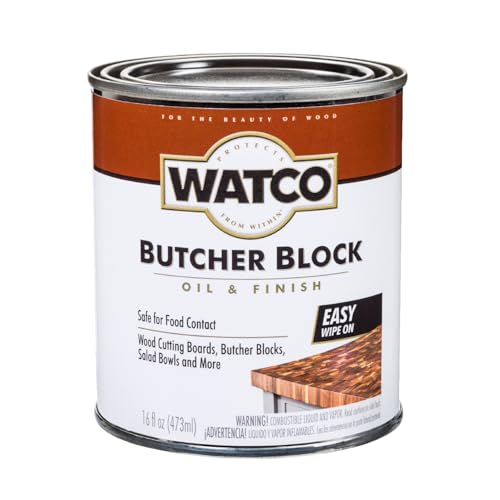
1. Watco Butcher Block Clear Oil & Finish
This is the finish for owners who want one product to color, protect, and maintain a countertop without spraying or complicated steps. Rated 4.7/5, the clear oil and finish wipes on with a rag, levels nicely, and leaves a warm satin look that still feels like real wood rather than a thick film. It builds enough protection for light daily use while staying easy to refresh in high-wear zones around the sink and stove. Dry time is forgiving and cleanup is simple, which makes it approachable for first-time DIYers.
- Pro: Very easy wipe-on application with even, natural-looking results
- Pro: Food safe once cured and pleasant to live with for daily prep
- Con: Not as water-resistant as a true varnish, needs more frequent reapplication
Skip it if you want maximum water resistance for a heavily used sink run or you prefer a hard, glossy film that you never need to oil.
2. Waterlox Original Sealer and Finish
Choose Waterlox if your butcher block is a true countertop, not just a cutting board, and you need tougher protection against standing water, wine, and citrus. Rated 4.8/5, this tung oil-based sealer and finish penetrates like an oil but cures to a durable film that resists moisture far better than straight oils or waxes. It brings out grain depth beautifully and holds up to daily wiping without whitening. Application takes more care and ventilation than a simple oil, and it costs more at $44.94 per quart, but the payoff is long-term durability.
- Pro: Excellent water and stain resistance for kitchen use
- Pro: Rich, hand-rubbed look that enhances grain without looking plastic
- Con: Stronger odor during application and longer cure compared to simple oils
Skip it if you want a purely oil-and-wax maintenance routine or you plan to cut and chop directly on the counter without a separate board.
3. Howard Products Butcher Block Conditioner
This conditioner is for anyone who already has an oiled top and wants an affordable way to keep it hydrated and protected. Rated 4.8/5 and priced at $9.18 for 12 Fl Oz, it blends food grade mineral oil with waxes to condition dry wood, soften the surface feel, and add a gentle sheen that repels light moisture. It spreads easily, smells neutral, and is ideal for monthly upkeep rather than initial sealing. It will not build a hard film, so it is best as a maintainer after an oil or as a standalone for lower-splash areas.
- Pro: Excellent value and easy to apply for regular maintenance
- Pro: Food grade mineral oil and wax formula leaves wood feeling soft, not greasy
- Con: Minimal standalone protection, requires frequent reapplication
Skip it if you are finishing raw wood for the first time and need deeper penetration and longer-lasting water resistance.
4. Watco Butcher Block Ebony Oil & Finish
Pick the Ebony version when you want protection plus color in one step. Rated 4.6/5, it uses the same easy wipe-on approach as the clear Watco but adds a deep ebony tone that evens out pale maple or birch and hides light discoloration and wear. The pigment helps achieve a styled, modern look without stain plus topcoat layering. At $22.65 per pint it remains accessible, and control is good if you work in thin coats. Like other penetrating oil finishes, it trades some ultimate water resistance for ease of repair and a natural feel.
- Pro: Adds rich, uniform color while conditioning and finishing in one product
- Pro: Same simple wipe-on process as the clear formula
- Con: Color can apply unevenly if coats are not kept thin and consistent
Skip it if you want to keep the natural light color of your wood or you need a clear film finish for maximum moisture defense.
5. Odie’s Butcher Block Oil
Odie’s is ideal for owners who want a curing, food-safe oil that is efficient and low-odor to live with. Rated 4.8/5, this 9 oz concentrated oil is designed to protect and waterproof butcher blocks, cutting boards, and furniture while curing to a durable, lustrous finish that does not feel waxy or sticky. A little goes a long way, which helps offset the $39.50 price, and the application is straightforward with thorough buffing. It leaves a soft, water-repellent surface that is easy to spot-renew without stripping.
- Pro: Curing finish adds real water resistance without a thick film
- Pro: Very low odor and efficient coverage from a small jar
- Con: Premium price and requires careful buffing to avoid over-application
Skip it if you are on a tight budget or you prefer a traditional mineral oil and wax routine with the lowest upfront cost.
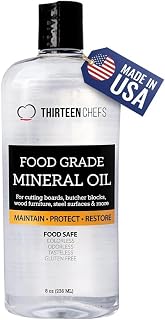
6. Thirteen Chefs Mineral Oil
This is the straightforward, no-frills option for regular hydration of cutting boards and butcher block. Rated 4.8/5 and priced at $9.99 for 8 oz, the food grade USP mineral oil is odorless, tasteless, and safe for surfaces that touch food, including wood, marble, and soapstone. It soaks in quickly, prevents drying and cracking, and keeps wood from looking washed out after washing. It does not cure or build a film, so you will reapply often, especially near sinks, but there is nothing simpler for routine care and for lubricating grinder parts and knives.
- Pro: Pure, food grade mineral oil with no additives or scent
- Pro: Very affordable and easy for frequent, quick applications
- Con: No curing or film protection, least water resistance on its own
Skip it if you need lasting stain resistance or you want a finish that does not require weekly to monthly reapplication in heavy-use areas.
7. Tried & True Original Wood Finish
For those who prioritize non-toxic, natural ingredients, this is a standout. Rated 4.7/5, the pint pairs polymerized linseed oil with beeswax to create a food safe sealer that is highly durable for an oil-wax blend. At $35.99 it sits in the middle of the price range but delivers a deep, matte luster and a tactile, wood-forward feel rather than a glossy coating. It applies in thin coats and buffs to a pleasant sheen, and it ages gracefully with spot repairs instead of peeling. Ventilation needs are modest compared to varnish-type finishes.
- Pro: Linseed oil and beeswax blend is non-toxic and food safe with lasting durability
- Pro: Beautiful, natural matte finish that is easy to maintain and repair
- Con: Requires thin, patient application and thorough buffing for best results
Skip it if you want a high-build, high-gloss film or the fastest possible dry and recoat cycle.
8. Wood Butter Cutting Board Wax
Wood Butter is best as a refreshing top-up over an already oiled surface. Rated 4.8/5 and priced at $13.95 for 8 fl oz, it combines food grade mineral oil and beeswax to condition dry wood, fill micro-cracks, and add a soft, water-repellent glow after oiling. It is especially useful on end grain, around edges, and on wooden tools that see frequent washing. The wax adds short-term water beading and a smoother feel under hand, though it will not replace a curing oil or varnish for primary protection.
- Pro: Excellent as a maintenance wax that enhances water beading and feel
- Pro: Food grade and easy to apply over any mineral oil base
- Con: Not a standalone sealer for raw countertops, needs an oil base underneath
Skip it if you are sealing raw butcher block for the first time and need penetration and curing rather than a surface wax.
Buying Guide
Penetrating Oil vs. Curing Film: Pick Your Maintenance Style
Pure mineral oil and wax conditioners soak in, keep wood from drying, and are dead simple to reapply, but they do not cure and need frequent refreshing where water sits. Curing oils and oil-varnish blends like tung oil-based sealer-finishes penetrate and then harden, giving noticeably better water and stain resistance and longer intervals between coats. If you are willing to ventilate and apply thin coats carefully, a curing finish saves maintenance. If you want the simplest, food-safe wipe-on routine and do not mind monthly touch-ups, oil plus wax is the easier path.
Food Safety, Feel, and Sheen
For countertops used for direct food prep, choose a product labeled food safe once cured and avoid heavy film builds that can chip under knife work. Most owners prefer a satin or matte, close-to-wood feel over high gloss, which shows scratches faster and can feel sticky. Wax over oil adds a soft luster and smoother hand without gloss, while varnish-type finishes add more sheen and protection but change the tactile character. Decide whether you will cut directly on the top or always use a separate board, that choice determines how hard your finish needs to be.
Application, Repair, and Long-Term Care
The best finishes are the ones you will actually maintain. Look for wipe-on formulas that level without brush marks, allow spot repairs without stripping the whole run, and do not require special spray equipment. Light sanding, thorough dust removal, and thin coats matter more than brand for final results. Plan for routine care: clean with mild soap, avoid soaking, and recoat or rewax high-wear areas before water stops beading. Keep a small jar on hand for quick touch-ups around the sink and in front of the cooktop, where wear shows first.
Our Verdict
For most butcher block countertops, Waterlox Original Sealer and Finish is the top pick because it delivers the best balance of natural wood look and real kitchen-grade water resistance that holds up to daily washing and spills. For budget maintenance, Howard Products Butcher Block Conditioner wins at $9.18, it is inexpensive, food grade, and perfect for keeping an already oiled top hydrated between deeper coats. If you want color plus protection in one step or need to unify pale or patchy wood, Watco Butcher Block Ebony Oil & Finish is the better choice despite needing more careful, thin application.
FAQ
What is the most durable food-safe finish for butcher block countertops?
A curing sealer-finish like Waterlox Original offers the strongest everyday protection while remaining food safe once cured. It resists standing water and stains better than straight mineral oil or wax, which need more frequent reapplication.
Do I need to oil and wax, or is one enough?
Oil hydrates and penetrates, wax adds surface water beading and a smoother feel. Using oil first and then a thin wax top-up gives the best combination of hydration and short-term repellency, especially on end grain.
How often should I reapply finish on a working countertop?
Light-use areas can go a few months, but sink and prep zones often need monthly touch-ups if you use straight oil or conditioner. Curing oil and varnish-type finishes extend that interval noticeably, though you should still recoat when water no longer beads.
Can I use these finishes on cutting boards as well as countertops?
Yes, all eight products are marketed as food safe for cutting boards and butcher block. For boards that get heavy knife work and frequent washing, simple mineral oil or an oil and wax routine is easiest to maintain, while countertops benefit from more durable curing options.