Our Top Picks
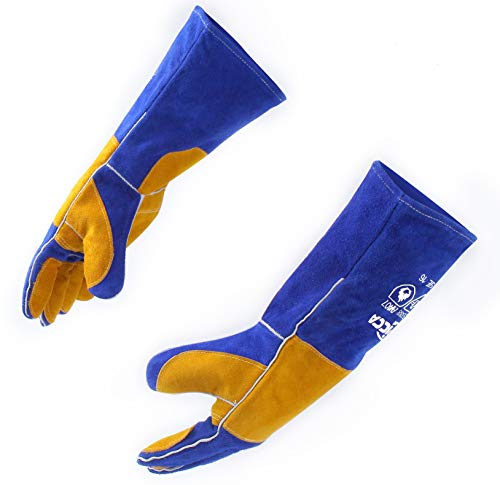
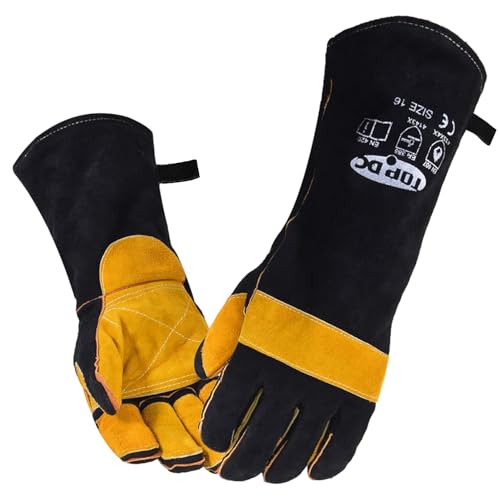 TOPDC Welding Gloves 16-Inch 932°F Heat Resistant Leather2 Count (Pack of 1)0.5 PoundsCheck on Amazon
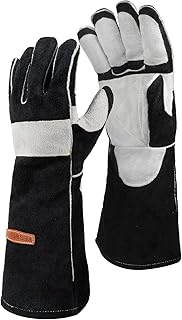
 Caiman Premium Goat Grain TIG/Multi-Task Welding GlovesLarge (Pack of 1)6 x 1 x 12 inches0.4 poundsCheck on Amazon


What's inside
As an Amazon Associate I earn from qualifying purchases. This post may contain affiliate links at no extra cost to you.
Most guys buy the wrong gloves. They grab a stiff yellow pair off the rack, use them for everything from TIG tacks to stick overhead, and then wonder why their fingertips are numb and their wrists are freckled with burn scars. The best welding gloves are not one pair. They are the right pair for the process, the amperage, and the position you are welding in.
Gloves are consumables. Leather breaks down from heat, sweat, and slag. A pair that felt great in month one can be board-stiff and cracked by month four, and cracked leather is a burn waiting to happen. Plan on replacing them, buy accordingly, and stop treating a $30 pair like a lifetime purchase.
As an Amazon Associate we earn from qualifying purchases at no extra cost to you.




What we cover
Glove Types at a Glance
Here is the short version. Match the leather and the build to what you actually do most days.
| Process | Leather Type | Cuff Length | What Matters Most | |
|---|---|---|---|---|
| TIG (low amp, fine work) | Goatskin or kidskin | 4 to 6 in | Fingertip feel, thin palm | |
| MIG (mid amp, production) | Pigskin or cowhide | 4 to 6 in | Balance of grip and heat, abrasion resistance | |
| Stick / SMAW (high amp) | Split cowhide or elkskin | 6 to 8 in | Heat mass, spatter deflection, insulation | |
| Overhead & | out-of-position | Split cowhide | 8 to 18 in gauntlet | Long cuff, sealed seams, no gaps |
| Heavy grinding & | fab | Cowhide with padded palm | 4 to 6 in | Abrasion, impact, reinforced thumb |
Read that table as a starting point, not a rule. A shop that runs 200 amp stick all morning and TIGs stainless after lunch needs two pairs on the bench, not a compromise pair that fails at both.
Leather: What Each Hide Actually Does
Goatskin is thin, soft, and high in natural lanolin, so it stays supple and gives you the most feel. That is why TIG welders live in it. The tradeoff is heat tolerance. Goatskin will not save you from sustained radiant heat off a heavy stick pass.
Pigskin breathes well and shrugs off water and oil better than most hides. It stays flexible after it gets sweaty, which matters in a hot shop. Good all-around MIG choice.
Cowhide comes in two flavors. Grain cowhide is the smooth outer layer, tougher and more abrasion resistant. Split cowhide is the fuzzy inner layer, thicker, cheaper, and better at blocking heat. Most classic stick gloves are split cowhide for exactly that reason.
Elkskin resists hardening from heat better than cowhide, so it takes longer to go stiff and crack. Welders who run hot and hate breaking in new gloves tend to favor it.
Deerskin is the comfort pick. Very soft, very flexible, not much heat protection. Fine for light TIG and layout work.
Cuff Length, Stitching, and Lining
Cuff length is a burn-risk decision, not a style decision. Short 4 inch cuffs are fine for flat, low-amp TIG where you want your wrist free. The second you weld anything above shoulder height, molten metal falls. Gravity does not negotiate. Go to an 8 inch or longer gauntlet and make sure the cuff goes over your jacket sleeve so nothing funnels into it.
Look at the thread. Kevlar or comparable heat-resistant thread survives spatter. Cotton thread burns through, seams pop, and the glove is trash. Check the palm seam and the thumb crotch, because that is where gloves fail first. Wing thumbs give more range of motion for stick and MIG. Straight thumbs feel more natural for fine TIG.
Linings matter more than people expect. Unlined goatskin gives maximum feel. Cotton or fleece lining adds insulation and sweat management but kills fingertip sensitivity. Aluminized or foil-backed linings are for high radiant heat, like heavy plate and preheat work.
TIG Welding Gloves (Goatskin, Unlined)
Buy these if you feed filler by hand and need to feel the rod. Unlined goatskin gives near-bare-hand dexterity. Accept that they are not high-heat gloves, keep amperage moderate, and expect to replace them more often than a stick glove. Size them snug, not tight, since loose fingertips cost you control.
Matching Gloves to Amperage and Material Thickness
Plain talk on the numbers. Amperage is roughly the heat you are pouring in. Material thickness sets how much heat you need. A general starting point for steel is about 1 amp per 0.001 inch of thickness, so 1/8 inch mild steel lands somewhere near 125 amps. Thicker plate means more amps, more radiant heat, longer arc time, and hotter gloves.
Under about 100 amps on thin sheet, radiant heat is manageable and dexterity wins. Thin goatskin is the right call. From roughly 100 to 200 amps on 1/8 to 1/4 inch material, you want mid-weight pigskin or cowhide. Above 200 amps on 3/8 inch and up, especially with long passes and preheat, you need thick split cowhide or elkskin with insulation, because the heat soaks through rather than hitting you in bursts.
Duty cycle is the hidden factor. Ten short tacks at 180 amps is nothing. Twenty minutes of continuous root and fill at 180 amps will cook a thin glove and your hand with it. If your gloves get uncomfortably warm and stay warm, you are underprotected. Do not tough it out.
PPE, Fumes, and Fire Risk Around Your Hands
Gloves are one layer. They do not work alone.
UV is the sneaky one. Arc rays cause skin burns that show up hours later, and bare wrists between glove and sleeve are the classic spot. Cover the gap. A leather jacket sleeve or FR sleeve over the cuff closes it.
Never wear wet gloves. Damp leather conducts. Stick and MIG voltages are low, but wet gloves plus a sweaty grip plus a grounded workpiece is how welders get bitten. Wet gloves also steam-burn from the inside. Dry them at room temperature, never on a heater or in an oven, which cooks the leather brittle.
Fume control is separate from gloves but it belongs in the same habit. Get local exhaust or a fume extractor on the arc, keep your head out of the plume, and use a respirator for galvanized, coated, or stainless work. Zinc fumes from galvanized steel cause metal fume fever. Hexavalent chromium from stainless is a known carcinogen. Grinding coated metal aerosolizes the same junk.
Fire risk. Sparks travel and slag rolls. Clear flammables within 35 feet, keep an extinguisher within reach, and check the area again 30 minutes after you stop. Wear your gloves for cleanup, because hot metal looks exactly like cold metal.
Stick Welding Gauntlets (Split Cowhide, Lined)
For high amperage, vertical, and overhead work. Thick split cowhide with a cotton or fleece lining and a long cuff. You lose dexterity, which is fine because stick electrodes do not require fine finger work. Look for reinforced palm and thumb, and heat-resistant thread on every seam.
Fit, Sizing, and Break-In
Too big and the glove slides when you grip, so you overgrip and your forearm burns out. Too small and the fingertips press against the leather, which puts your skin closer to the heat and cuts circulation. You want about a quarter inch of room past your longest fingertip and enough palm width to close your hand without bunching.
Try the actual motions before you commit. Pick up a rod. Squeeze a MIG trigger. Grab a grinder handle. If you cannot pinch a 3/32 electrode confidently, the glove is wrong for stick.
Break-in is real with stiff cowhide. Flex them, work the fingers, and expect a few days of awkwardness. Do not soak them in water to speed it up. That degrades the leather and leaves you with the wet-glove problem above.
- ✔ Right leather for the process means better control and fewer burns
- ✔ Long gauntlet cuffs stop overhead spatter from funneling to your wrist
- ✔ Kevlar-type thread keeps seams from popping under spatter
- ✔ Owning two or three purpose-built pairs beats one compromise pair
- ✘ Thin dexterity gloves wear out fast and need frequent replacement
- ✘ Heavy insulated gloves make fine filler feeding awkward
- ✘ Sizing varies a lot between brands, so returns are common
- ✘ Cheap gloves often use cotton thread that fails early
Rotation Strategy That Actually Saves Money
Run three pairs. A thin goatskin pair for TIG and layout. A mid-weight MIG pair for daily fab. A heavy gauntlet for stick, overhead, and anything hot and long. Add a cheap pair of grinding or rigging gloves so you stop destroying good welding leather on abrasive work.
Rotate them so each pair dries out between sessions. Sweat is what breaks leather down as much as heat. Inspect the palms and thumbs weekly. Any crack, thin spot, or popped seam and that pair moves to grinding duty or the trash.
MIG Welding Gloves (Pigskin or Cowhide, Mid-Weight)
The pair that lives on the bench. Enough heat protection for typical 100 to 200 amp MIG, enough feel to run a trigger and handle parts. Pigskin stays flexible when it gets sweaty, which is why production welders keep coming back to it. Buy two pairs and alternate days.
Best Welding Gloves: FAQ
How long should a pair of welding gloves last? It depends on process and hours. Heavy split cowhide on daily stick work often goes a few months. Thin goatskin under constant TIG use can be finished in weeks. Replace them when the leather cracks, a seam opens, or you start feeling heat you did not feel before.
Can I use one pair for MIG, TIG, and stick? You can, but you will weld worse and get burned more. A mid-weight cowhide pair is the closest thing to a do-everything glove. It is still too clumsy for precise TIG and too thin for long high-amp passes.
Are Kevlar-lined or aluminized gloves worth it? Heat-resistant thread is worth it on every glove, no debate. Full aluminized or foil-backed gloves are specialty gear for high radiant heat, like thick plate and preheated work. For general shop welding they are overkill and they hurt your dexterity.
The Short Answer
Pick the leather for the process, the cuff for the position, and the thickness for the amperage. Check the thread, size them so you can pinch a rod, and keep them dry. Then buy more than one pair, because the glove that makes you a better TIG welder is the same glove that will get your hand burned on a 250 amp overhead pass.
Check prices on Amazon →