
Our Top Picks
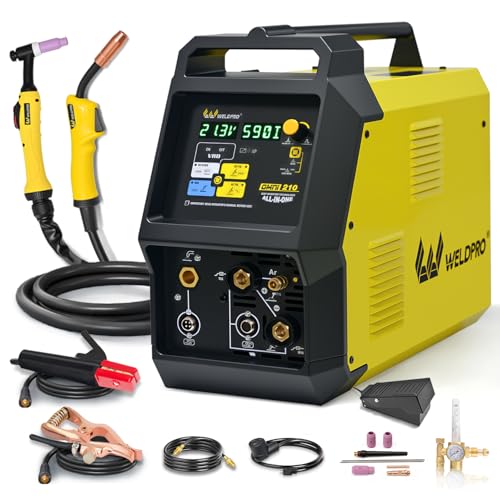 Weldpro Omni210 MIG Welder 200A Multi-Process Welder 110V/220V81.8 Pounds18.4 x 10.4 x 21.1 inches81.8 PoundsCheck on Amazon
What's inside
As an Amazon Associate I earn from qualifying purchases. This post may contain affiliate links at no extra cost to you.
A repair shop’s MIG welder earns its keep on variety: a cracked trailer frame, a worn bucket edge, a thin equipment cover, and a bracket that has to be welded in place. The decision that matters is how quickly the machine moves between those jobs. Synergic control shortens setup, dual-voltage input decides where the welder can work, and duty cycle decides whether a long repair seam finishes in one pass or three. Spool gun readiness matters too, because aluminum repairs arrive without warning and a machine that cannot take a spool gun leaves that work to someone else.
This guide is for equipment repair shops, farm and fleet maintenance crews, and mobile welders who need an inverter MIG machine for mixed repair work. Each machine below was chosen from the names and specifications shown on its Amazon product page, so the outputs, voltages, and features listed here match what the listing itself states.
What we cover
Quick Picks
As an Amazon Associate we earn from qualifying purchases.
| Product | Best for | Key spec from title |
|---|---|---|
| Lincoln Electric POWER MIG 210 MP | A multi-process machine for a busy repair bench | 210-amp output, multi-process, dual voltage |
| Lincoln Electric POWER MIG 211i | A portable dual-voltage machine for field repairs | 211-amp output, 120/230V, flux-cored ready |
| Hobart Handler 210 MVP | A straightforward dual-voltage shop welder | 210-amp output, 115/230V, 25-210 amp range |
| Weldpro Omni210 | A six-process machine with AC/DC TIG built in | 200-amp output, 110V/220V, AC/DC TIG |
How to Choose
Input voltage and duty cycle
Repair work happens wherever the broken equipment sits, so input voltage is a practical question before it is a technical one. A dual-voltage inverter MIG runs on a standard outlet for light brackets and switches to a 220-volt circuit for plate and long seams, and the output on each voltage is stated in the listing. Duty cycle then decides how much of a repair you finish before the machine needs to rest: a 30 percent duty cycle at 175 amps covers most repair seams, but a long crack on a trailer frame wants a machine that holds its arc. Check the amperage and duty cycle together, since a big headline number with a short duty cycle helps nobody.
Synergic control and setup speed
A repair bench changes material and thickness all day, so setup speed is real money. Synergic control links wire feed speed and voltage to a few choices like wire size and material thickness, which gets a new operator welding in minutes instead of tuning dials by trial and error. Manual mode still matters for the experienced welder who wants to fine-tune a bead on an awkward joint, so a machine that provides both modes covers the whole crew. A clear display of the chosen settings helps the next person repeat a repair that worked, and it keeps a shared machine from drifting into guesswork between shifts.
Wire feed, spool guns, and aluminum repair
The wire feed system decides whether a repair day runs smoothly or stalls. Check that the machine accepts the wire diameters your jobs need, usually 0.030 or 0.035 inch for steel repair, and that the drive rolls match that wire. Aluminum repairs need a spool gun, because soft aluminum wire jams in a long MIG liner, so confirm the machine is spool gun ready and which gun it takes. Flux core capability matters for outdoor work too, since wind blows shielding gas away and flux core wire carries its own protection. A machine that handles gas MIG, flux core, and a spool gun covers nearly every repair that rolls into the shop.
Where budget inverter MIGs cut corners
Lower-cost inverter MIG machines usually save money on the parts a repair shop touches daily. A short MIG gun and short ground lead force the machine to sit close to the work, which is awkward around large equipment, and a thin work clamp loses its grip on rusty frames. Some machines ship with only one set of drive rolls, so changing wire size means ordering parts first. Ventilation is a safety matter as well: flux core and stick welding on dirty or painted repair parts produce fume that needs extraction or fresh air, and a closed bay with no airflow is the wrong place for that work. Compare the full package, including leads, rolls, and regulator, before judging the machine.
The 4 Best Options
Lincoln Electric POWER MIG 210 MP
The POWER MIG 210 MP fits a busy repair bench that needs several processes in one machine. MIG, flux core, TIG, and stick cover the range from clean sheet repairs to dirty outdoor frames, and the digital display keeps voltage and amperage visible while the operator works. Dual-voltage input lets it run from a standard outlet or a 240-volt circuit, and at 40 pounds it moves between benches without a dedicated cart. With 210 amps on tap, it handles the plate and structural repair work that smaller machines leave unfinished, and the Lincoln support network makes parts and consumables easy to find.
Specs
- 210-amp maximum output
- Dual-voltage 120/240V input
- Multi-process: MIG, Flux Core, TIG, Stick
- Digital display
- 40 lb portable body
- Model K3963-1
Best for: A busy repair bench that needs MIG, flux core, TIG, and stick in one machine.
Watch out for: The TIG torch is a separate purchase, so confirm what is included if TIG work is part of your plan.
Lincoln Electric POWER MIG 211i
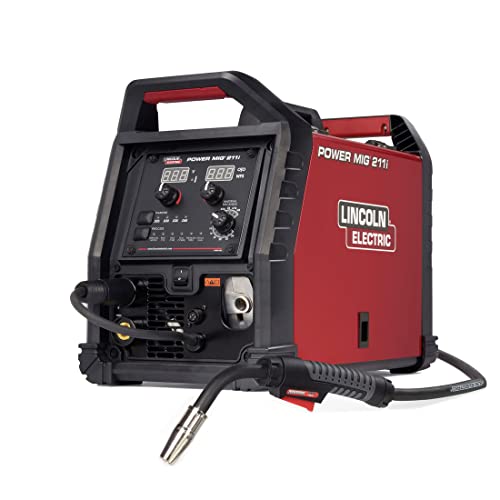
The POWER MIG 211i suits a repair welder who works in the field as much as in the shop. Its 20 to 211 amp range reaches thin covers at the low end and solid brackets at the top, and the 30 percent duty cycle at 175 amps covers most repair seams without forced breaks. Dual-voltage 120/230 volt input means it plugs into a standard outlet on a farm call or a heavier circuit back at the shop, and flux-core readiness keeps it welding outdoors where wind makes gas MIG unreliable. At 41 pounds it is genuinely portable, and the simple control layout suits a crew that shares one machine.
Specs
- 211-amp maximum output
- Dual-voltage 120/230V input
- 20-211 amp output range
- 30 percent duty cycle at 175 amps
- Flux-cored ready
- 41 lb portable body
- Model K6080-1
Best for: Field and farm repairs where the welder travels to the broken equipment.
Watch out for: Check the included drive roll sizes against the wire diameters you run most, since a swap may need extra rolls.
Hobart Handler 210 MVP
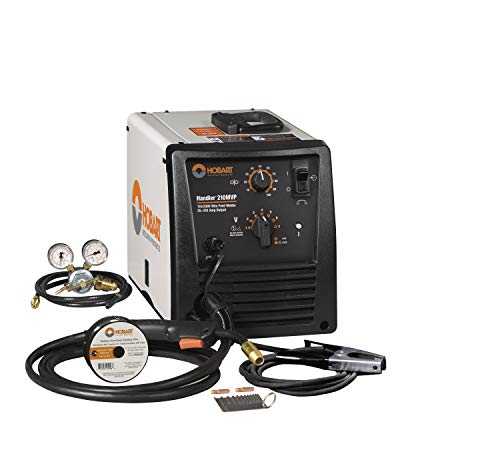
The Handler 210 MVP fits a shop that wants a straightforward dual-voltage MIG welder without a deep menu. Its 25 to 210 amp range covers sheet metal through quarter-inch plate, and the multi-voltage plug system switches between 115 and 230 volt input without rewiring. The HR-100 gun with a 10-foot lead reaches around larger repair pieces, and spool gun readiness means aluminum work stays possible when it arrives. Flux core wire is included in the package, so the machine can weld outdoors on the first day, and the simple five-position voltage control suits operators who prefer dials over screens.
Specs
- 210-amp maximum output
- Multi-voltage 115/230V input
- 25-210 amp output range
- Flux core and MIG capable
- Spool gun ready
- HR-100 MIG gun, 10 ft lead
- Model 500553
Best for: A shop that wants a simple, durable dual-voltage MIG welder for daily repair work.
Watch out for: It uses tapped voltage settings rather than infinite control, so fine-tuning a bead takes a different approach than on a digital machine.
Weldpro Omni210
The Omni210 fits a repair shop that wants six processes and is willing to learn a deeper menu to get them. Synergic MIG, flux core, stick, spool gun, and AC/DC HF TIG with pulse cover steel, stainless, and aluminum repairs in a single inverter, so one machine can answer nearly any job that arrives. The AC/DC TIG side is the standout here, since most multi-process machines treat TIG as an afterthought, and the included standard TIG torch makes it usable from the start. Dual-voltage 110/220 volt input and VRD safety circuitry round out a package aimed at shops that repair mixed metals every day.
Specs
- 200-amp maximum output
- Dual-voltage 110V/220V input
- 6-in-1: Synergic MIG, Flux Core, Stick, Spool Gun, AC/DC HF TIG with Pulse
- Standard TIG torch included
- VRD safety feature
- Multi-process inverter
Best for: A repair shop that wants AC/DC TIG and MIG together in one multi-process machine.
Watch out for: The menu runs deep, so set aside time to learn the TIG settings before a paying repair depends on them.
Which One Fits Your Situation
The bench handles every process in a week
Choose the Lincoln Electric POWER MIG 210 MP. Four processes in one machine mean the bench never waits for a different welder, and the digital display keeps settings visible when several operators share it. Its 210-amp output also covers the structural repairs that smaller machines cannot finish. That combination is why it leads this list for general repair benches.
Repairs happen out in the yard or on the farm
Pick the Lincoln Electric POWER MIG 211i. Dual-voltage input and a 41-pound body make it easy to carry to the equipment, and flux-core readiness keeps it welding in wind where gas MIG fails. The wide 20 to 211 amp range handles thin covers and heavy brackets alike. For a mobile welder, that portability is worth more than extra processes.
You want a simple machine the whole crew can run
Take the Hobart Handler 210 MVP. The tapped voltage control and multi-voltage plugs keep setup to a few simple choices, and the included flux core wire means it works outdoors on day one. Spool gun readiness keeps aluminum repairs in-house when they appear. Crews that share one machine will appreciate how little there is to learn.
Aluminum and steel repairs share the same bench
Go with the Weldpro Omni210. Its AC/DC TIG with pulse is the feature the other machines here lack, and six processes in one inverter cover nearly every mixed-metal repair. The included TIG torch means the aluminum side is ready without a second order. That breadth makes it the most versatile machine in this group.
Common Mistakes
- Buying a MIG-only machine and then turning away aluminum repairs that need a spool gun or TIG.
- Running the wrong drive roll size for the wire, which causes slipping, bird-nesting, and a ruined seam.
- Welding outdoors with gas MIG on a windy day instead of switching to flux core wire.
- Ignoring the duty cycle and expecting a full repair seam from a machine rated for short bursts.
- Skipping ventilation when welding painted or oily repair parts, which fills the bay with fume.
Frequently Asked Questions
Is an inverter MIG welder good for repair work?
Yes, and it is often the best choice for a repair shop. Inverter machines are lighter than older transformer units, so they move around the shop and out to equipment, and most include dual-voltage input and synergic setup. The key is matching output and duty cycle to the thickest repair you take on, not the average one.
Do I need a spool gun for repair work?
You need one if you repair aluminum. Soft aluminum wire jams in a standard MIG liner, so a spool gun feeds it from a small spool mounted on the gun itself. Steel and stainless repairs do not need one. If your shop sees aluminum housings or panels even occasionally, buy a machine that is spool gun ready.
What wire size should a repair shop stock?
Most repair shops stock 0.030 and 0.035 inch wire, since those sizes cover sheet metal through plate in the range equipment repairs usually involve. Thinner wire suits body panels and covers, while the heavier size handles frames and structural pieces. Match the drive rolls to the wire you load.
Can these welders run on a standard outlet?
All four run on dual voltage, so a standard 110 or 120-volt outlet works for light repairs and a 220 or 230-volt circuit unlocks full output. The available amperage drops on the lower input, so plate and long seams belong on the heavier circuit. Check the breaker and outlet rating before welding at full output.
Related guides
More from Amazon
Programs that pair well with the guide above. Offers and eligibility are set by Amazon and may change.
A free business account with business pricing and bulk-buying tools for work, shop or home office.
Create a business accountFree shipping on eligible items, Prime Video and more. Eligible new members can start with a free trial.
Start a Prime free trialAudiobooks and podcasts to listen to on the go. Eligible new members can start with a free trial.
Try Audible freeAd-free music streaming. Eligible new subscribers can start with a free trial.
Try Music Unlimited freeAs an Amazon Associate we earn from qualifying purchases.
Write Your Review
No reviews yet. Be the first to share your experience!