
What's inside
- 1. Lincoln Electric POWER MIG 211i
- 2. Miller Multimatic 215
- 3. ESAB Rebel EMP 215ic
- 4. Forney Easy Weld 140 MP
- 5. ARCCAPTAIN MIG200
- When an all-in-one makes sense
- How to choose
- Questions to ask before you buy
- Common mistakes
- Space, weight and storage
- Frequently asked questions
- A sensible order for learning each process
- Conclusion
As an Amazon Associate I earn from qualifying purchases. This post may contain affiliate links at no extra cost to you.
A multi-process welder lets one machine handle MIG, flux-core, stick and often TIG, which saves space in a small garage. It makes the most sense when you want to try several processes or do varied repairs. The five machines below are described based on specifications and reviewer feedback, with attention to power requirements and the compromises that come with an all-in-one design.
| Pick | Best for | Key feature |
|---|---|---|
| Lincoln Electric POWER MIG 211i | Serious hobbyists focused on MIG | Auto-set controls with dual voltage |
| Miller Multimatic 215 | Quality-first all-rounder | MIG, TIG and stick in one compact unit |
| ESAB Rebel EMP 215ic | Portable multi-process work | Lightweight inverter with full menu |
| Forney Easy Weld 140 MP | Entry-level versatility | Simple multi-process design |
| ARCCAPTAIN MIG200 | Budget-minded experimenters | Multiple processes in one box |
What we cover
- 1. Lincoln Electric POWER MIG 211i
- 2. Miller Multimatic 215
- 3. ESAB Rebel EMP 215ic
- 4. Forney Easy Weld 140 MP
- 5. ARCCAPTAIN MIG200
- When an all-in-one makes sense
- How to choose
- Questions to ask before you buy
- Common mistakes
- Space, weight and storage
- Frequently asked questions
- A sensible order for learning each process
- Conclusion
Our Top Picks
 ARCCAPTAIN 200A MIG Welder 110V 220V 6 in20.9" x 8.5" x 16.1"3.5 x 2.4 x 2.8 inches0.9 poundsCheck on Amazon
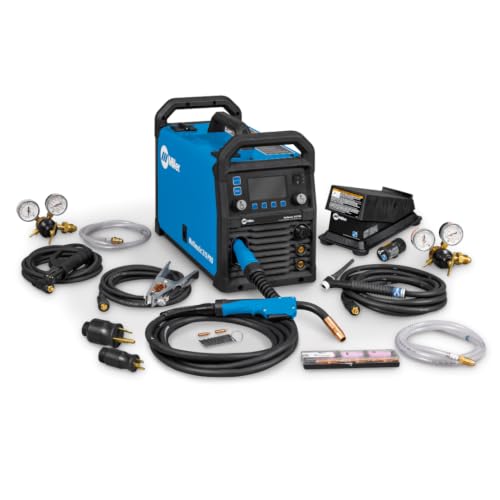
1. Lincoln Electric POWER MIG 211i
Primarily a MIG machine with additional process options, this unit is aimed at people who want strong MIG performance and room to expand. Its automatic settings make setup easier, and dual-voltage input offers flexibility when working off different outlets. It is a heavier, more costly commitment than a beginner machine, so it makes sense only if you will use the extra capacity. Lincoln Electric POWER MIG 211i Welder
2. Miller Multimatic 215
This is a well-known option for those who want MIG, TIG and stick together, with the engineering polish Miller is known for. It is compact for its capability and suits fabricators who bounce between processes. The tradeoff is that TIG requires extra equipment and learning, and the price of entry is not small. If you only plan to MIG weld, a dedicated machine may be more economical. Miller Multimatic 215 Welder
3. ESAB Rebel EMP 215ic
ESAB aimed this machine at those who want portability and variety. It is relatively light for its class, which helps if you carry it between a garage and job sites. As with any multi-process machine, you should confirm what accessories are included and which are sold separately, especially for TIG. ESAB Rebel EMP 215ic Welder
4. Forney Easy Weld 140 MP
A simpler multi-process option that helps beginners try a few processes without a large investment. It is more modest in power and build than premium models, so it suits lighter work and learning. Check the TIG capabilities and required accessories before you count on them. Forney Easy Weld 140 MP Welder
5. ARCCAPTAIN MIG200
A budget-oriented multi-function welder that offers several processes in one box. It is attractive to experimenters who want to see which process they prefer. As with many value-focused machines, check manual details, drive rolls and warranty support, and do not expect the refinement of the premium brands. ARCCAPTAIN MIG200 Welder
When an all-in-one makes sense
A multi-process welder suits people with limited space who want to try MIG, TIG and stick, or who handle a mix of repairs: sheet metal one weekend, a thick bracket the next, and an aluminum fix later. It is also useful if you are still deciding which process you like.
It makes less sense if you only ever weld one way. A dedicated MIG machine or a dedicated TIG machine often does that one job better for the same money. Multi-process welders also have more menus and settings, which can slow beginners. If TIG is your goal, check what torch, pedal and gas equipment the machine needs, since these accessories add to the total cost and learning curve.
How to choose
- Check input power. Dual-voltage machines give you flexibility, but 240V unlocks full output.
- Know the included accessories. Torches, regulators and pedals are often separate.
- Weight. Inverter machines are lighter and easier to move.
- Control interface. Clear menus matter if you switch processes often.
- Duty cycle. Check the rating at the amperage you will actually use.
Questions to ask before you buy
Start with power. Check what outlet you have, what breaker protects it and whether the welder’s stated output is available on that supply. Many machines advertise their top rating at 240V, and the 120V rating is lower. If you cannot run 240V, be realistic about the thickness you will weld.
Next, ask what is in the box. Some multi-process welders include only a MIG gun, while a TIG torch, foot pedal, stick lead and regulator may be sold separately. Add those costs to your plan so there are no surprises. Check the availability of replacement parts and the length of the warranty, since a machine you cannot service is a poor investment.
Finally, ask about support. Manufacturer manuals, videos and active user communities make a huge difference when you are learning a new process, and brands with an established following tend to have more of them.
Common mistakes
- Paying for processes you will never use.
- Assuming TIG is ready to go without extra accessories.
- Ignoring the circuit and plug needed for the machine.
- Skipping training and expecting instant results across all processes.
Space, weight and storage
One reason people choose a multi-process machine is to save space, so think about where it will live. Inverter models are much lighter than old transformer welders and can sit on a shelf or small cart, while a larger unit may need a dedicated stand. Plan room for the gas cylinder, leads, torches and a pedal if you TIG weld.
Keep accessories organized in labeled bins, since swapping processes means changing leads, polarity and sometimes gas. A tidy system makes it more likely you will actually use all the machine’s functions instead of leaving it set up for just one.
Frequently asked questions
Can I TIG weld aluminum with these machines?
Aluminum TIG usually requires AC output. Check that the specific machine supports AC TIG before you buy.
Is a multi-process welder good for beginners?
It can be, but simpler single-process machines are often easier to learn on.
Do I need 240V?
Not always. Many machines run on 120V at reduced output, but 240V provides full power.
What gases do I need?
MIG usually uses argon-CO2 mix or similar, while TIG uses pure argon. Check recommendations in the manual.
A sensible order for learning each process
Most people do best by mastering one process before moving to the next. MIG is the quickest to get working results, so start there with simple joints in mild steel. Once you can lay consistent beads, try stick welding, which teaches arc control and tolerance for less-than-perfect surfaces. TIG comes last for many people, because it demands the most coordination: one hand holds the torch, the other feeds filler, and a foot controls the current.
Give each process a few weeks of regular practice before judging it. Keep notes on settings that work, and spend time on prep and fit-up, because every process rewards clean, well-fitted parts. A multi-process machine is at its best when it lets you follow your curiosity without buying three separate welders.
One last tip: buy from a seller that handles returns and warranty claims well. Multi-process machines have more electronics than simple welders, and good support matters if something fails in the first year.
Conclusion
A multi-process welder is a good fit for a small garage with varied projects. Prioritize power input, included accessories and weight, and be realistic about which processes you will really use. If you only plan to MIG, a dedicated machine may serve you better.
As an Amazon Associate we earn from qualifying purchases.
Related guides
More from Amazon
Programs that pair well with the guide above. Offers and eligibility are set by Amazon and may change.
A free business account with business pricing and bulk-buying tools for work, shop or home office.
Create a business accountFree shipping on eligible items, Prime Video and more. Eligible new members can start with a free trial.
Start a Prime free trialAudiobooks and podcasts to listen to on the go. Eligible new members can start with a free trial.
Try Audible freeAd-free music streaming. Eligible new subscribers can start with a free trial.
Try Music Unlimited freeAs an Amazon Associate we earn from qualifying purchases.






Write Your Review
No reviews yet. Be the first to share your experience!