
What's inside
- 1. Lincoln Electric Viking 3350
- 2. 3M Speedglas 100V
- 3. Miller Digital Elite
- 4. Jackson Safety BH3 Insight
- 5. ESAB Sentinel A50
- Features that matter, and ones that do not
- How to choose
- Fitting and adjusting a helmet
- Common mistakes
- Fixed shade or variable shade?
- Frequently asked questions
- Care and lens replacement
- Conclusion
As an Amazon Associate I earn from qualifying purchases. This post may contain affiliate links at no extra cost to you.
The best auto-darkening welding helmet is the one that gives you a clear view of the puddle, fits your head comfortably for hours and has sensors and shade settings suited to your process. For general MIG and stick work, a variable-shade helmet with a decent viewing window and a grind mode covers most needs. The five helmets below are described based on specifications and reviewer feedback.
| Pick | Best for | Key feature |
|---|---|---|
| Lincoln Electric Viking 3350 | Clear view for all-around welding | Large viewing area with a high optical rating |
| 3M Speedglas 100V | Comfort and a lighter feel | Wide shade range with a long track record |
| Miller Digital Elite | Quality-focused fabricators | Clear Light technology and a digital interface |
| Jackson Safety BH3 Insight | Everyday shop use | Large lens and straightforward controls |
| ESAB Sentinel A50 | Tech-minded welders | Touchscreen interface and wide view |
What we cover
- 1. Lincoln Electric Viking 3350
- 2. 3M Speedglas 100V
- 3. Miller Digital Elite
- 4. Jackson Safety BH3 Insight
- 5. ESAB Sentinel A50
- Features that matter, and ones that do not
- How to choose
- Fitting and adjusting a helmet
- Common mistakes
- Fixed shade or variable shade?
- Frequently asked questions
- Care and lens replacement
- Conclusion
Our Top Picks
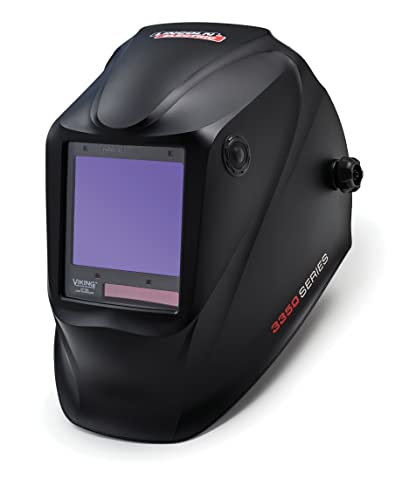 Lincoln Electric K3034-4 VIKING 3350 Auto Darkening WeldingX-Large13 x 11 x 10 inches1.41 poundsCheck on Amazon


1. Lincoln Electric Viking 3350
This helmet is popular because of its large viewing area and clear lens, which help you see the joint before and after the arc. It handles MIG, stick, TIG and grinding, and the headgear is adjustable for comfort. It can feel slightly heavier than some competitors during long sessions, so try to check the weight if you weld all day. Lincoln Electric Viking 3350 Helmet
2. 3M Speedglas 100V
A comfortable, well-balanced choice from a brand with a long history in welding protection. The shade range is wide enough for most processes, and the design is aimed at keeping neck fatigue down. The viewing area is not the largest on the market, so compare it with larger-lens options if visibility is your top priority. 3M Speedglas 100V Helmet
3. Miller Digital Elite
For those who weld frequently and notice optics, this helmet offers a bright, clear view and a digital interface for adjusting settings. It is a solid pick for people who spend long hours behind the lens and want a refined feel. It costs more than basic helmets, so it is worth it mainly for regular welders. Miller Digital Elite Helmet
4. Jackson Safety BH3 Insight
A practical shop helmet with a big lens and simple controls. It works for general fabrication, and the design keeps adjustments straightforward. It lacks some of the advanced features of premium helmets, but it covers what most people need for MIG and stick. Jackson Safety BH3 Insight Helmet
5. ESAB Sentinel A50
This helmet stands out for its touchscreen controls and wide view, aimed at people who like to dial in settings precisely. It is capable across processes. The learning curve for the interface is real, so make sure you are happy with a more feature-heavy design. ESAB Sentinel A50 Helmet
Features that matter, and ones that do not
Optical clarity is the headline feature. Auto-darkening filters are rated for optical quality, and a clearer lens reduces eye strain across a long day. Shade range matters because different processes call for different darkness: lower shades for light grinding, higher shades for high-amp welding. Look for adjustable sensitivity and delay, which let you avoid flicker and flash after the arc stops.
Viewing area is next. A larger window lets you see more of the work, particularly useful in tight positions. Headgear comfort and balance are also essential, because a helmet that tilts forward will tire your neck. Features like a grind mode and a lift-up front are useful, while extras such as fancy graphics do not affect protection at all.
How to choose
- Check the optical rating. The best ratings give a clearer, less distorted view.
- Look at shade range. Make sure it covers the processes you weld.
- Test comfort. Weight, balance and headgear adjustment affect long sessions.
- Consider power. Solar assist with a replaceable battery is common.
- Verify standards. Choose a helmet that meets the relevant safety standards in your country.
Fitting and adjusting a helmet
A helmet that fits properly is safer and more comfortable. Adjust the headband so the helmet sits level and stable when you nod, with the lens close enough that you can see the work without leaning in. Set the tilt so you can see your hands while the lens is dark, and tighten the crown strap so the weight sits on top of your head, not your forehead.
Set the shade according to your process and amperage, then fine-tune. Many welders start one shade too light and suffer eye strain without noticing. Test sensitivity by striking an arc at the lowest amps you use, and set the delay to suit your work: a longer delay is useful after high-amp welds that leave a glowing puddle.
Finally, wear safety glasses under the helmet. They protect your eyes when the helmet is lifted for chipping, grinding or inspecting a weld.
Common mistakes
- Choosing the cheapest helmet and ignoring optical quality.
- Setting a shade too light and risking eye strain.
- Forgetting spare cover lenses, which protect the filter.
- Using a damaged helmet shell or scratched lens.
Fixed shade or variable shade?
Variable-shade helmets let you adjust darkness for different processes and amperage, which is why they dominate the market. A fixed-shade helmet is simpler and sometimes cheaper, but it forces a compromise if you switch between MIG, stick and light grinding. Unless you weld the same way every time, variable shade is the safer pick.
Also look at whether the helmet has a separate grind setting. It lightens the lens for grinding and does not darken on sparks, though it is not a substitute for proper grinding eye and face protection.
Frequently asked questions
What shade should I use?
It depends on process and amperage. Use the manufacturer’s chart, and adjust for comfort within safe limits.
Do I need a helmet with true color?
It is not required, but many welders find it easier to see details with clearer color rendering.
Can I grind with an auto-darkening helmet?
Many have a grind mode, but a face shield and safety glasses are also needed for grinding.
How often should I replace cover lenses?
Replace them when they are scratched or pitted by spatter. They are cheap and protect the main filter.
Care and lens replacement
The outer cover lens takes the spatter, so inspect it often and replace it when it is pitted or hazy. Do not wipe the main filter with abrasive cloths or harsh cleaners; use the cleaning method recommended in the manual. Keep the sensors clean, since dust and dried spatter can reduce reliability.
Store the helmet in a cool, dry place away from direct sunlight, and avoid leaving it in a hot vehicle. If your helmet has replaceable batteries, swap them on schedule, and if it uses solar assist, make sure the cells are not covered by dirt. Retire any helmet with a cracked shell or a filter that fails to darken.
Consider carrying a small kit with spare lenses, a headband sweatband and a soft cloth. These inexpensive extras keep a good helmet working, and they cost far less than replacing the helmet itself.
Conclusion
A good auto-darkening helmet protects your eyes and makes welding easier. Choose clarity, comfort and a shade range that fits your processes, and keep spare lenses on hand. Whichever model you pick, wear it properly and inspect it regularly.
As an Amazon Associate we earn from qualifying purchases.
Related guides
More from Amazon
Programs that pair well with the guide above. Offers and eligibility are set by Amazon and may change.
A free business account with business pricing and bulk-buying tools for work, shop or home office.
Create a business accountFree shipping on eligible items, Prime Video and more. Eligible new members can start with a free trial.
Start a Prime free trialAudiobooks and podcasts to listen to on the go. Eligible new members can start with a free trial.
Try Audible freeAd-free music streaming. Eligible new subscribers can start with a free trial.
Try Music Unlimited freeAs an Amazon Associate we earn from qualifying purchases.







Write Your Review
No reviews yet. Be the first to share your experience!