What's inside
As an Amazon Associate I earn from qualifying purchases. This post may contain affiliate links at no extra cost to you.
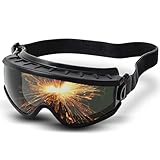
The best shade 5 welding goggles are indirect-vented, impact-rated goggles with a true shade 5 filter, full UV/infrared protection, and enough side coverage for the torch or plasma task you actually perform; for most buyers, a flip-front shade 5 goggle is the most versatile choice.
As an Amazon Associate we earn from qualifying purchases at no extra cost to you.



What we cover
Quick picks by job
| Situation | Best choice | Why | Important limit |
|---|---|---|---|
| Oxy-fuel brazing and heating | Shade 5 flip-front goggle | Easy to lift for setup and provides strong infrared filtering | Not intended for arc welding |
| Light oxy-fuel cutting | Shade 5 goggle with side shields | Balances visibility with protection from bright flame and sparks | Use a darker filter if the flame or workpiece is unusually bright |
| Low-amperage arc work | Welding helmet with the manufacturer’s specified shade | Provides face, neck, and side protection | Shade 5 goggles alone are generally inadequate |
| Low-current plasma cutting | Shade 5 cutting lens only when the machine manual permits it | Useful visibility at the lower end of plasma output | Higher current normally requires a darker shade and more coverage |
What makes one pair of shade 5 welding goggles better than another?
A shade number describes visible-light darkness; it does not, by itself, prove that a product protects against ultraviolet (UV), infrared (IR), impact, or flying particles. Look for an appropriate safety marking such as ANSI Z87.1 in the United States or the relevant EN 166 and EN 169 markings in Europe. The product documentation should identify the filter as a welding or gas-welding filter, not merely as tinted safety eyewear.
Lens clarity
Shade 5 is dark enough to reduce glare from many torch operations while still allowing you to see the joint, tip, and filler rod. Clarity depends on more than darkness. A flat glass lens usually gives consistent optical quality and tolerates heat well, while polycarbonate lenses are lighter and more impact resistant but can scratch more easily. A useful target is an optical-quality marking equivalent to Class 1 under applicable European standards, or clear, distortion-free optics under the applicable US marking.
Inspect the lens before each use. Fine scratches, clouding, rainbow distortion, or a loose filter can make it harder to control the flame and may encourage you to lift the goggles while work is still active.
UV and infrared protection
For oxy-fuel work, the filter needs to control both visible glare and infrared radiation. Choose a product explicitly labeled for gas welding, brazing, or cutting, with the applicable shade designation. Do not assume that a dark sunglass lens, motorcycle goggle, or generic smoke lens provides welding protection.
Arc processes produce substantially more hazardous radiation than ordinary torch work. Even a shade 5 filter is not a universal arc-welding filter. For shielded metal arc welding, gas metal arc welding, gas tungsten arc welding, or any operation that creates an arc, follow the welding-machine and safety-standard shade guidance and use a properly rated welding helmet.
Coverage and side protection
Large lenses give a wider working view, but coverage matters more than lens size alone. Side shields or a wraparound design reduce exposure to reflected light and sparks. Indirect ventilation helps reduce fogging without leaving open ventilation paths directly toward the eyes. Fully sealed goggles can be useful in dusty environments, but they may fog during hot work unless the design manages airflow well.
For plasma cutting, goggles leave the lower face, cheeks, and neck exposed. A face shield worn over suitable eye protection is often a better arrangement, particularly when slag and hot particles can rebound from the plate. A welding helmet or cutting shield is preferable when the task produces substantial spatter.
Head-to-head: the main shade 5 goggle designs
Flip-front goggles
These have a hinged dark filter that can be raised for positioning and lowered for the active cut or braze. They are the most convenient choice for intermittent work and are usually the best balance of price and usability. The hinge, however, is the part most likely to loosen or become contaminated with dust and spatter. Choose a design with replaceable lenses and a firm detent rather than a loose friction hinge.
Fixed-lens goggles
Fixed models are lighter, simpler, and often less expensive. They suit repeated brazing or cutting where you do not need to switch between clear and dark views. Their weakness is workflow: removing the goggles to inspect the setup exposes your eyes to nearby hazards unless the torch is fully extinguished and the area is safe.
Welding spectacles
Spectacle-style shade 5 eyewear is cooler and less bulky than goggles, but it generally offers less sealing and less side coverage. It can be appropriate for controlled oxy-fuel work when the product is impact rated and has side protection. It is a poor choice where sparks, dust, or reflected light can approach from multiple directions.
Shade 5 compared with shade 3, shade 10, and shade 14
Shade 3 welding goggles are lighter and may suit some low-brightness gas-welding, brazing, or torch-inspection tasks, but they are not automatically suitable for every flame or cutting operation. If the flame or molten pool is uncomfortable to view, stop and select the shade specified for that process rather than tolerating the glare.
Shade 5 welding goggles are commonly associated with gas welding, brazing, and lower-intensity cutting. They are not a replacement for an arc-welding helmet.
Shade 10 welding goggles, sometimes described as “welding goggles shade 10,” are much darker and are normally associated with certain arc-welding conditions rather than ordinary brazing. The correct shade depends on process, electrode or wire type, and current. A darker lens is not automatically safer if it prevents you from seeing the joint clearly, and shade 10 goggles still do not provide the face and neck coverage of a helmet.
Welding goggles 14 shade products are not a normal substitute for a shade 14 welding helmet. Shade 14 is exceptionally dark and is associated with specialized, very bright operations such as some high-current arc or carbon-arc applications. Never select it by number alone; use the process-specific guidance and equipment manufacturer’s instructions.
Decision matrix for buying
| Your use pattern | Recommended configuration | Reason |
|---|---|---|
| Occasional home brazing | Fixed or flip-front shade 5, impact-rated, side coverage | Low cost and adequate visibility for short sessions |
| Frequent torch repair | Flip-front model with replaceable lens and adjustable strap | Better workflow and lower long-term replacement cost |
| Beginner using plasma | Machine-approved shade plus face shield or cutting helmet | Amperage and spatter can exceed what goggles alone handle |
| Dusty or spark-heavy workspace | Indirect-vented goggle with side coverage, worn with a face shield | Improves particle protection while preserving the dark filter |
Fit, setup, and maintenance
- Check the marking. Confirm the shade, impact rating, and welding-filter standard before opening the torch or plasma arc.
- Adjust the strap before lighting. The goggles should stay in place when you look down or turn your head. A gap at the nose or temples is a fit problem, not something to solve by tightening until uncomfortable.
- Use the right outer protection. Add a face shield for cutting debris and wear suitable flame-resistant clothing and gloves. Goggles protect the eyes; they do not protect the rest of the face.
- Clean correctly. Let the goggles cool, remove loose grit with clean water or compressed air, then use mild soap and a soft lens cloth. Wiping dry abrasive dust across the lens is a common cause of permanent scratches.
- Replace damaged parts. Replace lenses with deep scratches, cracks, heat damage, or clouding. Also replace stretched straps, damaged side shields, and hinges that no longer hold the filter securely.
As a cost example, a $25 pair used for 50 short sessions costs about $0.50 per use. If scratched lenses force replacement after only 10 sessions, the cost rises to $2.50 per use, making replaceable filters and careful cleaning more valuable than a small initial saving.
Final recommendation
For most torch users, choose a shade 5 flip-front goggle with a clear standard marking, UV and IR protection, impact-rated construction, indirect ventilation, and side coverage. Use it for brazing and suitable oxy-fuel cutting, but verify the required shade for every plasma setting. For any arc welding or high-current plasma work, move up to the process-specified shade in a properly covering welding helmet rather than relying on shade 5 goggles alone.