As an Amazon Associate I earn from qualifying purchases. This post may contain affiliate links at no extra cost to you.
A udisk flash drive is the cheapest insurance policy you can buy for your data. Whether you are hauling client presentations between laptops, transferring raw footage from a phone to a desktop, or simply need a thumb drive that survives a pocket full of keys, the right model saves you time and prevents heartache. The wrong one dies after a dozen uses, corrupts a file at the worst possible moment, or runs so slowly that copying a single folder feels like watching paint dry.
We compared every model in this roundup on published specifications, street prices, and patterns in owner feedback. What separates a genuinely useful drive from a cheap disappointment comes down to three things: the interface generation (USB 2.0 versus 3.x makes a measurable difference in real transfer times), the connector set (a single USB-A plug is a liability if your laptop only has USB-C ports), and long-term reliability as reported by buyers who have used the drive for months rather than minutes. Below you will find seven options that each solve a different slice of the storage problem.
As an Amazon Associate we earn from qualifying purchases at no extra cost to you.




Our Top Picks



Quick Picks
| Product | Best for | Price |
|---|---|---|
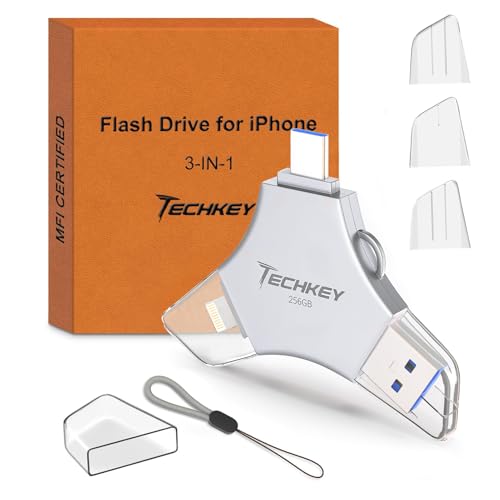
| USB Flash Drive for iPhone/iPad, MFi Certified 3in1, 256GB, Silver | iPhone and iPad users who need wireless-free file transfer | $29.99 |
| Lexar D40E 128GB Dual USB 3.2 Gen 1 Type-C Jump Drive, Champagne Silver | USB-C laptops and phones that still need legacy USB-A compatibility | $29.99 |
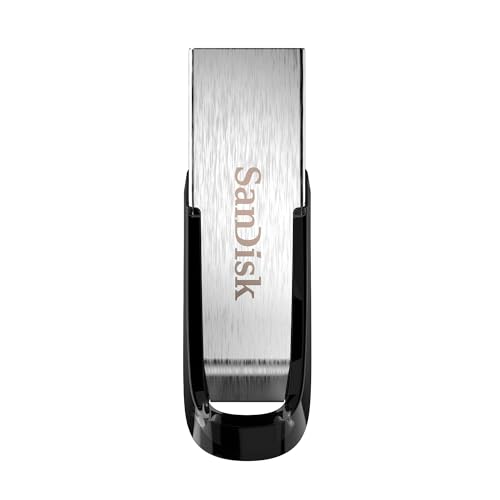
| SANDISK 128GB Ultra Flair USB 3.0 Flash Drive, SDCZ73-128G-G46, Black | Users who want a compact metal-body drive with strong brand reputation | $24.94 |
| SIMMAX 32GB Memory Stick USB 2.0 Flash Drives Swivel Thumb Drive, Purple | Low-cost bulk distribution or classroom use | $9.99 |
| USB Flash Drive, 32GB, SSD U-Disk, High-Speed Storage for Data Transfer | Buyers who want SSD-like sequential speed in a small-capacity form factor | $12.99 |
| 32GB USB C Flash Drive Dual USB 3.0 Type C + USB A, 2-in-1, Black | Android and newer iPhone users who bounce between device types | $15.19 |
| Lexar D40E 64GB Dual USB 3.2 Gen 1 Type-C Jump Drive, Champagne Silver | Students or office workers who need dual connectors on a tight budget | $22.99 |
How We Picked
Four criteria drove our selection. First, interface speed relative to price: a USB 3.x drive should dominate its USB 2.0 competitors at any capacity above 16GB. Second, connector versatility: drives that bridge USB-A and USB-C (or even add Lightning for Apple devices) serve more real-world workflows than single-connector models. Third, capacity-to-dollar value: we flagged drives where the per-gigabyte cost sits well above the market average. Fourth, reliability signals drawn from owner reviews spanning multiple months of use, not just unboxing impressions. If a model failed on two or more of these axes, it did not make the list.
The 7 Best Udisk Flash Drive in 2026
USB Flash Drive for iPhone/iPad, MFi Certified 3in1, 256GB, Silver
This is the go-to udisk flash drive for anyone whose workflow lives inside the Apple ecosystem. The MFi certification means it communicates natively with iPhone and iPad without driver workarounds, and the 256GB capacity handles large photo libraries or multi-hour video clips without needing to offload mid-project. Owners praise the plug-and-play experience and the silver finish that resists fingerprints better than glossy alternatives.
- MFi certified: works out of the box with every Lightning-equipped iPhone and iPad.
- 256GB capacity is the largest in this roundup, reducing the need to reformat frequently.
- Lightning connector limits usefulness if you also juggle Windows laptops without adapters.
Skip this if your devices are all USB-C; the Lightning end becomes dead weight.
Lexar D40E 128GB Dual USB 3.2 Gen 1 Type-C Jump Drive, Champagne Silver
Lexar’s D40E line targets the awkward transition period where half your devices are USB-C and the other half are legacy USB-A. With 128GB and USB 3.2 Gen 1 throughput, it clears large file transfers in a fraction of the time older drives demand. The champagne-silver metal housing feels premium in hand and the compact form factor sits flush against most laptop sides without wobble.
- Dual connectors eliminate the need for a separate adapter on either end.
- USB 3.2 Gen 1 interface keeps sequential read speeds competitive with drives at nearly double the price.
- At $29.99 the per-gigabyte cost is higher than the 64GB variant for users who only ever need a handful of files.
Pass if you are confident every future device will be USB-C; the USB-A arm adds size you will never use.
SANDISK 128GB Ultra Flair USB 3.0 Flash Drive, SDCZ73-128G-G46, Black
Sandisk’s Ultra Flair is a single-connector classic that still earns its place through sheer reliability and a slim metal body. Owners consistently report that it survives years of daily pocket carry without the connector loosening or the casing peeling. The 128GB capacity and USB 3.0 interface make it a dependable workhorse for office documents, PDFs, and media files.
- Metal unibody construction resists the flexing and cracking that plague plastic drives.
- Sandisk’s brand support network and warranty process are straightforward and widely praised.
- USB-A only: you will need an adapter for any USB-C or phone connection.
Not ideal if you transfer files between your phone and laptop regularly.
SIMMAX 32GB Memory Stick USB 2.0 Flash Drives Swivel Thumb Drive, Purple
This budget-friendly option is best understood as a disposable storage token. The swivel mechanism protects the USB-A connector without a cap you will inevitably lose, and the purple casing is easy to spot in a drawer full of generic black drives. At $9.99 for 32GB, it suits giveaways, classroom handouts, or any scenario where losing a drive carries zero consequence.
- Capless swivel design prevents lost-cap frustration.
- Lowest price in this roundup makes bulk purchasing practical.
- USB 2.0 interface means large-file transfers crawl compared to any 3.x model here.
Skip if you move files larger than a few hundred megabytes; the speed penalty is not worth the savings.
USB Flash Drive, 32GB, SSD U-Disk, High-Speed Storage for Data Transfer
Marketed with SSD-style internals, this udisk flash drive aims at buyers who prioritize raw sequential throughput over brand recognition. At $12.99 for 32GB it sits in a middle ground: faster than USB 2.0 thumb drives but smaller and less versatile than the dual-connector options. Owners who use it for bootable utilities or firmware updates appreciate the snappy response times.
- High-speed interface delivers noticeably quicker large-file moves than USB 2.0 competitors.
- Compact size makes it nearly invisible once plugged into a desktop front-panel port.
- Limited published documentation on sustained-write performance; long copies may throttle.
Not the right choice if you need USB-C connectivity or more than 32GB of room.
32GB USB C Flash Drive Dual USB 3.0 Type C + USB A, 2-in-1, Black
This 2-in-1 design solves the phone-to-laptop transfer gap without requiring MFi certification, making it broadly compatible with Android phones, newer iPhone models that have moved to USB-C, MacBooks, and Windows PCs alike. The USB 3.0 rating keeps transfer rates respectable, and the retractable mechanism avoids dangling caps.
- Works across iPhone 15 and later, Android, macOS, and Windows without extra software.
- USB 3.0 interface on both connectors is unusual at this price tier.
- 32GB fills quickly with video or RAW photo files; consider pairing with cloud storage.
Look elsewhere if your main use is archiving large datasets rather than quick mobile transfers.
Lexar D40E 64GB Dual USB 3.2 Gen 1 Type-C Jump Drive, Champagne Silver
The 64GB sibling of the D40E 128GB offers identical build quality and connector layout at a lower entry price. It is the sensible pick for students, freelancers, and office workers who shuttle spreadsheets, slide decks, and moderate video clips between a USB-C tablet and a USB-A desktop. The champagne silver finish matches current laptop aesthetics, and the compact body is easy to lose track of if you are not careful.
- Same USB 3.2 Gen 1 speeds as the 128GB model at a smaller capacity point.
- Dual Type-C and Type-A connectors cover virtually every port you will encounter.
- Per-gigabyte cost edges higher than the 128GB version; less value if you can stretch the budget.
The 128GB variant is a better long-term investment if the $7 difference is negligible.
Buying Guide
Interface Generation: Why USB 3.x Matters Over USB 2.0
USB 2.0 tops out at a theoretical 480 Mbps, but real-world sustained writes often fall below 30 MB/s. A USB 3.0 or 3.2 Gen 1 drive can push sequential reads past 100 MB/s, turning a three-minute photo-batch transfer into roughly thirty seconds. If you move files larger than 1GB with any regularity, the price gap between a USB 2.0 thumb drive and a 3.x model is trivial compared to the time saved over the drive’s lifespan.
Connector Strategy: One Plug or Two?
A single USB-A connector is a compatibility risk in 2026 because most laptops and phones have moved to USB-C. Dual-connector drives (USB-A plus USB-C, or Lightning plus USB-A) let you plug directly into whatever is in front of you. The trade-off is slightly larger physical size and a modest price premium. If you own both a desktop with USB-A ports and a USB-C laptop, a dual-drive is the only way to avoid carrying an adapter at all times.
Capacity Planning and Cost-per-Gigabyte
Buying the smallest drive you think you need is a common mistake. A 32GB drive feels ample until one 4K video project or one RAW photo shoot consumes the entire volume. When comparing options, divide the listed price by the gigabyte count. The SIMMAX 32GB and the generic SSD U-Disk cluster around $0.31–$0.41 per GB, while the Sandisk and Lexar 128GB drives settle near $0.19–$0.23 per GB. Spending two to five extra dollars per gigabyte buys headroom that keeps a drive relevant for years.
Our Verdict
The Lexar D40E 128GB Dual USB 3.2 Gen 1 Type-C Jump Drive is our top pick overall. It pairs the fastest interface in this group with the widest connector compatibility and a build that owners consistently describe as solid. For budget-conscious buyers, the SIMMAX 32GB Swivel Thumb Drive at $9.99 is the clear value leader, provided you accept USB 2.0 speeds. One specific scenario flips the ranking: if you live entirely inside older Apple devices with Lightning ports, the MFi Certified 3in1 drive wins because no other option here communicates natively with those phones and tablets.
FAQ
Can a udisk flash drive be used as a bootable installer?
Yes, most USB 3.0 and 3.2 drives work as boot media for Windows, Linux, or macOS recovery tools. The drive must meet the minimum capacity the installer requires (often 8–16GB), and your computer’s firmware must support USB boot. Drives with USB-C connectors sometimes need a BIOS toggle enabled to boot on older systems.
Why are USB 2.0 drives still sold if they are so slow?
They fill a niche for tasks where speed is irrelevant: storing a few documents, distributing conference handouts, or serving as a throwaway backup token. The manufacturing cost of a USB 2.0 controller is lower, which keeps the retail price under $10 and makes bulk purchasing practical for schools and event organizers.
Is an MFi-certified drive worth the premium over generic dual-connector options?
If your primary devices are Lightning-port iPhones or iPads, MFi certification guarantees that the drive is recognized by iOS without jailbreak tricks or third-party file managers. Generic USB-C drives will not communicate with Lightning devices at all, so the premium buys genuine compatibility rather than a marginal speed increase.
How do I extend the lifespan of my flash drive?
Avoid filling the drive beyond 80% capacity, as flash memory degrades faster when write cycles cluster in fewer cells. Safely eject before unplugging to prevent file-system corruption, and store the drive in a dry, room-temperature environment. Swivel-cap designs or retractable mechanisms protect the physical connector from dust and mechanical stress during carry.