What's inside
- The 7 Best TIG Welding Machines of 2026, Compared and Ranked
- Quick comparison of the seven machines
- 1. ESAB Rebel EMP 205ic AC/DC: best overall
- 2. Everlast PowerTIG 255 EXT: best for aluminum capacity
- 3. Miller Multimatic 220 AC/DC: best multiprocess premium choice
- 4. Lincoln Electric Square Wave TIG 200: best approachable dedicated TIG
- 5. PrimeWeld TIG225X: best value
- 6. AHP AlphaTIG 203Xi: best compact budget AC/DC option
- 7. Miller Diversion 180: best for simple TIG operation
- Choose by the metal thickness you actually weld
- Decision matrix: which TIG welder fits your situation?
- Ownership costs and maintenance that affect the decision
- The 7 Best TIG Welding Machines of 2026, Compared and Ranked
- Quick comparison of the seven machines
- 1. ESAB Rebel EMP 205ic AC/DC: best overall
- 2. Everlast PowerTIG 255 EXT: best for aluminum capacity
- 3. Miller Multimatic 220 AC/DC: best multiprocess premium choice
- 4. Lincoln Electric Square Wave TIG 200: best approachable dedicated TIG
- 5. PrimeWeld TIG225X: best value
- 6. AHP AlphaTIG 203Xi: best compact budget AC/DC option
- 7. Miller Diversion 180: best for simple TIG operation
- Choose by the metal thickness you actually weld
- Decision matrix: which TIG welder fits your situation?
- Ownership costs and maintenance that affect the decision
As an Amazon Associate I earn from qualifying purchases. This post may contain affiliate links at no extra cost to you.
What we cover
- The 7 Best TIG Welding Machines of 2026, Compared and Ranked
- Quick comparison of the seven machines
- 1. ESAB Rebel EMP 205ic AC/DC: best overall
- 2. Everlast PowerTIG 255 EXT: best for aluminum capacity
- 3. Miller Multimatic 220 AC/DC: best multiprocess premium choice
- 4. Lincoln Electric Square Wave TIG 200: best approachable dedicated TIG
- 5. PrimeWeld TIG225X: best value
- 6. AHP AlphaTIG 203Xi: best compact budget AC/DC option
- 7. Miller Diversion 180: best for simple TIG operation
- Choose by the metal thickness you actually weld
- Decision matrix: which TIG welder fits your situation?
- Ownership costs and maintenance that affect the decision
The 7 Best TIG Welding Machines of 2026, Compared and Ranked
The best TIG welding machine for most serious home shops is the ESAB Rebel EMP 205ic AC/DC, while the PrimeWeld TIG225X is the strongest value choice, the Miller Multimatic 220 AC/DC is the most versatile, and the Everlast PowerTIG 255 EXT is the best pick for demanding aluminum work.
This ranking focuses on the specifications that determine what you can actually weld: amperage range, duty cycle at maximum output, and whether the machine supports AC, DC, or both. TIG welding is a process in which a non-consumable tungsten electrode creates the arc while filler metal is added separately when needed. AC is required for aluminum and magnesium; DC is used for steel, stainless steel, copper, and most other common metals.
As an Amazon Associate we earn from qualifying purchases at no extra cost to you.

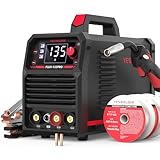


Quick comparison of the seven machines
| Rank | Machine | Output range | AC/DC | Duty cycle at maximum output | Best for |
|---|---|---|---|---|---|
| 1 | ESAB Rebel EMP 205ic AC/DC | 5–205 A | AC and DC | 25% at 205 A | One compact machine for TIG, MIG, and stick |
| 2 | Everlast PowerTIG 255 EXT | 5–255 A | AC and DC | 60% at 255 A | Aluminum fabrication and long welds |
| 3 | Miller Multimatic 220 AC/DC | 10–200 A TIG | AC and DC | 20% at 200 A TIG | Versatility and dependable shop support |
| 4 | Lincoln Electric Square Wave TIG 200 | 10–200 A | AC and DC | 25% at 200 A | Accessible aluminum and steel TIG work |
| 5 | PrimeWeld TIG225X | 10–225 A | AC and DC | 60% at 225 A | Budget-conscious hobbyists and fabricators |
| 6 | AHP AlphaTIG 203Xi | 10–200 A | AC and DC | 60% at 200 A | Small shops needing useful AC controls |
| 7 | Miller Diversion 180 | 10–180 A | AC and DC | 20% at 180 A | Simple, easy-to-learn TIG operation |
Duty-cycle figures are based on commonly published 10-minute ratings and can vary by input voltage and production revision. A 60% duty cycle means six minutes of welding followed by four minutes of cooling within a 10-minute period. It does not mean the torch, tungsten, or workpiece can operate continuously at that amperage.
1. ESAB Rebel EMP 205ic AC/DC: best overall
The Rebel EMP 205ic AC/DC is the most complete choice when the shop needs more than TIG alone. It combines AC/DC TIG, MIG, flux-cored welding, and stick welding in a relatively compact package. Its 5-amp lower limit is useful for thin sheet, while 205 amps is enough for many aluminum and steel fabrication jobs.
Its main limitation is the 25% duty cycle at maximum TIG output. That is adequate for short repair welds and typical home fabrication, but less attractive for long, repeated aluminum seams. The machine is also more complex than a dedicated TIG welder, so it costs more than a basic inverter TIG setup.
2. Everlast PowerTIG 255 EXT: best for aluminum capacity
For readers who regularly weld aluminum, the PowerTIG 255 EXT offers the highest output and strongest high-amperage duty cycle in this group. Its 255-amp ceiling gives more headroom for thick aluminum, especially when joints draw heat away through large fixtures or heavy sections. Adjustable AC balance, frequency, pulse, and waveform controls allow experienced users to tune arc behavior.
This is a dedicated TIG and stick machine rather than a multiprocess welder. It is a better fit for a permanent welding area than for a mobile repair kit, and its advanced controls can be unnecessary for someone learning the process. A suitable 240-volt circuit is important if you expect to use its upper range.
3. Miller Multimatic 220 AC/DC: best multiprocess premium choice
The Multimatic 220 AC/DC is a practical welding machine TIG buyers choose when MIG, flux-cored, and stick capability matter as much as TIG. It supports AC TIG for aluminum and DC TIG for steel and stainless, with a 10-amp minimum that remains usable for general fabrication.
The 20% duty cycle at 200 amps is modest. In practical terms, it suits intermittent welding rather than production-length seams at maximum output. Its advantages are operating simplicity, broad process coverage, a mature accessory ecosystem, and a compact format. If you need a dedicated aluminum TIG machine for long runs, the Everlast ranks higher.
4. Lincoln Electric Square Wave TIG 200: best approachable dedicated TIG
The Square Wave TIG 200 is a sensible choice for a new TIG welder who wants both AC and DC without paying for a multiprocess platform. It handles aluminum, steel, stainless steel, and similar repair and fabrication materials, and its controls are less intimidating than those on more programmable machines.
At 200 amps, it is appropriate for many projects involving material around 1/4 inch thick, depending on joint design, preheating, fit-up, and heat sinking. Its 25% maximum-output duty cycle means it is not intended for nonstop heavy fabrication. The 10-amp minimum is also less specialized for extremely thin automotive sheet than a machine with a lower starting current.
5. PrimeWeld TIG225X: best value
The PrimeWeld TIG225X stands out when the priority is AC/DC TIG capability and a substantial published duty cycle without moving into premium-brand pricing. Its 225-amp maximum provides useful margin over 200-amp machines, and the 60% duty-cycle rating at maximum output is attractive for a home fabricator who occasionally welds longer seams.
It is a dedicated TIG/stick unit, so it does not replace a MIG welder. The decision is also less about peak amperage than support and ownership: verify warranty terms, replacement torch compatibility, and local availability of consumables before buying. It is a strong match for someone who already understands basic TIG setup or is willing to learn electrode preparation and gas control carefully.
6. AHP AlphaTIG 203Xi: best compact budget AC/DC option
The AlphaTIG 203Xi delivers the essential features needed for aluminum and steel TIG in a compact format. Its AC/DC output, pulse controls, and 60% duty-cycle rating at 200 amps make it more capable than its price category may suggest.
The 10-amp lower limit is suitable for general fabrication but is not the ideal choice for very delicate foil or ultra-thin sheet. As with other value-oriented machines, inspect the torch lead, foot-pedal connector, ground clamp, and gas fittings when the machine arrives. These accessories often determine day-to-day satisfaction more than the headline amperage.
7. Miller Diversion 180: best for simple TIG operation
The Diversion 180 is aimed at users who want a straightforward TIG welder rather than a long list of adjustments. Its 180-amp output is enough for many steel, stainless, and moderate aluminum projects, and the simplified interface can shorten the learning curve.
It falls behind the other choices for thick aluminum and long welds: the maximum output is lower, the duty cycle is 20%, and its control set is less expansive than machines designed for advanced aluminum tuning. It makes sense for light fabrication, maintenance, and education where predictable operation matters more than maximum capability.
Choose by the metal thickness you actually weld
Amperage is only a starting point. As a rough planning guide, TIG welding steel or stainless often requires about 1 amp per 0.001 inch of thickness, though joint geometry, heat sinking, travel speed, and preheating change the result. Aluminum commonly requires more heat because it conducts heat rapidly; approximately 1.25 to 1.5 amps per 0.001 inch is a more useful initial estimate.
- Thin sheet below 1/16 inch: prioritize a stable low-amperage start, a sharp tungsten, and pulse control. The ESAB’s 5-amp minimum has an advantage here.
- 1/8-inch steel or stainless: almost any machine in this comparison has sufficient output; torch control and fit-up become more important than peak amperage.
- 1/4-inch aluminum: choose an AC/DC machine near 200 amps or higher, with adequate duty cycle. The Everlast 255 EXT offers the most headroom.
- Repeated heavy seams: compare duty cycle, input power, cooling, and torch rating rather than buying solely by maximum amps.
For example, a 1/4-inch aluminum joint may need roughly 250 to 375 amps under demanding conditions, depending on the joint and heat sinking. A 200-amp machine can still weld it in some designs with beveling, preheating, or multiple passes, but it will have less reserve and may spend more time in thermal shutdown. This is why the 255-amp Everlast is the better fit for thick aluminum than a machine with the same AC label but a lower output.
Decision matrix: which TIG welder fits your situation?
| Your situation | Best match | Why | Trade-off |
|---|---|---|---|
| First TIG machine, steel and occasional aluminum | Lincoln Square Wave TIG 200 | Dedicated TIG layout and manageable output | Limited maximum duty cycle |
| One machine for TIG, MIG, and stick | ESAB Rebel EMP 205ic AC/DC | Four-process flexibility in a compact package | Costs more and has more controls |
| Frequent thick aluminum work | Everlast PowerTIG 255 EXT | 255 amps and 60% duty cycle | Dedicated machine and 240-volt planning |
| Budget-conscious hobby shop | PrimeWeld TIG225X | AC/DC output and strong duty-cycle rating | Confirm service and accessory availability |
| Small workspace or occasional repairs | Miller Diversion 180 | Simple controls and modest capacity | Less aluminum and production headroom |
Ownership costs and maintenance that affect the decision
A TIG welding machine is only part of the setup. Budget for a proper argon cylinder and regulator, a foot pedal or torch control, tungsten electrodes, ceramic cups, collets, collet bodies, filler rods, and a clean work surface. General market pricing in 2026 is roughly $500–$900 for entry-level AC/DC TIG equipment, $900–$1,700 for stronger hobby and multiprocess machines, and $1,700 or more for higher-capacity dedicated units, before gas and accessories.
The consumables that wear first are usually tungsten tips, cups, collets, and torch hoses or connectors. Contaminating the tungsten with the puddle, brushing aluminum with a dirty steel brush, using damp filler rod, or leaving the gas flow too high can create more problems than insufficient machine power. Keep the torch nozzle clean, sharpen tungsten longitudinally, check gas connections with a leak solution, and allow the fan to clear dust from the machine’s ventilation openings.
For most buyers, the final choice is simple: choose the Lincoln or Miller Diversion for approachable general TIG, the PrimeWeld or AHP for value, the ESAB or Multimatic when multiple welding processes matter, and the Everlast PowerTIG 255 EXT when AC aluminum capacity and sustained output are the deciding requirements.