What's inside
- Key Specs at a Glance
- Welding Output: Match the Amps to the Electrode
- Generator Wattage: What “Miller Generator Welder” Really Buys You
- Fuel Use, Noise, and Daily Runtime
- Portability and Mounting Realities
- Decision Matrix: Which Miller for Your Situation
- Ownership Realities Listings Don’t Mention
- FAQ
- Related Guides
- Key Specs at a Glance
- Welding Output: Match the Amps to the Electrode
- Generator Wattage: What “Miller Generator Welder” Really Buys You
- Fuel Use, Noise, and Daily Runtime
- Portability and Mounting Realities
- Decision Matrix: Which Miller for Your Situation
- Ownership Realities Listings Don’t Mention
- FAQ
- Related Guides
As an Amazon Associate I earn from qualifying purchases. This post may contain affiliate links at no extra cost to you.
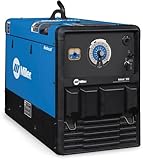
The best miller welder generator for most field work in 2026 is the Miller Bobcat 265: it delivers up to 265 amps of DC weld output, 11,000 watts of generator power, and weighs about 25% less than the models it replaced, which matters every time you load it on a truck. But “best” shifts with the job — a fence-line repair outfit has different needs than a pipeline crew — so here’s how the current Miller welder/generator lineup actually compares on output, wattage, fuel burn, noise, and portability.
As an Amazon Associate we earn from qualifying purchases at no extra cost to you.

What we cover
- Key Specs at a Glance
- Welding Output: Match the Amps to the Electrode
- Generator Wattage: What “Miller Generator Welder” Really Buys You
- Fuel Use, Noise, and Daily Runtime
- Portability and Mounting Realities
- Decision Matrix: Which Miller for Your Situation
- Ownership Realities Listings Don’t Mention
- FAQ
- Related Guides
Key Specs at a Glance
| Model | Fuel / Engine | Max Weld Output | Generator Power | Weight (approx.) | Best For |
|---|---|---|---|---|---|
| Bobcat 230 | Gas, Kohler | 225A (stick/TIG) | 10,500W peak / 9,500W continuous | ~385 lbs | Budget-minded repair work, farm/ranch |
| Bobcat 265 | Gas, Kohler EFI options | 265A (stick/TIG/MIG-capable) | 11,000W peak / 9,500W continuous | ~385 lbs | General construction, mobile repair |
| Trailblazer 330 | Gas, Kohler EFI | 330A | 12,000W peak / 10,500W continuous | ~460 lbs | Heavy structural, dual-operator setups, air arc gouging (light) |
| Big Blue 400 Pro | Diesel, Kubota | 400A | 12,000W (varies by config) | ~1,500+ lbs | Full-time crews, fleet trucks, daily multi-hour welding |
| Big Blue 500 Pro | Diesel, Kubota | 500A | Higher aux power, multi-operator | ~1,800+ lbs | Pipeline, heavy fabrication, carbon arc gouging |
Numbers are approximate and vary by configuration — Miller offers different engine and package options, so confirm the spec sheet for the exact package before buying.
Welding Output: Match the Amps to the Electrode
Amperage determines what rod you can run all day without hitting duty-cycle limits. For field repair and general construction:
- 1/8″ 7018 or 6010 rods (~90–140A): any Bobcat handles this comfortably at high duty cycle.
- 5/32″ 7018 (~150–180A) and heavy structural: the Bobcat 265 or Trailblazer 330 gives you headroom instead of running the machine at its ceiling.
- 3/16″ rod, 3/8″ carbon arc gouging, dual operators: you’re in Big Blue territory — 400A+ and the duty cycle to back it up.
A useful rule: buy roughly 25–30% more amperage than your typical weld requires. A machine loafing at 60% output lasts longer and welds smoother than one pinned at 95% all day.
Generator Wattage: What “Miller Generator Welder” Really Buys You
The generator side is half the reason people buy a miller welder/generator instead of a shop machine. Continuous wattage — not peak — is the number that matters for tools:
- Bobcat (~9,500W continuous): runs a plasma cutter, grinder, and work lights simultaneously, or a 12,000 BTU compressor alone. Won’t comfortably run a large air compressor and a plasma cutter at once.
- Trailblazer (~10,500W continuous): adds margin for a bigger compressor or multiple tool circuits on a service truck.
- Big Blue diesels: designed for simultaneous weld + tool loads; some packages support running weld output while aux power stays stable.
A quick sizing calc for a mobile repair rig: plasma cutter (≈6,000W) + angle grinder (≈1,500W) + battery charger/lights (≈500W) = 8,000W continuous need. A Bobcat 265 covers it; a smaller portable generator wouldn’t.
Fuel Use, Noise, and Daily Runtime
This is where diesel models justify their price — or don’t:
- Gas (Bobcat, Trailblazer): roughly 0.7–1.0 gallon/hour at welding loads, less at idle with auto idle enabled. A ~12-gallon tank means a full workday between fill-ups. EFI versions start reliably in cold weather and throttle down further.
- Diesel (Big Blue): a miller diesel generator welder burns noticeably less fuel per kWh — often 20–30% less — and Kubota industrial diesels are rated for far more engine hours than small gas engines. If the machine welds 4+ hours daily, the fuel savings and engine longevity pay back the premium.
- Noise: gas Miller welders generators run roughly 72–76 dB at load — conversation is possible nearby but raised. Big Blue units are quieter relative to output thanks to slower engine RPM and better enclosures, and modern Bobcats idle down automatically between welds, which is the real-world noise saver on a crew.
The honest math: if you’re welding 30 minutes a day on a service call, a diesel Big Blue never pays for itself. If it’s 6 hours a day on a construction site, gas is false economy.
Portability and Mounting Realities
“Portable” means different things at 385 lbs versus 1,800 lbs:
- Bobcat 230/265: fits across a pickup bed, liftable by two people with a hoist or forklift pockets, available with running gear. Genuine truck-and-trailer portability.
- Trailblazer 330: still truck-mountable but at ~460 lbs it’s a forklift job, not a two-man lift.
- Big Blue: skid-mounted or dedicated truck body only. These are permanent installations on service trucks or site skids.
Decision Matrix: Which Miller for Your Situation
| Your Situation | Recommended Pick | Why |
|---|---|---|
| Farm/ranch repair, occasional fabrication, tightest budget | Bobcat 230 | Cheapest entry, ample power for 1/8″–5/32″ rod, powers shop tools during outages |
| Mobile repair / field service truck, mixed stick + light TIG | Bobcat 265 | Best power-to-weight in the line; 265A covers nearly all repair scenarios |
| Structural steel, daily 5/32″+ rod, want MIG feeder capability and more aux power | Trailblazer 330 | 330A headroom, ~10.5kW continuous generator, still truck-portable |
| Full-time construction crew, welds 4+ hrs/day, needs reliability and lower fuel cost | Big Blue 400 Pro (diesel) | Diesel longevity, 100% duty cycle at rated output, fleet-standard serviceability |
| Pipeline, gouging, or multiple operators off one machine | Big Blue 500 Pro / PipePro | 500A class output and arc characteristics built for pipeline downhill work |
Price ranges in general market terms: Bobcats typically run a few thousand dollars, Trailblazers meaningfully more, and a miller diesel welder generator in the Big Blue class is a five-figure fleet investment. Buy through authorized welding distributors — warranty support and parts availability matter more than the sticker.
Ownership Realities Listings Don’t Mention
- What wears first: spark plugs, air filters, and battery on gas units; fuel filters and glow plugs on diesels. Receptacles and weld terminals corrode outdoors — clean and dielectric-grease them annually.
- Consumables beyond rod: contact tips and liners if you add a wire feeder, grinder discs, and — the one everyone forgets — fresh gasoline. Stale gas kills more small-engine welders than anything else; use EFI models or stabilized fuel if the machine sits between jobs.
- Common mistake: running the generator at welding RPM for tool-only use. Drop to low idle for aux power; it cuts fuel burn and engine wear substantially.
- Maintenance cadence: oil every 100 hours (gas) or per Kubota schedule (diesel), check leads and ground clamps for fraying, and exercise the machine monthly if it’s not on a truck daily.
FAQ
Is a miller generator and welder the same thing as a miller welder generator? Yes — same product category, just word order. Miller calls them engine-driven welder/generators; the engine powers both the welding arc and auxiliary AC outlets.
Can a Bobcat run MIG welding? The Bobcat 265 supports Miller’s SuitCase wire feeders for flux-core MIG in the field — a common upgrade for repair speed.
Gas or diesel for field work? Gas wins under ~3 hours of welding per day and when portability matters; diesel wins on fuel economy, torque, engine life, and resale when the machine is a daily-earning tool.
Will a miller welder/generator power my house in an outage? A Bobcat’s ~9,500W continuous can backfeed essential circuits through a proper transfer switch — a genuine secondary benefit of owning one — but never backfeed through a dryer outlet.