
Our Top Picks
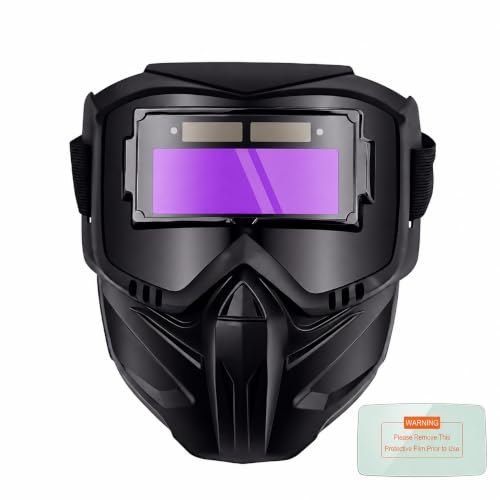
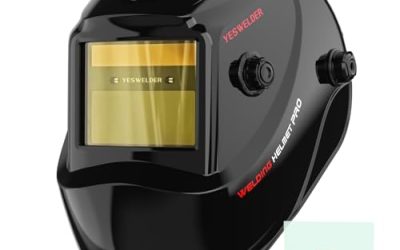
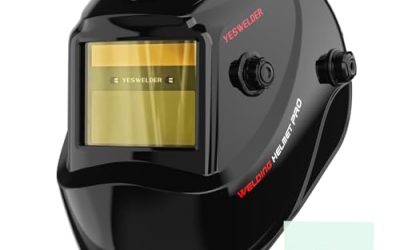
 YESWELDER Auto Darkening Welding Helmet 1/1/1/1 True Color3.64 x 1.67"1 x 1 x 1 Inches1 PoundsCheck on Amazon



What's inside
As an Amazon Associate I earn from qualifying purchases. This post may contain affiliate links at no extra cost to you.
Eight hours under a hood punishes the neck long before it punishes the eyes. When the search is for lightweight welding helmets for all day wear, the real question is how a helmet carries its mass, vents heat and stays put, not only what it weighs. This guide is for fabricators, shop hobbyists and weekend builders who have finished a long session with a stiff neck and want to avoid repeating it.
None of the eight listings below publishes a weight in its title, so the comparison leans on what the titles do state: shell material, headgear, viewing window, venting and flip-up design. Treat those as clues and confirm the weight on the product page before buying. Comfort is personal, and a helmet that suits a narrow head in 2026 may sit differently on a broad one.
What we cover
Quick Picks
As an Amazon Associate we earn from qualifying purchases at no extra cost to you.


| Product | Best for | Key feature from the title |
|---|---|---|
| TOPDC Flip Front | Occasional light work | Flip-front shade 11 with adjustable headgear |
| Miller Classic Series | Value-minded all-rounders | Variable shade 8-13, HD optics, comfortable headgear |
| SHINE Leather Flip-Up | Welders who also grind | Flip-up design with shade 4/9-13 |
| YESWELDER LYG-L600A | Mixed MIG, TIG and grinding | 2 arc sensors and a bluelight-blocking lens |
| True Color UV/IR Hood | Hot shops | Breathable vent system |
| Tefuawe Sugar Scoop | Pipeline and position work | Chopped fiberglass shell, medium cut top and bottom |
| ESAB Sentinel A60 | Daily shop use | Low-profile nylon shell, 4.65 in x 2.80 in view |
| BESTCLUB Solar Hood | Battery-free convenience | Solar powered, shade 4/9-13 |
How to Choose
Weight and Balance Beat the Number on the Box
A light shell that rides far forward of the face can feel heavier than a slightly heavier hood that sits close. Look for a low-profile shape, a headgear pivot that lets you adjust the front-to-back tilt, and a flip-up front if you stop to grind or tack often. Ignore words such as “ultra light” unless the listing gives a figure you can compare against other hoods.
Viewing Window and Shade Range
A bigger window helps visibility but adds shell size. Titles here range from compact windows to a 4.65 in x 2.80 in view. A variable range such as 4/9-13 covers most MIG, TIG and stick work, while a fixed shade 11 suits only a narrow band of amperage. Check that the shade range matches the processes you actually run, not the ones you might try someday.
Headgear and Ventilation
All-day comfort lives in the headband. Look for ratcheting adjustment, a padded sweatband you can swap, and a crown strap that spreads load across the skull instead of the forehead. Heat is the second fatigue source, so a listed vent system is a genuine plus in a warm garage or a summer shop.
Where Budget Models Cut Corners
Entry-level hoods tend to skimp on headgear padding, battery access and optical clarity. Look for a stated optical class such as 1/1/1/1 or 1/1/1/2, replaceable batteries or solar assist, and a named safety standard where one is claimed. A title with no model name and no specs gives you little to verify. Also look at how the lens is attached: a flimsy cover lens retainer or a hard-to-reach battery door turns a minor chore into a daily annoyance, and those small frictions add up over a long shift.
One last check before you order is the return window. Because fit is so personal, a helmet that looks right on paper can still press on the forehead or ride too far forward. Buy from a seller that accepts returns so you can wear the hood for a full session at home before committing to it.
The 8 Best Options
TOPDC Flip Front Welding Helmet
A fixed shade 11 flip-front with a 3.86 in x 1.61 in window and adjustable headgear. It fits buyers who weld rarely and want a simple hood for DIY, plasma cutting or costume projects without paying for auto-darkening electronics.
- Flip-front design lets you lift the lens for grinding or inspection.
- Adjustable headgear helps you tune the fit to your head.
- Trade-off: fixed shade 11 is not auto-darkening, so you cannot see the work before striking an arc.
Skip it if you weld daily or need a shade range across several processes.
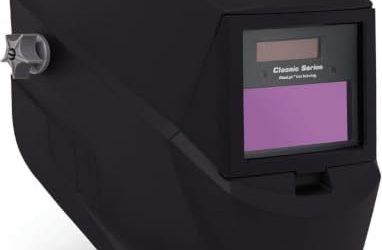
Miller Classic Series Auto-Darkening
Built for the value-minded welder who runs TIG and MIG, with a variable shade 8-13 and ClearLight optics. It suits shop users who want a recognized name and comfortable headgear without a pile of extra features to learn.
- HD optics and a ClearLight lens aid weld-puddle visibility.
- Variable 8-13 covers common MIG and TIG ranges.
- Trade-off: the shade range starts at 8, so very low-amp TIG may fall outside it.
Skip it if you need a lower shade for delicate low-amperage work or want a flip-up front.
SHINE Leather Flip-Up Auto-Darkening
A 1/1/1/2 true-color hood with a flip-up front, a 2×4 1/4 window and shade 4/9-13. It is a sensible pick for people who alternate between welding and grinding in one session and tire of removing the whole hood.
- Flip-up front reduces how often you take the helmet off.
- Variable shade 4/9-13 covers a broad range of processes.
- Trade-off: the listed window is modest compared with larger-view competitors.
Skip it if you want the widest possible field of view for tracking long seams.
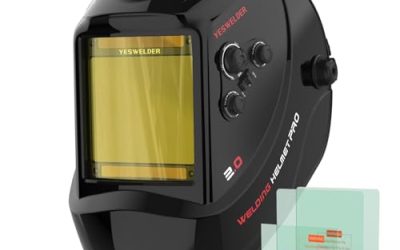
YESWELDER LYG-L600A
A 1/1/1/1 true-color helmet with 2 arc sensors, 1/30000 s response and a bluelight-blocking lens. It is listed as ANSI Z87.1 certified, which appeals to shop users who care about stated standards and who weld, then grind, then weld again.
- Fast response and a 3/7-13 range cover TIG, MIG, arc and grinding.
- The bluelight-blocking lens may ease glare over a long day.
- Trade-off: the title says nothing about weight or venting.
Skip it if weight is your top filter and you need a published figure first.
True Color UV/IR Auto-Darkening Hood
An unbranded auto-darkening hood with true-color view, UV and IR protection, an adjustable headband and a breathable vent system. It suits welders who work in warm garages and sheds where heat inside the hood is the main complaint.
- The vent system targets heat build-up around the face.
- The adjustable headband helps with fit across head sizes.
- Trade-off: no model name, shade range or optical class appears in the title.
Skip it if you want clear specifications to compare before you buy.
Tefuawe Chopped Fiberglass Sugar Scoop
A flip-up pipeline-style hood in chopped fiberglass with a medium-cut top and bottom sugar scoop shape. It fits position and pipe welders who need clearance around the chin and neck when leaning into awkward joints.
- The sugar scoop profile gives room for bending into tight positions.
- The flip-up front helps between passes.
- Trade-off: the title lists no lens details, so this is a shell-first choice.
Skip it if you want a listed auto-darkening range or light-state data.
ESAB Sentinel A60
A low-profile black nylon shell with a large 4.65 in x 2.80 in viewing area and high impact resistance. A strong fit for daily shop use where a clear view and a shape that stays close to the face matter more than extras.
- The low-profile design suggests a closer-to-face position.
- The large view helps with joint tracking.
- Trade-off: the larger window may add shell size compared with compact hoods.
Skip it if you prefer a flip-up front or a very small frame.
BESTCLUB Solar Powered Hood
A true-color hood with solar power and an adjustable 4/9-13 range, finished in a Flag Eagle graphic. It suits hobbyists who dislike swapping batteries and want a hood with some personality.
- Solar assist reduces battery worries.
- The 4/9-13 range works across common processes.
- Trade-off: the title offers no response-time or optical-class data.
Skip it if you want measurable specifications to weigh against other hoods.
Which One Fits Your Situation
You Weld a Full Shift in a Warm Shop
Start with the True Color UV/IR Hood for its listed vent system, or the ESAB Sentinel A60 for its low-profile shape and large view. Both address the two big fatigue sources: heat and awkward leverage.
You Switch Between Welding and Grinding
The SHINE Leather Flip-Up and the YESWELDER LYG-L600A both list grinding or flip-up access, which saves repeated hood removal. Pick the SHINE if flip-up is the priority and the YESWELDER if a stated safety standard matters.
You Weld Occasionally on a Tight Setup
The TOPDC Flip Front is the simple pick for short sessions, while the Miller Classic Series suits someone who wants a step up in optics without added complexity.
Common Mistakes
- Buying on weight alone while ignoring how the hood balances on the head.
- Choosing a fixed shade helmet for work that spans several amperages.
- Skipping the headgear adjustment and blaming the helmet for neck strain.
- Assuming every “true color” claim means the same optical class.
- Ignoring ventilation when you weld in a warm space.
Related guides
- Auto Darkening Welding Helmet Not Darkening Causes And Fixes
- How To Adjust Welding Helmet Headgear For A Comfortable Fit
- How To Choose A Welder For Your Garage Circuit Breaker Size
Frequently Asked Questions
What counts as lightweight for a welding helmet?
There is no fixed definition, and most titles here omit a figure. Compare the listed weights on each product page, and consider balance as well as total mass.
Is a flip-up front more comfortable?
It can be, because you avoid taking the hood on and off. It does add a hinge, so check how the front sits when raised and whether it pulls the weight forward.
Do solar-powered hoods need batteries?
Some use solar assist plus a replaceable battery. Read the listing to see which power type each helmet uses before you order.
Can a heavy-feeling helmet be fixed?
Often, yes. Adjusting the crown strap and the front-to-back tilt can shift the load, so try those settings before replacing the hood.
Related guides
More from Amazon
Programs that pair well with the guide above. Offers and eligibility are set by Amazon and may change.
A free business account with business pricing and bulk-buying tools for work, shop or home office.
Create a business accountFree shipping on eligible items, Prime Video and more. Eligible new members can start with a free trial.
Start a Prime free trialAudiobooks and podcasts to listen to on the go. Eligible new members can start with a free trial.
Try Audible freeAd-free music streaming. Eligible new subscribers can start with a free trial.
Try Music Unlimited freeAs an Amazon Associate we earn from qualifying purchases.
Write Your Review
No reviews yet. Be the first to share your experience!