
Our Top Picks
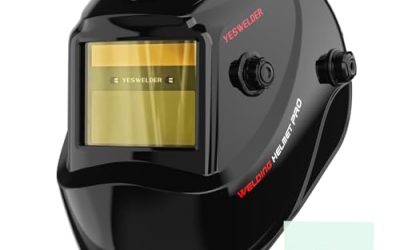
 YESWELDER Auto Darkening Welding Helmet 1/1/1/1 True Color3.64 x 1.67"1 x 1 x 1 Inches1 PoundsCheck on Amazon


What's inside
As an Amazon Associate I earn from qualifying purchases. This post may contain affiliate links at no extra cost to you.
Spending under 100 dollars on an auto darkening welding helmet is one of the most common budget decisions a hobbyist faces, and it is also one where specs on the box can blur together. Nearly every helmet in this price tier advertises “true color,” a fast switching time, and a shade range that starts around 4 or 5 and climbs to 13. The useful question is which of those numbers actually changes your day at the bench: lens clarity when you are not welding, how many arc sensors keep the lens dark when your torch is partly hidden, and whether the shade range covers grinding and low-amp TIG work.
This guide is for garage fabricators, farm and ranch repair welders, and students building a first kit. It is built from the specs listed in each product title rather than from performance claims, so you will see where a listing gives a concrete figure and where it leaves a gap you should confirm on the product page. The aim for 2026 is simple: help you land on a helmet that fits your process and your head without chasing features you will never use.
What we cover
Quick Picks
As an Amazon Associate we earn from qualifying purchases at no extra cost to you.




| Product | Best for | Key spec from the title |
|---|---|---|
| YESWELDER LYG-L600A | TIG and general low-amp work | 1/1/1/1 true color, 2 arc sensors, 1/30000s response, shade 3/7-13 |
| YESWELDER LYG-M800H | Welding, cutting and grinding in one hood | 4 arc sensors, 1/30000s response, shade 3/5-9/9-13 |
| ARCCAPTAIN with Light | Big viewing area | 3.94 by 3.66 inch view, 1/25000s response, solar powered, 4 arc sensors |
| TRQWH with Light | Buyers who want a stated safety standard | ANSI Z87.1 certified, solar powered, 2 arc sensors, 1/1/1/2 |
| BESTCLUB Solar Hood | Graphic-style budget pick | Solar powered, shade range 4/9-13 |
| True Color UV IR Helmet | Long sessions needing airflow | Adjustable headband, breathable vent system, TIG MIG ARC use |
How to Choose
Optical class and true color
The four-digit code such as 1/1/1/1 describes optical class, light diffusion, variation in luminous transmittance, and angle dependence, with 1 being the best score in each position. A 1/1/1/2 helmet like the TRQWH differs only in the last number, which matters little for most garage welders. “True color” is a lens treatment that makes the unlit view look closer to natural color, which helps when you are lining up a joint. Do not pay more just for a bright-looking lens; look for the clarity code and a stated shade range instead.
Arc sensors and response time
Two arc sensors are enough for straight-ahead bench work, but four sensors reduce the chance of the lens flickering when your hand or torch blocks one. This matters for out-of-position welds and pipe. Switching speed is listed as a fraction, such as 1/25000s or 1/30000s. At this price tier, the gap between those figures is smaller than the gap between sensor counts, so use sensors and shade range as your main filters.
Shade range, sensitivity and modes
A wide-range lens such as shade 3/5-9/9-13 covers a weld mode, a cut mode and a grind mode, while a basic 4/9-13 range focuses on welding. Low-amp TIG work needs a lens that goes lighter than the typical shade 10, which is why the YESWELDER L600A lists a shade 3 lower bound. If you mostly stick weld or MIG weld, the standard range is fine. Ignore marketing graphics and look for knobs that let you set shade, sensitivity and delay.
Power, fit and where budget models cut corners
Solar powered cells with a replaceable battery backup are common, and they keep the lens running between jobs. Check the headgear: ratchet adjustment and a padded sweatband matter more than most people expect after an hour under the hood. Budget helmets usually trim shell thickness, lens cover quality, and included spare covers. Confirm the safety standard on the listing, since only some titles state ANSI Z87.1, and pair the helmet with safety glasses, a respirator or good ventilation, and flame-resistant clothing. A helmet is one part of a protective setup rather than a complete guarantee.
The 6 Best Options
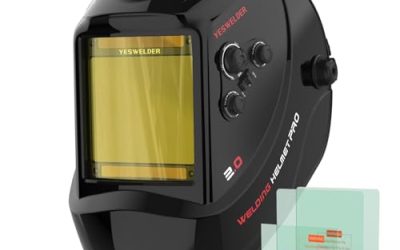
YESWELDER LYG-L600A
The L600A reads like a TIG-friendly helmet at an entry price. The title lists true color with a 1/1/1/1 optical class, two arc sensors, a 1/30000s response, a bluelight-blocking lens and shade 3/7-13. It suits hobbyists who weld thin material at lower amps and want a lens that can go very light. Because the same model number shows up in several listings, compare the included extras, such as spare cover lenses, before picking a seller, and confirm the headgear adjustment range if you have a larger or smaller head.
- Strength: shade range starting at 3 helps with low-amp precision work.
- Strength: top-tier optical class code of 1/1/1/1.
- Trade-off: only 2 arc sensors, so awkward positions may cause more lens flicker.
Skip it if you weld in tight spots where the torch regularly hides the sensors.
YESWELDER LYG-M800H
The M800H adds sensors and modes. The title mentions a large view, four arc sensors, 1/30000s response, and shade 3/5-9/9-13 for weld, cut and grind. It is aimed at people who move between welding and grinding in the same project and prefer not to flip the hood up and down. A hood that handles several tasks is handy on repair days, when one afternoon might involve tacking a bracket, cutting a bolt, and grinding the seam flat. Read the manual for how the mode switch behaves, because grind mode means the lens stays light and is not a substitute for a face shield.
- Strength: four arc sensors for steadier darkening.
- Strength: three-position shade layout covers more tasks.
- Trade-off: more controls mean more settings to learn.
Skip it if you only run one process and want the simplest helmet possible.
ARCCAPTAIN Helmet with Light
This ARCCAPTAIN model puts size first. The title lists a 3.94 by 3.66 inch viewing area, true color at 1/1/1/1, a 1/25000s response, solar power, and four arc sensors, plus a light feature. It suits welders who feel boxed in by smaller windows and want a better look at the puddle edges. A wider window also helps beginners who are still learning to keep a steady travel angle, since more of the surrounding joint stays visible. Confirm the overall shell weight and head clearance on the listing, because a lens of this size can shift the balance forward on the head.
- Strength: large viewing screen listed in inches.
- Strength: four sensors with solar power.
- Trade-off: a larger lens can mean a bulkier shell on the head.
Skip it if you want the lightest possible hood for overhead work.
TRQWH Helmet with Light
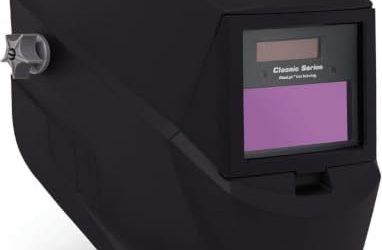
The TRQWH is the one in this group that spells out a safety standard in its title: ANSI Z87.1. It also lists true color, solar power, two arc sensors, and a 1/1/1/2 class with a wide shade range. It fits shoppers who want a standard named in the listing rather than inferred. That clarity helps school shops, community workshops, and anyone filling out a purchase request that asks which standard a piece of eye and face protection meets. Still, treat the title as a starting point and read the full listing for the exact markings and any limits on use.
- Strength: ANSI Z87.1 stated in the title.
- Strength: solar powered with a light feature.
- Trade-off: 1/1/1/2 is a notch below the best optical code, and only two sensors.
Skip it if you do a lot of awkward-position work needing four sensors.
BESTCLUB Solar Powered Hood
The BESTCLUB combines a solar powered auto darkening lens with a 4/9-13 shade range and a decorative flag eagle design. It targets MIG, TIG and arc welders who like personality in their gear and need a straightforward welding-focused lens. The graphic shell is purely cosmetic, so judge it on the same checklist as any plain hood: headgear comfort, lens cover availability, and whether the sensitivity and delay controls are easy to reach with a glove on. It is a sensible second helmet for a friend or family member who borrows your shop now and then.
- Strength: adjustable shade range of 4/9-13 for typical processes.
- Strength: solar powered with true color in the title.
- Trade-off: shade 4 as the lowest setting is less helpful for very low-amp TIG.
Skip it if you want a plain helmet or a lens that goes below shade 4.
True Color UV IR Adjustable Headband Helmet
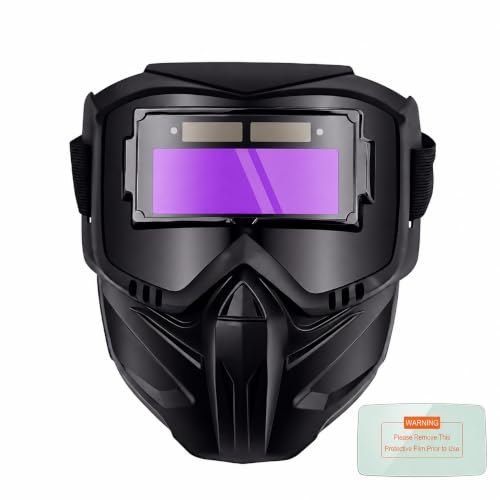
This unbranded-style listing highlights comfort features: an adjustable headband and a breathable vent system, with true color and UV/IR protection mentioned for TIG, MIG, ARC and grinding. It fits buyers who prioritize airflow during long sessions. Summer garage work gets stuffy under any shell, so ventilation and a well-padded headband can matter as much as optical class. Because the title is light on numbers, treat it as a candidate to confirm rather than a finished decision, and check the listing for sensor count, shade range, and the powering method.
- Strength: vent system is built into the design.
- Strength: covers multiple processes including grinding.
- Trade-off: the title offers few hard numbers, so verify sensors and shade range on the listing.
Skip it if you need spec-sheet certainty before buying.
Which One Fits Your Situation
You weld thin steel with TIG
The YESWELDER L600A is the match, since a lens that starts at shade 3 gives better visibility at low amperage.
You alternate between welding and grinding
Choose the YESWELDER M800H. Its weld, cut and grind layout keeps you from lifting the hood mid-project.
You want to see more of the joint
The ARCCAPTAIN with Light has the largest stated window here, which helps when you are tracking a bead along an edge.
You want a named safety standard
The TRQWH lists ANSI Z87.1 in the title, making it the easiest to justify for a shop that cares about documentation. Confirm the certification details on the product page.
If none of those fit cleanly, the True Color UV IR helmet is the wildcard for long, warm sessions, as long as the missing numbers check out on the listing.
Common Mistakes
- Choosing by graphic design instead of arc sensor count and shade range.
- Assuming every helmet under 100 dollars lists a safety standard in its title.
- Buying a shade 4 lens for low-amp TIG work that needs a lighter starting point.
- Skipping safety glasses, fume control and flame-resistant clothing because the hood is “auto”.
- Ignoring headgear fit and adjustment, which decide comfort over a long session.
Related guides
- Auto Darkening Welding Helmet Not Darkening Causes And Fixes
- Flux Core Welders For Beginners Without Gas
- Lincoln Electric Welders For Home Garage
Frequently Asked Questions
How many arc sensors does a beginner helmet need?
Two sensors cover straight bench work, while four sensors make the lens more consistent in awkward positions. Most buyers who weld outside a fixed bench will appreciate the extra sensors.
Does a faster switching time matter at this price?
Figures like 1/25000s and 1/30000s are both quick, and the real-world gap is small. Sensor count and shade range usually matter more for day-to-day comfort.
Can a budget helmet be used for grinding?
Some models include a grind mode, such as the M800H with its 3/5-9/9-13 layout. Always use a face shield or eye protection suitable for grinding as the manufacturer instructions state.
What does true color mean on a welding lens?
It refers to a lens treatment designed to reduce the green or amber cast common in older lenses, so the unlit view looks more natural. It is a clarity feature, not a protection upgrade.
Related guides
More from Amazon
Programs that pair well with the guide above. Offers and eligibility are set by Amazon and may change.
A free business account with business pricing and bulk-buying tools for work, shop or home office.
Create a business accountFree shipping on eligible items, Prime Video and more. Eligible new members can start with a free trial.
Start a Prime free trialAudiobooks and podcasts to listen to on the go. Eligible new members can start with a free trial.
Try Audible freeAd-free music streaming. Eligible new subscribers can start with a free trial.
Try Music Unlimited freeAs an Amazon Associate we earn from qualifying purchases.
Write Your Review
No reviews yet. Be the first to share your experience!