
Our Top Picks
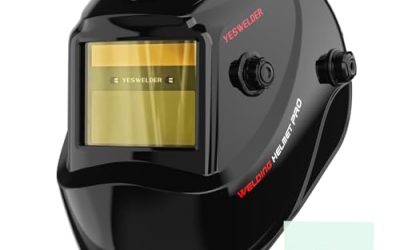
 YESWELDER Auto Darkening Welding Helmet 1/1/1/1 True Color3.64 x 1.67"1 x 1 x 1 Inches1 PoundsCheck on Amazon
 MIGVAN Welding Helmet Auto Darkening True Color LargeAdjustable9.65 x 7.76 x 11.69 inches2.4 PoundsCheck on Amazon


What's inside
As an Amazon Associate I earn from qualifying purchases. This post may contain affiliate links at no extra cost to you.
A TIG helmet has a harder job than a MIG hood. The arc is quieter and often much dimmer, you are looking at a small, bright puddle from a few inches away, and you may be working at 10 or 20 amps on thin stainless where a sluggish lens or a dark default shade makes it hard to see where the tungsten is pointing. That is the real constraint inside “best welding helmets for TIG”: a lens that can go light enough for low-amp work, sensors that keep the lens dark even when the torch blocks your view, and a hood that sits comfortably when you hold a position for minutes at a time.
This guide is for hobbyists and small-shop welders who run TIG on aluminum, stainless, or chromoly and want a helmet matched to that process rather than a generic hood. It is built from the details in each product title, such as optical class, shade range, sensor count and power source. Specs not stated in a title are flagged so you can confirm them on the listing. Entering 2026, the strongest signal separating TIG-ready helmets from the rest is the lowest shade a lens can reach, so that is where this guide spends most of its attention.
What we cover
Quick Picks
As an Amazon Associate we earn from qualifying purchases at no extra cost to you.


| Product | Best for | Key spec from the title |
|---|---|---|
| YESWELDER LYG-L600A | Low-amp TIG on thin material | 1/1/1/1 true color, 2 arc sensors, 1/30000s, shade 3/7-13 |
| SHINE Leather Flip-Up | Welders who also grind between passes | Flip-up mask, 1/1/1/2 true color, 2×4 1/4 lens, shade 4/9-13 |
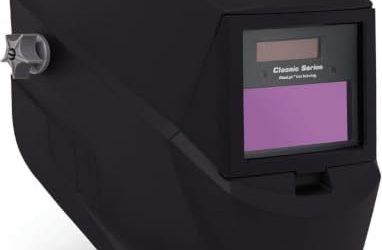
| Miller Classic Series ClearLight | Brand-name, value-minded TIG and MIG | Variable shade 8-13, HD optics, comfortable headgear |
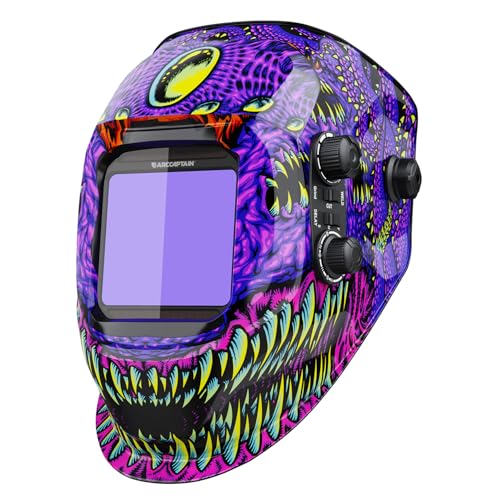
| ARCCAPTAIN with Light | Large view of the puddle | 3.94 x 3.66 inch view, 1/25000s, solar powered, 4 arc sensors |
| MIGVAN Large View | Wide shade range with backup power | Shade 4/5-13, 4 arc sensors, solar and replaceable battery |
| YESWELDER LYG-Q800D | Wide peripheral view and LED light | 180 degree view, LED, shade control for weld/cut/grind, 1/30000s |
How to Choose
The lowest shade matters most for TIG
Many helmets advertise “shade 9-13,” which is fine for MIG and stick but leaves the lens too dark for low-amp TIG, because the arc may not trip a dark shade to be readable. Look for a lens that reaches shade 5 or lower in welding mode, or a dual range. The YESWELDER L600A lists shade 3/7-13, and the MIGVAN lists 4/5-13, both friendly to low-amp work. The Miller Classic lists a fixed variable shade of 8-13, which suits higher-amp TIG better than delicate thin-gauge work. Match the lens range to the amps you run most.
Arc sensors and sensitivity
TIG hides the arc behind your hand, the torch cup and the workpiece, so sensor count matters. Two sensors are enough when you can see the tungsten directly. Four sensors, as on the ARCCAPTAIN, MIGVAN and the 180 degree YESWELDER, reduce the chance of the lens flickering to light at the wrong moment. Low-amp TIG arcs are also dim enough that sensitivity needs to be adjustable, so look for a sensitivity knob rather than a fixed setting. If a listing does not mention this, check the full description.
Optical class, view size and power source
Optical class is a four-number code. A 1/1/1/1 lens, like the L600A and Q800D, is the best score in each position, while 1/1/1/2 is a small step down in angle dependence. View size affects how much of the joint you see: 2×4 inches on the SHINE is on the smaller side, while 3.94 x 3.66 inches on the ARCCAPTAIN is large. Solar cells with a replaceable battery are common and keep the lens running between jobs. Helmets listing LED lights are helpful in dim corners but are an extra, not a requirement.
Fit, weight and where budget models cut corners
Because TIG sessions involve stillness, comfort drives the decision. Check for a ratchet headband, adjustable tilt, and a hood weight that does not pull forward. Budget helmets typically skimp on shell thickness, lens cover quality and headgear padding. Keep in mind that a flip-up design like the SHINE adds a clear lens for grinding, but the hinge adds weight and a possible light leak around the edge. Whatever you choose, pair it with safety glasses underneath, long flame-resistant sleeves, and ventilation, since TIG on stainless and coated metals produces fumes. A helmet is one layer in a complete setup.
The 6 Best Options
YESWELDER LYG-L600A
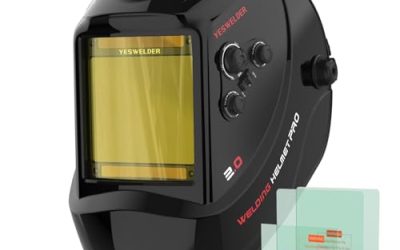
The L600A is a TIG-minded helmet on paper. The title lists a 1/1/1/1 true color lens, two arc sensors, a 1/30000s response, a bluelight-blocking lens and a shade range of 3/7-13. That low shade 3 end makes it appealing to a welder doing delicate work on thin stainless or aluminum, where a standard shade 9 starting point is too dark for comfort. The same model number appears in several listings, so compare what is bundled, such as spare cover lenses, and confirm the adjustment range of the headgear before ordering.
- Strength: shade range starts at 3, helpful for low-amp work.
- Strength: top optical class code of 1/1/1/1.
- Trade-off: only two arc sensors, so awkward angles may cause flicker.
Skip it if you often weld in positions where your hand or the torch hides the sensors, or if you need a large viewing window.
SHINE Leather Auto Darkening Flip-Up Helmet
The SHINE is a different style: a leather flip-up welding mask with a 1/1/1/2 true color lens, a 2×4 1/4 viewing window and a variable 4/9-13 shade range. It suits TIG welders who also grind and clean between passes and like the idea of a clear front lens that swings up instead of lifting the whole hood. The leather exterior gives it a distinct look in the shop. Check the listing for how the hinge locks in the up position, since a loose hinge is the usual complaint with flip-up hoods, and confirm whether the clear lens is replaceable.
- Strength: flip-up design adds a clear lens for grinding and prep.
- Strength: shade range starts at 4 for lighter work than a typical 9-13 lens.
- Trade-off: the window is on the smaller side at 2×4 inches.
Skip it if you want the biggest possible viewing area or prefer a lighter shell.
Miller Classic Series ClearLight
The Miller Classic Series is the established-brand option. The title describes it as an auto-darkening helmet for value-minded welders, for TIG and MIG, with a variable shade of 8-13, HD optics and comfortable headgear. It fits someone who values a known name and straightforward design over a long feature list and who runs moderate-amp TIG or MIG on mild steel. Welders who share a shop with others often prefer a helmet with a known name because replacement lenses and headgear parts are easier to find later. Confirm sensitivity and delay controls on the full listing, as the title is brief.
- Strength: brand-name build with HD optics noted in the title.
- Strength: comfort-oriented headgear called out directly.
- Trade-off: shade range begins at 8, which is dark for very low-amp TIG.
Skip it if you run thin-gauge TIG at low amperage and need a lighter default shade. The same series also appears in another colorway, so compare listings.
ARCCAPTAIN Auto Darkening Helmet with Light
The ARCCAPTAIN is the big-window pick. The title lists a 3.94 x 3.66 inch viewing screen, true color at 1/1/1/1, a 1/25000s auto-darkening response, solar power, and four arc sensors, with a light feature included. TIG welders who struggle to see the edges of a joint through smaller windows will notice the difference when tracking a bead along a fillet. The built-in light is a bonus for dim garages and for lining up the tungsten before striking an arc, though it is no substitute for good shop lighting. Check how the light is powered before assuming it will last a long session.
- Strength: large view and four arc sensors.
- Strength: solar powered with a light added.
- Trade-off: a larger lens can make the shell feel front-heavy for some heads.
Skip it if you need a very light hood for long sessions or want the lowest shade starting point; confirm the shade range on the listing.
MIGVAN Welding Helmet Large Viewing
The MIGVAN combines a large view with a 4/5-13 wide shade range. The title mentions true color, solar and replaceable battery power, and four arc sensors, plus an optical class entry that is cut off. It suits TIG welders who want a low-ish lower shade bound and the reassurance of a replaceable battery in case solar charging runs short. Indoor TIG under dim shop lighting is the situation where solar cells struggle most, so a swappable battery is a practical safeguard. Verify the exact battery type on the listing so you can stock a spare.
- Strength: shade range reaches 4 or 5 for lighter work.
- Strength: four arc sensors and dual power sources.
- Trade-off: truncated title means the optical class and response time need checking.
Skip it if you want a documented optical class before buying.
YESWELDER LYG-Q800D Panoramic Helmet
The Q800D focuses on the field of view. The title mentions a 180 degree view, LED lighting, wide shade control for weld, cut and grind, a 1/1/1/1 true color lens, and a 1/30000s response. That peripheral view appeals to TIG welders working in tight setups, such as tubing or frames, where seeing the surroundings helps with positioning the torch. The wide field also helps when you need to track a filler rod or a helper’s hands near the joint without turning your head. Confirm the weight and strap adjustment on the listing, because panoramic shells tend to be larger.
- Strength: 180 degree panoramic view with LED lights.
- Strength: top-tier optical class and fast response listed.
- Trade-off: wrap-around designs can feel bulkier than standard hoods.
Skip it if you prefer a compact shell or are not interested in lights built into the hood.
Which One Fits Your Situation
You weld thin stainless at low amps
Choose the YESWELDER L600A or the MIGVAN. Both list a light lower shade bound, which is the feature that matters most for dim arcs.
You jump between welding and grinding
The SHINE flip-up or the YESWELDER Q800D with its weld, cut and grind modes cut the number of times you lift and drop the hood.
You want a well-known name
Miller Classic Series is the brand-name option and works well for steady, moderate-amp TIG and MIG.
You need to see the whole joint
The ARCCAPTAIN, with its large stated window, is built for tracking longer beads. Check the listing to be sure the shell weight and fit suit you.
Common Mistakes
- Buying a helmet whose darkest-light setting is shade 9 and then struggling at low amps.
- Ignoring arc sensor count when working in positions that hide the torch.
- Choosing by the size of the lens alone and ignoring head fit and weight.
- Skipping safety glasses and fume control because the arc looks gentle.
- Assuming every helmet in a similar shell is the same without checking the listed shade range.
Related guides
- Auto Darkening Welding Helmet Not Darkening Causes And Fixes
- Auto Darkening Welding Helmets Under 100 Dollars
- Flux Core Welders For Beginners Without Gas
Frequently Asked Questions
What shade range is best for TIG welding?
A lens that can go to shade 5 or lighter in welding mode helps at low amps. Helmets with shade 3/7-13 or 4/5-13 ranges are more versatile for thin material than 9-13 only models.
How many arc sensors does a TIG helmet need?
Two sensors can work when your torch and tungsten are in clear sight. Four sensors add stability for pipe, tubing and awkward positions.
Is true color important for TIG?
It is a clarity feature that makes the unlit view look more natural, which helps with positioning the tungsten and reading the weld pool. It does not replace a proper shade for the amps you run.
Are flip-up helmets practical for TIG?
They can be, especially if you do a lot of grinding and cleaning between passes. The trade-off is added weight and a smaller window on some models, so compare specs on the listing.
Related guides
More from Amazon
Programs that pair well with the guide above. Offers and eligibility are set by Amazon and may change.
A free business account with business pricing and bulk-buying tools for work, shop or home office.
Create a business accountFree shipping on eligible items, Prime Video and more. Eligible new members can start with a free trial.
Start a Prime free trialAudiobooks and podcasts to listen to on the go. Eligible new members can start with a free trial.
Try Audible freeAd-free music streaming. Eligible new subscribers can start with a free trial.
Try Music Unlimited freeAs an Amazon Associate we earn from qualifying purchases.
Write Your Review
No reviews yet. Be the first to share your experience!